

How skinny brows became a counter-culture icon

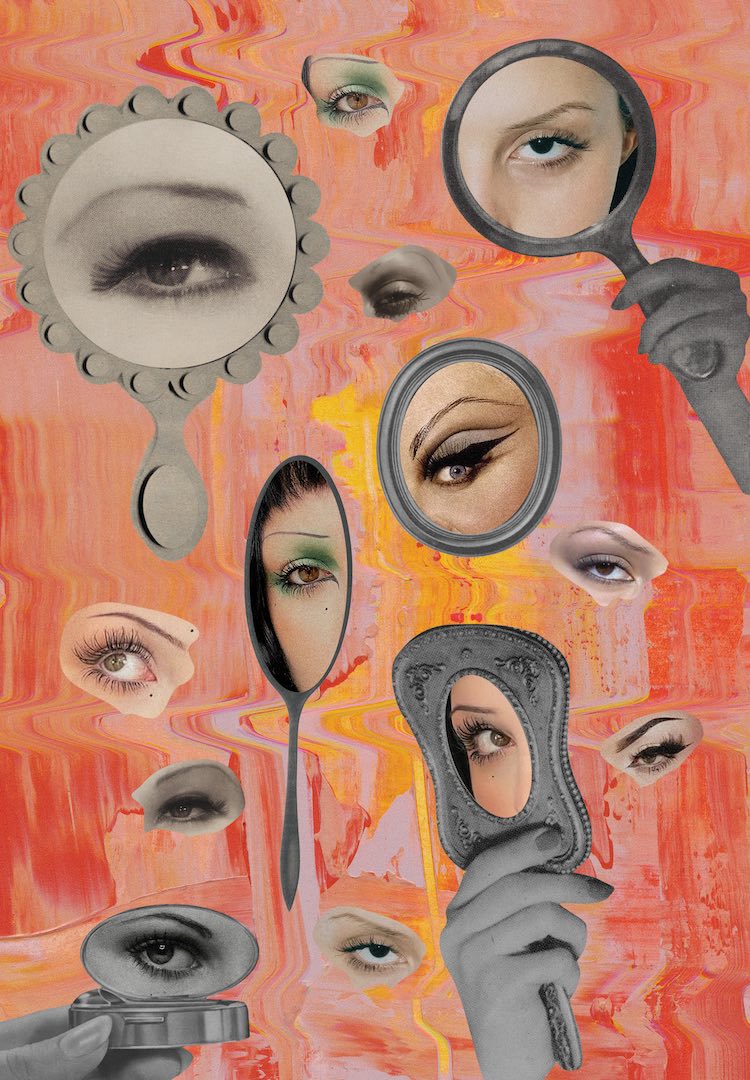
COLLAGE BY SIMONE ESTERHUIZEN
WORDS BY IZZY WIGHT
Where have our eyebrows gone?
When Aotearoa-based hairdresser Victoria Clare was in high school, she had an important realisation. After arriving at class with her natural arches overdrawn “at least two centimetres thick”, she learnt just how divisive eyebrows can be.
“The boys in particular hated them,” she explains. “I thought, ‘Wow, this makes people emotional. I can really annoy people with the way I do my makeup.’”
We like nosy people. Don’t be shy, head to our Beauty section for more.
That was in 2012 – Victoria’s peak Tumblr era. From there, she continued to push boundaries with her brows: bleaching them, shaving them off and pencilling them back on in shades of black, hot pink and lurid green. It was, and continues to be, her little act of transgression, a subversive statement that attracts those who ‘get it’ and repels those who don’t.
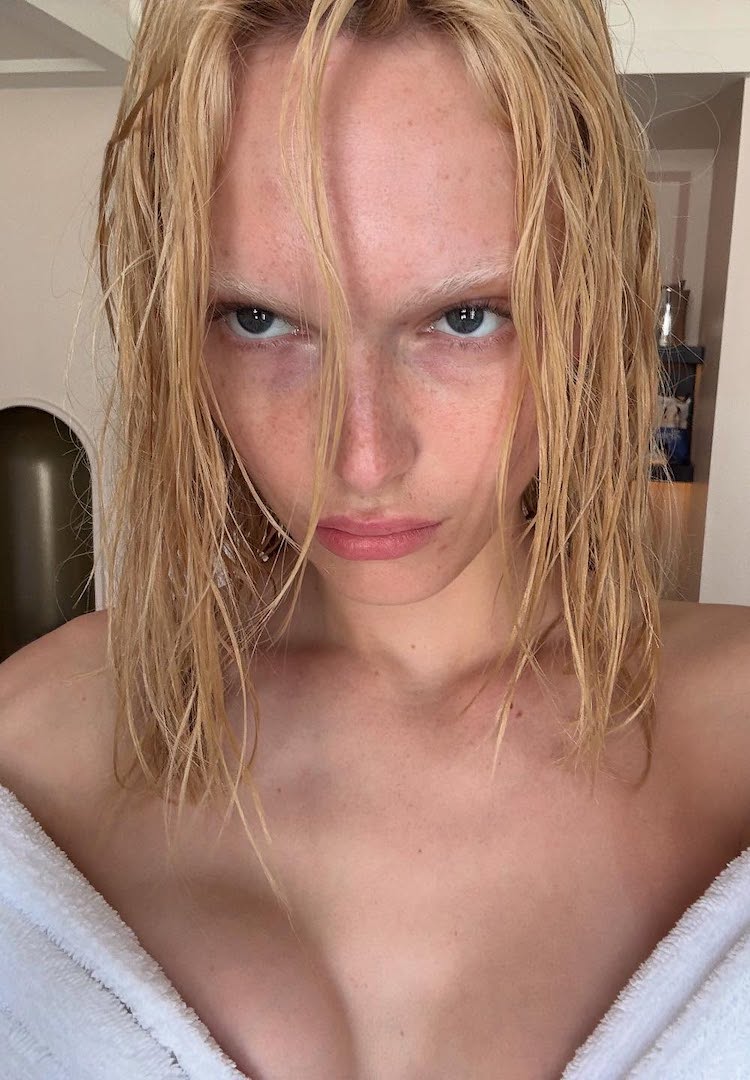
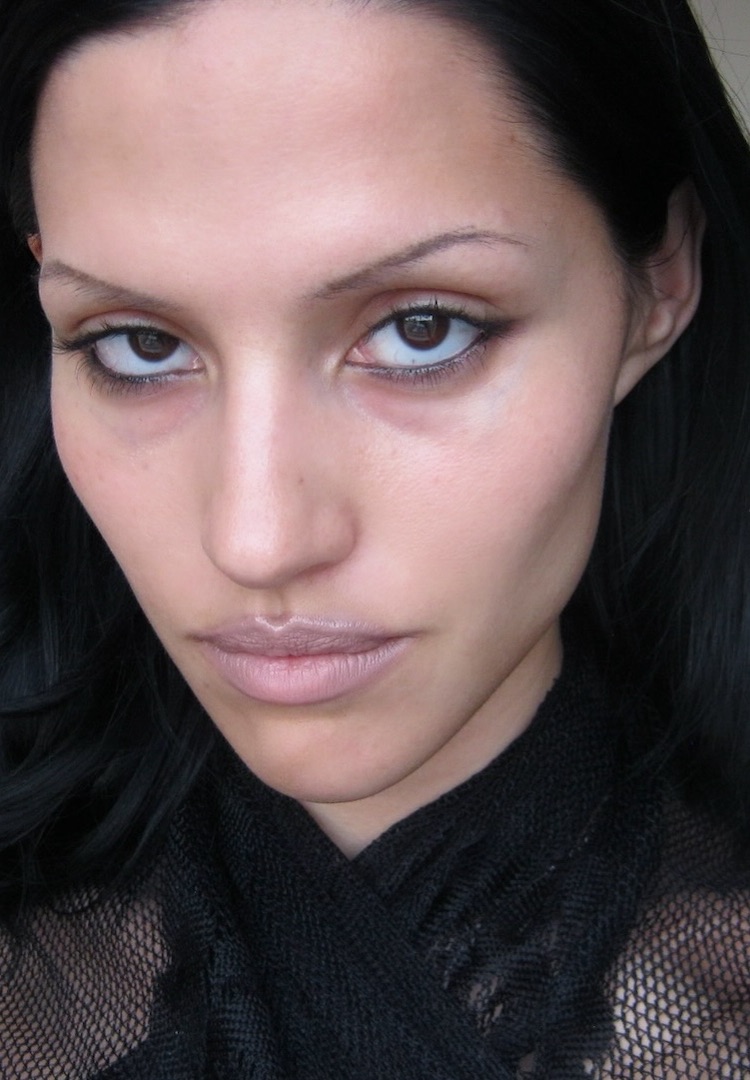
Over a decade later, skinny (or entirely absent) brows have become the look du jour in the world of alternative celebrity style icons. Gabbriette, Amelia Gray, Julia Fox and FKA Twigs are all poster girls for dramatically thin or bleached-off arches, while Doja Cat has sported a range of experimental eyebrows since shaving hers off on Instagram Live in 2022. I’d be remiss not to mention Riri here, who was a step ahead of the It Girls, sporting pencil thin brows on the cover of British Vogue in 2018, drawn on by then-emerging makeup artist, Isamaya Ffrench.
In reality, the act itself is anticlimactic. It’s as simple as the swipe of a razor, a thimble of bleach or one dedicated half-hour with a mirror and a good pair of tweezers. If eyebrows frame the face, removing them leaves a blank canvas – one to fill with angry, slanted lines; thin, rounded arches; colourful squiggles; forehead-touching eyeshadow; or perhaps most daringly, nothing at all.
At the same time, we’re seeing a growing shift towards conservatism on social media. With the rise of tradwives, Ozempic and trends such as ‘quiet luxury’, the pendulum seems to be swinging back to more traditional beauty standards. Subtlety is back in a big way, and can be seen in the number of women posting about removing their tattoos, dissolving their filler and forgoing heavy makeup and unnatural hair colours in favour of a more widely palatable look.
For those looking to signal their counterculture status, this move towards ‘natural’ beauty only makes a statement eyebrow (or lack thereof) more appealing. “Eyebrows are used by so many subcultures to push away and separate out from the mainstream,” says James Dobson, a New Zealand-based designer and one-half of Beauty Benders, a social media duo that highlights subversive beauty on Instagram. “They’re such a powerful way to redefine and reshape the face.”
On a mission to ‘degender makeup’, James and his Beauty Benders co-founder, Andre Sv, encourage their followers to experiment with looks that exist outside of the gender binary. “I have bleached my brows numerous times – mostly because, having hooded eyes, it gives you so much more room to play with eye makeup,” James says.
The duo takes cues from drag, goth and punk subcultures, where traditionally, natural eyebrows are glued down, plucked into oblivion or shaved off entirely to expand the surface area for makeup. From there, a blank forehead can bend to all eyebrow whims – like the menacing 90-degree angles of Pink Flamingos actor and ‘queen of filth’, Divine; the straight, tapered lines of post- punk icon Siouxsie Sioux; or the lifted, hyperfeminine arches of RuPaul’s Drag Race alumni, Violet Chachki and Trixie Mattel.
“Both drag and goth are about reimagining and engineering the architecture of the face to transform yourself… even the most micro adjustment can make a dramatic statement,” James explains. “In saying that, both are still referencing historical precedents. Goth owes a lot to the pencil-thin brows of the ’20s, and a shaved brow goes right back to Ancient Egypt.”
It’s true, humans have been using eyebrows as a form of self-expression and communication for centuries. In Ancient Egypt, brows were dramatic, often emphasised with kohl or shaved off entirely to mark a period of mourning. During Elizabethan times, eyebrows and hairlines of the upper class were heavily plucked, made to accentuate their high, smooth foreheads and signal their nobility.
In the post-war 1920s, beauty became a means of liberation. Women began to break away from previous traditional ideas of class and gender in favour of opulence, glamour and overt sexuality. Modelled after stars like Clara Bow and Josephine Baker, bobs were sharp, skirts were shorter and eyebrows were micro-fine. It was a rejection of the buttoned-up beauty standards of wartime, marking a moment in which thin eyebrows became distinctly political.
Fast forward to ’60s Southern California, and a kindred beauty movement was developing among young Mexican- American women. Now known as ‘chola’ style, it’s a look that often combines baggy menswear and distinctly feminine makeup – like low-slung Dickies and a plaid shirt paired with dramatic cut-crease eyeshadow and barely-there, sharply arched eyebrows.
It’s a style we might associate with the ’90s but its roots extend back much further. “[It] stems from the Pacheco era,” explains San Jose-based digital creator, Winnonah Sarah, referring to a period during World War II when young women – known as pachucas – used makeup and clothing as a way to revolt against White America’s notions of femininity.
Loved for her old-school beauty tutorials on TikTok, Winnonah’s makeup pays homage to her mum, a “tough yet elegant” Chicana woman who also wore dramatic winged liner, white eyeshadow and heavily plucked, pencil-thin brows.
“My cousins plucked my brows off at age 13 and taught me how to heat up the liner pencil so it goes on smooth and dark. They also taught me how to trim my feathered hair, which I still maintain today as well.”
Now a mother herself, Winnonah tells me that while parts of her look have changed, one element has remained consistent: her thin eyebrows. “How else can I showcase my cool white- shadowed lids? Thick brows would take away from the true artistry of the perfect wing and shadow lines. Thin brows always have and always will represent non-conformity.”
In reality, these patches of hair hold as much or as little cultural subtext as you allow. Thin arches aren’t always an act of defiance, just like thicker brows aren’t a sign of political apathy. But in a time where beauty standards are swinging back toward subtlety, it might just be a skinny brow – or lack thereof – that speaks the loudest.
This article was originally published in Fashion Journal issue 198.
Find more from Izzy here.
Liked this? You’ll love these...