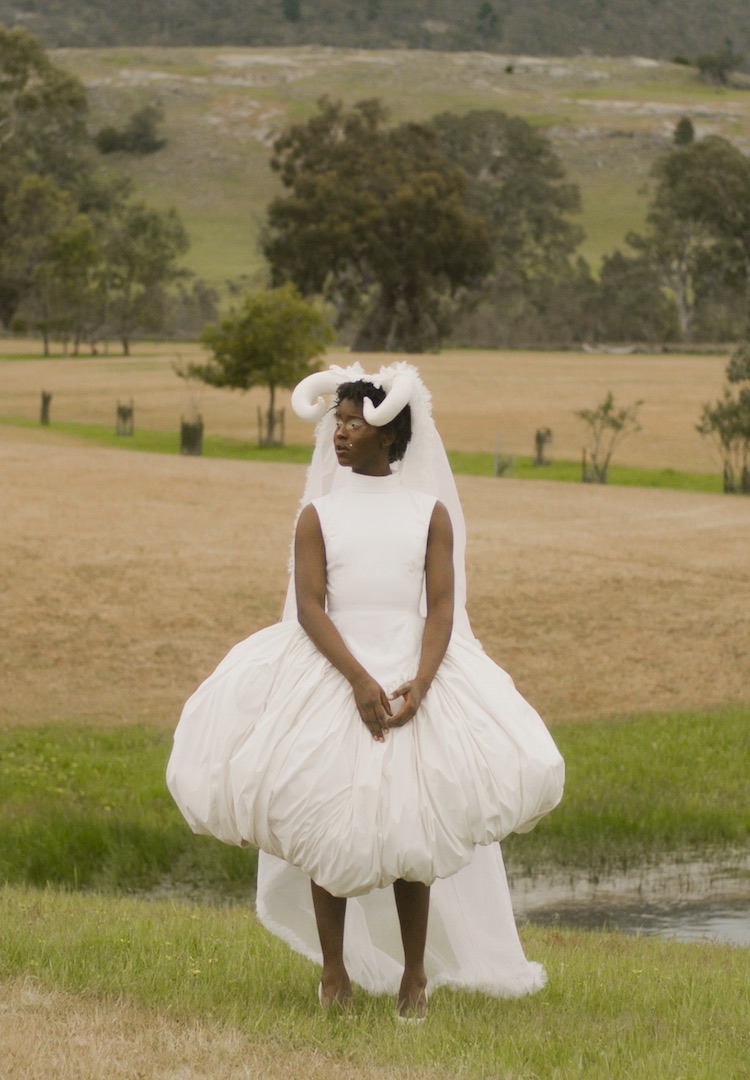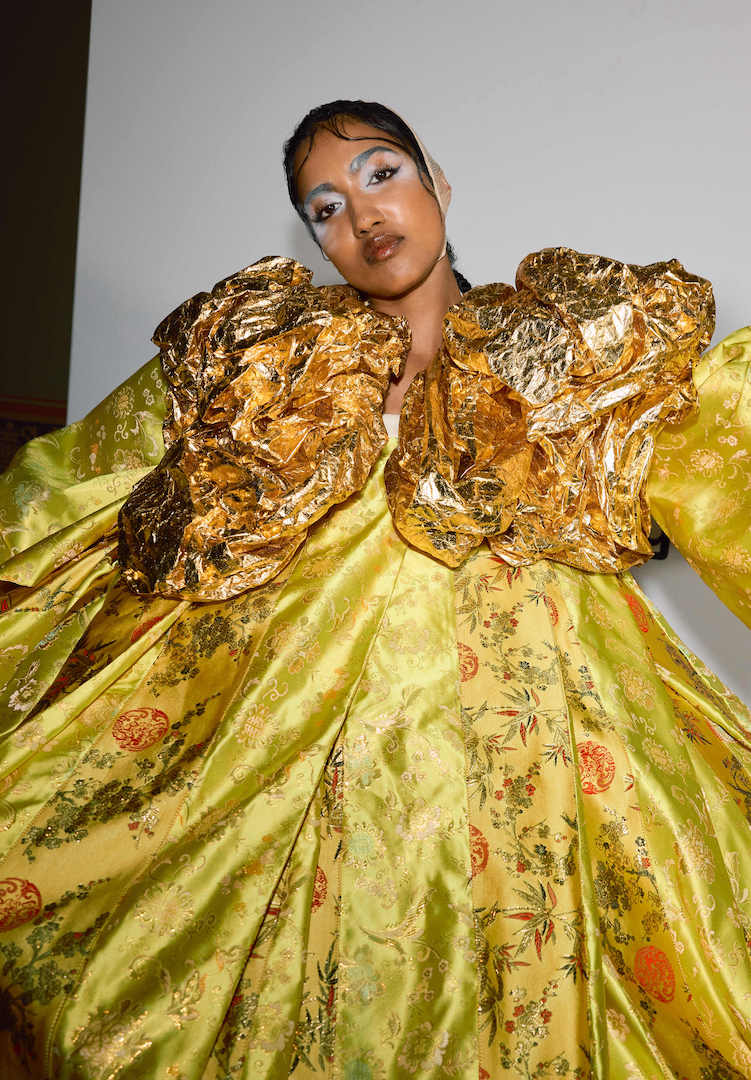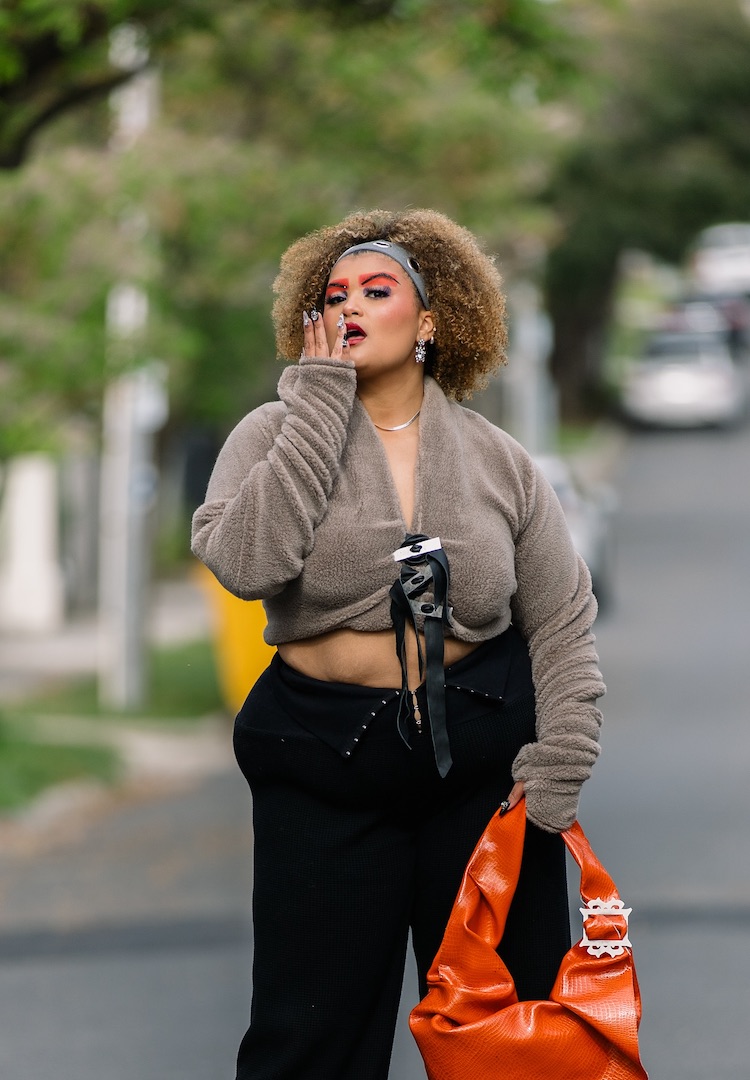
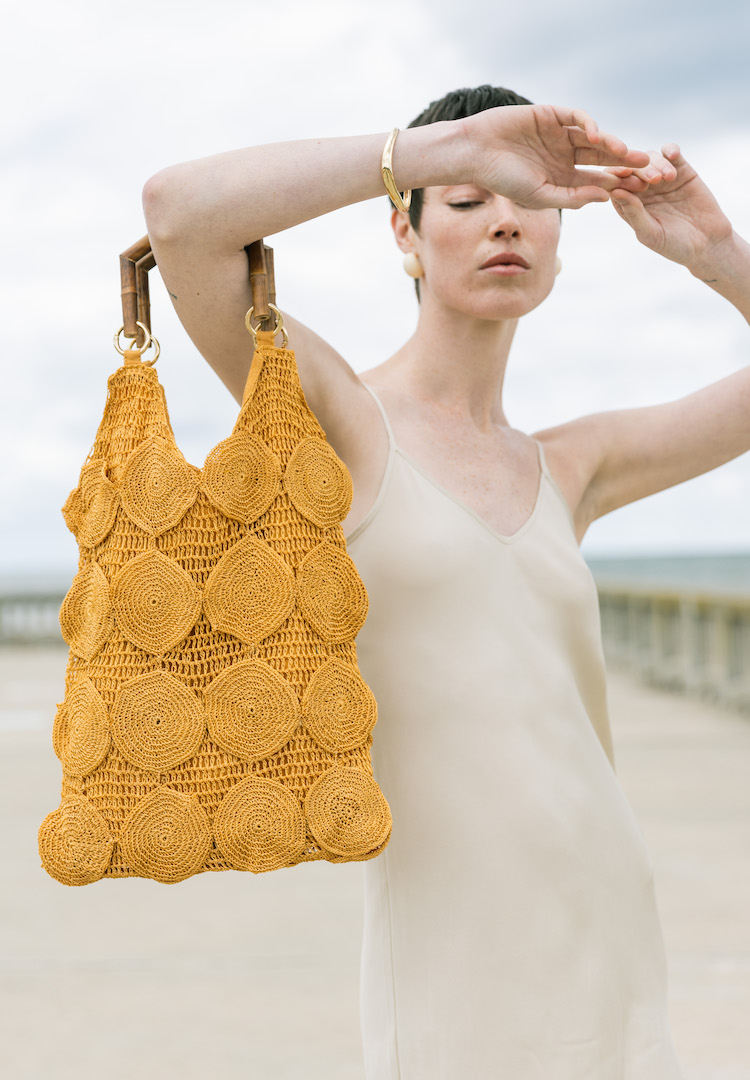


You can hear designer Rose Guiffre’s collection before you see it
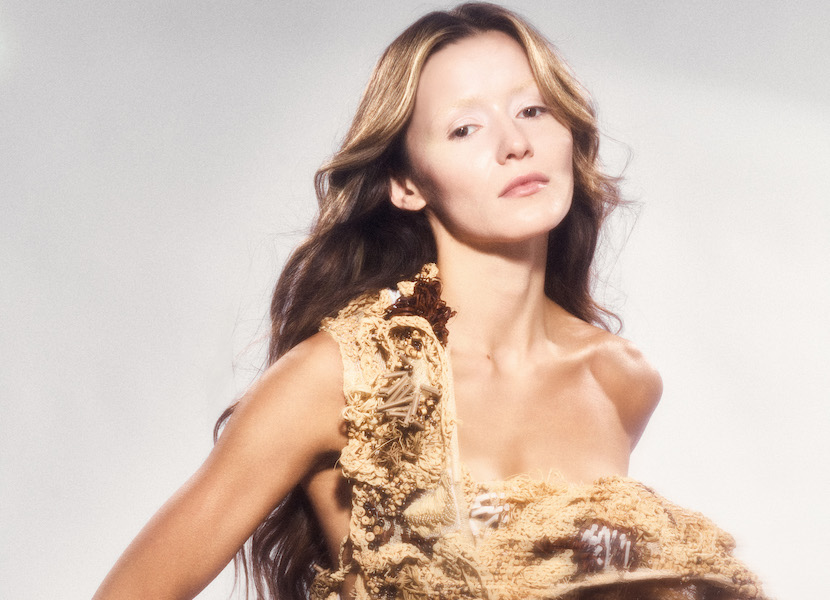
Photography by Micaela Chutrau
words by lara daly
“One of the dresses alone took over 300 hours to print and then hand-stitch, so patience became a really important part of my process.”
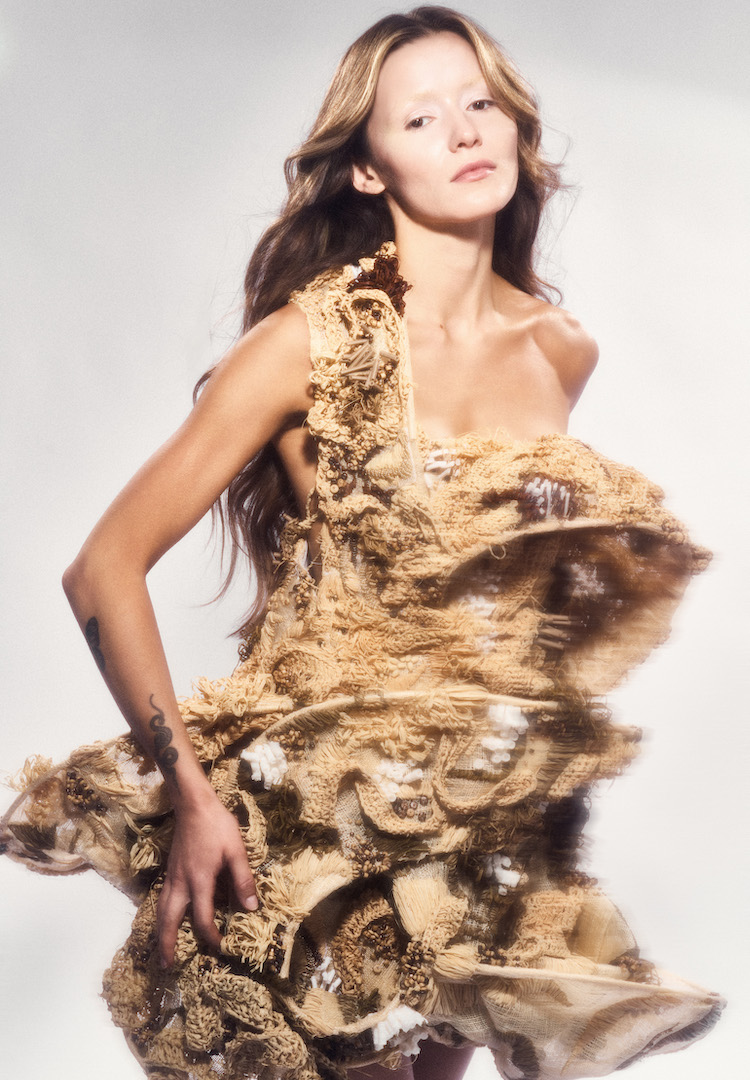
If you haven’t come across one of Rose Guiffre’s designs before, chances are you’d hear it before you see it. Wool dresses adorned with straw-like, 3D-printed PLA (a biodegradable, plant-based plastic) clatter softly as they move down the runway, their sound as considered as their form.
Typical of an emerging designer, Rose’s work is unconcerned with trends or everyday wear, instead occupying the space between creation and research. “It’s more about creating pieces that feel alive on the body and spark curiosity,” she tells Fashion Journal. “Getting people to slow down, look closely and think about their relationship with the natural world.”
For more fashion news, shoots, articles and features, head to our Fashion section.
An Honours student at the University of Technology Sydney, Rose has spent the past year immersed in the labour-intensive development of her graduate collection ahead of its showcase at PayPal Melbourne Fashion Festival next month. “As a student, you can be quite ambitious with both materials and the amount of time you invest,” she explains. “There’s a sense of stability in knowing that if something works, that’s great – but if it doesn’t, you’re allowed to try again and again, and again.”
Rose spent countless hours experimenting with materials, from raffia and wood to wool, silk, glass and 3D-printed beadwork. The result is ‘Accretion’, a textile-led collection inspired by diffusion-limited aggregation (DLA) – a scientific model that describes how particles accumulate to form natural structures. ”It felt quite cathartic that the way the collection came together actually mirrors the DLA process itself, with embroidered and 3D-printed elements gradually accumulating onto cane structures and forming the final six-looks,” she explains.
‘Accretion’ is one of 12 graduate collections set to be shown at the National Graduate Showcase on February 24 at the Royal Exhibition Building. It’s an exciting glimpse into the future of Australian fashion, and Fashion Journal is proud to be a long-time media partner of the event.
View this post on Instagram
Fashion Journal: Tell me how you first got into fashion. Did you always want to be a designer?
Rose: I’ve always been drawn to making things. I grew up in an artistic family where I was always working on some sort of project, or watching my parents make their own. When I was little, I wanted to be a ballerina and then an engineer, so I find fashion lets me express what I love about both disciplines through my own lens.
I learnt to sew from my mum and my Nonna, and in high school I fell in love with textiles as a subject, and realised I wanted to continue into the fashion and costume world. For a while, there was a bit of tension between wanting to make beautiful things and wanting to make things that actually help people. What I love about being a designer now is realising that it’s not just about making products but about building worlds and imagining futures.
View this post on Instagram
Tell me about your collection, ‘Accretion’, you’re showing at Melbourne Fashion Festival. What was the inspiration behind it?
My collection is inspired by a code called ‘diffusion-limited aggregation’ (DLA), which describes how particles moving through space naturally clump together over time to form structures like coral, frost, or snowflakes.
At its core, ‘Accretion; reimagines sustainability as an ongoing dialogue between materials rather than a fixed solution. The collection invites audiences to experience fashion as something multisensory: engaging sight, sound, and touch to expand how we perceive textiles and form.
When I started developing the collection, I wanted it to centre on the joy I find in making textiles, but to ground that in a scientific concept. I knew I would be spending a long time with each piece, so it was important for the research to keep me curious and motivated throughout the year.
I began exploring areas I knew very little about, including coding, which led me to DLA and its presence across both natural systems and artistic practices. Constantly learning new processes (and sometimes struggling to fully understand them) pushed me to think more abstractly and helped me define my niche as a designer.
View this post on Instagram
What has the design process been like?
Labour intensive but very fulfilling. Over the year I generated a lot of silhouettes that didn’t quite resonate with me, alongside textiles that I really loved, so there was a constant tension between feeling like I was on the right track and feeling very behind.
I was fortunate to be sponsored by the Australian Wool Education Trust, which allowed me to develop new methods of 3D printing with various wool fabrications to create texture and surface noise. It took an entire semester just to develop the 3D printing techniques before I could even begin constructing the garments.
I’m incredibly grateful to the team and resources at Protospace UTS, who let me take over the machines and patiently answered my endless questions. One of the dresses alone took over 300 hours to print and then hand-stitch, so patience became a really important part of my process.
View this post on Instagram
How would you describe your collection to someone who’s never seen it before?
I’d say you can probably hear it before you see it. Each garment has different acoustics through the different 3D printed textiles and how they interact with the body so I would describe my collection as very material-driven and body-focused.
A lot of the shapes and textures are inspired by natural systems such as growth patterns and I use techniques like embroidery and surface manipulation to translate those ideas into something tactile. Palette wise, it’s quite stripped back and uses a lot of whites and earthy tones to add a level of sophistication where the textiles are very playful.
What’s the most challenging part about being a student designer?
The hardest part is not letting other people’s opinions define your work. When you’re making something physical and presenting it week after week, it’s easy to fall into the mindset of designing for what you think your tutor wants to see rather than following your own instincts. It’s definitely a balancing act, because tutors often have a strong eye for what’s working, but fashion is such a personal practice that it’s really important to advocate for what feels authentic to you as a designer.
View this post on Instagram
What are you most proud of in your work so far?
I’m proud that the collection as a whole reflects my perspective on fashion, which sees it as a little bit weird and wonderful. I know how many hours each element took for me to sew and print, so being able to see it through from start to finish was very rewarding.
Who is exciting you the most in local fashion right now?
My favourite part of fashion is the experimentation stage, so seeing what my friends and cohort are creating is really exciting! I also really admire the brand Amiss and it’s designer, Vanessa Grey. I love how she combines engineering-based techniques and technology with fashion. The work feels both nostalgic, through its use of upcycled materials, and future-focused, through advanced processes and an emphasis on garment longevity. It’s such an inspiring approach to making fashion that is thoughtful, innovative, and meaningful.
What about the local fashion industry do you think needs to change?
Local designers are already very knowledgeable about sustainability and passionate about reducing waste, but I think real change also requires teamwork between government and consumers. If people become more conscious of the quantity and quality of their wardrobes, we can shift focus toward the conditions in which garments are made and hopefully invest more in local manufacturing.
View this post on Instagram
Material innovation is another key area. Working with wool this year gave me a deep appreciation for how versatile the fibre is, how important Australia is as a global wool producer, and how little awareness the public has about it. Around 98 per cent of Australian wool is exported in its raw state, so educating consumers on the value of wool could help build onshore infrastructure and create more opportunities to produce and wear locally made wool garments.
Where do you hope to be in the next five years?
Still learning, in some form or another! I’m heading to London in July for a traineeship at Hand and Lock, and I plan to completely immerse myself in that experience and see what doors it opens. One day, I’d love to be part of the Haute Couture scene and continue honing my craft.
I also really enjoyed working at Protospace UTS, and I hope to return for post-grad research to develop new 3D-printed textiles and keep exploring emerging technologies. For now, my focus is on existing in that space between creation and research. Perhaps in the future I’d like to develop my own label, but for now I want to focus on growth and craft before diving into the business side of fashion.
If you could land an internship with any one designer, who would it be?
If I had to choose just one, it would be Iris van Herpen. Her work sits at the intersection of fashion and technology in a way that’s incredibly inspiring, and has really shaped how I design. Her atelier operates almost like a research lab, with many collections developed through collaborations with engineers, architects, and artists outside the traditional fashion industry.
I think it would be amazing to work in that kind of environment – to experience design beyond a conventional studio setting and see how ideas, materials, and technology come together to create something entirely new.
How can we see more of your work?
I use Instagram to document my work. You can find various photoshoot, runway and process work imagery there. I’ll also be presenting a short film about my collection at the Melbourne Fashion Film Festival Awards screening that I made in collaboration with my sibling, Avery.
Get your tickets to the NGS Showcase at PayPal Melbourne Fashion Festival here.
Liked this? You’ll love these...