

Oversized sunglasses have always been political
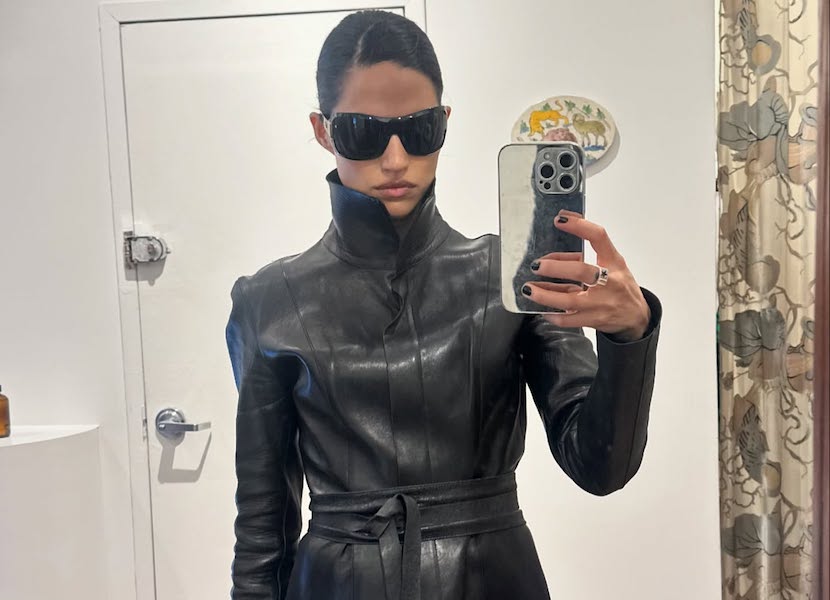
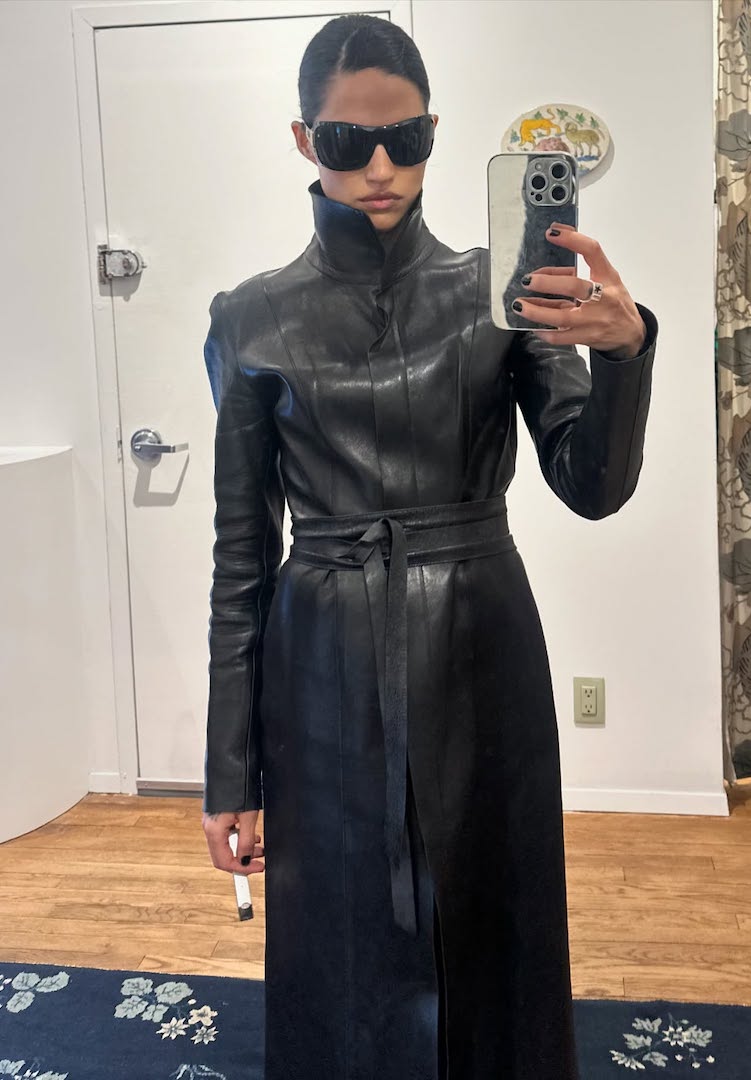
image via @gabbriette/instagram
words by kitty lloyd
An accessory, or a way to ward off surveillance?
Amid predictions from fashion writers and TikTok’s cries over the Celine CL40345I 53N being sold out, it’s safe to say that oversized sunglasses are back.
The style has ebbed and flowed through the trend cycle for decades, first popularised by Jackie Onassis in the late ’60s. Once she shed her raspberry pink Chanel-but-not-Chanel suit, you’ll struggle to find a photo of her without oversized shades perched on her face; a feature as predictable as her bouncy bob and distant smile.
For more fashion news, shoots, articles and features, head to our Fashion section.
The legend goes that it was Onassis’ confidant, the American writer Gore Vidal who recommended that such an accessory should become her signature. Vidal believed that sunglasses would help the widow regain a sense of privacy from the relentless attention and surveillance of the press.
“They are not only useful for hiding under, but also for studying people without their realising it,” he reportedly said.
Today, the oversized sunnies trend feels just as politically charged. Its return has coincided with a new era of hypersurveillance, from facial recognition in our grocery store aisles to a new category of eyewear: wearable surveillance.
View this post on Instagram
“We have diminishing access to privacy these days, even in places that used to be private,” explains Dana McKay, Associate Dean of RMIT’s School of Computing Technologies. “This is due to our own choices and the choices of others, [such as] ring doorbells capturing us as we move down the street and uploading our image, or smart glasses in changing rooms.”
Nicknamed ‘pervert glasses’, this technology was introduced by Meta in 2021, giving its wearers the ability to record video through the unassuming look of Ray-Ban Wayfarers. Since then, they’ve had a Kylie Jenner endorsement and an increasing number of dupes, with Kmart even dropping a $89 option that sold out in record time.
Smart glasses have ushered in a new culture of hyper-surveillance that echoes what Onassis experienced. Our access to privacy in public spaces is being pervasively reshaped, and for women, the consequences are serious.
View this post on Instagram
“These glasses are being used to harass and intimidate women regularly,” shares McKay. “Deepfake sexual videos are almost exclusively made of women. Women are also overrepresented in statistics for suicide due to online shaming, and of course, these videos could reveal the presence or location of a woman who is trying to keep her location secret due to domestic violence too.”
So can a style like the Loewe Wave Masks offer an effective response to this reality? Not exactly.
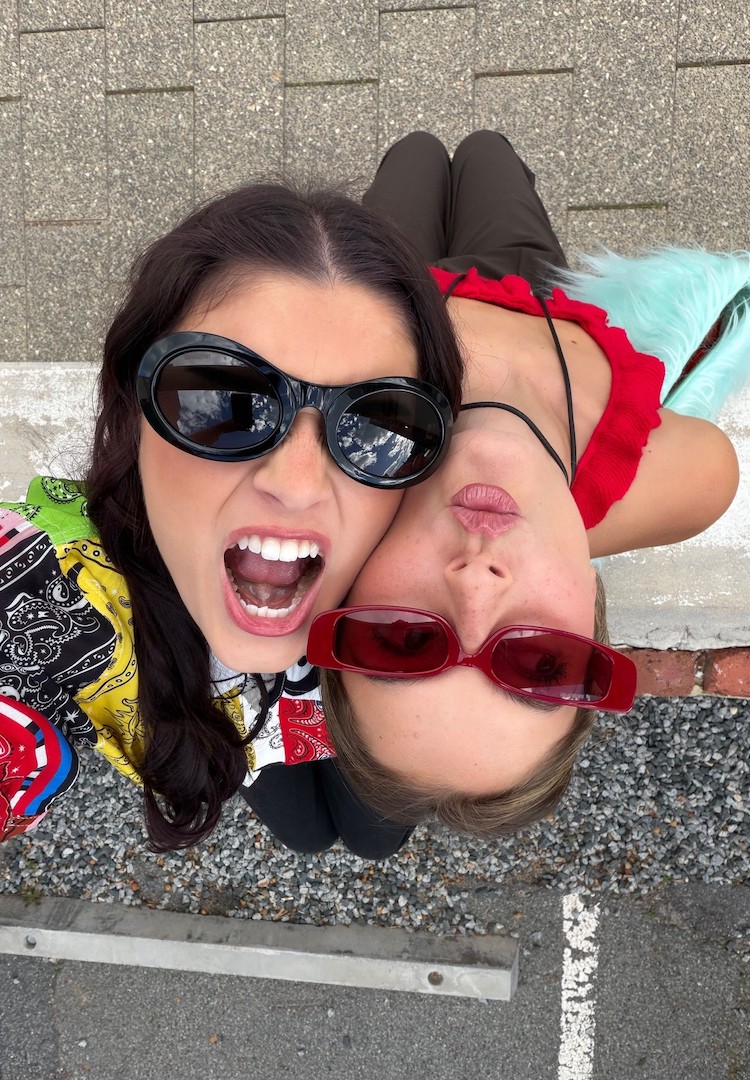
Like most eyewear, oversized styles sit at the intersection of form and function. Their extravagance operates like camouflage: the bigger the frame, the more it obscures the face beneath it. The camouflage is, however, inherently performative – the exaggerated scale can often make the wearer even more conspicuous.
There is undeniably something empowering about this tension. A gargantuan pair of sunglasses in public often feels like a spectacle of resistance: the more deliberately you hide, the more attention you can command.
That’s likely why the style endures. They don’t just offer some fantasy of anonymity but the fantasy of control. While they might not make us invisible, they offer us a way to actually negotiate our public visibility.
View this post on Instagram
The surveillance and hypervisibility of the modern age renders the tools that once helped women navigate daily life insufficient. For decades, oversized sunglasses offered women a way to retreat from the gaze without retreating from public life. For women today, the same gesture feels increasingly symbolic.
“There are clothes that limit facial recognition and AI mapping,” explains McKay. “But the best thing we can do is ask people to take [surveillance glasses] off if we feel safe to do so, and ask for policies in our work and social spaces about their use.”
Of course, there are important, socially beneficial uses of these glasses – such as text-to-voice for people with vision impairments, or text processing difficulties. However, these benefits still raise questions about privacy and data collection, particularly when the technology is produced by companies whose products rely on collecting user data.
Ultimately, privacy is no longer just a matter of obscuring your face or acting with discretion – and I’d argue that, for women, it’s never been that simple.
While oversized sunnies may not be able to hide us like they once did, they endure for what they represent: the desire to decide how much of ourselves the world gets to see. As Vidal knew, they have always been about so much more than hiding.
For more on oversized glasses, try this.
Liked this? You’ll love these...