

Meet Sundays Vintage, the Melbourne label turning towels and tablecloths into ready-to-wear fashion
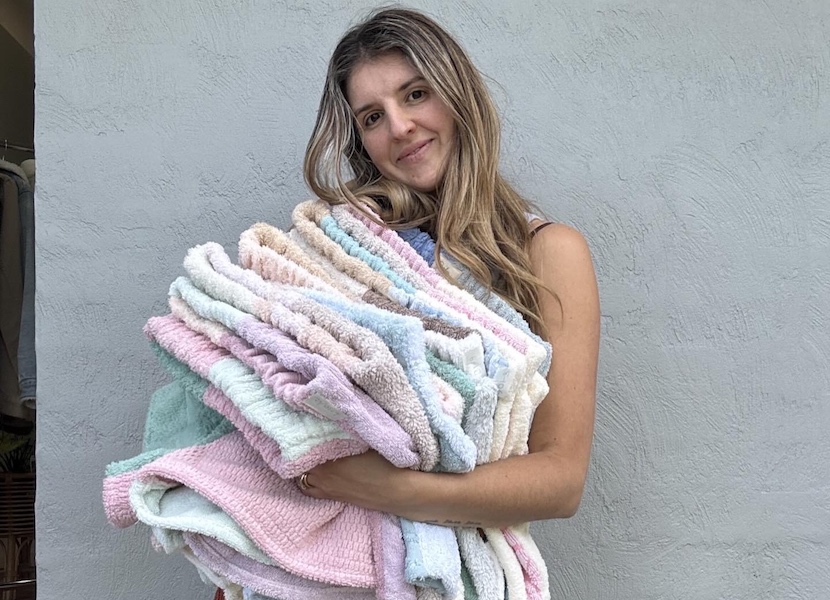
IMAGE VIA @interwoven.docx/INSTAGRAM
AS TOLD TO DAISY HENRY
“Choosing to work with reclaimed materials was a really intentional decision.”
On average, Australian shoppers buy 56 items of clothing each year, making us the highest consumers of textiles per person in the world. Of that, around 300,000 tonnes of clothing is sent to landfill or exported from Australia. The call is very much coming from inside the house.
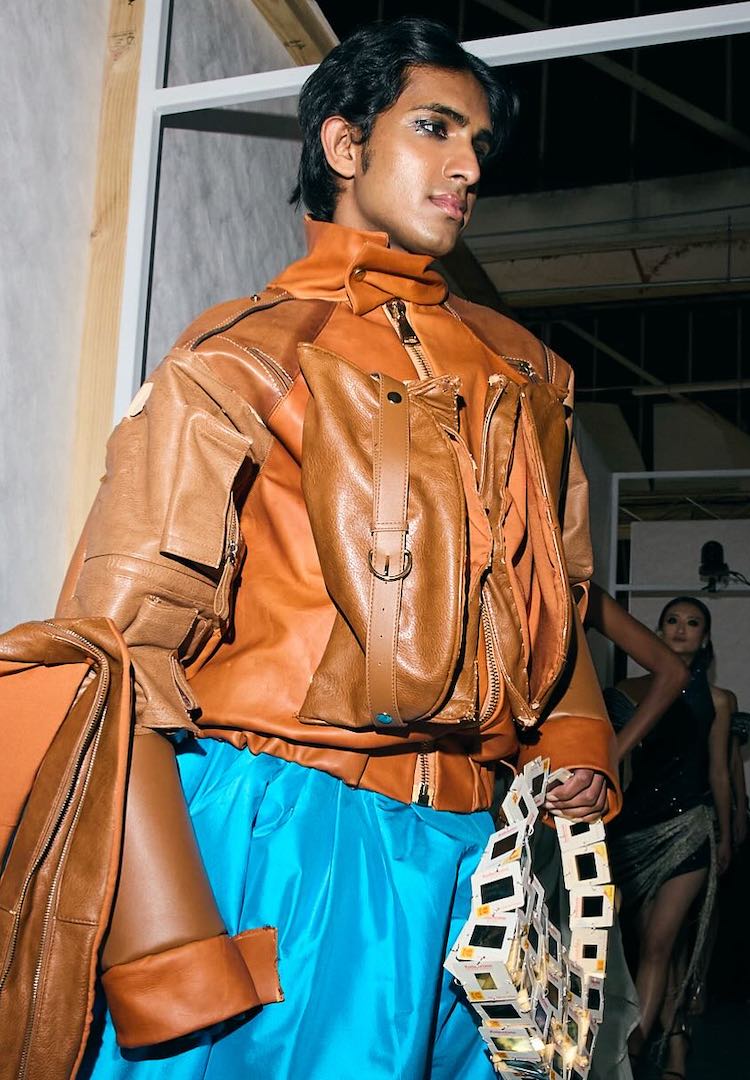
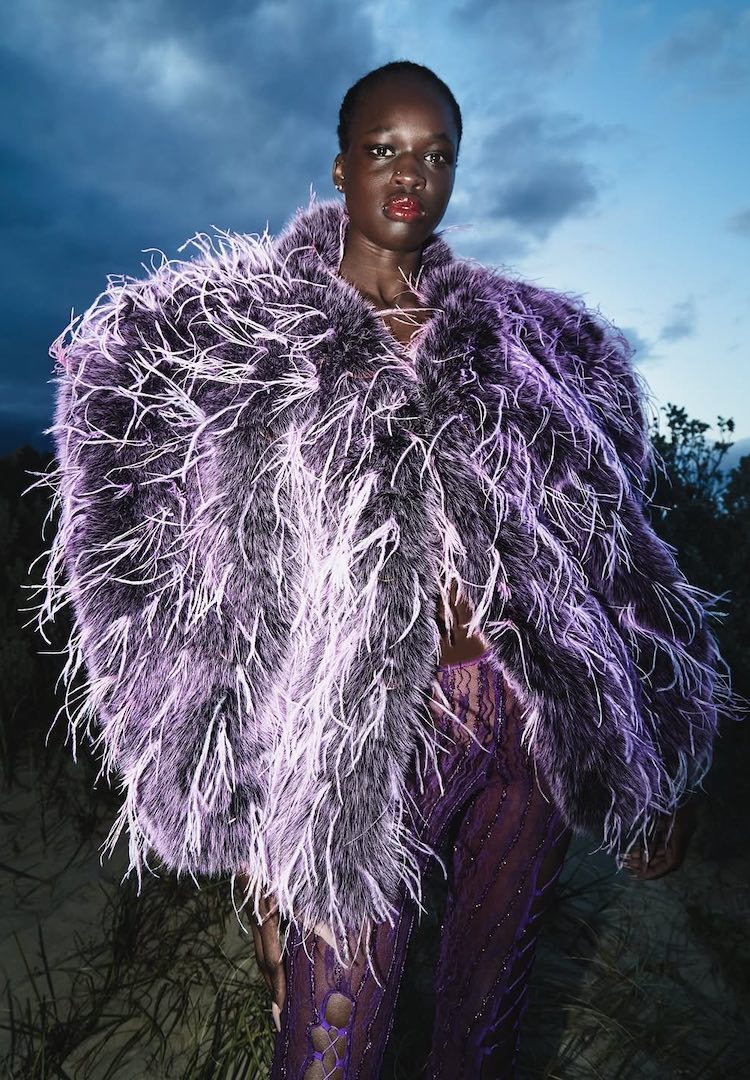
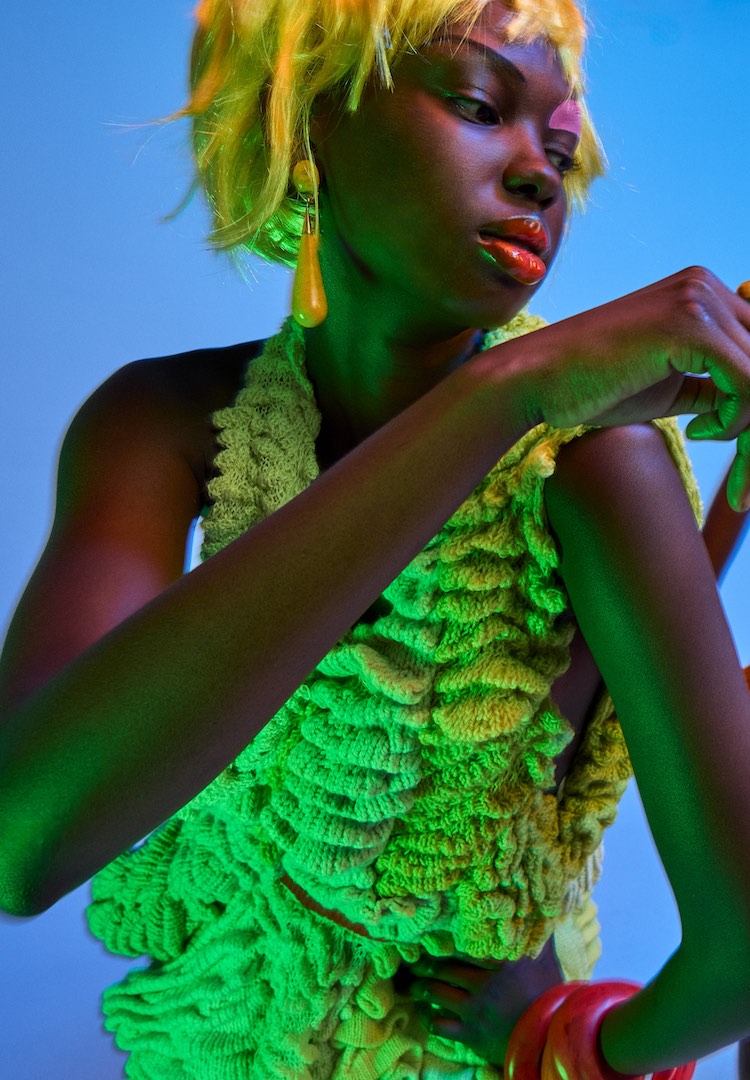
Yet amid a sea of rampant overconsumption, there are local designers combating the rising tide of textile waste. Interwoven, an upcoming documentary, was made to spotlight these efforts, tracing the work of makers and small labels committed to turning discarded textiles into wearable art. ‘Stitch‘ is its in-real-life, runway counterpart.
For more on slow fashion, head to our Pre-Loved section.
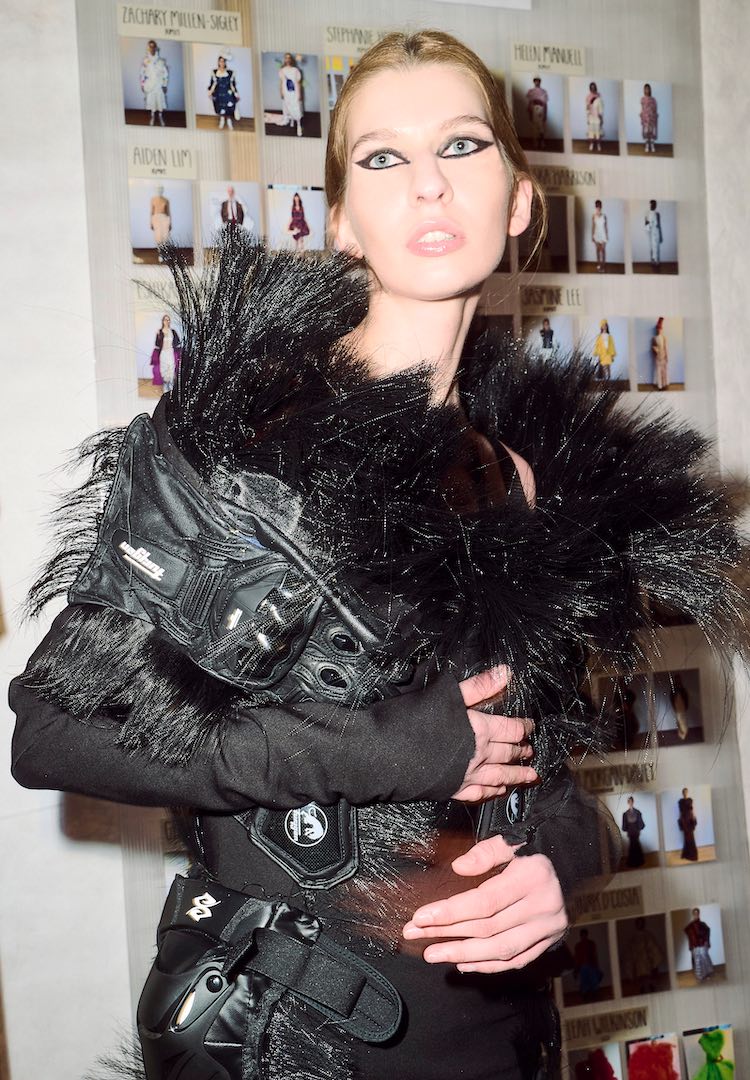
Showing as part of PayPal Melbourne Fashion Festival on Sunday, February 22, Stitch showcased the work of designers who work exclusively with reclaimed materials.
“Independent runways like Stitch are so important for emerging designers because they create space for work that doesn’t necessarily fit within traditional fashion systems,” explains Elisa Pigatto, the founder behind upcycled label Sundays Vintage.
“For a lot of smaller or slow fashion brands, especially those working with reclaimed materials, the way we create doesn’t always align with expectations around large-scale production or seasonal collections.”
Showcasing her work alongside sustainable local labels like Bowe Fashion, Kylah Owo! and Theurge, Elisa presented a collection of work made from reclaimed textiles. There was her curtain dress and matching bag, pieces from her ‘Retowel‘ collection made from discarded towels, including a patchwork bag and shorts, and plenty more.
Though there are inevitably challenges in working with reclaimed fabrics (“materials are never consistent”), Elisa is committed to the cause. “So much already exists,” she says. “Working with offcuts and pre-existing materials is about keeping those textiles in rotation for as long as possible… rather than contributing to the cycle of overproduction.”
Below, we speak to Elisa about her process, how she launched Sundays Vintage and the value of programs like Interwoven and Stitch for emerging designers.
View this post on Instagram
Fashion Journal: Hi Elisa! Tell me a little about yourself. What’s your fashion background and where are you based?
Elisa: I’m the founder of Sundays Vintage, based in Melbourne. I studied Fashion Design at RMIT a little over 10 years ago, before spending some time travelling and living overseas. After returning home, I found my way back into the fashion industry, continuing to learn and deepen my involvement in the space.
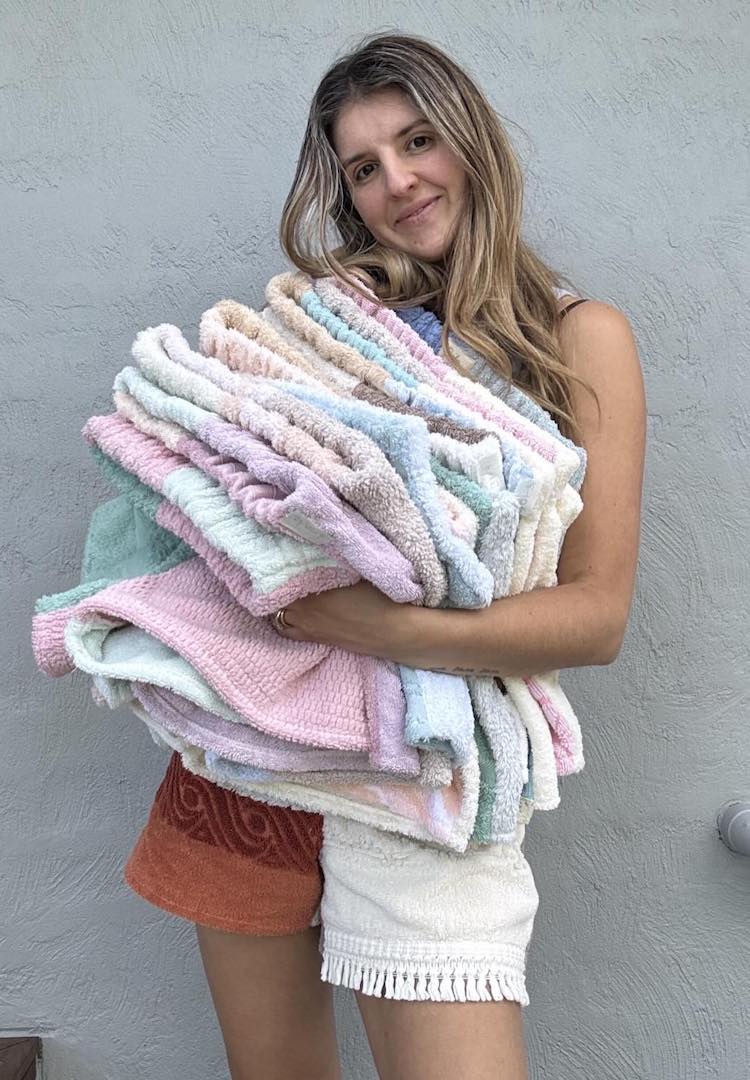
I’ve always been someone who’s gravitated towards creativity through mindfulness. From thrifting and sewing, to slow days at the beach or time spent with family, that appreciation for longevity and sentimentality naturally found its way into my approach to fashion. Over time, that evolved into working more hands-on with textiles, particularly reclaimed towels and vintage wool blankets, which I now upcycle into one-of-a-kind garments and accessories.
Can you take me back a little and tell me how Sundays Vintage first got started? Where were you in your life?
Sundays Vintage began in 2020 during the pandemic, initially as a lockdown passion project while Melbourne was in and out of restrictions. Around that time, my partner and I had just moved into my Nonna’s home after she passed away, and going through her wardrobe became quite a pivotal moment for me.
She had held onto these incredible pieces from the ’70s, ’80s and ’90s – garments made from beautiful, quality textiles that you don’t typically see today. I kept some of my favourite pieces but began selling others online rather than letting them go to waste.
It was through that process that something really shifted in my thinking about clothing and longevity, and ultimately, how Sundays Vintage first began.
View this post on Instagram
How has it evolved since launching in 2020?
As I spent more time sourcing and reselling vintage, I found myself drawn to sewing again. I started noticing all of these amazing materials around me, like blankets, curtains and tablecloths that still had so much life left in them. What began as reworking a mix of different reclaimed textiles evolved into working with towelling, or Retowel as I now call it, after making myself a pair of shorts that everyone kept asking about.
From there, Sundays Vintage shifted from simply curating existing garments into creating one-of-a-kind pieces and turning rescued textiles into wearable, everyday clothing, designed to be worn, loved and kept in rotation rather than discarded. Towards the end of last year, I knew I needed to jump in the deep end and give Sundays my all, to see if it could become something more, and I’m so glad that I did. I can’t wait to continue growing it from here.
Can you tell me about how you source your fabrics? Why did you decide to go for reclaimed materials and offcuts?
Sourcing is a seminal part of my process. Most of my materials are found through op shops, local markets, Facebook Marketplace or second-hand textile clear-outs. I’m always on the lookout for vintage towels, wool blankets, lace tablecloths or any fabric that still has strength and the potential for longevity.
Choosing to work with reclaimed materials was a really intentional decision. Through reselling vintage and then beginning to sew again, I became much more aware of how much time, labour and resources go into creating a garment in the first place. So much already exists, and often it’s higher quality than what’s being produced now. Working with offcuts and pre-existing materials is about keeping those textiles in rotation for as long as possible and reimagining them into something wearable, rather than contributing to the cycle of overproduction.
View this post on Instagram
What’s your design process – what kind of pieces do you make?
My design process is quite intuitive and usually begins with the textile itself. When you’re working with reclaimed materials, you can’t approach things in the same way you would with a roll of new fabric. Often, I’ll find an amazing doona cover at an op shop or a pair of vintage curtains, and my brain immediately imagines how that could be reimagined into something wearable, like a matching set or a pair of beach pants.
I aim to really let the textiles do the talking. The colours, textures or prints tend to guide what the final piece becomes. I’m always thinking about what I would genuinely want to wear myself – fun, nostalgic pieces that feel easy and wearable for everyday life.
Are there any challenges to working with reclaimed materials?
Definitely. One of the biggest challenges is that reclaimed materials are never consistent. Every towel, blanket or textile is different in terms of size, wear, thickness or stretch. Unlike working with new fabric, where you can simply order more if you run out, I’m limited to what already exists. That means patterns often need to be adapted to suit the material I have, and I have to design flexibly around imperfections, previous wear or unique quirks within the fabric.
It also means that most pieces end up being one of one, which I think is incredibly special, but it does make scaling and production more complex.
View this post on Instagram
How would you describe the feel and aesthetic of Sundays Vintage to someone who has never seen it before?
I’d describe Sundays Vintage as nostalgic, romantic and coastal, with a subtle ’70s influence running throughout. The pieces are relaxed and wearable, the kind of clothing you’d throw on for a beach day, a morning market or slow time at home, with silhouettes that feel easy and lived-in.
What pieces did you debut on the Stitch runway? What went into preparing for this?
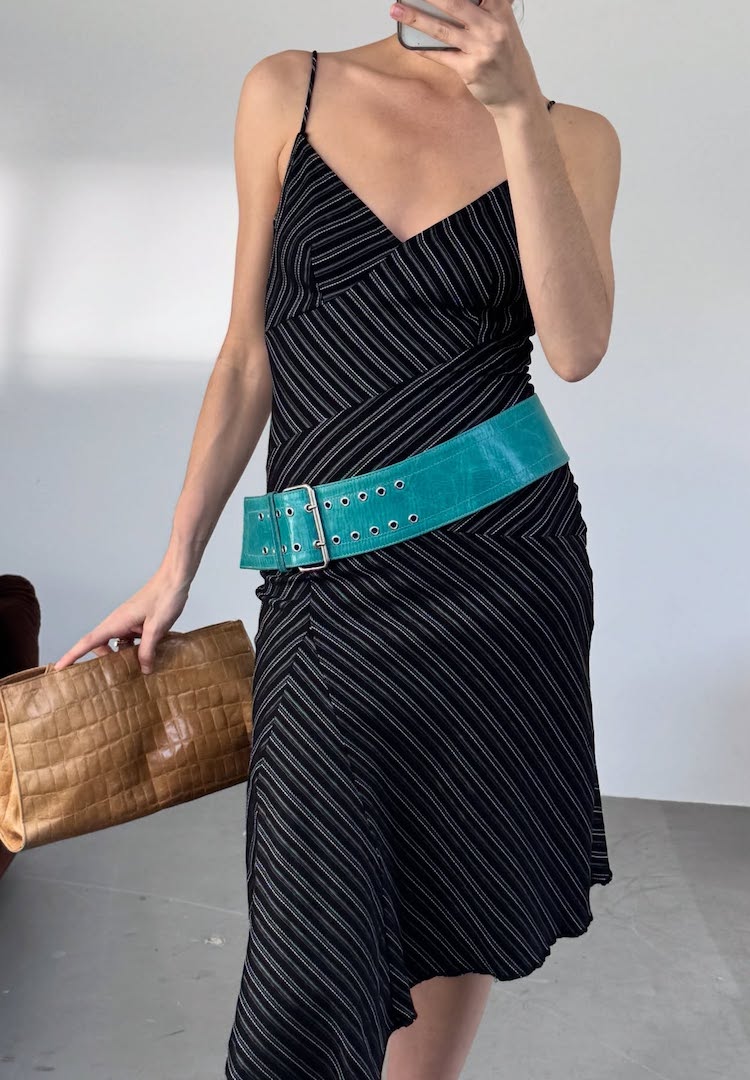
For the runway, I showcased a mix of ‘Retowel’ pieces alongside other designs made from reclaimed textiles. This included my curtain dress with a matching curtain croissant bag, alongside a coordinating curtain top worn with my lace ‘Sunnie’ pants and a matching lace croissant bag.
I’ll also be revealing an unreleased ‘Retowel’ playsuit that is launching very soon! As well as my classic Retowel shorts paired with a patchwork towel bag made from towelling offcuts and a reworked men’s shirt. To lead into the cooler months, I’ve also created a wool blanket set featuring a jacket, skirt and matching hat, as a preview of the winter-focused pieces I’ll be continuing to explore as the weather begins to shift.
View this post on Instagram
Why is it important to have these kinds of independent runways for emerging and independent designers?
Independent runways like Stitch are so important for emerging designers because they create space for work that doesn’t necessarily fit within traditional fashion systems.
For a lot of smaller or slow fashion brands, especially those working with reclaimed materials, the way we create doesn’t always align with expectations around large-scale production or seasonal collections. Platforms like this allow us to share our work in a way that still feels true to our process, while also being part of a bigger conversation around sustainability and alternative ways of making.
They also allow independent designers to connect with new audiences and other creatives, and feel supported within an industry that can otherwise feel quite isolating when you’re building something on your own, which is very much my reality running Sundays Vintage as a one-woman operation.
How do you see Sundays Vintage developing over the next five years?
Over the next five years, I’d love to continue growing Sundays Vintage in a way that still feels aligned with my values around slow, circular design. That looks like expanding further into Retowel and reclaimed textiles, refining some of my core silhouettes, and continuing to find ways to use materials as fully as possible, whether that’s through garments, accessories or working more intentionally with offcuts.
Longer term, I’d love to one day have a small Sundays Vintage boutique or studio space where people can come in not only to shop, but to attend up-cycling workshops or classes, almost like a community hub with a bit of a café feel.
View this post on Instagram
Who are your dream collaborators?
I’d love to collaborate with an Australian homewares or interiors brand, someone like Hommey, working with offcuts, sampling yardage or excess textiles from their production process and reimagining those materials into wearable pieces. I think there’s so much potential to translate interior textiles into clothing in a way that gives them a second life beyond the home.
I’m also really drawn to working with others in the upcycling or textile recovery space locally, whether that’s designers, makers or recycling organisations, to explore more collaborative ways of keeping existing materials in rotation.
Who and what is in your wardrobe right now?
90 per cent of my wardrobe is thrifted vintage or second-hand pieces I’ve found in op shops, at markets or on platforms like Depop. I love the hunt of finding something really special that no one else is going to have.
When I do buy new, I try to support other small Australian brands or up-cyclers whose values align with mine around sustainability and thoughtful design.
Find more from Sundays Vintage here.
Liked this? You’ll love these...