



Can anxiety really not hit a moving target? Unpacking TikTok’s latest mental health trend

photography by Kaitlyn Bosnjak
WORDS BY GENEVIEVE PHELAN
“Hyper-productivity is a very short-lived coping mechanism.”
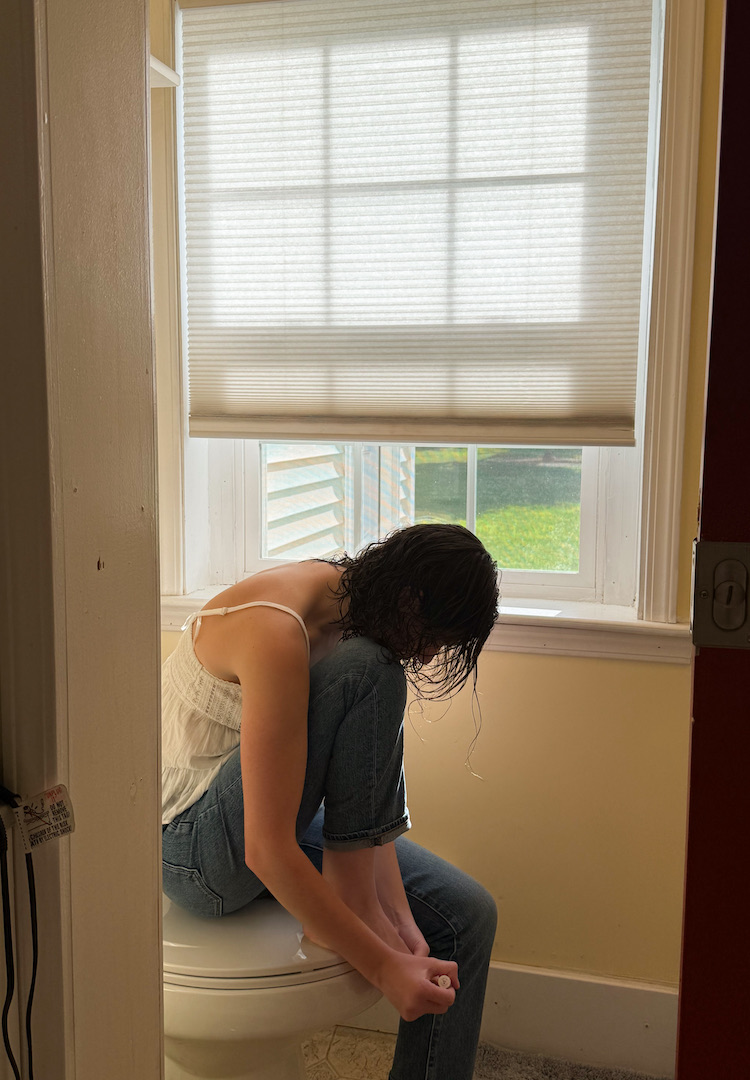
Lately, I’ve been struggling with anxiety more than meets the eye. Intrusive thoughts, catastrophising, ruminating, and a general feeling of unease having been playing on my mind. As of recently, my main way of coping with it is to stay busy. I’ve tried keeping my calendar free and my days open, but I’m just not wired to sit still.
The viral TikTok sentiment that anxiety and depression ‘can’t hit a moving target’ struck me at first as an ostensibly funny trend. It typically features someone dancing, exercising or being visibly ‘busy’ running errands. But then a harsh reality dawned on me: the need to ‘outrun’ our feelings is a hugely relatable concept for people all over the world.
For more health and wellness advice, head on over to our Health section.
When I started pondering this piece, I was in the car and ‘Denial Is A River’ by Doechii came on. In the song, she says “I’m movin’ so fast, no time to process”, echoing the idea that if we are ever-evolving, constantly moving and perpetually hustling, then we’re too busy to actually deal with our thoughts and feelings.
@usercazzLiving in London in your 20’s is not for the weak lol♬ original sound – Burke
“An object in motion will continue in motion”
The Tiktok phenomenon of being a ‘moving target’ to distract yourself from internal battles is not Gen-Z-specific. I’m reading Joan Didion’s posthumous Letters to John right now, and in the compilation of letters transcribed from appointments with her psychiatrist over the years, she writes: “Working was what I did instead of engaging. Working, as you once pointed out, was the way I had found to not be there emotionally.”
I can relate to work being the greatest distractor, something to fill the constant radio between your ears with productivity. Writing used to be my modality of processing life and now that I’ve fallen out of the habit, I’ve noticed ideas stockpiling more than usual.
In Didion’s essay, Why I Write, she echoes a similar sentiment: “I write entirely to find out what I’m thinking, what I’m looking at, what I see and what it means. What I want and what I fear.”
When I asked some fellow industry peers for their take on writing as a method to manage anxiety, copywriter and director of Bossy, Alyce Greer, a self-described ‘expert spiraller’, gave a good case. “We spend so much time in our head, and often a problem could be solved in five minutes if we grab some paper and a pen, especially before bed,” she tells me.
Recently, I’ve been trying to journal as a new form of ‘writing’ every morning. Not in the long-winded passage sense, but in a brain dump of the things I’m worried about, and then a dot-pointed list of ultra-specific things I’m grateful for. It could be the way my puppy is nudging his head into my lap, a ‘good morning darl’ text from mum, the foam on my coffee or the jasmine trellis finally blooming.
The issue with positioning yourself as a moving target is the principle of inertia; the idea that an object in motion will continue in motion. It’s maintaining the status quo, and by refusing to change a habit or open yourself up to new ideas, there’s no room for growth.
If you don’t ever slow down, you’ll inevitably hit burnout. Your body, whether it’s through sickness or emotional overwhelm, will eventually force you to stop. And when you do, everything you’ve been trying to outrun will catch up with you. So, what’s a girl to do?
Resisting the pull to be ‘busy’
I spoke to psychologist Sophie O’Dwyer to distil some of these bigger ideas and share how we can better process our feelings rather than try to escape them. I liked the metaphor she used, that avoiding our emotional experience and cues from our bodies can be “a bit like a beach ball getting pushed under water.” They’ll keep trying to resurface through intrusive thoughts or physical manifestations, until we finally confront them.
Sophie explains that for those who’ve been suppressing their feelings for a long time, confronting them might require professional support. But for immediate habit-changing, she advocates for “micro-pauses and moving slower in our daily movements.”
Sometimes, all it takes to pull me out of the doldrums of dread is using a technique my therapist taught me: “I am safe, I am here, I am now.” By identifying a few things I can touch, hear, taste, smell and see, and saying them out loud, I can drag myself back into this current state.
In a session the other week, she compared my anxiety to something tangible that I’m actively scared of — my example was the eyes of a great white shark. She told me to imagine myself submerged in a shark cage, deep under dark ominous waters and picture creatures circling me, their beady eyes staring. My breath became halted, my chest tight.
The exercise was to show how powerful our brains are, that an ‘imagined’ fear, if we give it enough thought and detail and drama, can stimulate the exact same bodily responses and distress as if it were real life, happening right now. Anxiety can function in the same way.
Real steps to honouring rest time
So, how do we stop fuelling these silly thoughts? Sophie suggests returning to our bodies and trying to extract the thought. “When you notice thoughts spiralling, try to shift from being in the spiral to watching the spiral.”
By using language like ‘I’m having the thought that this might happen’, you can slowly start to distinguish between thoughts and facts. “Writing thoughts down without trying to change them can help us practice this skill of gaining distance from thoughts,” she adds.
However, Sophie emphasises that there are strategies for combatting restlessness in a ‘still’ period, as well. There’s physical rest, which might look like stretching, breathwork or taking a nap, as well as sensory rest, like reducing bright lights, taking time away from devices or bringing out your noise-cancelling headphones.
Cognitive rest, on the other hand, might mean saying ‘no’ more often or delegating decision-making, while emotional rest can include journalling, meditation and self-compassion. Whether it’s implementing even a just few techniques into your routine, managing anxiety is about reconfiguring your small, day-to-day habits as well.
Though it’s a work in progress, I’m living proof that the badge of ‘busyness’ means nothing in the grand scheme of things and hyper-productivity is a very short-lived coping mechanism. Getting thoughts out of one’s head, instead of trying to outpace them, is officially the cleverest self-soothing tactic of them all.
For more on managing anxiety, try this.
Liked this? You’ll love these...