

“My hips are tight because I have daddy issues”
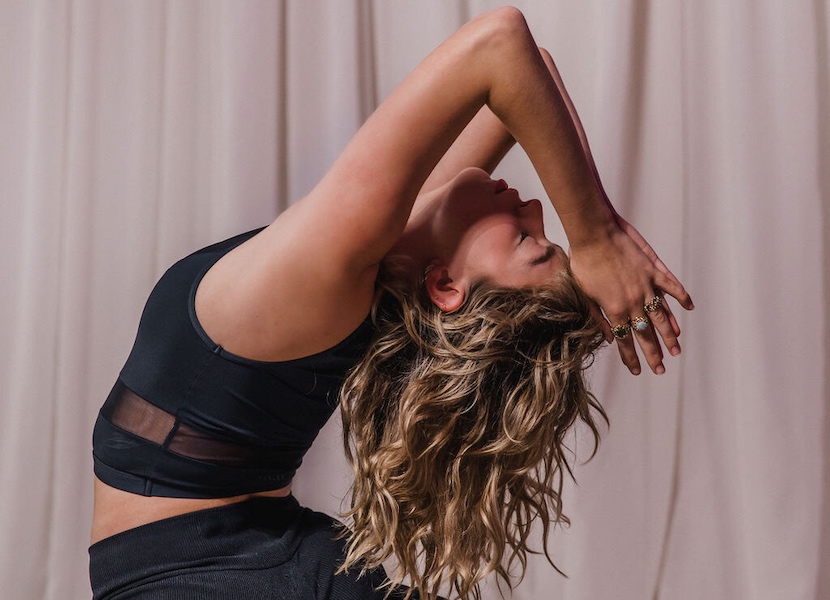
photography by Britt James
words by Lily Beamish
“If the engine stops running smoothly, the machine won’t function as well.”
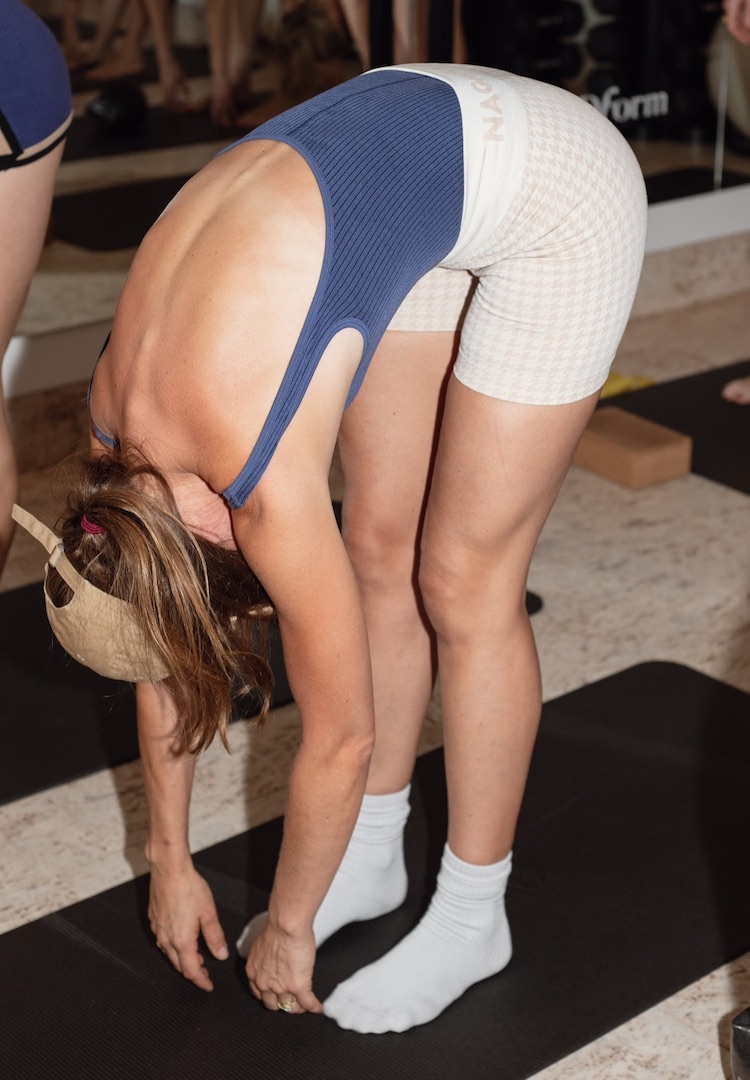
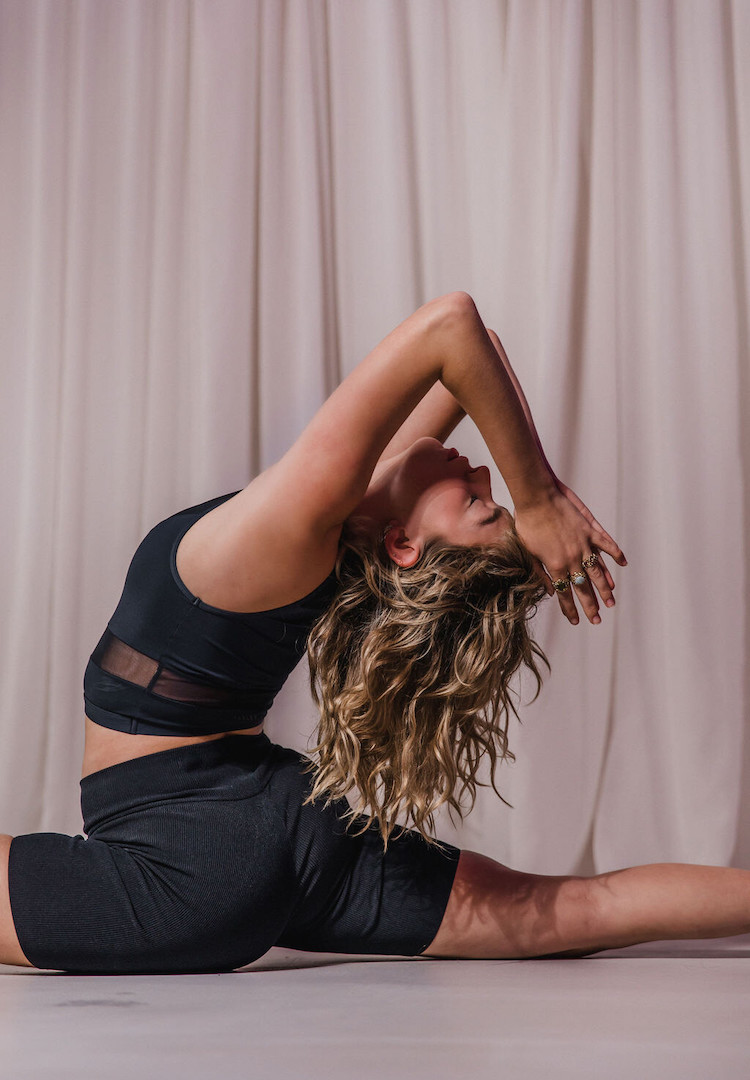
It’s 2015 and I’m cramped into a small, dimly lit yoga studio. I’m 16 and dressed head-to-toe in tight, black Lululemon. The teacher, a five-foot-two ex-dancer, guides us into pigeon pose: one leg extended behind me, the other folded at a right angle in front, aiming for that deep, hip-flexor stretch.
“This pose may bring up intense emotions, just sit with them,” she coos. “The hips hold our stresses… Mine are tight because I have daddy issues.”
For more health and wellness advice, head on over to our Health section.
Anyone who’s taken a yoga class has probably encountered some version of this narrative – the idea that the body holds our daily stresses, tucking them into the crevices of our muscles and storing them over time.
From a yogic standpoint, this checks out. The word ‘yoga’ comes from the Sanskrit ‘yuj’, meaning to yoke, join or unite. Broadly, it’s understood as the union of mind, body and spirit – a sentiment that has since filtered into the wider wellness world.
I live comfortably within this world, stretching before bed, going to therapy twice a week, attending weekly Vinyasa flows and regularly taking my vitamins. And yet, earlier this month, in that same pigeon pose, I was almost brought to tears.
If I’m ticking off all my wellness boxes and ‘doing the work’, then I couldn’t figure out why I had such a strong emotional reaction? What about the pose brought up so much underlying emotion in me?
As someone who believes they can will their way to happiness and mental clarity, my first instinct was to rationalise the rising discomfort as purely physical. “I’m just tight,” I told myself, “this will fade if I stretch more, sit less and take regular walking breaks.” But my mind kept returning to the idea that maybe it ran deeper than muscle.
The pelvic floor’s relationship with emotion
To unpack this, I spoke with Dr Lara Stoll, an osteopath, yoga teacher and founder of Assemble Osteopathy in St Kilda. When I asked whether holding emotions in the body was a ‘woo-woo’ cliché, she laughed.
“The pelvic floor is connected to both the parasympathetic and sympathetic nervous systems,” Dr Lara explains. “The body doesn’t know the difference between being chased by a tiger and your daily stresses. When the sympathetic system goes into fight-or-flight, the pelvic floor contracts, which can lead to pain in the pelvis, hips, or lower back.”
“If the body is the machine, then the mind is the engine,” she adds. “If the engine stops running smoothly, the machine won’t function as well.”
Dr Lara sees this connection unfold in real time in her practice. “Many people come in with hip or back pain, but as treatment progresses, it often becomes clear their pain is tied to stress or emotional strain. You can’t treat the body without acknowledging the rest of the person.”
“Most [people] already know the right stretches, they’re already doing them. Often, what they really need is breathwork to tap into the parasympathetic nervous system and return to a state of rest. They come in expecting rehab exercises and leave with mindfulness techniques and a belly breath.”
I’ve been there. We often treat the body as a secondary limb; something that absorbs the fallout of our emotions but isn’t allowed to have an emotional life of its own.
“The mind may rationalise but the body remembers”
Earlier this year, after a traumatic abortion, I signed up for what I thought would be a physical yoga retreat, only to realise on arrival that it was actually focused on meditation.
I was furious. I wanted to work my body relentlessly – to twist, sweat and strain my way out of the vulnerability of grief. Instead, I was forced to sit still and experience a different kind of reckoning: a visceral, unexpected release that rose from somewhere deeper than muscle.
Our tendency to cauterise the body’s emotional intelligence has long roots in misogyny, capitalism and in the cultural push toward emotional intellectualisation. More broadly, it reflects a growing divide between what we feel and what we permit ourselves to acknowledge. Intellectualising is useful, yes, but in cutting ourselves off from the body, we end up muting the mind as well.
When I speak with Georgia Hunter, a yoga teacher who specialises in emotional and energetic release, she puts it simply: “Emotion is energy in motion. If you’re not fully expressing your emotions, they get suppressed, pushed down and held in the body, and that can turn into a blockage.”
Her advice is disarmingly straightforward. “A good start is to just sit in meditation and ask yourself: where am I tense? And if yoga isn’t your thing, dance is a beautiful way to move energy. It exists in every culture for a reason. Dance and breathwork.”
This interplay between breath and body points to a deeper need to listen to what our physical selves are trying to communicate. Across osteopathy, somatic psychology and the messy evidence of my own body, a clear message emerges: physical sensation is not an afterthought, it is often the first displays of emotion.
Yes, the mind may rationalise but the body remembers. The next time I arrive in a stretch and feel the familiar tug of discomfort, maybe I won’t rush to fix it. Maybe I’ll just be there with it.
For more on the benefits of yoga, try this.
Liked this? You’ll love these...