

I went in for a facial and came out with an Ozempic prescription
words by lily beamish
“I could want the fantasy and still mourn what it meant to pursue it.”
Content warning: This article contains discussions that may be triggering for those who have experienced disordered eating.
I’ve really struggled to write this story. Not because I don’t think there’s merit in telling it, but because I know how sensitive conversations about weight and what is a healthy weight, and diet and what is a healthy diet, can be.
To preface: I am a completely average-sized person but like many women, my experience in my body is anything but average.
For more perspectives on wellness, head on over to our Health section.
Nonetheless, I have chosen to talk about my experience of being prescribed Ozempic. Not in a self-congratulatory or anti-body-acceptance way, but more to highlight the complex experience of being prescribed a GLP-1 after you have craved thinness for so long.
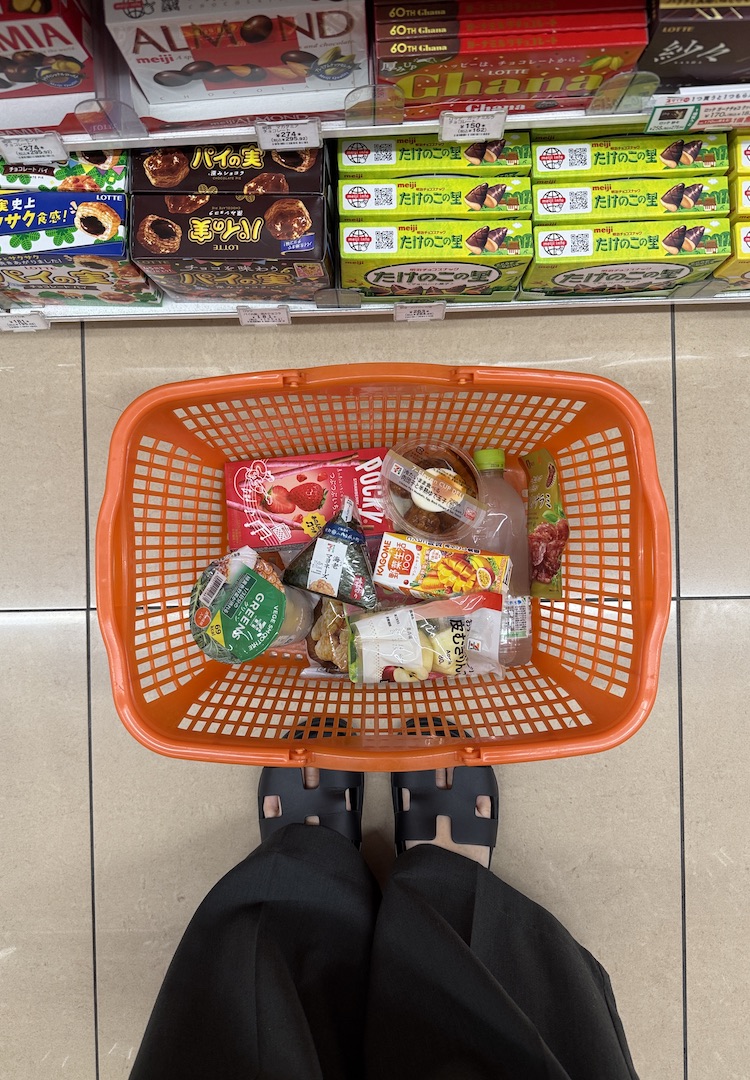
Earlier this year, I found myself hysterically crying while walking around Tokyo. It was a hot, humid day and my cotton maxi skirt was dragging across the ground, gathering dirt. In my sweaty hands was a crumpled paper bag, tightly clutching the packets of Ozempic I had been prescribed earlier that morning.
A few hours earlier, I’d been in Roppongi – the so-called Toorak of Tokyo – to get a facial. I, like many women in their mid-to-late twenties, was flirting with the idea of Botox, so I made sure my facialist was also a medical practitioner. The clinic was on the second floor, up a set of beige spiral stairs to a similarly beige, well-frequented waiting room.
After sitting on the plush leather seats, my doctor called me in. She was an incredibly thin and impeccably put-together woman, aged anywhere between 30 and 60. I explained to her my worries that I was getting wrinkles, my desire to look younger, higher, tighter, while she nodded empathetically.
“Is there anything else you’d like to ask about?” she asked. “I’m not sure, is there anything you would suggest?” I responded, thinking she would maybe say Botox or some filler.
“Ozempic,” she replied. “You definitely need to be on weight-loss medication.”
I, like so many women, have struggled with my body; I’m not unique in this. From excessive exercising, to binging and purging, to keto-paleo-sugar-free-no-carb diets, the daily pinch test, 100 sit-ups, the army diet, pro-ana Tumblr and other forays into eating-disorder-adjacent propaganda, and then the continual return to the uphill battle with self-love and self-acceptance, I’ve felt the highs and lows of the struggle.
As a child, I had this recurring dream where I would edit myself with the Sim’s customiser tool. In it, I’d watch layers of fat be chipped away from my stomach, legs and arms, falling off like thick chunks of parmesan under a heavy-handed grater.
Amongst all these fantasies, however, I’d never fully considered Ozempic. Saying that now feels ridiculous. Of course it would be considered the logical next step, and of course an aesthetic-focused doctor would offer it. I really shouldn’t have been shocked; I knew lots of people who were taking it. It was this big open secret that filled rooms and emptied plates.
I was aware of the nausea, the vomiting, the sight loss, the hair thinning and the decrease in libido that were associated with taking weight-loss medication. I am a fucking food writer, for God’s sake: how ironic, the girl who writes about food not being able to stomach it?
I really thought that I was above Ozempic. That my enjoyment of food, of sex, of feeling all the different facets of desire would protect me from my ultimate desire of being thin. And while I cognitively understand that thinness is a manufactured ideal, that women’s bodies come in all different sizes, that having a body that moves with ease is a blessing, sometimes the mind and the heart just want different things.
Because the thing is, the moment someone said to my face, “You need to take a weight-loss drug,” all that grandstanding went out the window. And there I was, back to the teenage girl pinch-testing in the mirror.
I left the clinic $800 poorer and with a six-month supply of Ozempic. I couldn’t stop crying. I felt stupid. Ashamed. Disgusting. Gutless.
“I thought you’d be happy,” my boyfriend said. “I think you are beautiful as you are, but if you’ve been feeling so bad about your body, isn’t this a good thing?”
How could I explain the strange contradiction of it all? On one hand, I’d been handed the silver bullet I had been praying for for years: thinness, delivered in a tiny injectable pen. On the other hand, I’d had my worst fear affirmed, my moral compass shattered. I had spent a stupid amount of money on something I didn’t even know I wanted to take.
I was suddenly confronted with the uncomfortable truth that wanting to be thin and wanting to accept my body might not be mutually exclusive. I could want the fantasy and still mourn what it meant to pursue it. I could be excited by the possibility of changing my body and horrified that I had been convinced it needed changing in the first place.
And perhaps most frighteningly, I realised how willing I was to trade away things I had spent years trying to reclaim – appetite, pleasure, desire, spontaneity, even the possibility of making peace with my body – for the promise of becoming smaller.
Being prescribed Ozempic by a complete stranger made me feel so much shame. I took the drug for two weeks before deciding that I just couldn’t anymore. Predominantly, I was worried about what I would be left with when the drugs ran out. What would I do when I couldn’t supplement my happiness and my stability with thinness?
Looking back on the whole situation a couple of months down the track, I feel a lot of anger towards the doctor who prescribed it to me, and to the structures that allowed and encouraged a serious medication to be prescribed so flippantly.
My Instagram is now absolutely flooded with advertisements and testimonials for weight-loss medication. They’re all framed in the same language: a supplement, a vitamin, a ‘helpful little addition’ to your daily routine. Something natural. Something low-impact. Something you could almost forget you were taking.
It would have been really easy to just take it. I probably would have looked very different right now. I probably would have felt incredibly validated. I probably would have loved it.
That is the part of this story I feel most uncomfortable admitting. Because I don’t think the danger of Ozempic, or of the current obsession with thinness, is that women don’t know better. We’ve all lived it before.
I knew better. I knew all the arguments. I had thought, written and spoken about them at length. I had spent years trying to make peace with my body, to accept it and, eventually, even love it. But one decisive judgement was enough to wipe that out.
Because when Ozempic is prescribed without consideration, it can do more than make you lose your appetite. It can give your most sinister, self-hating inner monologue the authority of a medical prescription. It can take something you’ve spent years trying to unlearn and tell you that maybe you were right all along.
If you don’t need a weight-loss drug for health reasons, you shouldn’t have to take one to feel good about yourself. No matter who tells you that you do.
For support with eating disorders or body image concerns, call Butterfly National Helpline on 1800 33 4673 or visit butterfly.org.au to chat online or email, seven days a week.
Liked this? You’ll love these...