

Seven creatives share their most brutal advice for going freelance

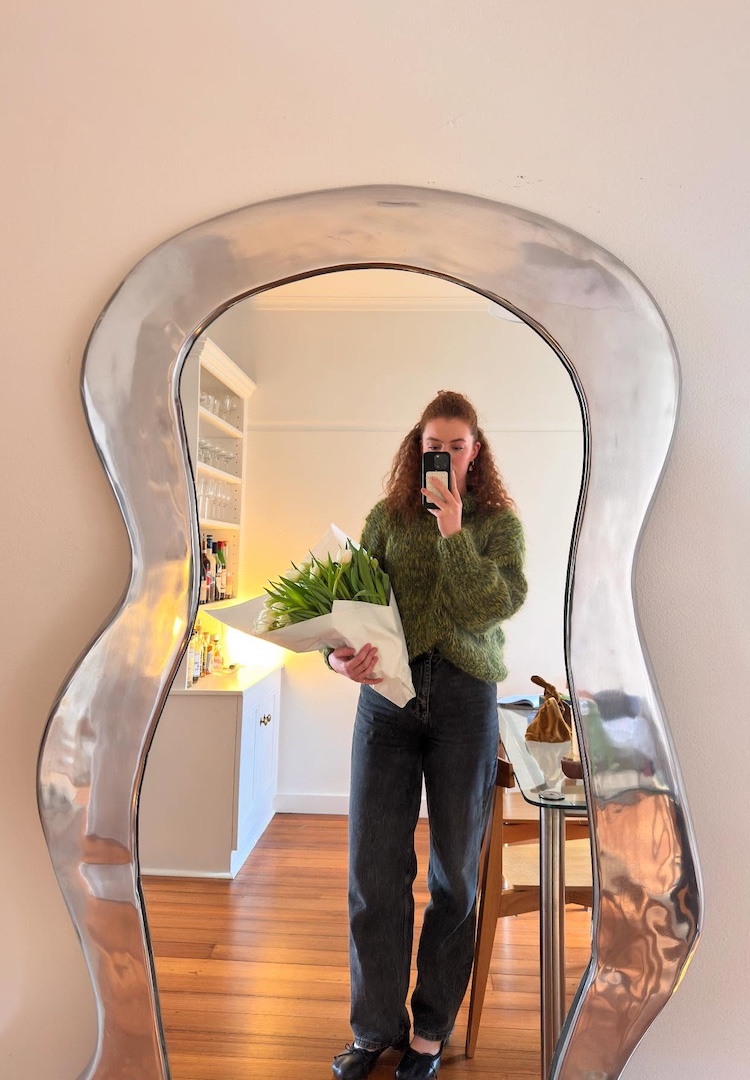
image via @sophiemcintyre___/instagram
words by daisy henry
“You have to believe in what you’re doing, almost to the point of delusion.”
For most people pursuing work in creative fields, quitting your job and going freelance is the dream. From afar, the benefits seem endless: being your own boss, choosing the projects you want to take on, working outside a nine-to-five, booking last-minute holidays.
But ask anyone who’s actually done it and they’ll tell you, the reality can look a little different. From navigating taxes, superannuation and knowing what rates to set, to making sure you have enough jobs in the pipeline, going freelance a balancing act.
Looking for a new 9 to 5? Head to our Careers page for new listings daily.
What’s more, freelancing as a creative is by nature, a solitary endeavour. And if you don’t have friends deep in the pursuit themselves, it can be hard to know where to go to find advice. While the freedom can be worth the sacrifice, it pays to lower the rose-coloured glasses and take a real look at the pros and cons. Below, seven Australian creatives share their most honest piece of advice for those looking to make the leap.
Genevieve Phelan, freelance publicist and writer
View this post on Instagram
I had a finance-related breakdown about a year into working solo, because I owed the ATO a shocking sum due to my numbers negligence. I will never forget an old accountant dryly telling me what I owed, and then remembering I had an Entrecôte end-of-year celebratory splurge dinner booked that night — it’s comedic reflecting now.
Moral of the story: get yourself a good accountant who you actually understand, preferably someone who specialises in your form of business. Train yourself to keep a spreadsheet of incomings and outgoings from day dot. It’s super simple and will keep record of all your money moves so that you’re not in the dark when you grow and need to start thinking about things like GST, BAS lodgements and other Big Girl Shit.
Hannah Lehmann, freelance screenwriter and director
View this post on Instagram
In the seven years I’ve been working as a screenwriter and director, the most difficult periods have always been the stretches where I don’t have a job lined up beyond whatever client project I’m currently working on. I struggle with feelings of failure, that I’m behind my peers and colleagues, and major imposter syndrome, despite the fact that historically, I’ve always gone on to secure work. It can be really tough mentally and creatively, but I’m learning not to conflate my self worth with my creative output.
This is also really difficult but I feel the antidote is to always be developing my skill set regardless of if I’m being paid or not. So often, jobs have appeared because I’ve written on spec and sent my work out, or because I’ve developed ideas, pitched them and willed a job into existence. I try to see the down periods of freelancing as opportunities to grow creatively, so when I do get the next job, I’m even more undeniable.
Catherine Jia, freelance creative
View this post on Instagram
I’m a multi-hyphenate creative: co-founder of sustainable fashion label Mei Mei Market, a content creator and a development manager for a childcare centre company (one day a week). I’ve been freelancing for just over a year now, after quitting my corporate job in the first week back at work this time last year. Quitting wasn’t part of the plan last year but even after two weeks off, the burnout hadn’t lifted. I realised something had to change, so I followed my gut.
If I could offer one piece of advice to anyone contemplating the leap, it would be this: don’t rush the exit. I worked on my growing my page, while employed full-time for almost five years, saving close to $80,000 before leaving. This meant I could keep paying my apartment mortgage and strata levies, cover bills and groceries, contribute to my wedding and live (not just survive) while figuring things out for the first six months.
A year in, my income still isn’t predictable like a traditional salary – some months are generous, others humbling. Freedom comes with responsibility. Working for yourself requires discipline: keeping a schedule, honouring your time, and showing up even when no one is watching. That structure is what makes the freedom sustainable. I love the freedom and flexibility of owning my time, choosing when and how I work, and I wouldn’t trade that for a nine-to-five ever again.
Laura Roscioli, freelance writer
View this post on Instagram
I’ve been a sex writer for three years but only recently made the leap to full-time freelance. The job looks like this: I come up with ideas, pitch them to publications, get a yes (or, more often, a no), agree on a fee and then write the piece. No safety net and no guaranteed monthly income. But I get to be creative and write things I believe in, every single day.
My most brutal piece of advice is to send the pitch. Don’t agonise over the headline. Don’t workshop the wording for weeks. In my experience, that’s rarely what gets you commissioned anyway, it’s the core idea. Write your ideas down as they come (I live in my Notes app), think about who they might be right for, craft a few clear lines, and send them. If an editor likes the idea but wants to tweak the angle or tone, they’ll still commission it and work through that with you.
Too many freelancers live and die by pitching. We let rejection decide whether we’re ‘cut out’ for this work. The truth is, yeses are hard to come by. So don’t pour weeks into an idea you might never hear back on. And if you do get a no? Write it anyway.
Sophie McIntyre, freelance business owner and creative
View this post on Instagram
I’m the founder of Club Sup – an events based community that helps people make new friends. Club Sup turns five in 2026 and it also marks the start of its third year as my full time job. It took me so long to get it going financially. During that time I worked nearly six days a week for two years. So be prepared for things to take time through consistency.
The other thing I’ve learnt with starting and running my own business is that your self esteem is served back at you everyday, and it’s directly tied to your motivation, and how you show up and make money. So, you have to believe in what you’re doing, almost to the point of delusion. You need to be your own cheerleader all the time. Oh, and work two jobs for as long as you possibly can do the juggle.
Hannah Cohen, freelance publicist and writer
View this post on Instagram
As a freelance publicist, the hardest thing I had to wrap my head around was the initial period in which you’re under-charging in order to prove yourself. Coming from an agency background, I was keenly aware of the higher rates other agencies and more experienced consultants might be charging and therefore, needed my rates to stay competitive to win business.
My first few months involved a lot of out-of-scope work and extra hours that I knew my previous workplaces would be stricter on. But in the early stages of being freelance, the results needed to speak for themselves if I wanted to charge higher fees in the future. If you can hustle and give the extra inch, it goes a long way! In order to do this, I got a casual job at a restaurant to help support myself and now, moving into 2026, I can comfortably raise my rates with a portfolio of successful projects under my belt and positive referrals from my first few clients.
Shan Kerr, freelance artist and creative
View this post on Instagram
I’m a full-time artist and content creator living in Melbourne. The most brutal piece of advice I’ve learnt along the way is that no one cares as much as you think. You wore a killer outfit? Left your full-time job? Ran a marathon? Bought a house? Posted a video of your art? No one cares (as much as you do). I think the girlies on social media are so incredibly supportive but the truth is, everyone is also so wrapped up in their own lives.
Although kind of brutal, I think this advice can be so liberating – once you realise that everyone is their own main character, the pressure of other people’s judgement seems to evaporate. So take it as a sign to do what you want and chase the things that matter to you. And let success be about making yourself proud.
Kelly Lim, freelance graphic designer
View this post on Instagram
I’m a freelance designer and creative and have been working independently for three years, which is crazy because I still feel new to it all. My advice for first-time freelancers is to make sure you have set up a system for your finances that is well organised and easy to navigate. I remember starting out and not realising just how important tracking everything would be. And when it came to tax time, completely freaking out. All those invoices, expenses – it all counts.
People tend to forget the extra financial work freelancing brings and to be honest is probably my least favourite thing about working for myself. But there are heaps of resources out there that can guide and even do the work for you, if you prefer. I use a simple spreadsheet to track my expenses and revenue each month. Keeping your finances organised can really feel like a chore, but as annoying as it is, if you take the time and find a system that works for you, it’ll be way less daunting to manage.
For more on building community as a freelancer, try this.
Liked this? You’ll love these...