

Why everyone should try nude modelling at least once in their lives
words and photography by Constance McDonald
“You are the assignment and every centimetre of you is being looked at.”
I was living in Tokyo when I first tried life modelling. I was teaching English at a high school and had become friends with the librarian. I taught three classes a day and spent the other hours in the Dewey Decimal 700s looking at the art books.
Over time, the librarian would put books on my desk that she thought I’d like. One day, it was Alice Neel, then Egon Schiele, Paula Rego and Lucien Freud. I pored over the nude portraits and considered how I could, like the subjects in these books, be naked in a room in front of an artist.
Interested to hear how others navigate the world? Head to our Life section.
Curious, I emailed a life drawing class in downtown Tokyo to see if they needed a nude model. They replied that night and two days later, I was standing in the lobby of an office building and checking the emailed location instructions thrice to make sure I wasn’t attempting to take my clothes off in the wrong room.
I found the floor, then the corridor, then the door, and the woman with whom I’d been conversing opened it. I was twenty minutes early. The metal blinds were down and angled up and the floor was blue-speckled white linoleum. I was shown to a nook in the corner made of three movable walls on stainless steel wheels, where I was to remove my boob tube and jeans. I quickly learnt to wear elasticated nightdresses with no buttons, zips, or ties so I could undress in one motion.
Soft, never-ending harp music played on a UE Boom tucked away somewhere. This sound was layered with fingers brushing eraser crumbs away and softening carbon marks on paper as I sat still on a chair draped in white bedsheets.
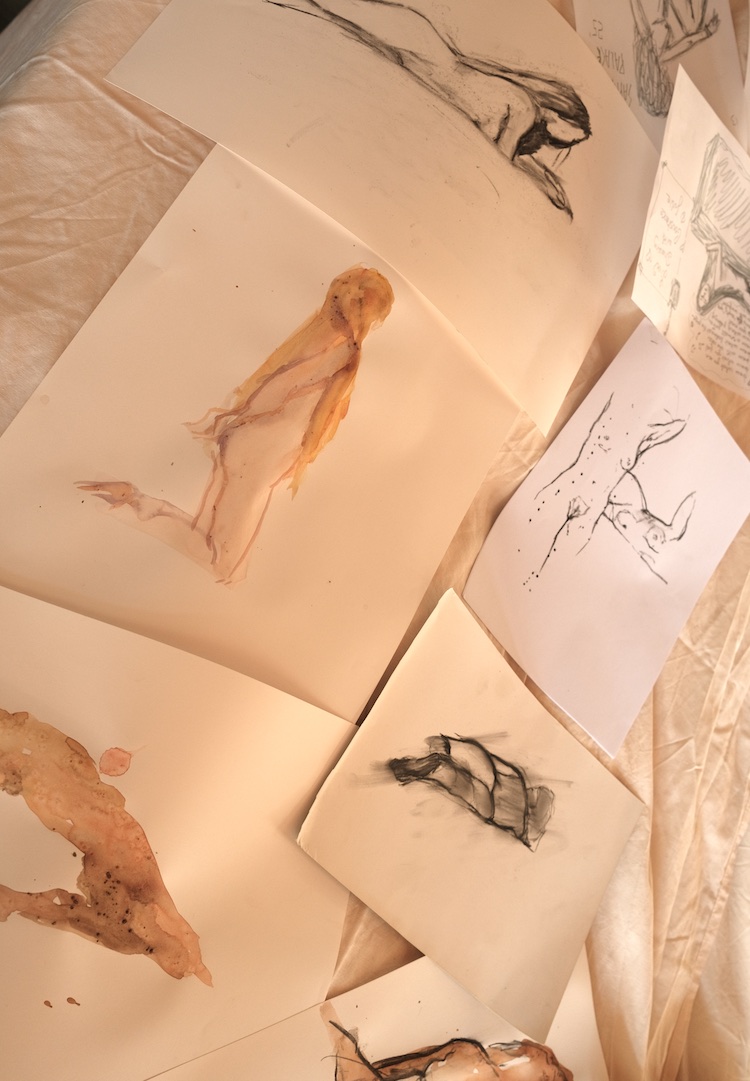
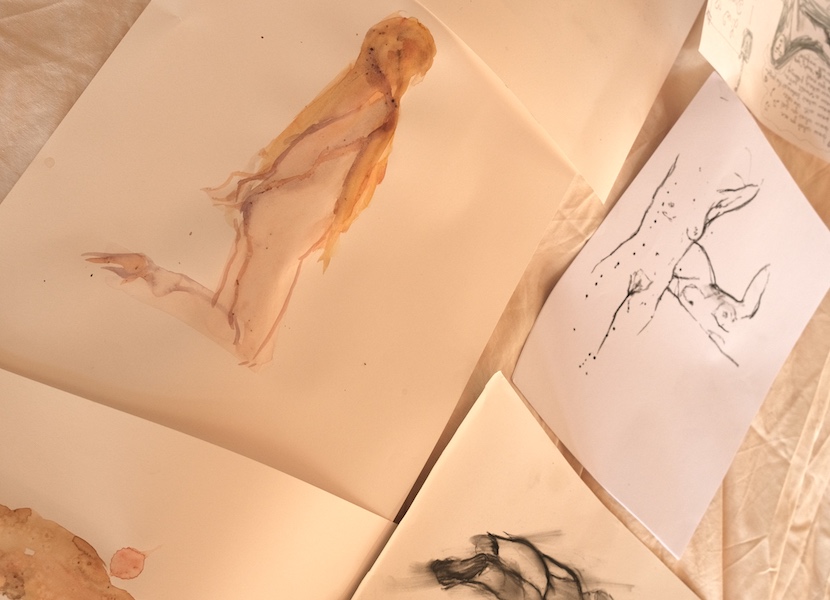
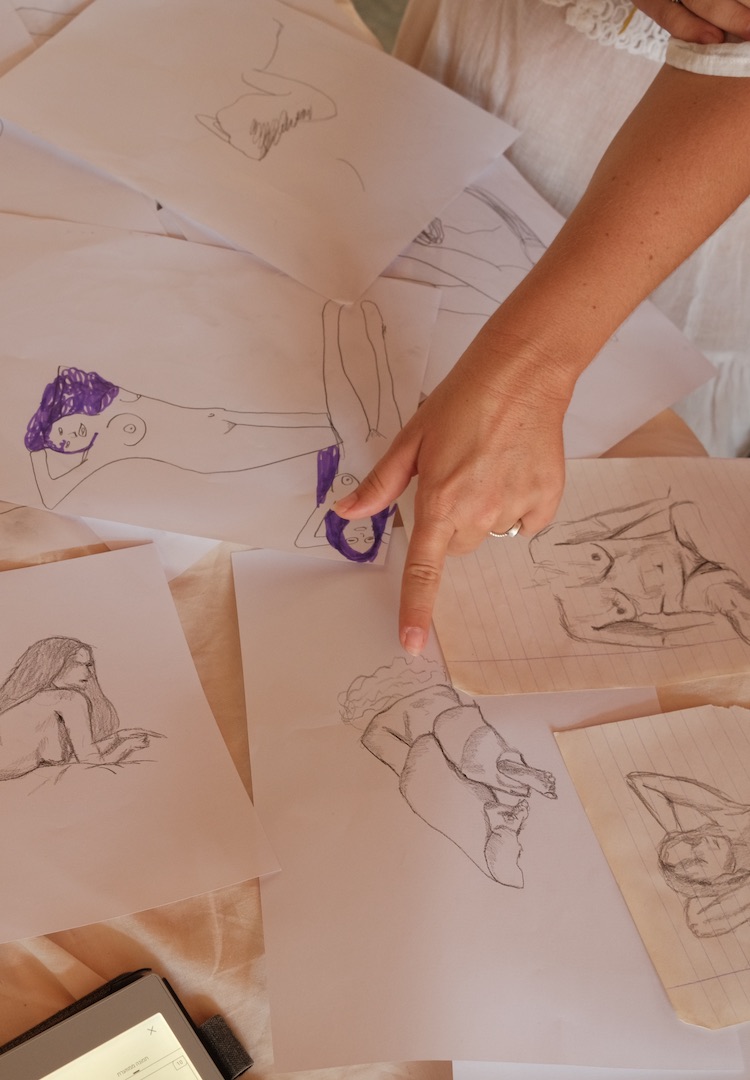
At the end of the session, I put my clothes back on and walked around the room and looked at the easels (some wooden upright, some with a bulldog clip hanging onto a hardcover book) and saw how they had imaged me. Someone said, “Oh, would you like this?” handing me their drawing. I’ve since continued to collect little stacks of drawings of myself to commemorate the times I stripped off for The Culture.
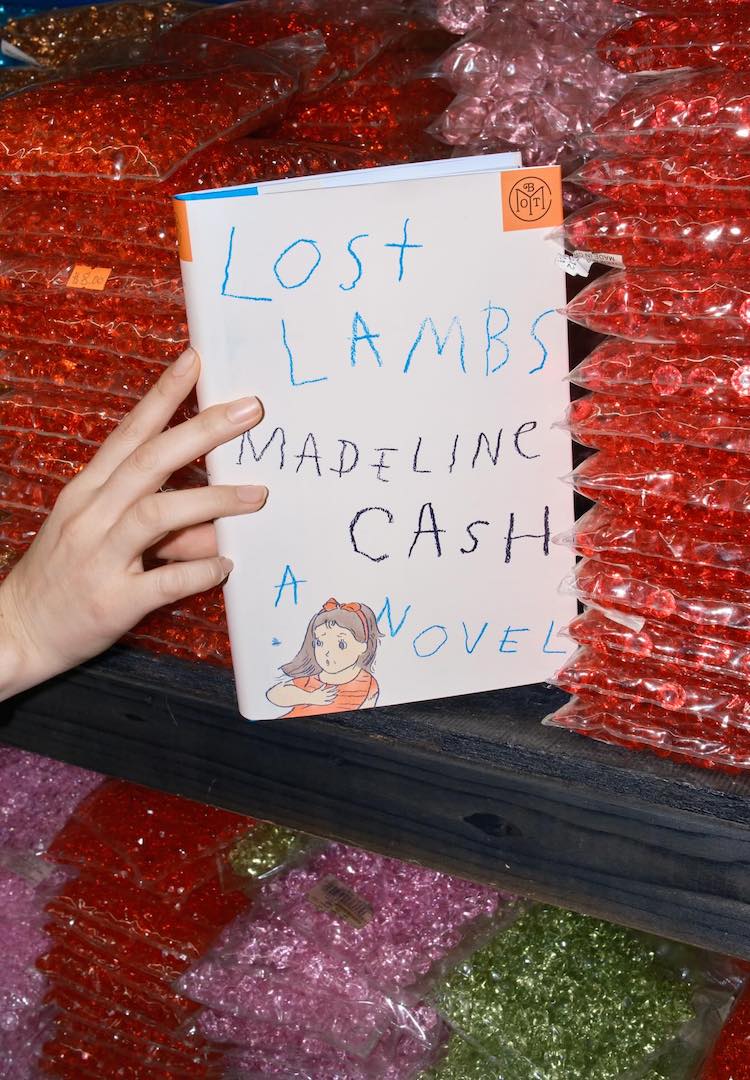
Life modelling became one of my weekly after-school liturgies. Another was hanging out with the Deputy Prime Minister’s son for what he and I, called ‘English conversation practice’. I got to pick the restaurants, scouting them between classes on my work laptop. I mostly chose high-rise spots with views of the city that reminded me of Lost in Translation, and menus of unpriced lobster and sea urchin (POA). This is where I learnt I don’t like caviar.
Both the life drawing and the dinners ended the same way: with an unmarked white envelope being handed to me filled with modest amounts of Japanese Yen. I paid my rent in cash on the first of the month to some salaryman in Roppongi and was able to keep a bulk of my teacher wage for important purchases like cans of ‘Strong Zero’ chūhai from Family Mart.
In Lisbon, I did it again. I emailed a life drawing group asking if they needed my body. Only two people showed up to that session and they agreed among themselves that they didn’t want any five-minute poses. Instead, they wanted one long two-hour pose. I thought of a couple of Great Nudes to emulate. I first tested out Ingres’s ‘Grande Odalisque’ (ouch!) and settled on something à la Giorgione’s ‘Sleeping Venus’.
After forty minutes, my kneecaps, stacked on top of each other, began to feel like two plastic Tupperware containers. I had set my gaze on a lower corner of a loose lampshade. When I tried to give my eyes a little treat (a millimetre shift to the left), I was immediately, but gently, told I’d moved. I apologised through closed lips, ventriloquist-esque.
One of the artists was deep in his Blue Period. He rendered me in a thick, oily blue crayon that was the shade of the eyeliner my mother and Princess Diana used along their waterlines. His paper was wider than my arm’s breadth.
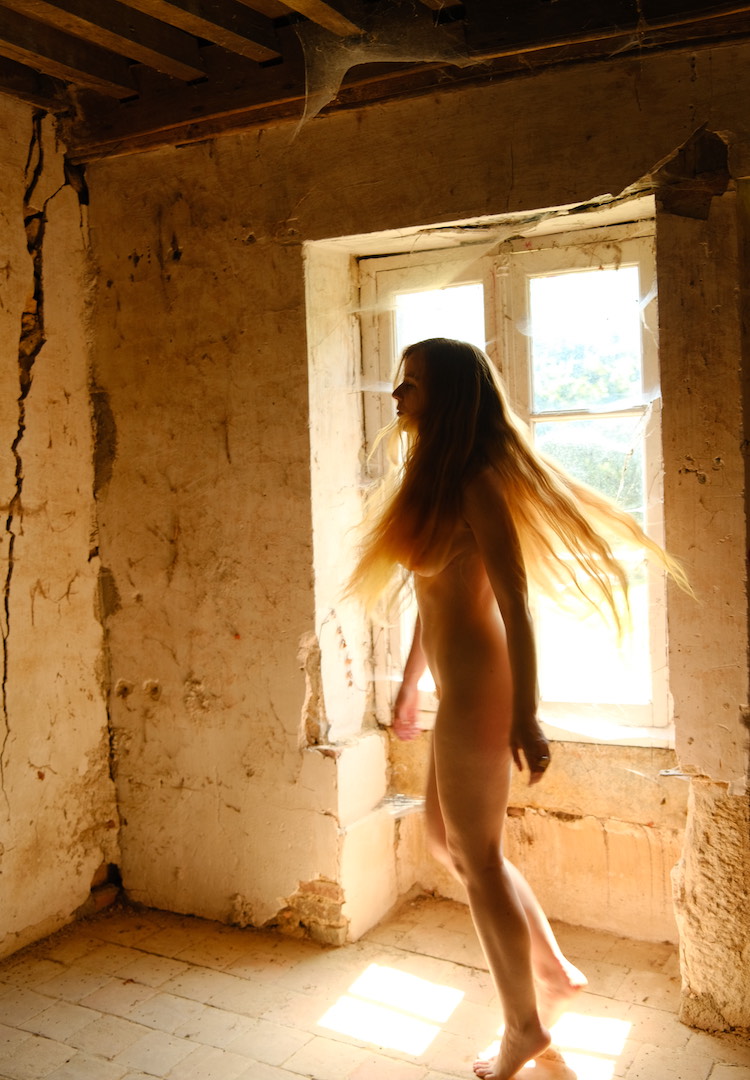
I had been naked around groups of people before and maybe you have too, in saunas, public baths, or even naturist communities. But everyone is nude there, so nobody really is. In a life drawing class, you are the only nude one. You are the assignment and every centimetre of you is being looked at. You are the bowl of fruit.
The artists form a loose semicircle around you and therefore you cannot angle yourself toward what you deem to be your ‘good side’. One of my breasts is always drawn (quite correctly) smaller than the other and the pimples I try to bury under concealer are shaded in. Sometimes people give me a ski-jump nose I do not have.
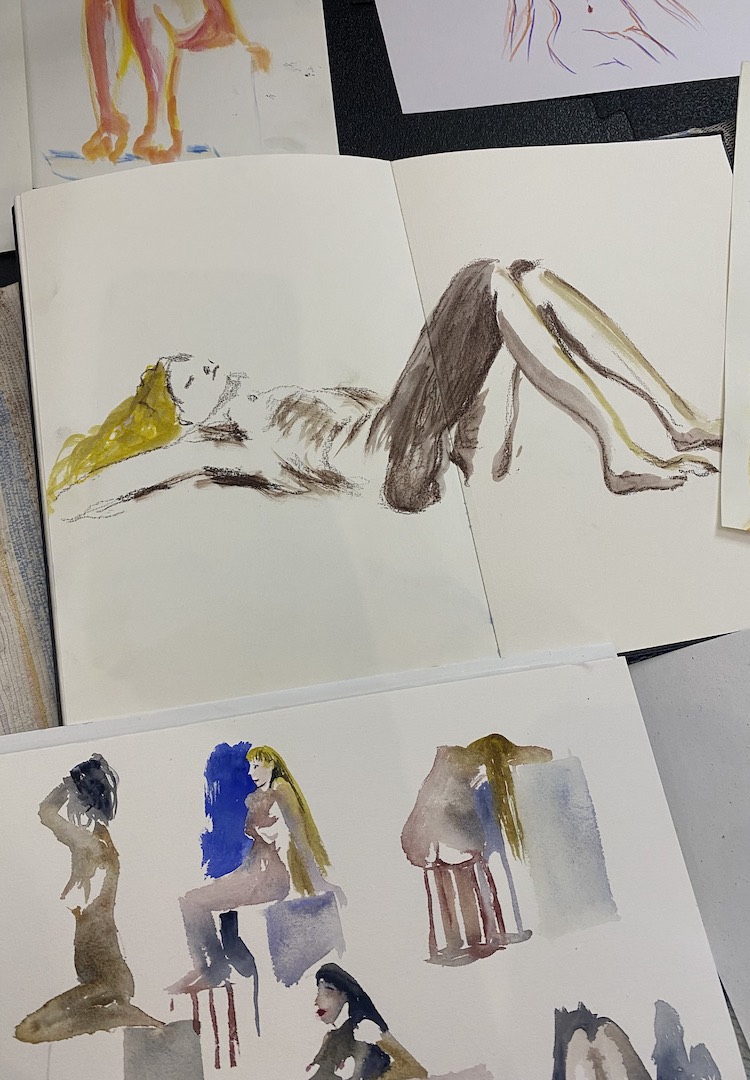
On the Greek island Lesbos (Sappho’s birthplace), I helped set up a women’s community centre called Sappho’s Palace. This summer, my friend and I hosted a life drawing session there. We made posters and stapled them to lampposts, and posted on the town’s community Facebook group.
We pushed four tables together, dragged a mattress upstairs to put on top of the makeshift stage. We filled four cut-crystal jugs of ice and water and made a playlist. We kept the poses’ time by the length of the songs. One song for a short pose, three songs for a long one. Simon and Garfunkel, Leonard Cohen, Shona Laing, Hammond Gamble.
At the end of the session, we asked the artists to put their drawings from the session onto the mattress we had been posing on. I asked one man if I could have one of his watercolours of me. Later, I looked him up. Three of his oil painting portraits hang in the National Portrait Gallery in England.
I think people imagine there is some secret door into the world of life modelling. But, like a lot of things, if you decide you want to do it, find the right email address and ask, they will probably say yes.
All you have to do in there is stay still.
For more on life modelling in Australia, try this.
Liked this? You’ll love these...