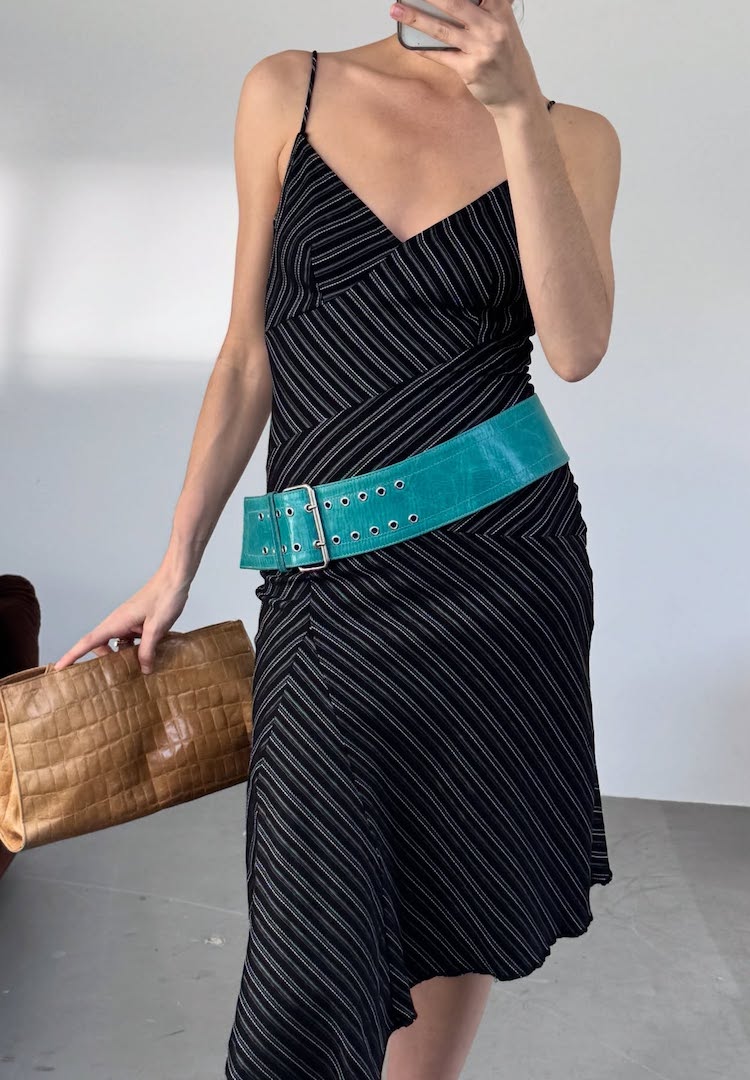


Soft and seductive, vintage lace deserves a spot in your wardrobe
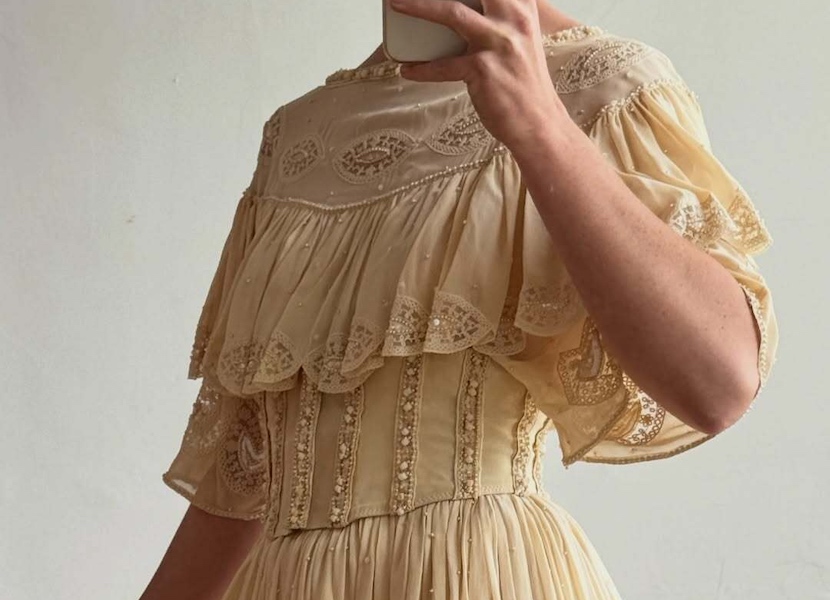
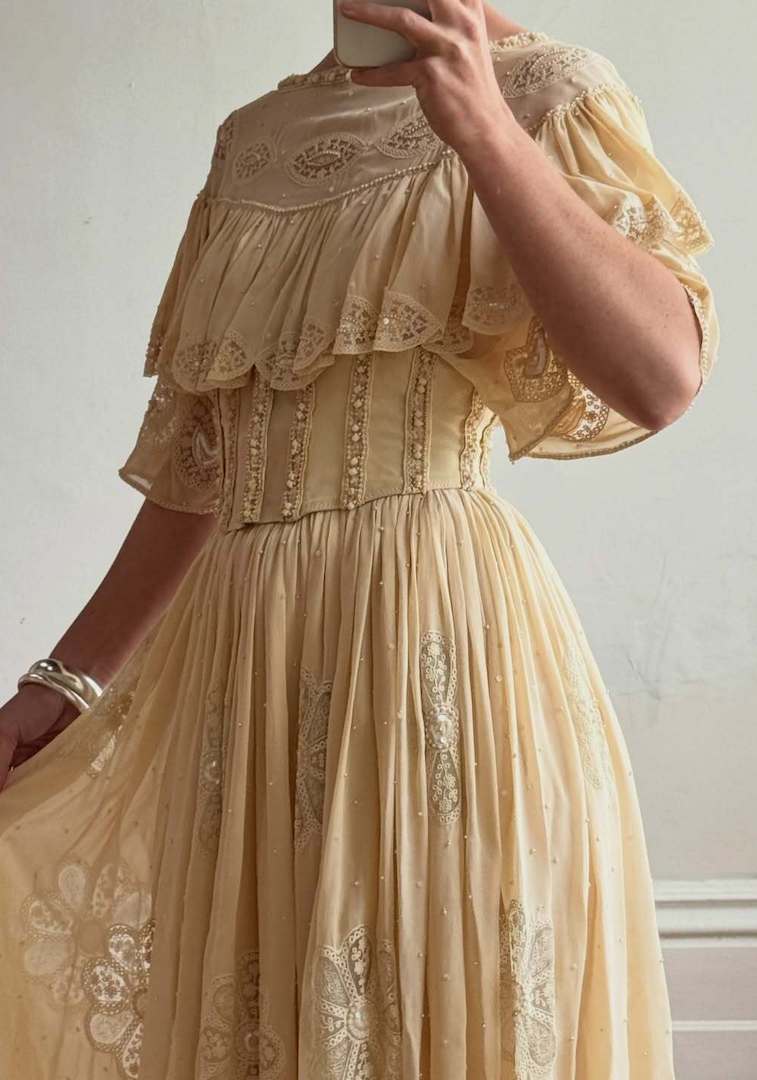
IMAGE VIA @callmethebreeze/INSTAGRAM
words by daisy henry
The enduring appeal of lace.
Lace is one of those fabrics that seems to traverse time, eras and trends. Born in 16th-century Europe as a painstaking, labour-intensive symbol of wealth, lace was once reserved for the collars and cuffs of the extremely well-to-do. But over time, it loosened up. Hems rose, layers sheered out, silhouettes softened. Lace slipped from modest court dress into lingerie drawers, festival fields and red carpets.
And she’s having a moment again. From the runways at Chloé to Pinterest mood boards, lace is back in heavy rotation. Pinterest even reported a surge in lace-related searches late last year, naming it one of its predicted trends for 2026.
For more on the circular economy, head to our Pre-Loved section.
There’s also the small matter of fashion’s ongoing obsession with romance. The fever-pitch anticipation around Emerald Fennell’s Wuthering Heights, and the now much-discussed costumes worn by Margot Robbie, has only fuelled the mood. Whether they’re historically accurate or not (do we care?), the lacy fringing, tulle gowns, gauzy fabrics, and shades of red and pink evoke an undeniable and fantastical air of romance.
And it’s not just cinematic. On red carpets and at after-parties, lace has been championed by everyone from Charli xcx to Hailey Bieber, proving it can oscillate between ethereal and undone.
View this post on Instagram
One of a kind
But the reasons for lace’s resurgence don’t end there. While its appeal lies in its rare ability to straddle both soft and seductive, it also comes down to its irreplicable nature. In a landscape of ever-changing trends, ‘core-ified’ aesthetics and mass-produced fashion, lace’s delicate quality gives the impression that it’s one of a kind.
Created through techniques like looping, braiding and twisting, lace carries a distinct feel and pattern. Not every style is handwoven by ateliers but its intricacy suggests no two pieces are ever truly identical. When sourced vintage, it’s as close to one-of-a-kind as you can get (custom-made aside). Emerging from an op shop with a vintage Chloé blouse, or slipping into your mum’s old lace slip, feels undeniably romantic. It isn’t easily bought; it demands patience, commitment and personal taste.
What type of lace are you?
Most commonly made from cotton, silk and linen yarns and threads, lace comes in a variety of forms. One of the most popular and well-known styles is chantilly, a delicate and lightweight bobbin lace style often characterised by intricate floral designs.
Alençon is another fine, romantic style often found in wedding dresses, and Venetian lace, which, although similar, features open netting, rather than a mesh background. There are also embroidered, eyelet and crochet styles.
View this post on Instagram
Where to source vintage lace
Despite being more affordable, it’s always best to shop secondhand when it comes to experimenting with a new style. Not only is it an effective way of reducing landfill, but the unique nature of vintage finds means you really can uncover a truly one-off piece.
Of course, it’s always worth hitting up your local thrift shop, like Vinnies or Savers, but if you’re after a slightly more curated offering, we’d suggest consignment stores like Swop, Goodbyes, Mutual Muse and Reunion Store. And beyond that, spaces like Salon Archive, Bruce or Dot Comme are always known for their collections of archival designer finds.
Or, you can head online. Depop, Vestiare and eBay boast pages of pre-loved pieces, while an increasing number of online pages are building up entire collections of vintage-sourced bridal. For the latter, we’d recommend exploring Call Me the Breeze, Iona MacLean, Art Garments and Fruitful Bridal.
For more on the history of lace in fashion, try this.
Liked this? You’ll love these...