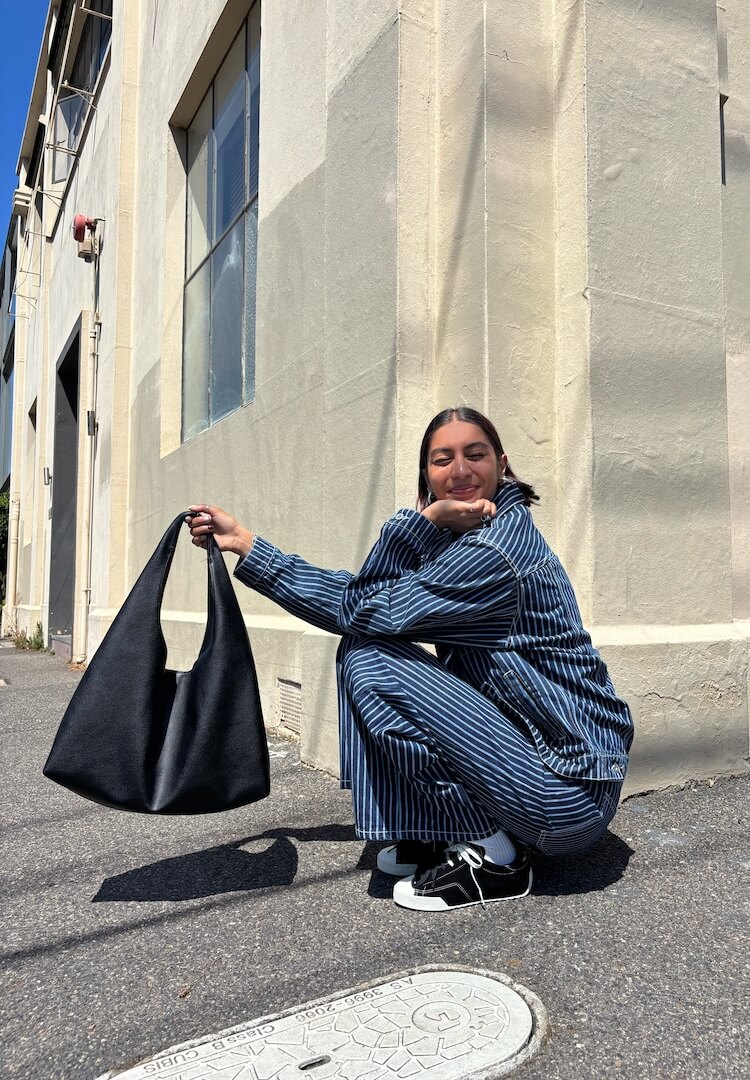


Can landfill be good for the earth? If it’s Kowtow clothing, then yes

IN PARTNERSHIP WITH Kowtow
WORDS BY Maryel Sousa
Welcome to the regenerative revolution.
In an industry responsible for up to 10 per cent of the world’s carbon emissions and millions of tons of landfill waste, New Zealand label Kowtow has been leading the charge for more ethical and sustainable practices in fashion.
Since 2006, the brand has consistently set the standard, relying on Fairtrade and organic cotton and creating a timeless design language that exists outside of trends. It also takes responsibility for every step of its process, rebuilding its supply chain to be 100 per cent plastic-free and encouraging other brands to do the same. But Kowtow’s work isn’t done yet.
For more fashion news, shoots, articles and features, head to our Fashion section.
This year, Kowtow is making another historic stride toward a better future by reverse-engineering its cotton garments. The brand’s Regenerate program will be the first to turn end-of-life garments into carbon-rich biochar, which can be blended into a nourishing soil. “We’re converting our clothes back to their origins,” says Tessa Bradley, Kowtow’s Head of Sustainability.
Although it’s the first program of its kind, Kowtow has no plans to be the last or only brand committing to more sustainable end-of-life solutions. As the company scales, founder Gosia Piatek hopes the rest of the industry will take notice. “If every brand that ever makes a product dealt with its waste, it would revolutionise everything.”

Fashion Journal: Hi Gosia and Tessa! Can you share more about Kowtow’s latest initiative?
Tessa Bradley, Head of Sustainability: We’re introducing our first solution to divert clothing from landfill: returning garments to the earth. This is achieved by transforming Kowtow’s organic cotton clothing into pure carbon through a process called pyrolysis, creating organic cotton biochar. This can be mixed with soil to improve health and biodiversity.
The cotton journey starts with carbon in the soil nourishing the growth of our organic cotton seeds into plants. These are harvested, cotton cloth is created, and the cloth is made into a garment. We’re converting our cotton back to its original form of carbon and then returning it to the earth.
Tell us about the moment you decided biochar was the future of Kowtow.
Gosia Piatek, Founder: When I started Kowtow 20 years ago, I wanted to understand the life cycle of the garments I was making – hence why I started with a Fairtrade, organic product and why we’ve eliminated all plastic from our clothes. Making garments that can return to the earth without harm is Kowtow’s goal. When you can return them to nature, it’s easier to work out an end-of-life solution.
As we began taking back Kowtow garments that could no longer be worn, Tessa alerted us that we couldn’t just hold these garments without finding a way to do something responsible with them.
The fashion industry can’t just keep stockpiling clothes. It’s a reality. We have to keep reusing the resources that we have. You can’t just pile all the used clothing in Africa and hope for the best. That’s actually not being a responsible creator of a product.
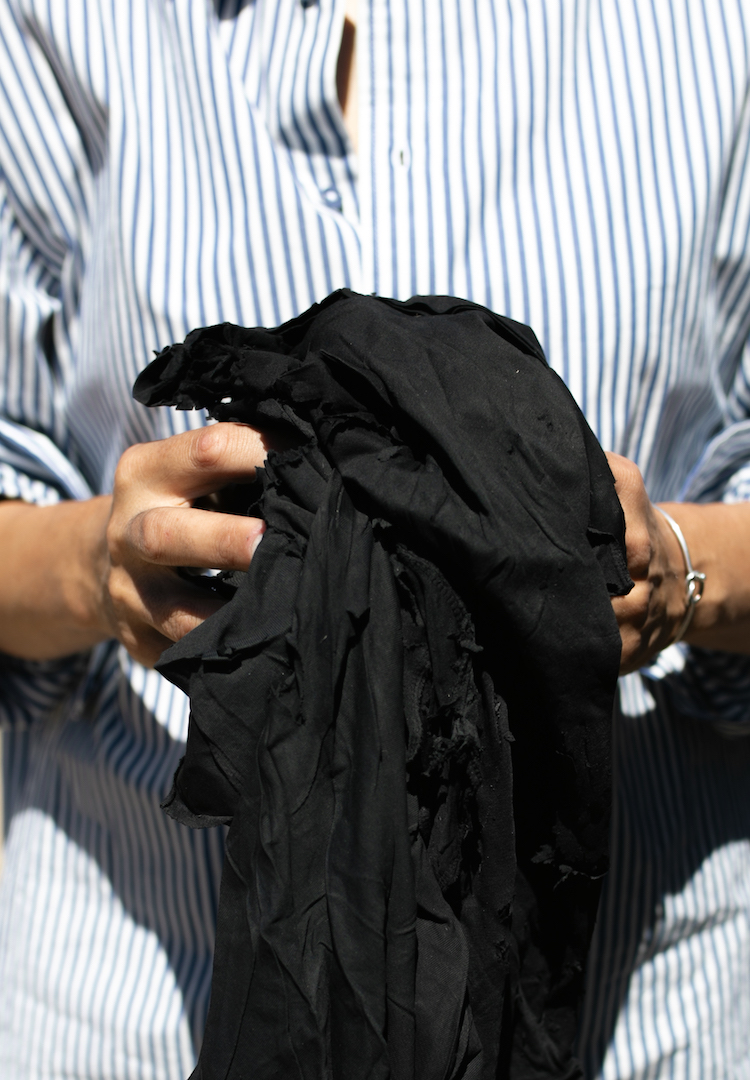
Thinking about this lack of permanence, has committing to biochar as an end-of-life solution changed the way you experiment with Kowtow’s design language?
Gosia: From the moment we begin to design a piece, we design in a very utilitarian way. We design with only one monofibre: Fairtrade organic cotton. We have very few trims, and those we use are natural or recyclable. All of that means that it lasts really well.
Our design language is intrinsic to the massive restrictions that we’ve placed upon ourselves with materials. Given the constraints beyond what most designers face, we have to push our creativity within those limits. The smaller the design brief, the more we thrive. The magic that the designers can create from such limitations actually always makes that capsule sell out.
Tessa: Because we’re working with a single natural fibre and we’re really limited on our trims, we have to work really hard to create texture and variety. We have to change our design language each season to make it fresh because we don’t introduce other fibres to bring in drape, warmth, or fluffiness.
Let’s talk about transparency. Will customers be able to trace the journey of their old garments from the closet to biochar?
Tessa: Transparency matters deeply to us, but it needs to be meaningful. At this stage, customers won’t be able to trace an individual garment from their wardrobe all the way to biochar, simply because that level of item-by-item tracking adds significant complexity without delivering much extra value.
What customers consistently tell us they want is confidence: that their clothes were made ethically, and that when they reach the end of their life, they’ll be handled responsibly.
Our supply chain is complex by nature – from growing and ginning cotton to spinning, weaving, dyeing and manufacturing – and it involves multiple Fairtrade-certified partners we work closely with and visit regularly. When garments come back to us, they’re carefully sorted, repaired where possible, stripped of reusable components, and only then converted into biochar as part of a controlled, considered process.
Rather than investing heavily in granular tracking systems, we choose to put our energy into improving the system itself – innovating circular solutions, strengthening our production chain, and taking full responsibility for a garment’s end of life.

With Kowtow investing more in the end-of-life Regenerate program, can customers still count on other circular offerings like the Relove program?
Gosia: Yes, absolutely. We’ve already got an allocated space in the workroom for it. It started in the jacket cupboard and continues to grow. The plan is to put it permanently into all our stores. We’re passionate about it. The clothing looks good, cohesive, beautiful, and it still feels relevant because our design isn’t trend-driven.
I was always scared that the secondhand pieces in our stores would look out of place, but actually, it feels the complete opposite. They feel almost like unique gems. They’re looked after, and they go through a comprehensive sorting system, just like the Regenerate pieces.
What could the industry look like if more brands committed to a closed-loop model like Kowtow’s? And how do you hope to continue to set the standard for ethical and sustainable fashion?
Gosia: If every brand that ever makes a product dealt with its waste, this world wouldn’t be in the situation that it’s in. It would revolutionise everything, because designers would suddenly realise they cannot manufacture a single item using 600 different types of plastic, metals, or components. They would standardise recycling practices because they would be responsible for them.
The only way this could truly happen is if the government passed new laws. At the moment, we’re doing it because we want to, because we feel that we have to. But there isn’t a law telling us to behave like this. How we’re behaving should be the bare minimum.
Tessa: There’s a lot of legislation globally that’s going to force more fashion brands to do it. But for us, because we’re in New Zealand, we’re very limited in what we can do to close the loop.
We’re working with local universities to trial fibre-to-fibre recycling because there’s nothing currently here for us to actually do that. And we don’t particularly want to send our clothing to the other side of the world to enter an open-loop system where we have no control over our resources, outputs, or ability to purchase them back.
There needs to be more brands demanding action and coming on board, so that more solutions are available in this part of the world. We’d love to hear from others. Let us know what you’re doing and what’s out there. Let’s make the Southern Hemisphere the world leader.
Gosia: Yes, let’s be more collaborative so that we can come up with solutions. We can get solutions happening, scale them faster and quicker. When you read this, keep going, keep pushing, keep getting the word out there. Keep being one step ahead of the rest.
To learn more about Kowtow’s Regenerate program, head here.
Liked this? You’ll love these...