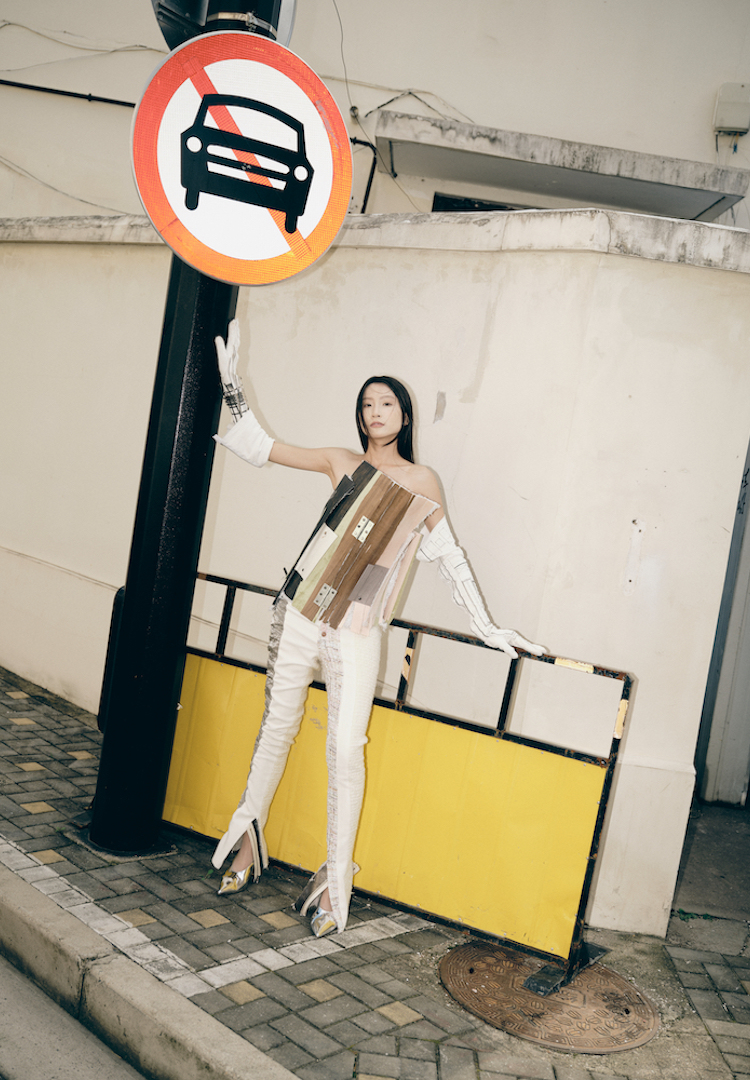


Emerging designer Zhenzhen Hong creates a “moving house” through clothing
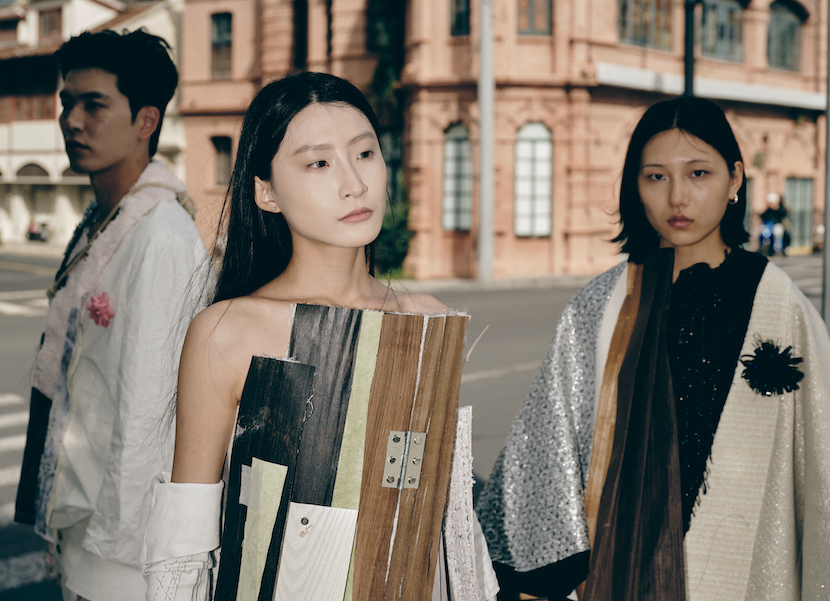
photography by @aisicong
as told to lara daly
“I need to be completely alone and free of distractions to be in the mood to create.”
For RMIT graduate Zhenzhen Hong, fashion wasn’t a lifelong calling so much as something she “kind of fell into”. Raised in an artistic household and introduced to Alexander McQueen at the age of nine, she spent her adolescence drawing anime characters and designing clothes without ever imagining fashion as a serious career.
It wasn’t until Zhenzhen noticed the rise of independent designer brands in China, paired with the pressure of needing a career plan after high school, that fashion revealed itself as a viable path. “After a lot of pleading, convincing and debating with me, my parents finally agreed to let me study fashion design,” she says. “In the grand scheme of things, there’s nothing else I would be or could be other than an artist or designer.”
For more fashion news, shoots, articles and features, head to our Fashion section.
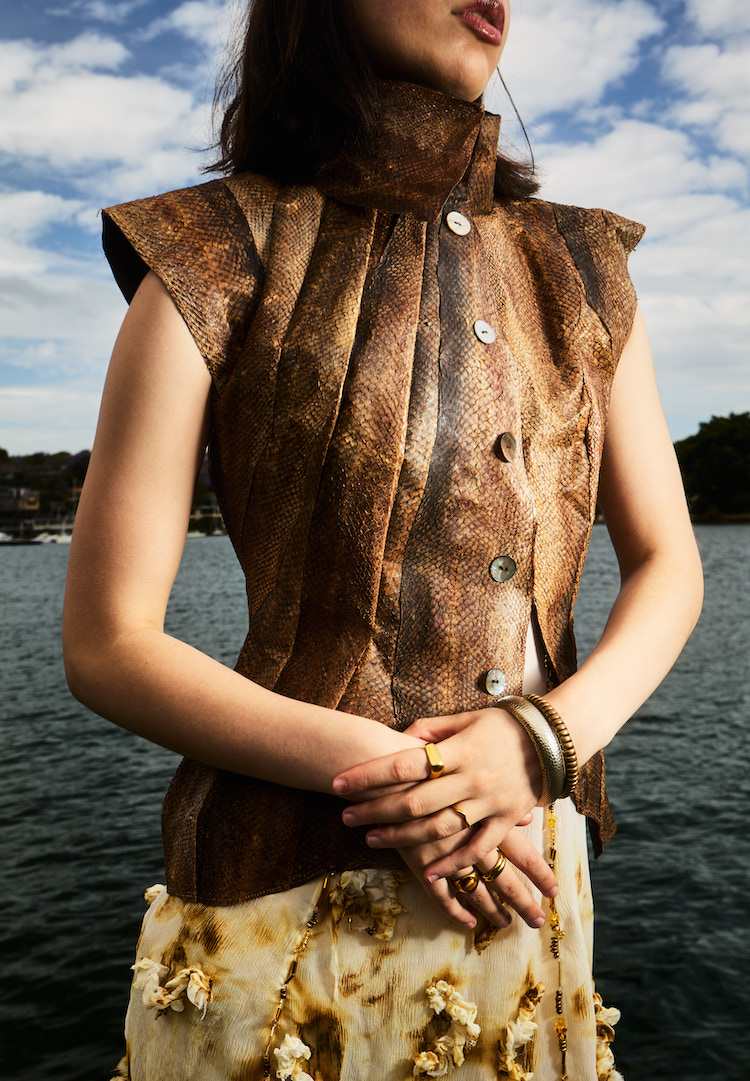
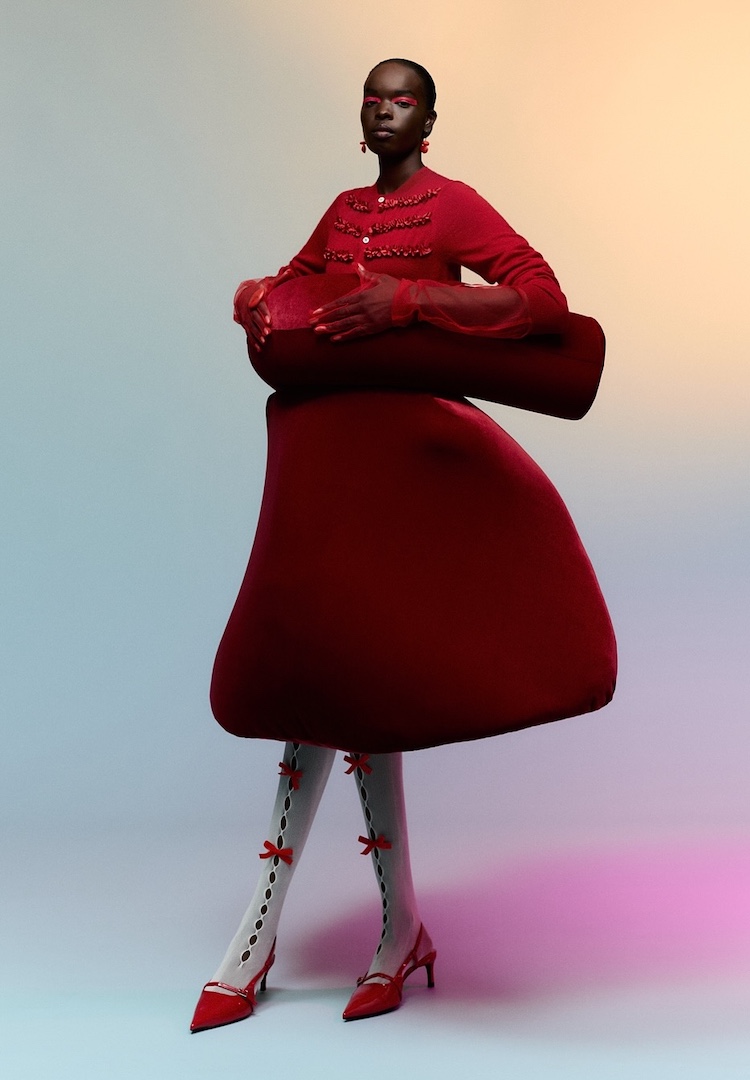
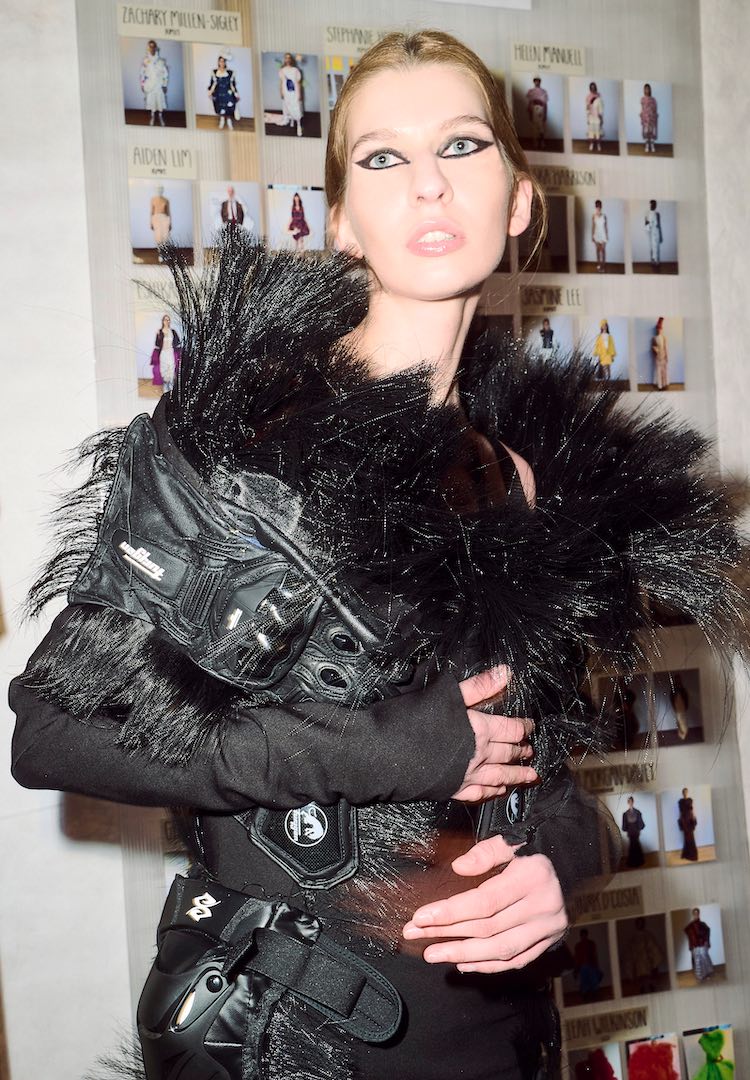
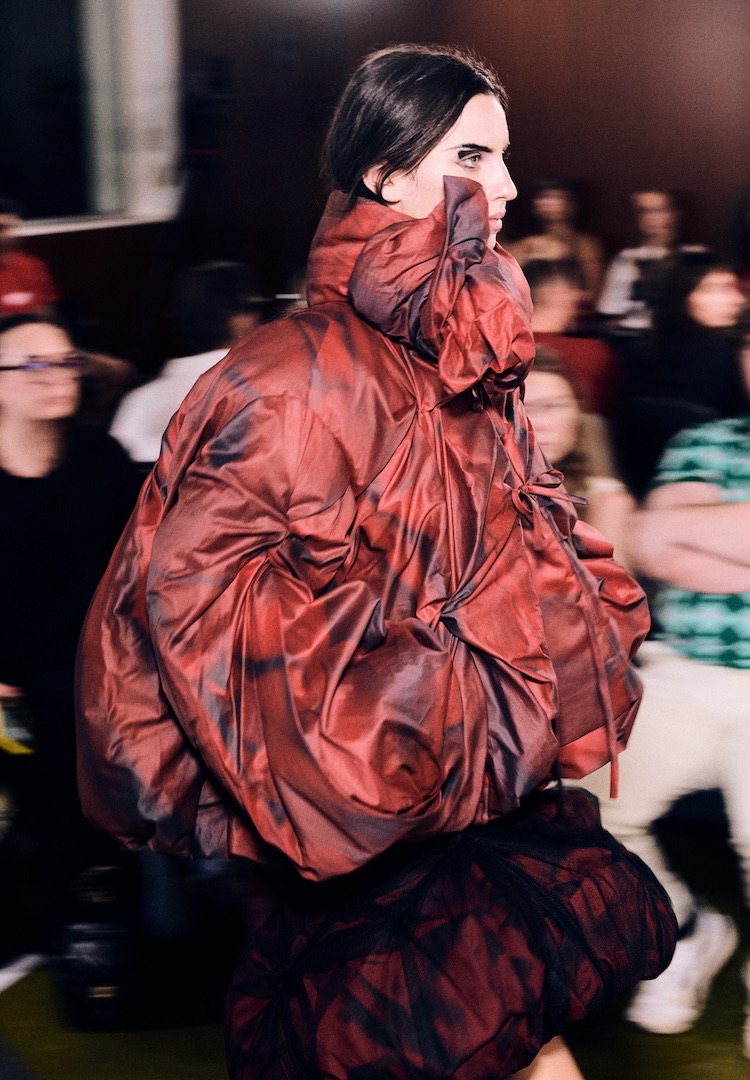
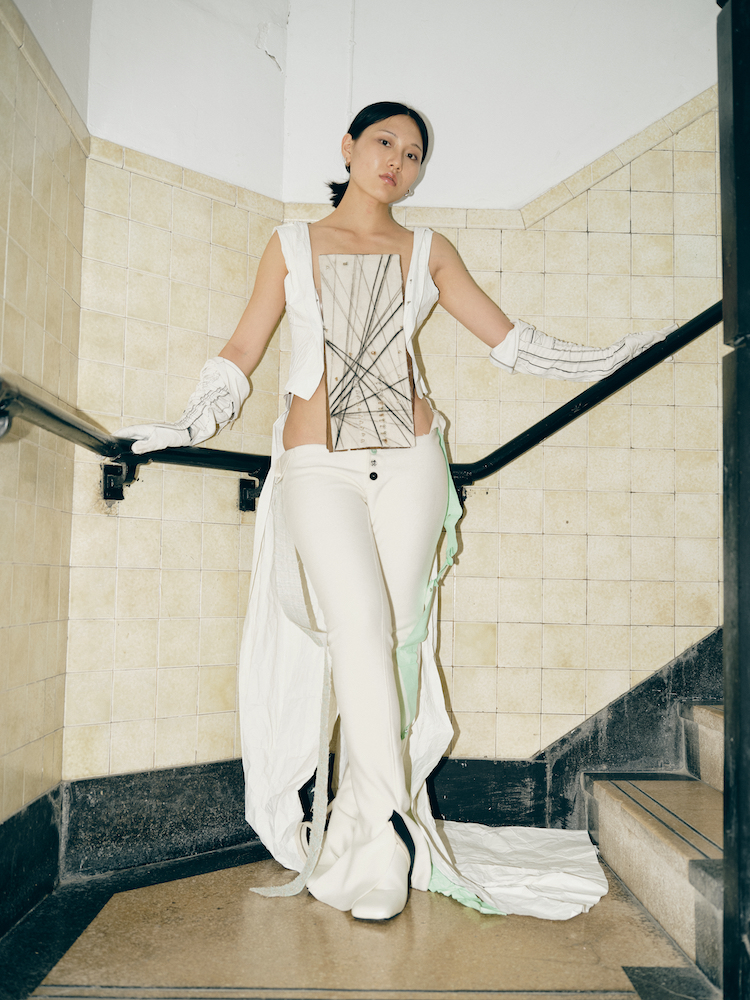
That instinct for self-expression underpins ‘At Hoc Ad Home’, Zhenzhen’s graduate collection, an exploration of home and belonging, shaped by her experience as a migrant. Drawing from memories of her childhood home in Shanghai, a hybrid of French provincial and neoclassical architecture, the collection imagines garments as “living artefacts”, transforming the body into an interior space. Blending a love of Rococo-era excess with unconventional techniques, Zhenzhen set out to see whether it was possible to create a “moving house” through clothing.
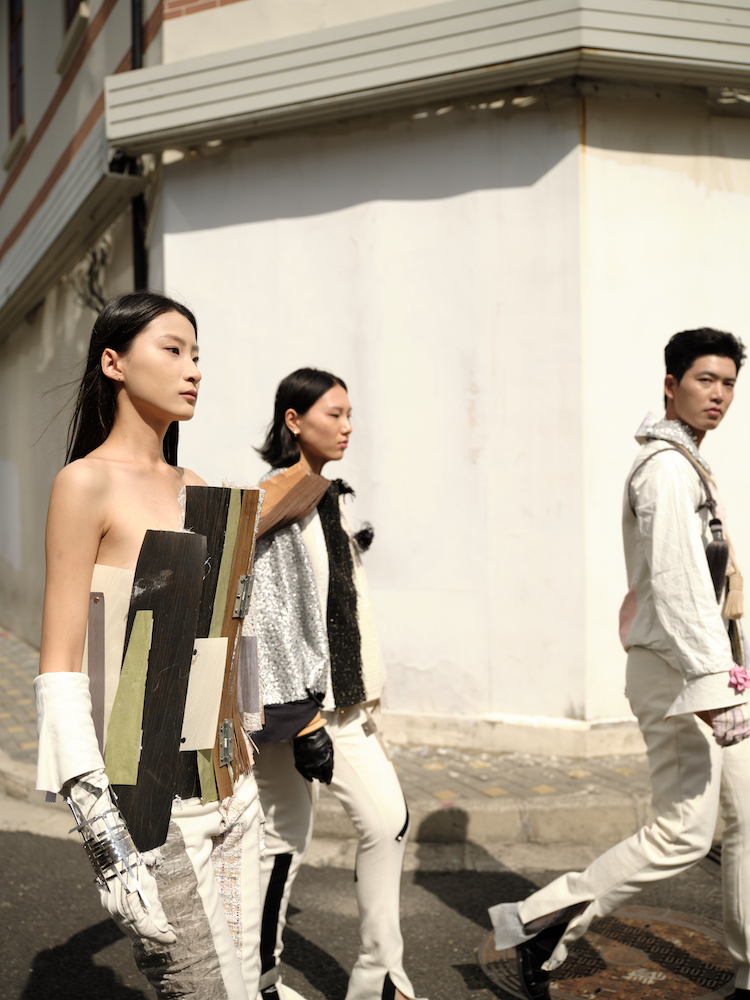
The result is a body of work that’s both lavish and tied to identity: clothing that embraces contradiction, excess and vulnerability in equal measure. As Zhenzhen puts it, “fashion is pain, and pain is fashion” but the pleasure of creating something she genuinely loves remains “simply euphoric.”
‘At Hoc Ad Home’ is one of many student collections that will be on display at the National Graduate Showcase as part of PayPal Melbourne Fashion Festival on February 24. Held at the Royal Exhibition Building, the runway will feature 12 graduate designers hand-picked from Australia’s leading fashion institutions. It’s always an exciting glimpse into the future of Australian fashion and Fashion Journal is proud to be a long-time media partner of the event.
Fashion Journal: Hi Zhenzhen! Tell me about how you got started in the fashion industry. Did you always want to be a designer?
Zhenzhen: I was introduced to Alexander McQueen at nine years old by my mother. I grew up in a very artistic household and started drawing and creating at a very young age. I spent all my adolescence drawing anime art and designing clothes for characters, nut it never occurred to me that fashion design could be a serious career.
It was during my last two years of high school that the pressure of having a career plan, or a general plan, became very real. This is when I witnessed the boom of independent designer brands in China, and realised the massive potential of this career. After a lot of pleading, convincing and debating with me, my parents finally agreed to let me study fashion design.
And no, I didn’t always want to be a fashion designer. My backup career route that almost came true was studying political science and becoming a diplomat. I still think about the other possibilities I could’ve dabbled with, but to be honest, in the grand scheme of things, there’s nothing else I would be or could be other than an artist or designer. I kind of fell into fashion through my work in hair and makeup, as well as my drag artistry, which influences the more theatrical elements of my work.
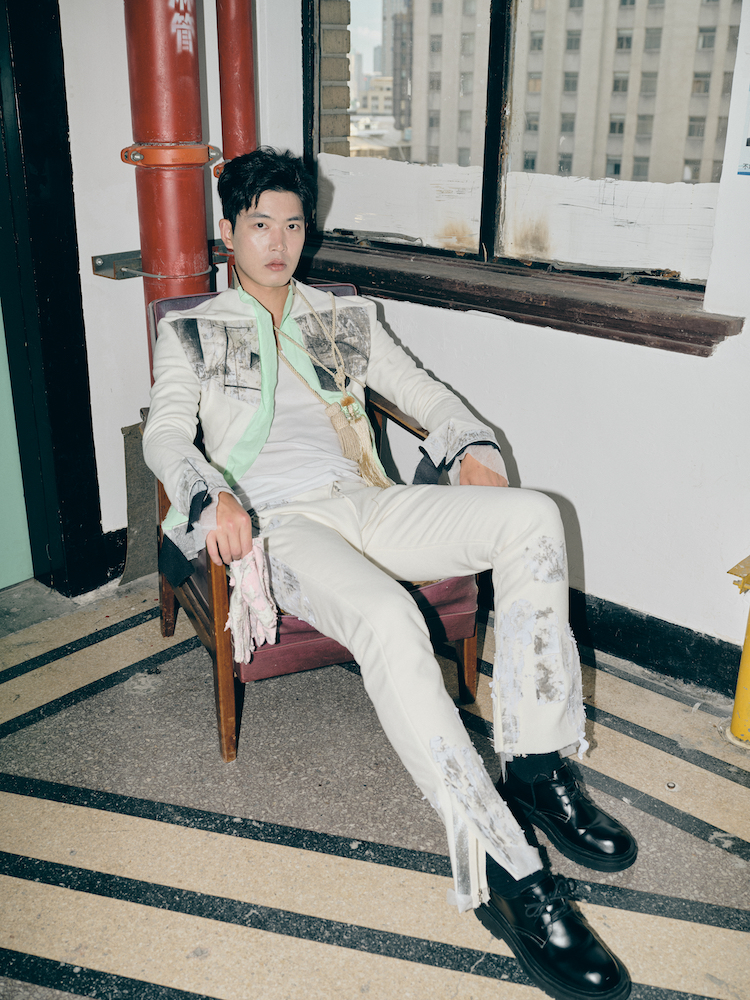
Tell me about the collection you’re showing for the NGS runway. What was the inspiration behind it?
‘At Hoc Ad Home’ is a collection about the idea of home, a concept shaped by my experience as a migrant and exile, and my longing for comfort, belonging and peace. [It] draws from my personal history, memory and emotions of my pubescent days.
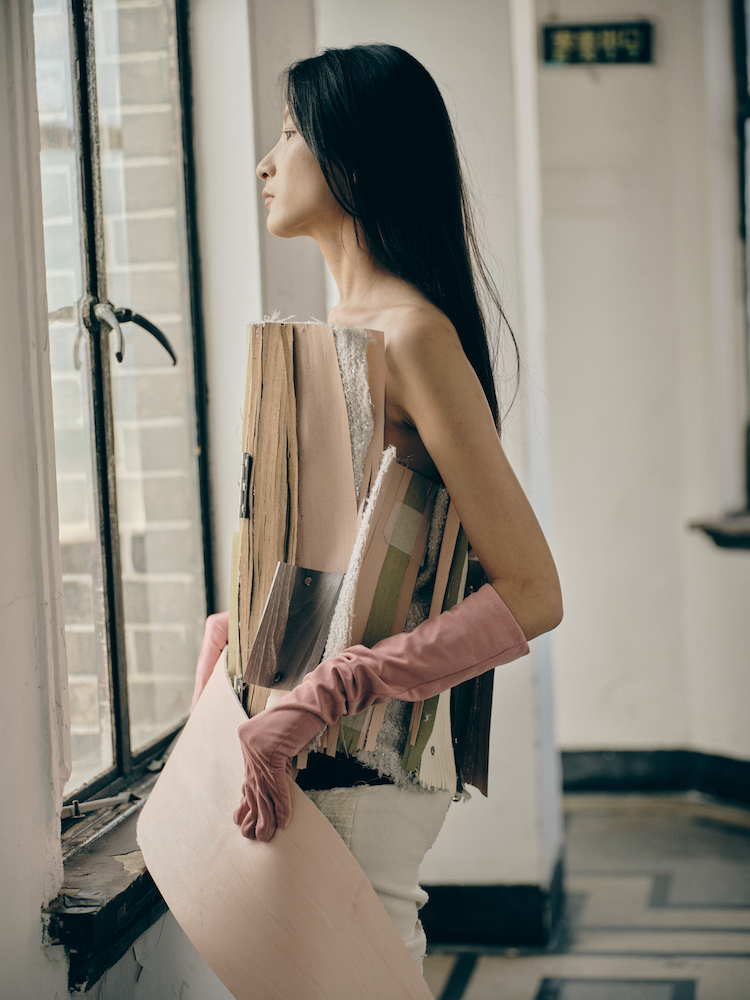
For me, ‘home’ is inextricably tied to my childhood family home in Shanghai: a hybrid house blending French provincial and neoclassical architectural styles. The garments in my collection are conceived as living artefacts: bodies transformed into interior spaces, drawing on materials and techniques typically reserved for architecture and interiors.
I combined my love for Rococo-period fashion and my zest for experimentation with unconventional techniques and treatments; I wanted to see if it was possible to create a ‘moving house’ through fashion.
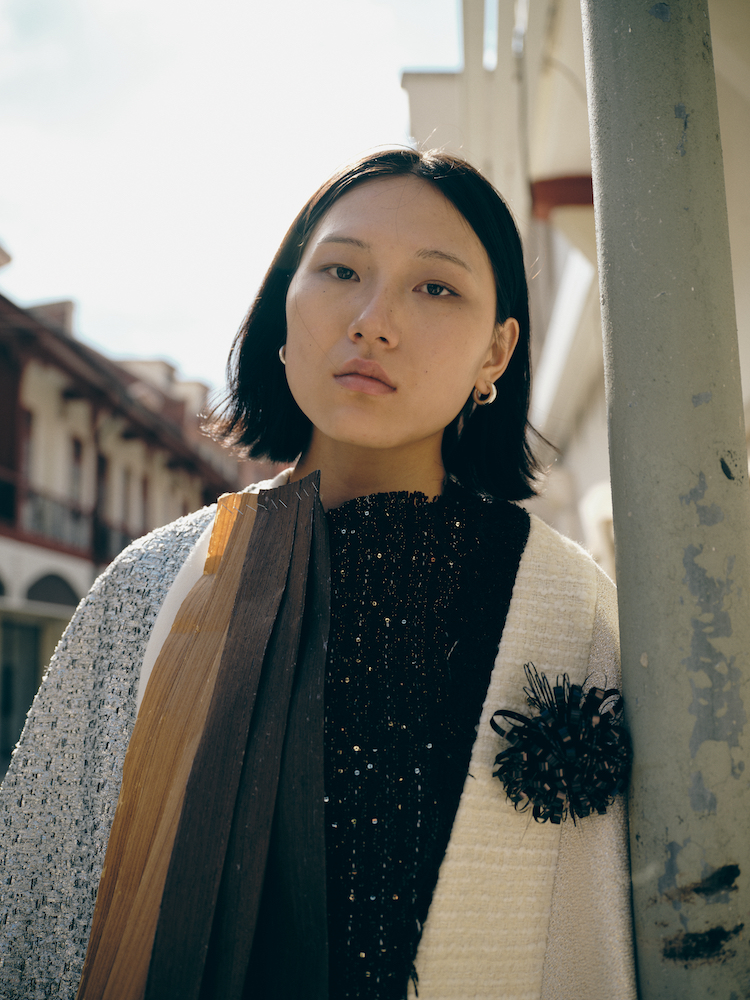
What has the design and construction process been like for you?
Pain mixed with pleasure. Not the other way around. But fashion is pain, and pain is fashion. The pleasure of creating something you genuinely like is simply euphoric, so you ignore the pain and keep at it. Creating this collection wasn’t a smooth process, it was more of a spiral ascending, but I had no idea where it was going.
I’ve hit many roadblocks and dead ends, it wasn’t till the cohort graduate show that the true form of my collection appeared, and I started feeling motivated. Only then did I truly understand why my lecturers keep saying: ‘The collection is never over’.
What are the best and worst parts about being a design student?
Best: the facilities and array of specialty machinery, making new friends, gossiping, discovering cheap yummy eats around your campus, cohort drama, seeing amazing, inspiring and talented people’s work, smoke breaks.
Worst: deadlines, sharing tables, cohort drama (when it involves you), unmedicated ADHD, perfect sunny days but you’re trapped in your studio, commuting in and out daily with 15kg of fabric and tools, staying up for four days in a row.
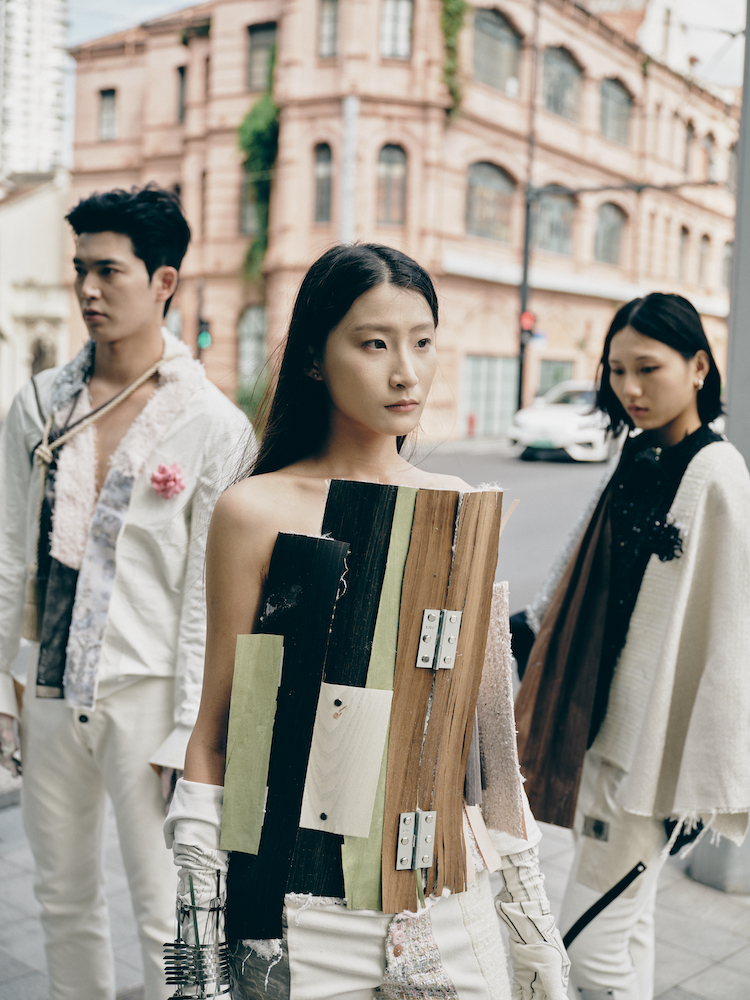
How would you describe your collection to someone who’s never seen it before?
I’m not a good descriptor but I’ll try my best. Think of the most bedazzling European palaces, Monet’s illustrious French provincial cottage, the peaceful old New England-ish seaside mansion. Think of the film Marie Antoinette, Dangerous Liaisons, and The Devil Wears Prada. Think of the skyscrapers of New York, the intricate iron structures of the Eiffel Tower.
Imagine what it would look like if you wore all those textures, colours, and materials on your body. How regal, lavish and protected you would feel. But you are not a walking relic or a walking tin box, while the low slim cut trousers comfortably hug your hips, you lie languid and idly on your favourite couch, thinking of nothing but sparkling daydreams and cherished memories.
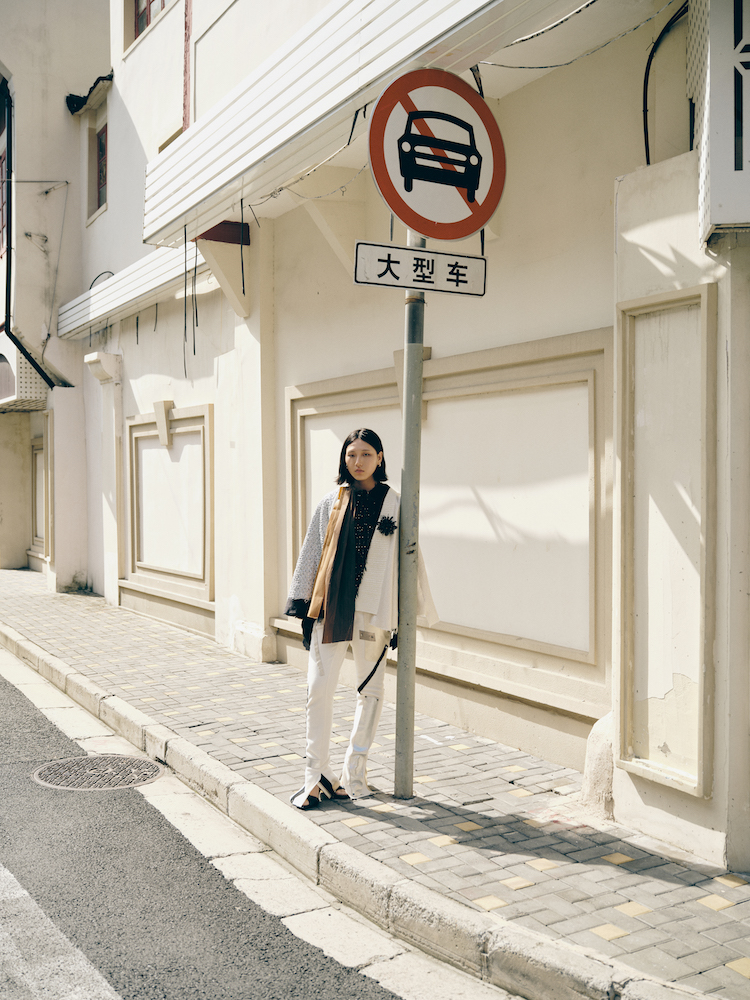
What are you most proud of in your work so far?
I’m proud of the materiality of my work. I am happy that I was able to mix so many different materials and techniques into one collection. I had lots of fun working with different wood veneers.
What do you wish you’d known when you first started your collection?
I purposely stepped in with no expectation or direct vision because I wanted to see what was beyond the wall of my consciousness and abilities. I wanted a clean slate, and I was excited about the unknown. The only thing I should’ve done is gotten an ADHD diagnosis and prescription before the academic year started.
When do you feel your most inspired, morning or night?
Definitely late at night, when the clamour of the city dies down and I’m left alone to myself and thoughts in my tiny windowless studio. Something about the day is just erky and uninspiring; it’s too wholesome. I need to be completely alone and free of distractions to be in the mood to create.
Who’s exciting you the most in fashion right now?
My friend Delrey (Xukai) Chen makes amazing jewellery (@studio.drc). Manfred Wong and Zachary Zhang, who are both talented at tailoring and have a strong focus on quality and craftsmanship. My favourite jewellery Vvren, run by Yiran, curates a different exhibition every few months in collaboration with different jewellery makers and artists, which I find very inspiring.
What about the local fashion industry needs to change?
We need to revitalise local manufacturing and create better supply chains for creatives who really want to produce high-quality garments. Finding high-quality materials and tools has been a great frustration in Australia, not to mention the prices of existing products, which don’t match the quality.
Secondly, I think there should be more collaborations between fashion institutions and local big brands in terms of career opportunities. There really is a lack of support during the transitional phase of a student to industry personnel in Australia. It’s really a shame to see so many talented, capable graduates not being able to even land an entry job.
Lastly, there seems to be a negative cycle of traumatised managers and bosses who pass down trauma to their underlings. We really need to be nicer to each other and break this cycle.
Where do you hope to be in the next five years?
I want to be living and working between Europe and Shanghai. I have a very open vision about the future, so who knows where I will land and what I’ll do. As long as I get to create, I am happy.
If you could land an internship with any designer in the world, who would it be?
Kei Kagami. To me, his work screams perfection. I’d love to learn how he combines industrial materials with soft materials.
How can we see more of your work?
You can follow my Instagram, @peroxide________star.
Get your tickets to the NGS Showcase at PayPal Melbourne Fashion Festival here.
Liked this? You’ll love these...