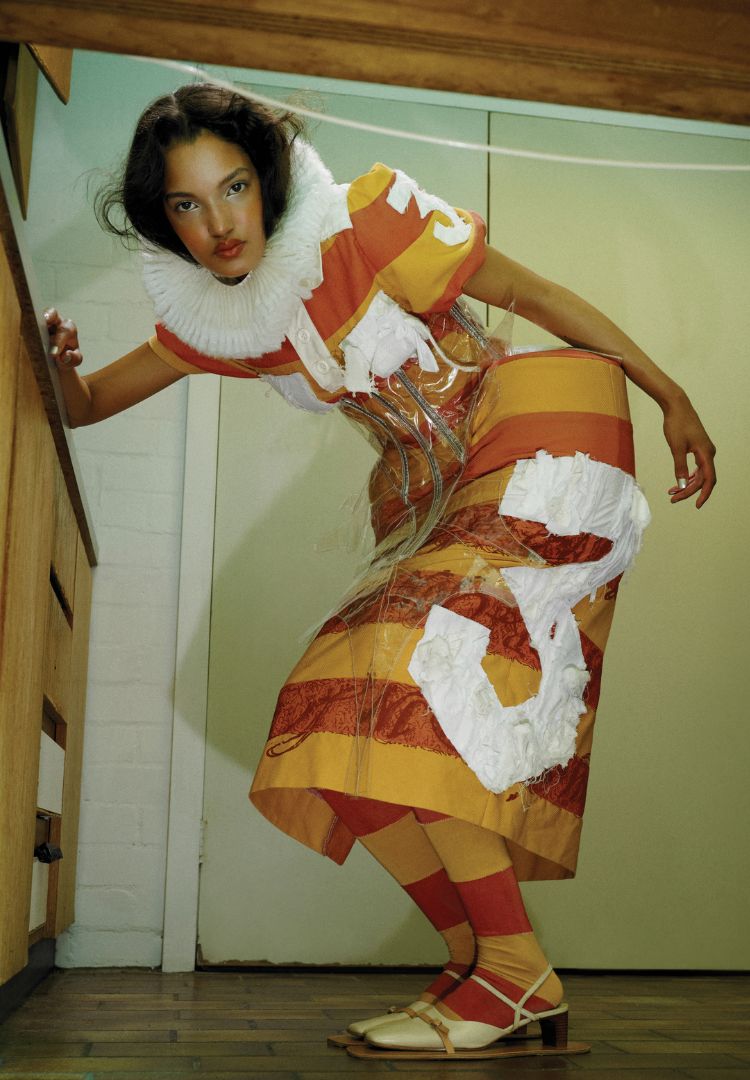


Is the Tabi still cool in 2026?
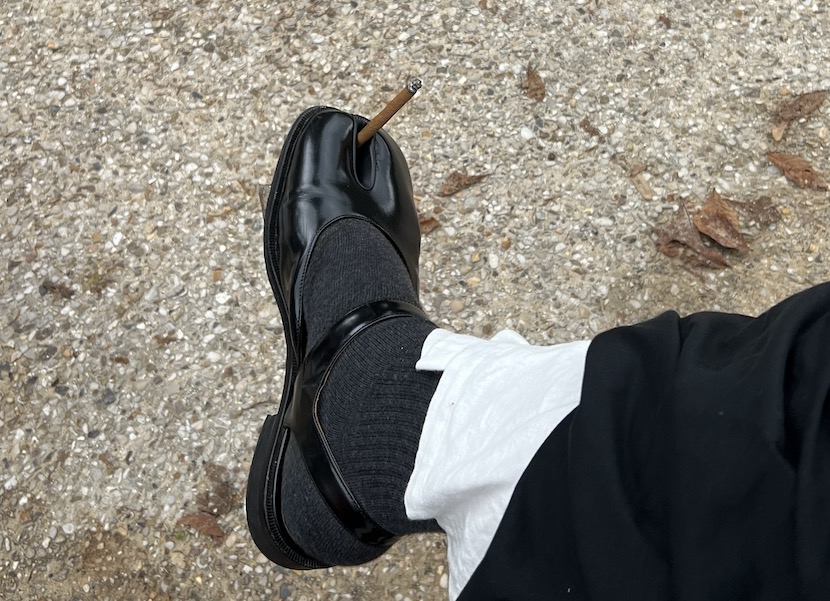
words by Amberley Colby
What fashion’s most divisive shoe says about exclusivity in the TikTok era.
I remember the first time I wore a pair of Tabis out of the house. The year was 2021, I was living in Auckland and heading out to meet a friend for dinner. I didn’t know what she was planning to wear, but I suspected my choice of footwear might prompt a few questions and perhaps a few curious looks from strangers. I was right.
“They’re so you,” she said, glancing down at my feet.
For more fashion articles and features, head to our Fashion section.
It was hard to gauge her tone but I wasn’t particularly concerned whether she liked them or not. Auckland’s central suburbs aren’t especially conservative, yet a simple Tabi was enough to ruffle a few feathers.
I took a certain satisfaction in that. They were, after all, my dream shoes: a secondhand pair of wedge-heel Tabi boots by Maison Margiela.
The brief history of the Tabi
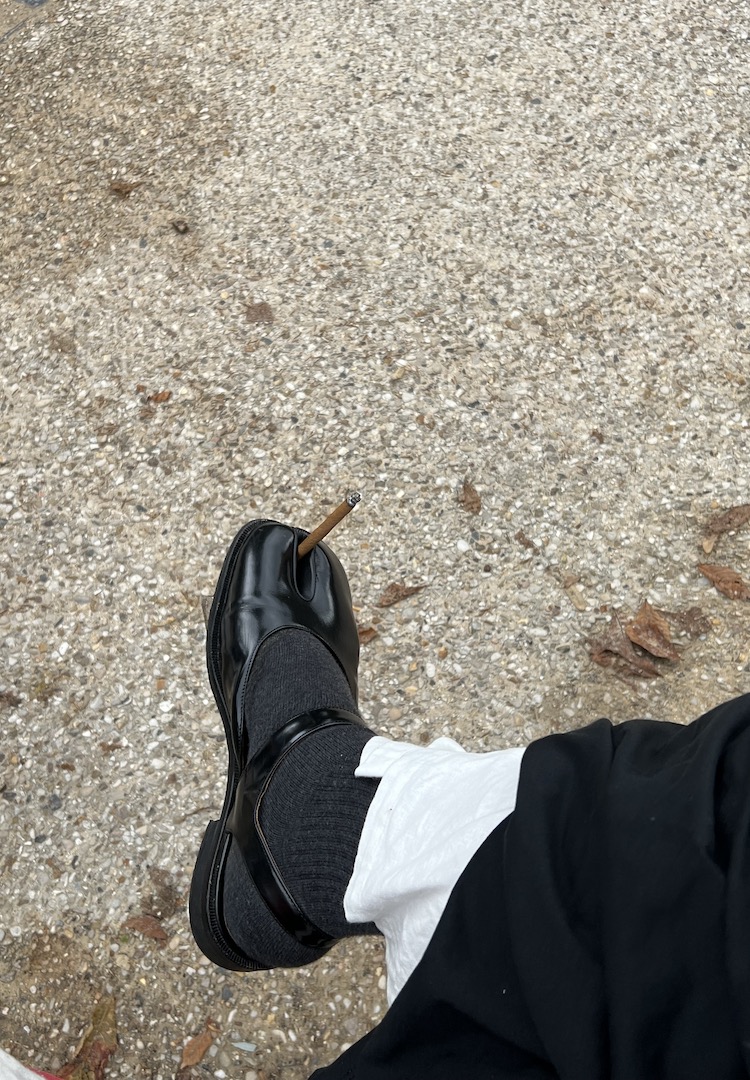
Defined by its distinctive split-toe silhouette, the Tabi is one of fashion’s most divisive shoes. Loved by some, hated by others, it’s become a cult object: a style recognised instantly by those in the know and dismissed by everyone else as looking freakishly hoof-like.
My exchange with my friend happened only five years ago, a relatively recent moment in the Tabi’s history. While Martin Margiela debuted his now-iconic interpretation in 1988, its origins stretch back to the split-toe socks worn in Japan as early as the 15th century.
Traditionally, the socks were associated with wealthier classes, as cotton was relatively scarce. Worn indoors with thong-style sandals, they were thought to promote balance and stability in the wearer. Once trade with China opened and cotton became more widely available, the style spread across Japanese society.
Around the turn of the 20th century, a hardier outdoor version – the Jikatabi – emerged for labourers and tradespeople, an iteration that no doubt influenced Maison Martin Margiela’s first Tabi designs.
Now, none of this is news. Tabis have long been a subject of discourse in fashion circles and over the years, brands from Nike to Vetements have released their own interpretations. Yet these versions still largely existed within the fashion ecosystem: expensive enough to remain aspirational, niche enough to signal a certain level of insider knowledge.
View this post on Instagram
Gaining momentum
Sometime around 2023, during one of my habitual TikTok scrolls, I stopped on a video of a woman showing off what appeared to be the classic flat-soled Margiela Tabi ballerinas. However, upon reading the caption, I discovered they weren’t Margiela, but a pair by Singaporean label Woodchuck Sato.
A quick Google search told me that the brand got its start on Etsy before gaining momentum during the pandemic, attracting fashion devotees with handmade leather Tabis that captured the look of Margiela’s at a fraction of the price.
I remember feeling a flicker of frustration. Here were shoes that looked remarkably similar to the ones I’d saved up for, costing hundreds of dollars less. And yet, I still took comfort in knowing mine were the ‘real’ ones – even though I knew Margiela didn’t own the silhouette.
Then came the memes. Later that year, creator Alexis Dougé posted a TikTok recounting how a Tinder date had stolen her Margiela Mary Jane Tabis. The video amassed hundreds of thousands of likes and comments, and was subsequently covered by Vogue and The New York Times. It wasn’t simply a viral story about a bad date; it was evidence that the Tabi had escaped fashion’s echo chamber and entered the broader cultural lexicon.
View this post on Instagram
Mass adoption
Since then, the shoe has become almost impossible to avoid. It appears on Pinterest boards, in countless influencer styling videos and, perhaps most tellingly, on the websites of Steve Madden, Alias Mae, Therapy and Glassons.
What was once an insider’s wink has become instantly recognisable, even to people who might have once dismissed the style as ‘weirdo‘ footwear. It’s made me wonder whether the Tabi has lost some of the mystique that made it so appealing in the first place.
The question is no longer whether people recognise the Tabi. It’s whether, now that almost everyone does, it can still function as a symbol of rebellion, exclusivity and fashion literacy.
The whole phenomenon reminds me of Miranda Priestly’s iconic cerulean blue monologue in The Devil Wears Prada, in which she traces the life cycle of a trend: first appearing on the runway, then trickling through the designer market before eventually landing “in some tragic casual corner” – or, in this case, fast-fashion retailers.
It seems the Tabi has reached that point. But I’m not convinced it’s the death knell some people imagine. Fashion has always worked this way: ideas filter down, are reinterpreted and eventually reach wider audiences. The difference today is that social media has dramatically accelerated the process, collapsing what once took years into a matter of months.
View this post on Instagram
It’s easy to lament the loss of exclusivity when something once considered niche becomes commonplace. Luxury fashion has long relied on scarcity, whether through price, availability or simply cultural knowledge, to maintain its allure. As a silhouette becomes more accessible, it inevitably loses some of its potency as an insider signal.
Perhaps that’s the contradiction at the heart of fashion. The industry thrives on exclusivity, yet the trends that shape culture are almost always the ones that escape it. Not everyone can justify spending upwards of $1,000 on a pair of shoes. If fashion is a form of self-expression, shouldn’t more people have access to the silhouettes they love?
After all, the appeal of the Tabi has never really been about exclusivity. Its enduring power lies in the fact that it’s a genuinely polarising design. Even now, decades after Margiela first sent it down the runway, it continues to provoke reactions. Some people still think they’re hideous. Others think they’re the coolest shoe ever made.
Perhaps that’s exactly why they’ll endure, because a shoe that still divides opinion can never become entirely ordinary. I guess only time will tell.
For more Tabi lore, try this.
Liked this? You’ll love these...