

Why shoes are getting freakier and freakier
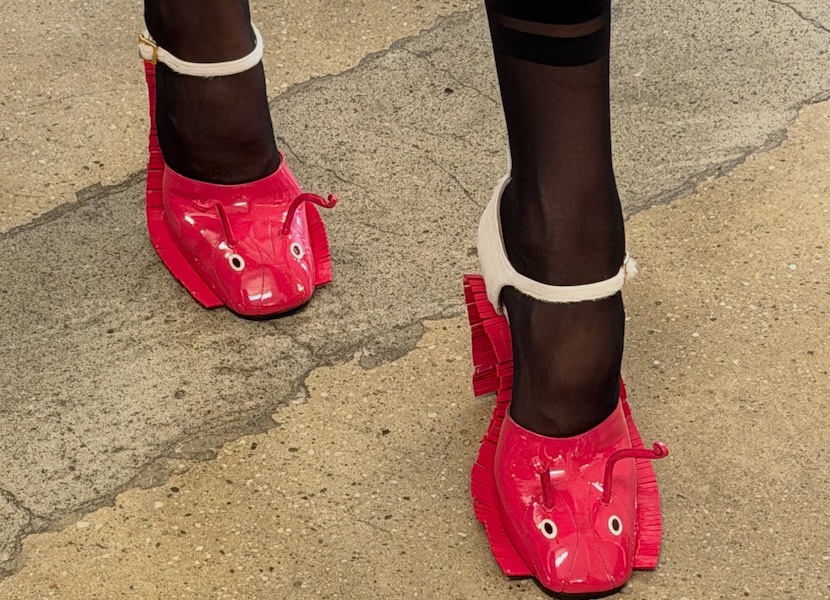
image via @eddiemarcoe/instagram
words by kitty lloyd
“Footwear that sways into the uncanny.”
Shop the footwear section of your chosen fast-fashion vice and you’ll find an assortment of near-perfect high-fashion imitations. The Row’s jelly Mara flats, Alaïa’s fishnet Mary Janes and Phoebe Philo’s gathered ballet styles have all been re-interpreted and replicated countless times. Even Margiela Tabis, and their thonged toe, haven’t been able to escape the churn of dupe culture.
For several seasons, Spring/Summer footwear appeared to be getting more and more streamlined. A side-effect of lockdown living and the chaos of the world, designer Nina Christen told fashion writer Joan Kennedy: “The world is getting so out of hand, we just feel drawn to more essential things that support our comfort, that are breathable and [have] not so much design [and] more functionality.”
For more fashion articles and features, head to our Fashion section.
Shorthand for ‘quiet luxury’, this era of footwear was defined by ultra-simplified designs, minimalist details and updates to practical silhouettes like ballet flats and flip-flops. Even in the case of something like Tabis, any illusion of ‘weirdness’ is undercut by the design’s unquestionable practicality and comfort. The style itself is inspired by traditional Japanese tabi footwear, which were widely adopted as workwear.
It’s this simplicity and practicality that made these styles particularly susceptible to the dupe economy, being incredibly easy to copy and mass-market. Not to mention, TikTok’s affinity for trend reports has put a renewed emphasis on what is trending or ‘chic’, driving the appeal of high fashion dupes that come at lower price points.
View this post on Instagram
With the ‘Big Four’ fashion weeks coming to a close this week, it feels as though high fashion is pushing back against the relentless dupe pipeline with a wave of weird shoes. The term ‘weird’ is being used here with the highest praise. It’s footwear that sways into the uncanny; a little unsettling, a tad absurd and usually, a lot intriguing. A firm departure from the average person’s daily shoe and something different entirely from fashion’s usual motifs of elaborate embellishments and bold colourways.
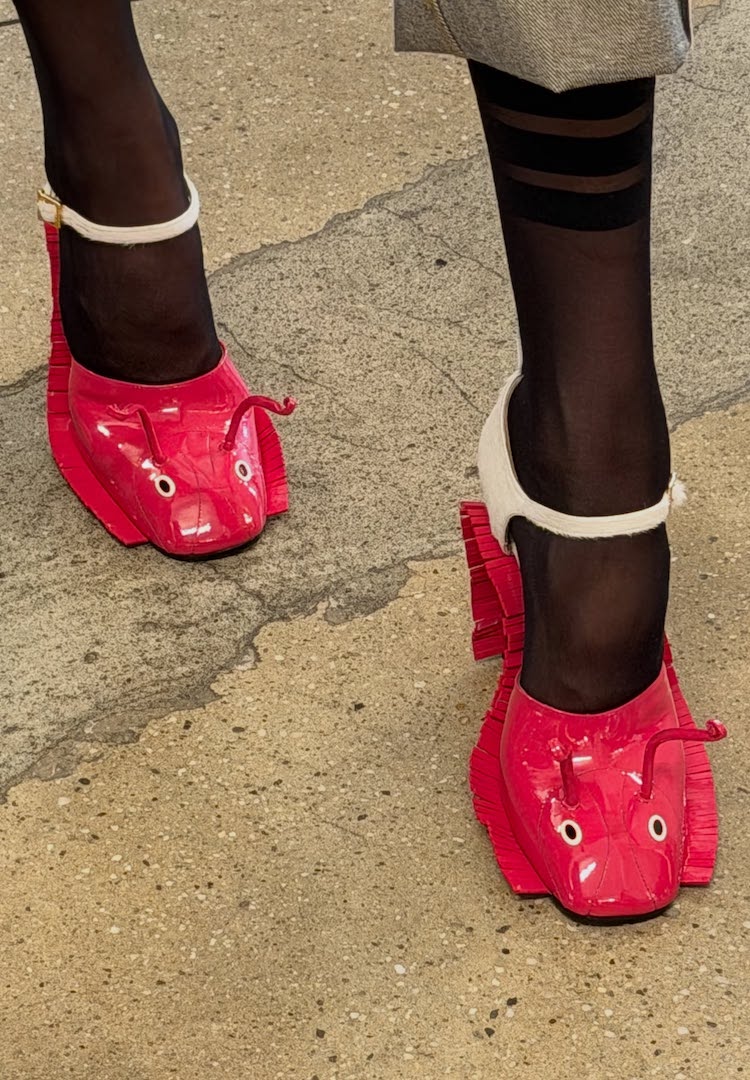
Many Spring/Summer shows embraced this era most emphatically. In New York, Sandy Liang debuted a series of literal kitten heels – zany wedges decorated with ears, nose and eyes, bearing a striking resemblance to Marc Jacobs’ Kat Ballerina of the 2010s. Thom Browne made his metamorphosis theme explicit with insect-inspired heels, complete with arching antennae and beady eyes crafted from patent leathers.
View this post on Instagram
Across the pond, models walked the Chopova Lowena runway in ballet flats encrusted in oversized holographic sequins and pumps adorned in black fur. Marni’s buckled Mary Janes were paired with sequinned knee highs and matching buckled calf-garters; meanwhile, Blumarine collaborated with Ugg to engulf their classic mule slipper in a frenzy of purple feathers.
This sudden appetite for weird footwear has been widely foreshadowed throughout the year. From the single-toed rubber-heeled Havaianas debuted at Copenhagen Fashion Week by Studio Constance to the growing popularity of Vibram’s Five Fingers amongst fashion girls, footwear has progressively been getting freakier and freakier.
In August, this reached fever pitch when actress and It-girl Margaret Qualley walked the red carpet in a pair of shoeless sandals. An oxymoronic style debuted in Matthieu Blazy’s Chanel Resort Show back in April, these shoes feature a leather heel, studded with the Chanel monogram and nothing more. The soles of the starlet’s feet were exposed to the ground below as she posed for an onslaught of flashing lights.
The appeal of these shoes lies in their confusing design, and their refusal to be easily understood can also make them harder to copy. A simple ballet flat can be reduced to its essential components and reproduced almost intact, whereas a soleless shoe, a butterfly pump or sequin-socked calf depart from the familiar conventions of footwear. By being difficult to reduce to a generic approximation, they offer the fast-fashion machine no obvious, practical blueprint to follow.
View this post on Instagram
Amidst the eerily accelerated dupe culture, weird shoes feel like an appropriate antidote – designs so excessive, absurd and impractical that their weirdness is what makes them valuable. They might not defeat the shamelessness of the fast-fashion industry that has no qualms about turning artistic novelty into a mass-market product, but these weird designs make it much more difficult to do so precisely or effectively. Every odd detail and uncanny antennae helps make the distinction between the original and its imitation that much more glaring.
Of course, this also raises the question: what happens when exclusivity itself becomes the point? The repercussions of dupe culture affect us all. The gutting of our cultural creativity and the devaluing of the craftsmanship, materials, labour and artistry involved is undisputedly egregious. But in trying to escape the sameness of fast fashion, it does feel as though high fashion could revert back to one of its oldest languages: elitism.
Throughout time, shoe design has always been a signifier of status. For feudal society, what resided below the ankle could signal one’s class, wealth and social position. This tension gave way to some of history’s most extravagant and impractical shoe designs, where ornate detailing went beyond aesthetics to communicate power. To wear something impractical was to signal that you did not need to be practical; that your time, money and labour were abundant enough to be wasted.
In an age where almost anything can be replicated, excess once again becomes a way of distinguishing the original from the imitation. This is probably where the weird shoe craze finds its uncanny quality, making the great paradox of modern fashion so legible.
The watching eyes, lack of soles and cascading feathers operate as emblems of artistry and the joy of aesthetic absurdity. But at the same time, they remind us of a distance that gapes between classes. A reminder that some can afford to exist beyond the demands of utility, while most remain bound by them.
For more on dupe culture, try this.
Liked this? You’ll love these...