

Is it okay to objectify men now? This Melbourne label says yes
IN PARTNERSHIP WITH MILKBAR
WORDS BY IZZY WIGHT
“We want our customers to feel like the lead character in their own cinematic world.”
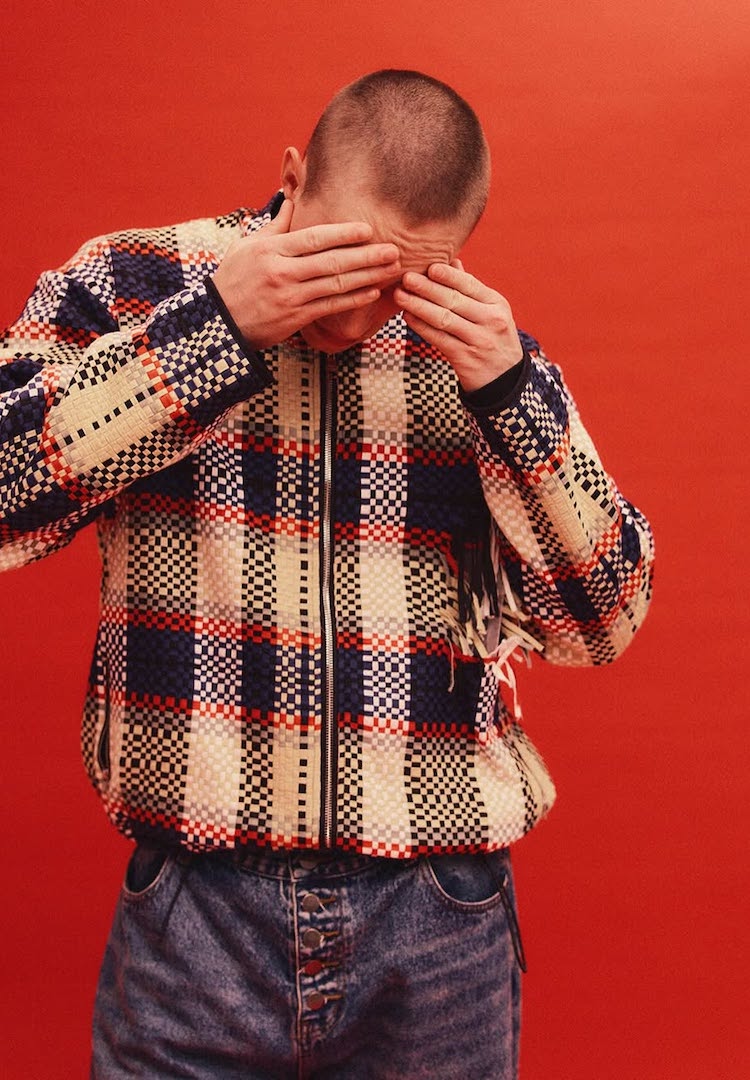
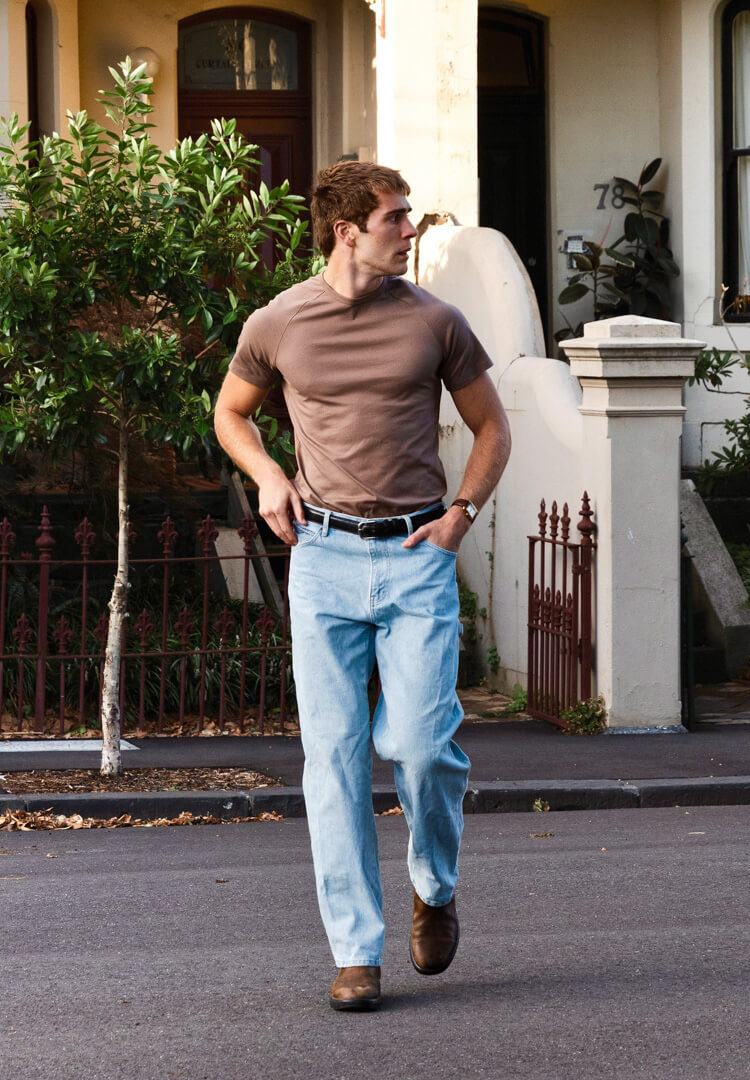
Melbourne designer Simon Agosta takes T-shirts very seriously. A firm believer that the “sluttiest thing a man can wear” is a fitted white tee, designing a perfect one (thick cotton, bound neckline, tight on the biceps), was integral to the launch of his brand, Milkbar.
In a sea of oversized, boxy silhouettes, Simon wanted to create a T-shirt that paid homage to the male sex symbols of yore. Inspired by 1950s heartthrobs like James Dean, Marlon Brando and Clint Eastwood, Milkbar’s modus operandi is simple: produce high-quality basics that help men look and feel their sexiest. Not ‘best’ or ‘most presentable’ – sexiest, and don’t forget it.
For more fashion news, shoots, articles and features, head to our Fashion section.
Because in 2026, Milkbar believes objectifying men is totally fine. The brand will even make clothing to encourage it. “Every film in the past four years with a female demographic has banked its marketing budgets on lusting over the male actors, and stirring affair rumours between co-stars,” Simon tells me, citing Emerald Fennel’s bodice-ripper “Wuthering Heights” as an example. “For whatever reason… it seems that men are being more objectified and morally, I think there’s nothing wrong with it.”
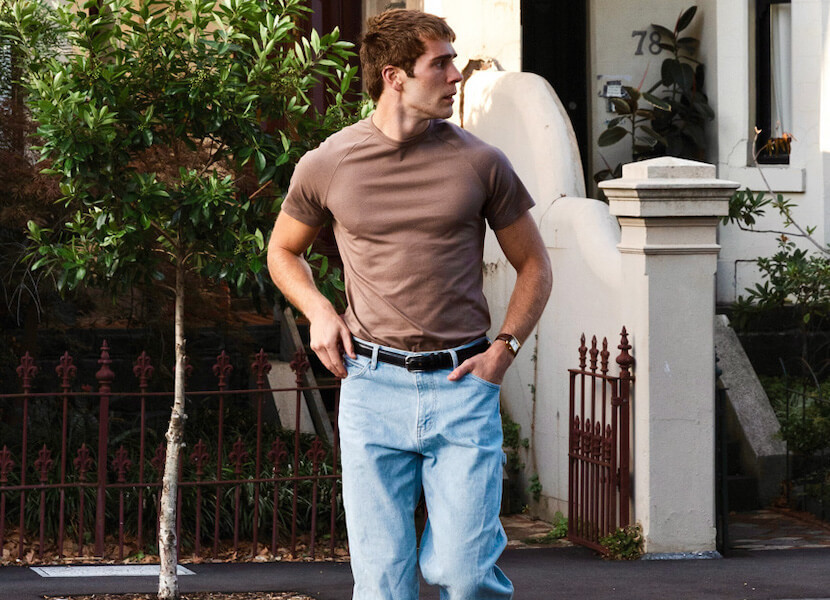
Unlike other menswear brands, Milkbar’s shorts are a little shorter, its shirts a little tighter, its chunky ribbed singlets designed to accentuate chest and back muscles. It’s a choice Simon makes for his customers and, importantly, the people checking them out.
View this post on Instagram
Because somewhere between Magic Mike and the Jezabel/Buzzfeed era of the internet, the female gaze came into focus, bringing with it an era of equal opportunity horniness. “I can’t speak for women, but it seems that because of the internet, there is a lot less shame around sex and lust. It almost feels like the ’70s… in the sense of a sexual revolution. I imagine it’s quite empowering to have the roles reversed, for men to be objectified,” Simon tells me.
“In the same way female body standards fluctuate with the trend cycle, so do male body standards. The 2010s definitely skewed more towards a lean physique for men. By the late 2010s, it felt like everything was oversized; the body was completely invisible. Now that the trend cycle has become more fitted and shorts are getting shorter again, there is a lot more to objectify, and I assume a lot more for women to be excited about.”
After speaking to a handful of Milkbar fans (read: the girlfriends of the men who wear it), it appears Simon would be right. “There’s an air of confidence he exudes when he wears Milkbar,” says Steph, speaking about her partner. “And I know other women see it too. There’s been more than one occasion when we’ve been out and a woman has complimented him while he was wearing a Milkbar fitted raglan. Such are the perils of dating a ridiculously handsome man with a strong moustache and even stronger sense of style.”
View this post on Instagram
Issy was the one to buy the Milkbar shirts for her boyfriend, and she noticed a difference in his confidence almost immediately. “A tight, sexy Milkbar shirt or singlet on a handsome man from an immigrant Greek family is a beautiful sight, and he knows it. He feels put-together in the well-made raglan tee, and glows a little bit at the edges when you compliment him,” she says.
Designing men’s clothing that appeals equally to women is no easy feat. When I ask Simon about finding the balance, he muses that the instinct might be genetic. Raised in an Italian family in Melbourne’s outer northern suburbs, Simon grew up studying the principles of spezzatura. “In Italian, spezzatura translates to ‘effortless style,’ which I think is most important in menswear, particularly in Australia,” he says.
“The spezzatura of my ancestors would have been even more refined once they came here. They would tell stories of getting into fights because they walked into pubs in beautiful suits when they first got to Australia. When I look back on the archive of family photos, you can see how, even through the racism and tall poppy syndrome, they still found a way to express their Mediterranean origins in subtle ways… having an eye for fashion but balancing the context of the environment is something I feel like I’ve always had a feel for, maybe because of my heritage.”
View this post on Instagram
Heritage is an integral part of the Milkbar brand identity, and was one of the reasons why the brand’s recent collaboration with Carlton Football Club made so much sense. “I have a reverence for local storytelling, which means Carlton Football Club is in the same light as the New York Yankees for me. If anything, Carlton is actually cooler,” Simon tells me. “My whole life, I’ve grown up on stories of my mum and her cousins living on Rathdowne and Drummond Street in Carlton and walking to Princes Park to watch them play…looking back now, I feel like I created something with that project that only I could have.”
But while the brand remains rooted in the city’s small-but-mighty creative scene, Simon continues to think deeply about the type of masculine traits he chooses to champion with Milkbar. “One of our shoots isn’t going to reframe the spectrum of masculinity. The goal is to explore that in our own way, over the course of our whole body of work.”
Explore the Milkbar collection here.
Liked this? You’ll love these...