



So, you want to start a fashion label? Here’s what to do first

PHOTOGRAPHY BY TOBIAS ROWLES
IN PARTNERSHIP WITH LCI MELBOURNE
WORDS BY SARAH NOONAN
“The truth is, fashion business is about what sells.”
Over the past few years, the timeline between graduating from fashion school and launching a label has shortened. Where designers once spent years working under someone else’s name, many now consider starting their own brand almost immediately.
It’s not hard to see why. After months of fittings and refinement, launching can feel like the logical next move. And in some ways, it is. What’s less obvious is everything that supports it. A finished collection is one thing; building the structures behind a brand is another.
For more fashion news, shoots, articles and features, head to our Fashion section.
This is where the shift from studio to market becomes real. Pricing, production schedules, forecasting and growth strategies don’t always come naturally, but they do shape whether a collection extends beyond its first release.
For Nataša Pitra-Grbić, founder of Pitra the label and Head of Business and Management at LCI Melbourne, that transition is familiar territory. She has built and scaled her own brand through multiple phases of growth, navigating the same commercial recalibrations she now teaches to aspiring designers.
So before locking in manufacturers or announcing a launch date, it’s worth understanding what actually comes first.
Build a brand, not just a collection
Early on, it’s easy to focus on the product, but longevity depends on everything surrounding it. That means thinking beyond the garments themselves and looking at the whole picture when it comes to your label’s identity.
As Nataša knows, building a brand is a long-term commitment. “Without the right mindset and business foundations, the journey can become unnecessarily difficult. This is precisely why we intentionally combine creative and business education at LCI Melbourne,” she explains. “It ensures students are equipped not only to design, but to sustain and scale their ventures beyond university.”
In Australia, that long-term thinking is critical. “The [local] fashion landscape is small, highly competitive and relationship-driven. Reputation matters. Longevity matters,” she stresses. Designers who endure tend to understand this early.
Design for your customer, not just your portfolio
One of the first steps Nataša recommends is to get specific about who you’re designing for. “Understand who your target market is. Design for them, not for you,” she tells her students. Too often, emerging designers create for themselves rather than their audience.
It’s a shift many creatives resist. But as Nataša points out, fashion is a commercial enterprise. “The truth is, fashion business is about what sells,” she says. The ones who take commercial viability seriously are the ones who’ll survive.
Knowing your audience informs aesthetic decisions, pricing and even your supply chain. It allows you to build a value proposition that translates creatively and commercially, allowing your designs to actually sell, without compromising your vision.
Test your ideas in real time
One of the biggest mistakes emerging designers make is producing too much, too soon. Momentum can make a full collection feel urgent, but sometimes it’s better to take a measured approach.
“Use design thinking when launching,” Nataša advises. “This means not going full scale in production, only selecting key silhouettes to test with your customer so you do not over produce.”
“The largest problem is the amount of fashion businesses that commit to production and then sit on thousands to millions of dollars worth of stock. Not only is it not good for the environment, but it will slowly decline your business,” she says.
In other words: treat your first release as a test. Identify the strongest pieces, gauge demand, refine your pricing and production model, then expand with intention.
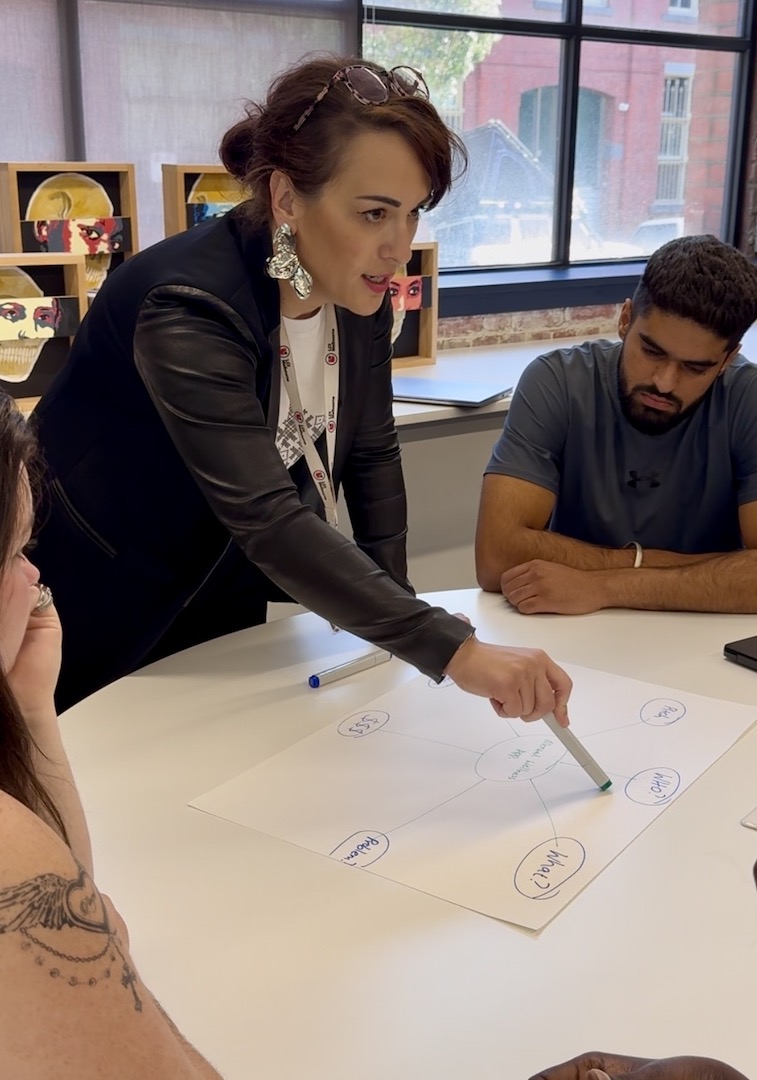
It’s an approach she embeds into her teaching, where students at LCI Melbourne are encouraged to prototype and pressure-test their ideas before committing to scale. “It gives our students the practical skills to be able to trial their creative business ideas in real life, with the support of industry mentors, facilities and safe spaces to fully launch their businesses.”

Budget for more than you think
If there’s one financial principle to adopt early, it’s to plan for more than you think you’ll need. “Finances in the fashion business are always unpredictable, and whatever you plan, I suggest doubling it,” says Nataša.
From production complications to marketing spend, unforeseen costs are inevitable. A robust plan gives you flexibility to make smarter choices under pressure.
“There are many unforeseen circumstances in fashion that can be detrimental to the finances of the business. Especially when it comes to production… Always plan for more. You will thank yourself later when you do not go over your budget.”
Spend time inside the industry first
There’s a difference between understanding fashion academically and operationally. Working within an existing brand exposes you to supplier relationships, delivery pressures and the realities of cash flow in ways a classroom can’t.
“You learn what you do and don’t want in your own business before carrying the full weight of leadership,” Nataša says. That perspective can shape everything, from how you negotiate with manufacturers to how you respond to setbacks. Launching immediately isn’t always the fastest way forward.
Treat entrepreneurship as a skill
“Entrepreneurship is not for the faint-hearted, but it is something that can be learned,” Nataša says. Learning, in this case, means exposure: understanding what happens when a plan doesn’t quite land, and adjusting accordingly. That’s the thinking she brings into her teaching, where students are encouraged to build their own ventures while still studying.
“The ability to launch your own business while studying a business degree is our value proposition as a higher education provider, because it gives students the opportunity to make mistakes, plan and launch before graduating.” And that kind of support is pivotal.
For students weighing up fashion design versus business, Nataša says to think practically. If you’re driven by garment construction, design may be your path. If building and scaling a label excites you, business offers a different toolkit. Increasingly, the two intersect – which mirrors how the industry actually works.
Launching a label isn’t about rushing to production or having everything figured out. It’s about experimenting, learning from small-scale decisions, and building systems that support your creative vision. Approach it with curiosity and strategy, and you’ll be better positioned to turn your ideas into a brand that lasts.
Find out more about the Fashion Design and Business and Innovation programs at LCI Melbourne here.
Liked this? You’ll love these...