


Underwear through the ages: Roman loincloths, Candypants and pearl thongs
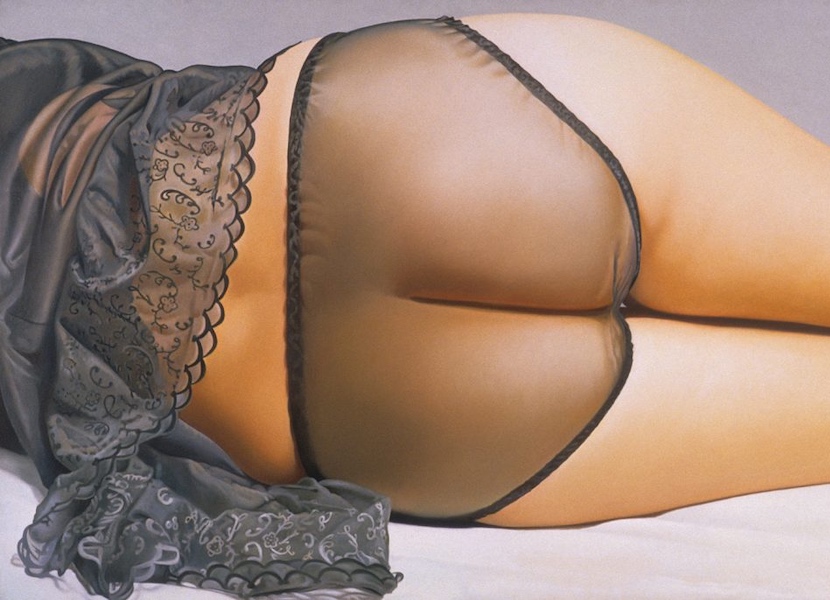
John Kacere, Jutta, 1973. Courtesy of the Estate of John Kacere
Words by Constance McDonald
A brief history.
I’m staying at a farm in the Central Highlands in Vietnam. It’s eight dollars a night and includes one meal. Today I chose the prawn dumplings and they drift like small folded envelopes in the clear broth. There’s a dried-up well here. I shout my name into it and it comes right back to me.
Two thousand years ago, a woman removes her underwear. She holds it over a well’s dark mouth of water for a moment before she lets it go. In 1953, an archaeologist reaches into that same well, in the City of London, wipes off the grime and realises what he is holding. It’s a pair of carefully constructed leather underwear. That night, he goes home, lies in bed and wonders: Who was she?
For more fashion news, shoots, articles and features, head to our Fashion section.
In Sicily, near Piazza Armerina, are the remains of the Villa Romana del Casale. Inside, on the floor of a small room, is a mosaic depicting 10 women; some are running, and one holds a discus. Nine of the women wear leather underwear known as subligaculum: athletic, fitted and Ancient Rome’s answer to Lululemon spandex shorts. That is what was found at the bottom of the well.
Across the Mediterranean, Egyptian King Tutankhamun was buried with 145 pairs of underwear. On TikTok, people debate how many pairs of underwear you should pack for a week-long trip. Tutankhamun’s schenti are made from a rectangle of linen wrapped around the hips and knotted at the front. They’re similar in function and aesthetic to Rome’s subligaculum. The loincloth, in all its variations, remains humanity’s oldest undergarment.
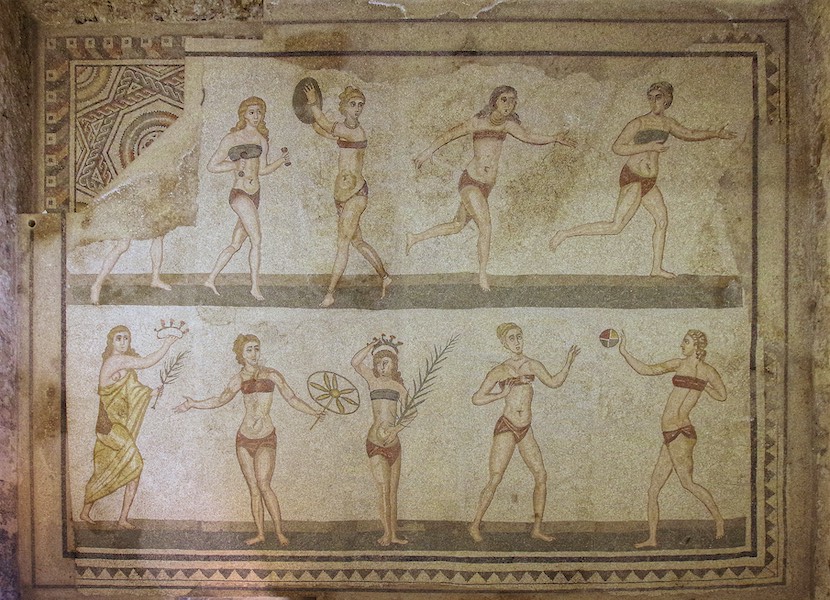
Floor mosaic, Villa Romana del Casale, Sicily, c. 4th century AD. Photograph by Berthold Werner.
Underwear is our most practical garment, right up until it isn’t. It disappears so easily, which makes it surprising how often it reappears: in tombs, in wells, in mosaics, behind museum glass, in archives, on screens.
Sift through your own underwear drawer. There’s the expensive lace pair purchased during a period of optimism. The comfortable cotton pair that has forgotten its original shape but knows yours. The black pair you’ve been meaning to return to your friend since you borrowed them for a morning-after brunch. The period pairs. The emergency pair that’s always picked last and signals laundry day must be today. Seven-pair ‘days of the week’ sets (missing, somehow, Wednesday and Friday).
For something so ordinary, underwear has an unusual tendency to survive. Not always physically, though sometimes that, too.
In 1954, Marilyn Monroe stood over a subway grate on Lexington Avenue while the city’s hot mechanical breath lifted her white dress into the air, revealing her underwear. If you go there now (specifically, the eighth grate south of East 52nd Street), you can stand in the exact spot. There is an online project called Traffic Cam Photobooth that lets you access the city’s surveillance camera network so you can immortalise your own Marilyn moment. Just make sure you are wearing underwear.
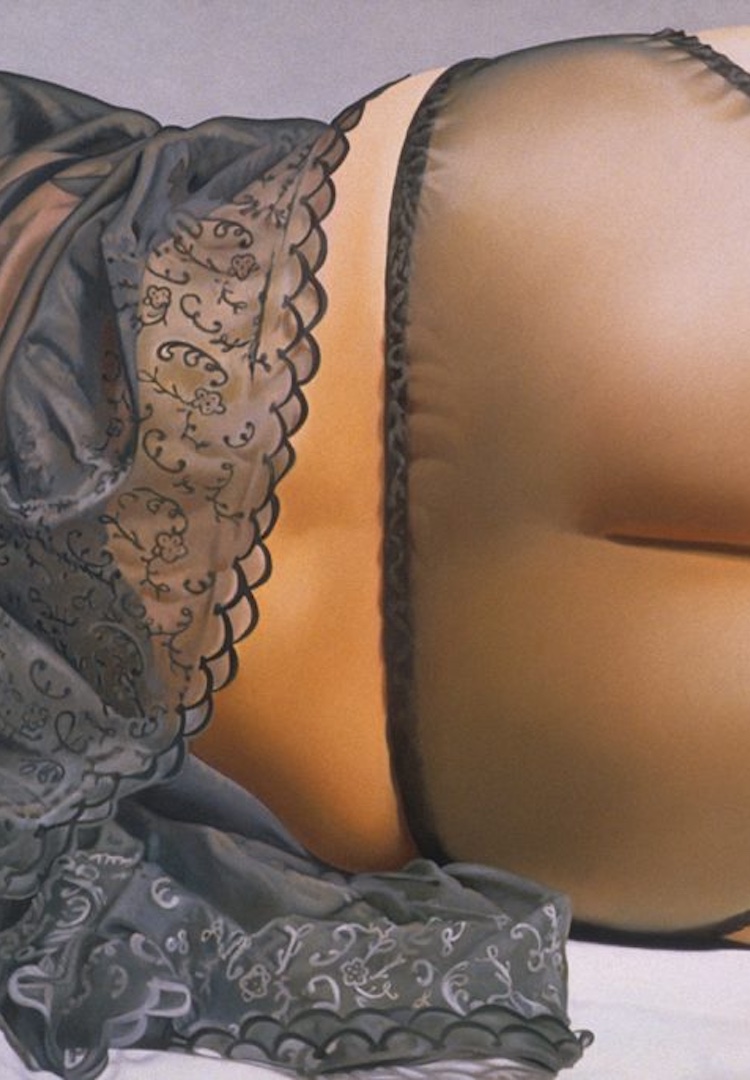
Marilyn was wearing Hanro’s maxi briefs. They are still purchasable today. Decades later, Nicole Kidman would wear Hanro too, in Eyes Wide Shut. That perfect, thin spaghetti-strap top and the midi briefs. Sofia Coppola based the opening shot of Lost in Translation on John Kacere’s 1973 photorealist painting, Jutta. In it, Scarlett Johansson lies on a bed wearing a pair of sheer pink Sonja briefs by Araks, which are, too, still purchasable.
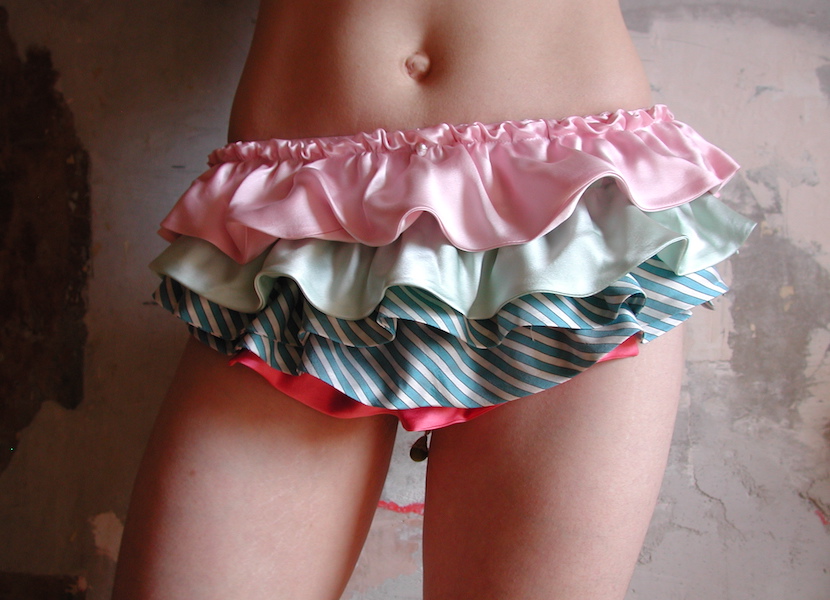
Strumpet and Pink, 2002–2011. Designed by Melanie Probert and Lisa ZMorgan. Courtesy of Lisa Z Morgan.
Some underwear, though, was never meant for commercial production. My favourite (but to-date, unattained) underwear is by Strumpet and Pink. The brand was created in the early noughties by British artists Melanie Probert and Lisa Z Morgan.
The Victoria and Albert Museum in London holds one of its pieces in its permanent collection: a pair of knickers featuring two frothing rosettes of silk chiffon directly over the buttocks. Another piece of theirs was hand-crocheted with a thread made from fermented yeast, sugar, water and spider DNA. If you find a pair of secondhand Strumpet and Pinks, do not tell me, unless it is to ask when my birthday is and for my postal address.
Some underwear is edible. In 1975, David Sanderson and Lee Brady discovered an edible film originally designed to wrap frozen turkeys and used it to manufacture banana splits, hot chocolate and wild cherry-flavoured briefs they called Candypants. By 1976, they were selling 25,000 pairs a month. Candypants looked exactly like they were made of Uncle Toby’s Roll-Ups: something I was never allowed in my school lunchbox, but once successfully swapped a scented gel pen for.
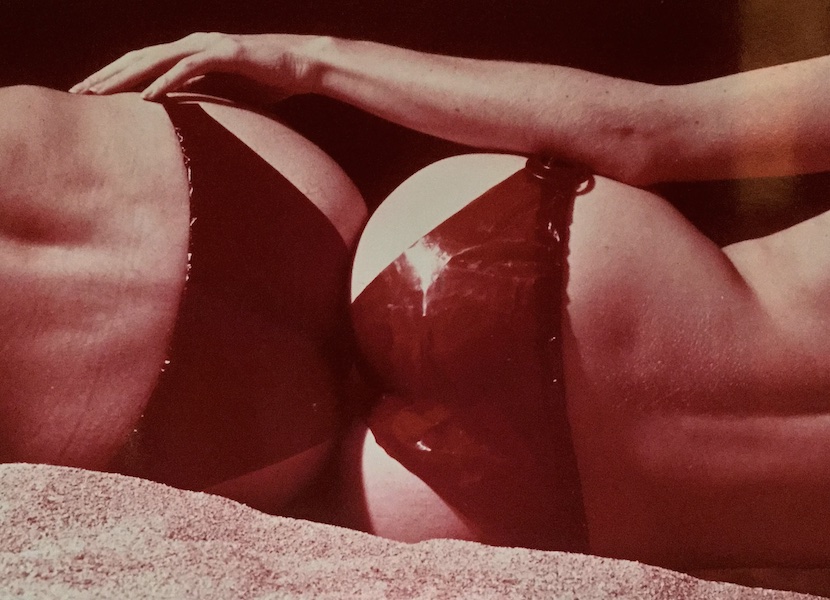
Candypants advertisement, c. 1975–76. Cosmorotics, Inc. David Sanderson & Lee Brady.
At Hamidiyah Souq in Damascus, Syria, you can buy sugar fondant spun into lingerie in flavours like pineapple, mango and honey. The Syrian bride arrives at her marriage with a suitcase of underwear – at least 30 sets – some edible, some embedded with microchips that play Arabic love songs. Excess here feels like part of the ritual. If you ever come across the book, The Secret Life of Syrian Lingerie, clear your day.
The washing machine at my Vietnamese farmstay is broken, so I fill the white plastic bathroom sink with water. I submerge three pairs of underwear with my palm and they bloom beneath the waterline. They’re all made of silk.
During the Second World War, Allied airmen carried their maps printed on silk because the material was quiet, durable, water-resistant and easily compacted into a damp pocket. Some women were gifted custom knickers made from these very military silk maps by their Royal Air Force boyfriends. My pairs are not maps. Mine cost 50 cents a pop from op shops. I am not afraid of secondhand undies.
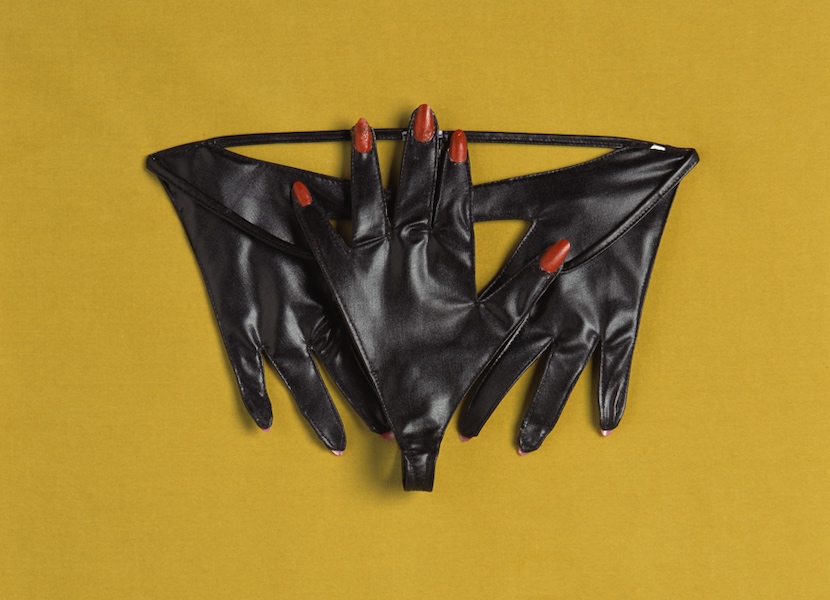
Photograph by Gilbert Hage, from ‘The Secret Life of Syrian Lingerie’ by Malu Halasa and Rana Salam, 2008. Courtesy of the artists.
I open a sachet of baby powder-scented washing liquid with my teeth and stir the water until it foams. It is time to attend to my gussets with secular devotion. Suds cling to my wrists like lace cuffs.
After the fall of Rome, the bifurcated garment mostly disappeared from the woman’s wardrobe, replaced for centuries by the long, modest linen shift. By the late 18th century, knee-length drawers had returned, blousy and made of butter-soft silk – if you could afford it. The crotch was left open so you could squat over a
chamber pot without getting undressed.
Open-crotch drawers had been the norm for a 100 years when (and this tale is best served with a heavy grain of salt and a glass of absinthe in hand), at the Moulin Rouge and the Folies Bergère in Paris, women performed the intimate ritual of going to bed. Slowly undressing and brushing their hair. Then, the music changed and the can-can began.
When the high kick came, the leg went vertical and the skirt lifted, revealing a new adaptation: a sewn-up crotch. The dancers had cut the legs short, edged them with lace and added baby-pink ribbon. Oh là là, the ‘French Knickers’ were born.
Hidden things have always attracted ornament, whether with pearls, beads, or seal-skin fringe. My own most embellished pair of knickers are mesh, covered in pearls and impossible to sit down in. Samantha Jones wears a version of this in season five, episode three of Sex and the City: a pearl thong by Bracli.
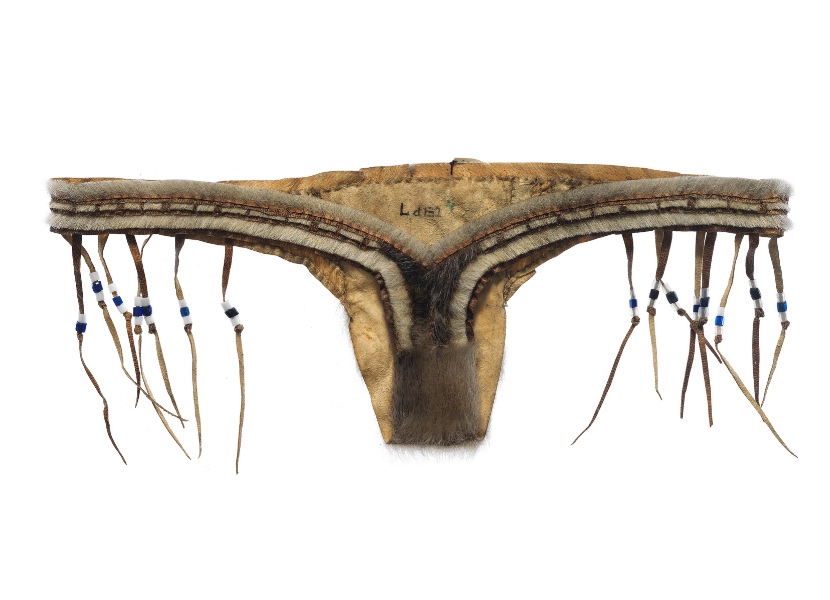
Naatsit (seal-fur underwear), Greenland, 19th century. Courtesy of the National Museum of Denmark, photograph by Roberto Fortuna.
If you ever find yourself in Copenhagen, the National Museum holds a pair of 19th-century beaded seal-fur underwear, called a naatsit, from East Greenland. A small, triangular apron of fur is secured by a low-slung waistband, connecting to a strip of hide that passes between the legs. It’s decorated with glass beads on a seal-skin fringe, and is the direct ancestor to a taxidermied rat g-string made by Kristofer Paetau and Ondrej Brody 20 years ago.
The water in the basin goes grey. I rinse and press the knickers between my palms to relieve them of their water weight. If a pair of Strumpet and Pink ever materialises for me, though, I promise to wash them in Holy Water.
For more on the history of lingerie, try this.
Liked this? You’ll love these...