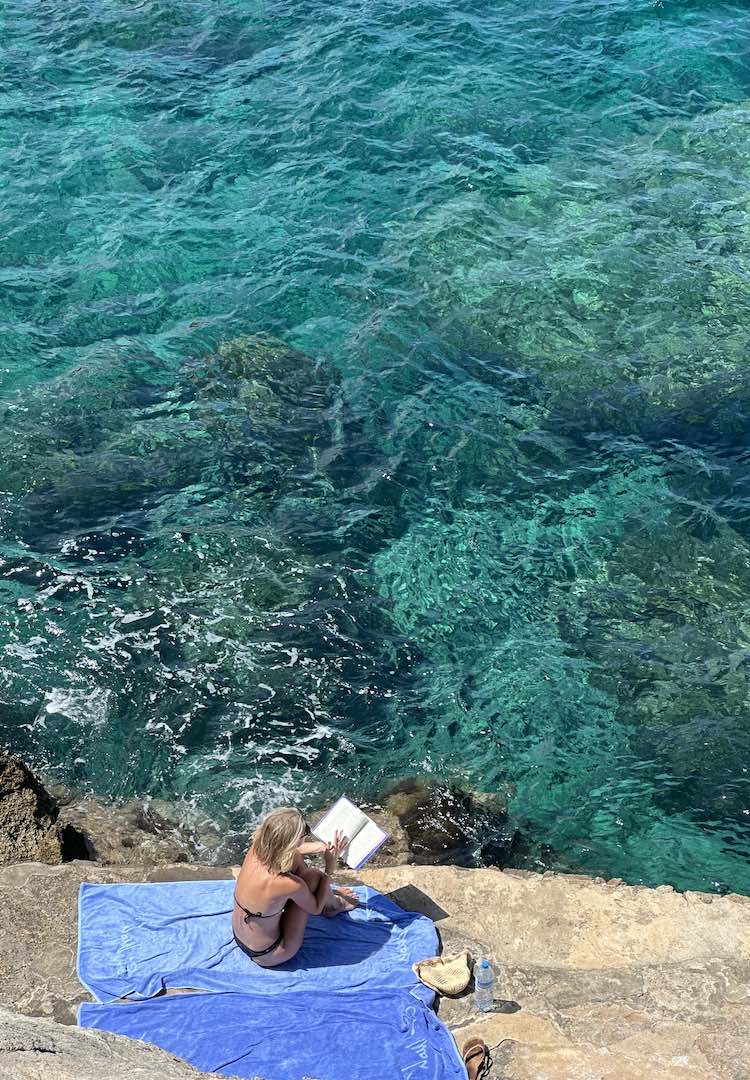


Abbey Lay’s latest novel, ‘Slip’, explores desire and reinvention amid an Italian summer
words by daisy henry
“It felt right that she should become tangled in her freedom.”
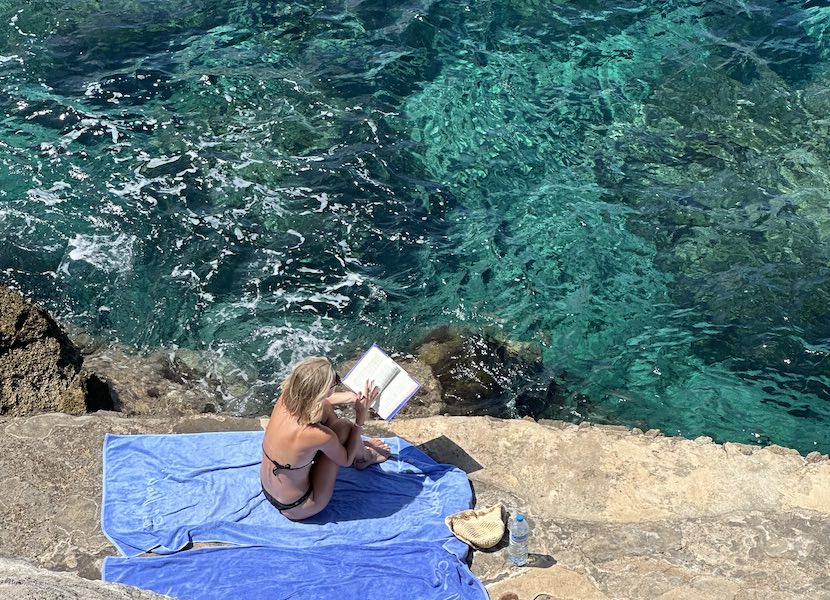
Sometimes, the temptation to book a trip away comes purely from a desire to switch off, do nothing and bask in the sun. Other times, it’s about exploring an unfamiliar terrain, or immersing yourself in a new culture. But occasionally, and more than most of us would like to admit, it comes from somewhere deeper; a desire to flirt with another version of ourselves.
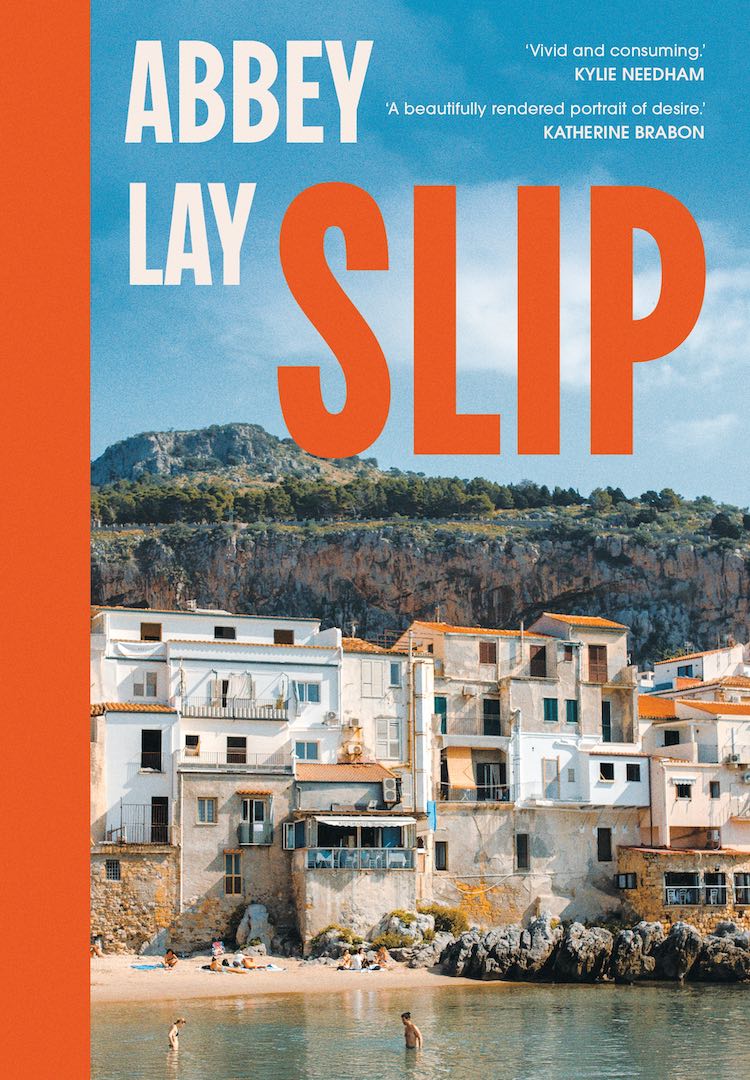
It’s the latter reason that partially inspired Australian writer Abbey Lay’s latest novel, Slip. Set in the height of an Italian summer, it follows a young linguist who leaves her life and partner behind as she takes a six-week long research trip to Palermo. It’s there that she meets Nico, a local Sicillian writer.
For more author interviews and book recommendations, head to our Life section.
“Life is often driven by habit and momentum,” Abbey tells me. “Travel centres pleasure, novelty and risk, all of which make us feel more alive.”
In equal measure, the idea for Slip first came when Abbey was travelling through Italy, and a friend heard her speak in Italian for the first time over dinner. “Afterwards, she remarked that it was as though I was a different person – it was in the way I gestured, the way I moved my mouth, my personality,” she remembers. “This stayed with me for years, until I reflected on what a moment like that might mean if the emotional stakes were higher.”
Spanning themes of dialect, desire, identity and expectations, Slip is the kind of novel you might pick up to feel transported, but it’s also the kind of story that stays with you long after finishing.
To celebrate it landing in bookstores today, we caught up with Abbey for a chat about the story, her writing process and what’s on her bookshelf.
Daisy: Hi Abbey, congratulations on your new release! For readers who are just coming to Slip, what’s the elevator pitch?
Abbey: Thank you! Slip follows Grace, a young linguist, on a trip to Palermo, where she intends to research dialects for her thesis and quietly immerse herself in the food and social dynamics of southern Italy. Her partner, barrister Jack, is set to join her after the end of his first big trial. By the time he arrives, things have changed dramatically between them – Grace has been living with Nico, a Sicilian writer, who has drawn her into the local experience she craves, but at a cost.
When did the idea for Slip first come to you, and did you start writing straight away, or did it take time to find its shape?
I was travelling through Italy in 2017 when a friend came over from Australia to meet me. We went out for dinner on her first night and she observed me speaking in Italian for the first time. Afterwards, she remarked that it was as though I was a different person – it was in the way I gestured, the way I moved my mouth, my personality.
It had never occurred to me that I would come across as anyone other than my usual self in a moment like that. This stayed with me for years, until I reflected on what a moment like that might mean if the emotional stakes were higher (as they are in, say, a love triangle). I felt curious enough to begin writing in 2022.
How did your writing process on Slip differ from your previous book, Lead Us Not?
As with Lead Us Not, I wrote towards and away from what felt like a critical moment, the significance of which didn’t become clear to me until I got there. I write with the same sense of curiosity a reader brings when they read a story for the first time, focusing on letting the novel tell me what it wants to be about.
Even if this approach is based on complete delusion (best if I don’t think about that too much), I find that it allows me to treat my characters as though their desires and choices are their own and keeps me from stifling the narrative. Then I revise, revise, revise.
Grace is a linguist researching dialects in Sicily. What drew you to the South of Italy?
Regions in southern Italy have histories of intense colonisation, violence and poverty, but are heavily romanticised for their culinary, natural and artistic beauty. I was drawn to how this tension shows up in tourism, a critical industry in Italy which locals both depend on and deeply resent, including because the beauty of southern Italy comes with a complex legacy of pain, shame and inequality.
What do you think travel allows us to admit about ourselves that staying put doesn’t?
Life is often driven by habit and momentum. Travel centres pleasure, novelty and risk, all of which make us feel more alive (and erotic, as Esther Perel so beautifully characterises it). This state of mind allows us to flirt with who we might be if we were freed from inertia, and distances us from the implications of any admissions we might make to ourselves. Any self-insight can be easily dismissed as a flight of fancy if it becomes too inconvenient or disruptive (or so we, and certainly Grace, might think).
Slip is full of moments where things feel slightly off-kilter or tense, rather than overtly dramatic. Why were you interested in exploring that sense of quiet dissatisfaction instead of a big, overt crisis?
In general, I think that a person’s unique character is better revealed in moments of tension rather than drama. In a big dramatic moment, we tend towards either fight, flight or freeze – instinctive responses that are narrow and immediate and forced by the situation.
When we’re under pressure, we have more time, space and agency, enough for the subtext of our desires, secrets, contradictions, insecurities and values to fully reveal themselves in our choices. Grace is a person with so many choices available to her – it felt right that she should become tangled in her freedom. Interestingly, I do think she’s in crisis (even if quiet!).
The relationship Grace is in at the start of the novel isn’t necessarily bad, but it’s definitely a dream dynamic. Without giving too much away, why do you think those kinds of relationships are hard to leave?
Like all of us, and as much as she might like to see herself differently, Grace is driven to some extent by convention, ease and a desire for certainty. When we first meet her, we see that she thinks making decisions based on an assessment of risk and probability makes her clear-headed. I imagine the same is true of many others, who evaluate their relationships according to more than romance and who are delicately balancing what is really important to them (even when they can’t name all those things).
Is Nico meant to represent a genuine alternative for Grace, or more of a catalyst, forcing her to confront something?
Ultimately, I think that’s a question for the reader. Nico is compelling in many ways…
The word ‘Slip’ itself feels almost accidental. What kind of slips were you interested in – romantic, sexual, moral, rational, or something else?
All of the above! I was also interested in those associated with language. Who do we become when we slip in and out of other languages, what do others see and what do they miss when they witness us? And, of course, I was very interested in the stories that we tell ourselves about the extent to which we’re in control, which keep us from seeing just how at risk we are and complicates the idea that all slips are in some way accidental.
What’s on your bookshelf right now?
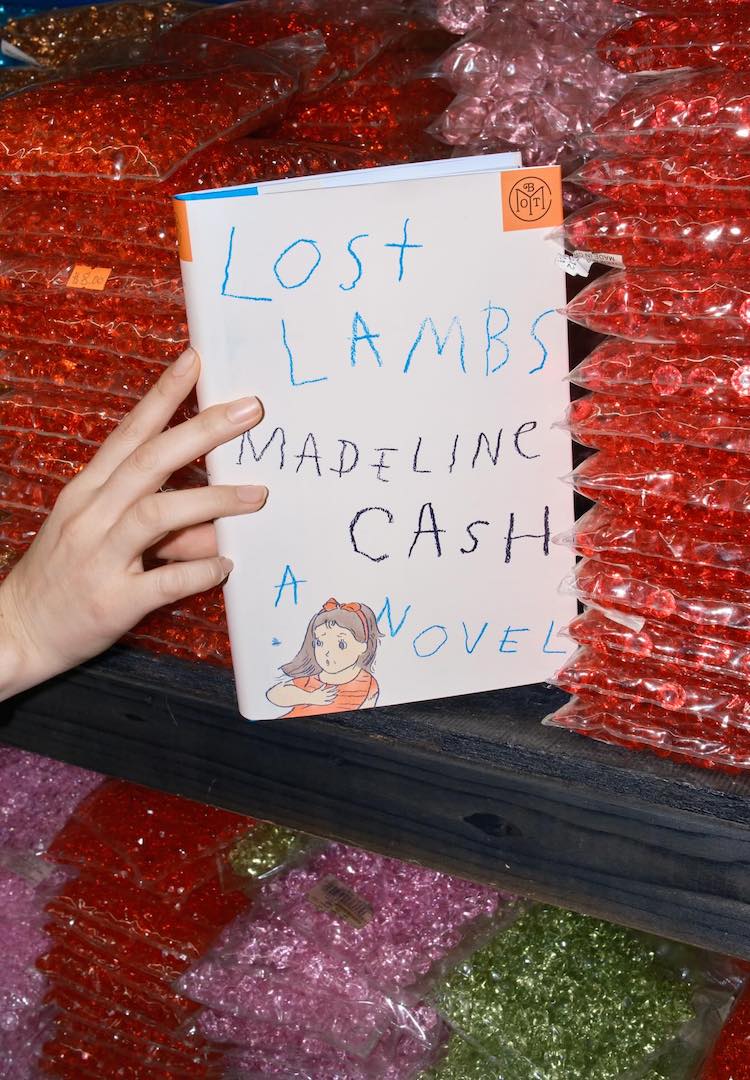
Things in Nature Merely Grow by the extraordinary Yiyun Li, Lost Lambs by Madeline Cash and Prophet Song by Paul Lynch.
Get your copy of Slip here.
Liked this? You’ll love these...