

HRT tanked my confidence but I rediscovered my style
words by jackie zhou
“As my hormones fluctuate, so will my body shape for the rest of my life. But I can also allow myself to be fluid in the way I dress.”
My relationship with my body and style has troubled me for what feels like forever. I’ve known I was non-binary since the pandemic. Being trapped in indefinite solitude tends to make you reflect on many things you may have put off out of apprehension, guilt, or fear.
My body felt sculpted from expectations of what women should look like; how someone I wasn’t should dress, act and behave. Wearing feminine clothing made me uneasy, like I was simply adhering to gender roles rather than wearing what I liked, but masculine clothes felt too stylistically restrictive. And then came testosterone.
Interested to hear how others navigate the world? Head to our Life section.
I reviewed and wrote about using chest binders after my first year of Hormone Replacement Therapy (HRT), when I was first exploring how to style my changing body. Nowadays I rarely wear binders for sensory reasons, especially in summer, but styling around the prominence of my breasts is another piece of the puzzle in gender diverse fashion. It’s now been two years since I started HRT, and the changes have been both welcomed and unprecedented.
I started on Testogel, a topical transdermal treatment that’s gradually absorbed into the bloodstream. This is the easiest way to control testosterone intake, making it a good starting point when I wanted to see how comfortable I was with the developments I saw.
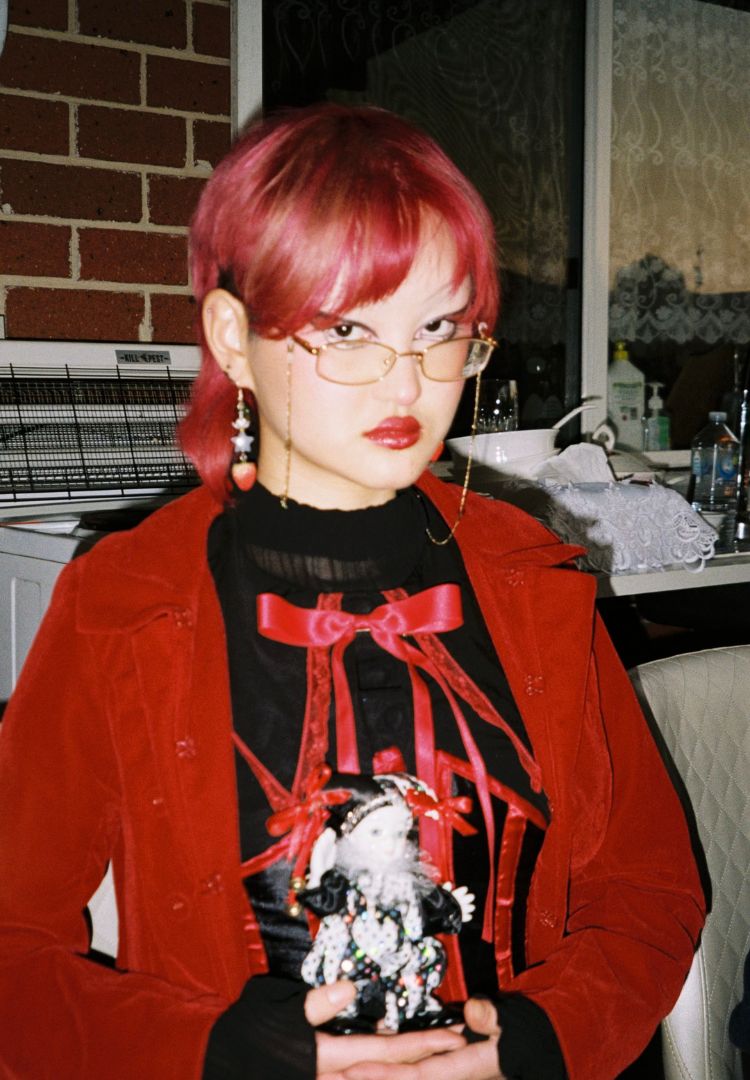
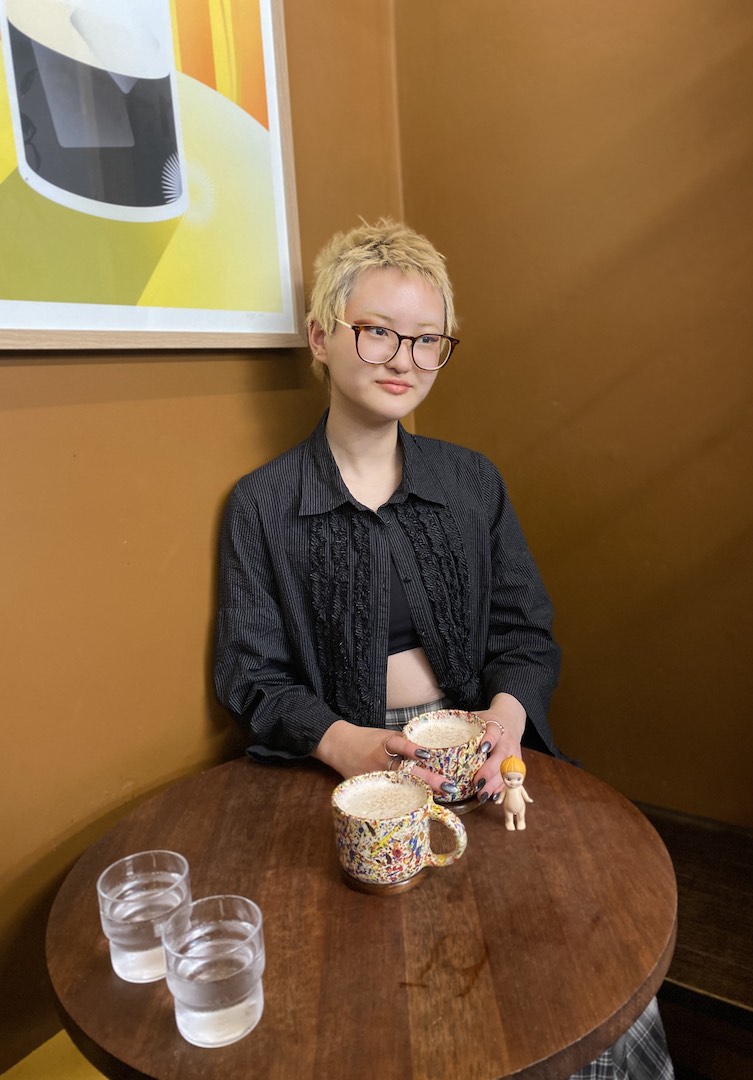
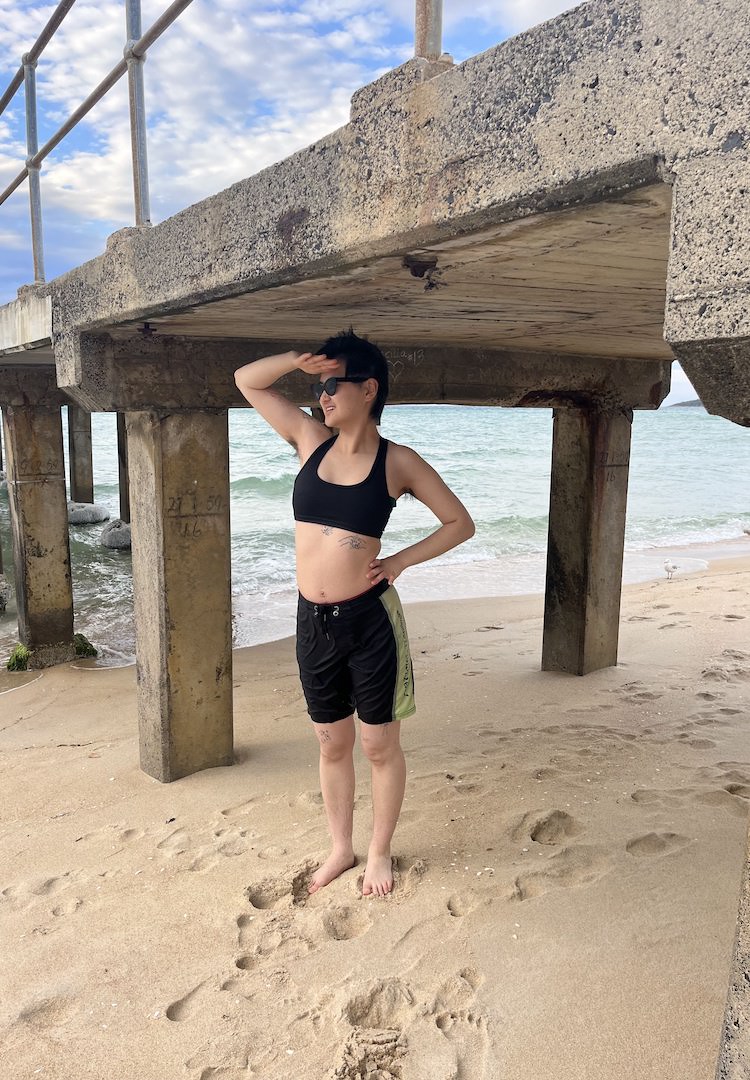
Jackie, pre-HRT.
Six months in, I committed to bi-monthly Reandron injections. Voice cracks, cystic acne (where spotty facial hair gradually followed) and new body hair growth all felt alien, but they also felt like exactly what I was meant to experience. I took comfort in knowing that these changes meant progress.
In other ways, my confidence tanked; the biggest factors in this were weight gain and fat redistribution. With a fast metabolism, I had been lucky to hold a steady weight for the majority of my life, even if my diet and (lack of) exercise weren’t ideal for a growing person. However, on HRT, I gained weight very quickly. Instead of going to my thighs and butt, like it would have when I had a more estrogenised body, all the new weight went to my stomach.
Cystic acne might have impacted my confidence, but weight gain and fat distribution did something else entirely. Figuring out how to dress my body within a short timeframe was extremely stressful; 70 per cent of my current wardrobe didn’t fit me anymore – either the arms of cute tops were too tight and the bodice too baggy, or the waist of my pants never sat properly. It was after this spike in weight that made me realise how physically restrictive women’s styles can be.
Very specific shapes are demanded of women’s styles; any fluctuation in body fat distribution in the arms, breasts, torso and waist can drastically affect how garments drape on the body. I’d loved wearing my red Damson Madder blouse, but the sleeves were incredibly tight around my armpits and newly wider upper arms, even though I had followed the size chart. There were many similar cases throughout my wardrobe, and I had to completely rethink how I dressed, including letting go of pieces I loved.
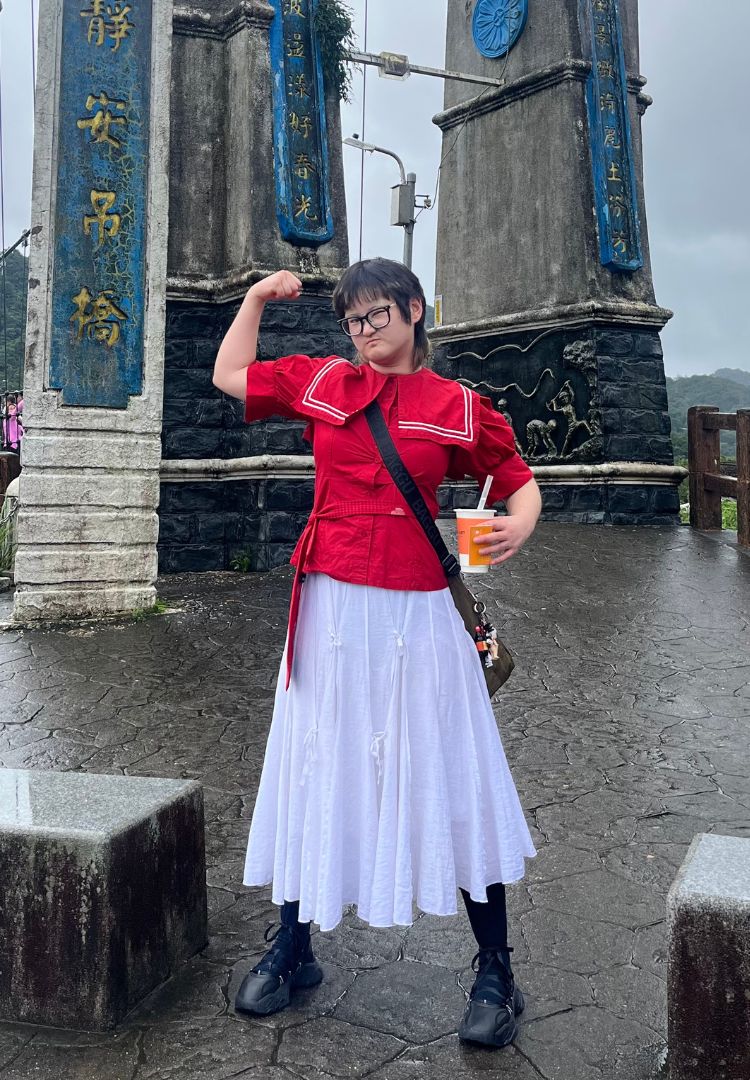
A favourite Damson Madder blouse.
The ‘non-binary drip’ stereotype of baggy, formless clothing comes from some truth. Many gender diverse people find comfort in baggier silhouettes because it conceals their body shape, making it harder for other people to ‘clock’ their biological sex. But this is behaviour ingrained through exposure to transphobia, and from public tendencies to project gender stereotypes onto others.
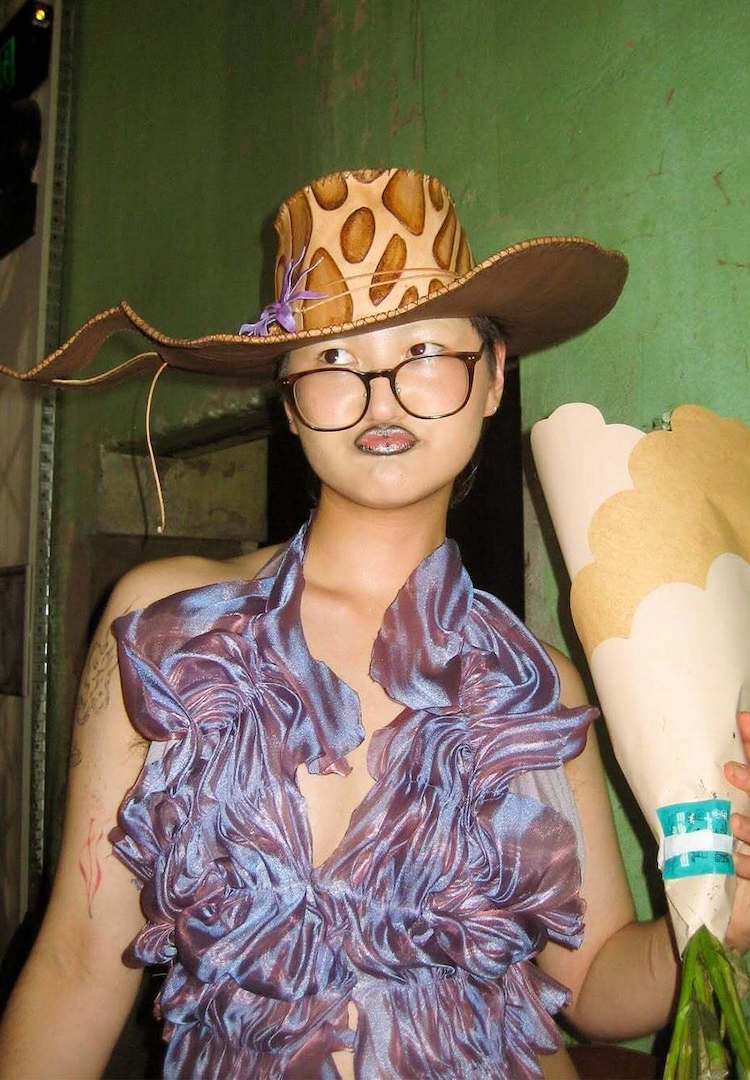
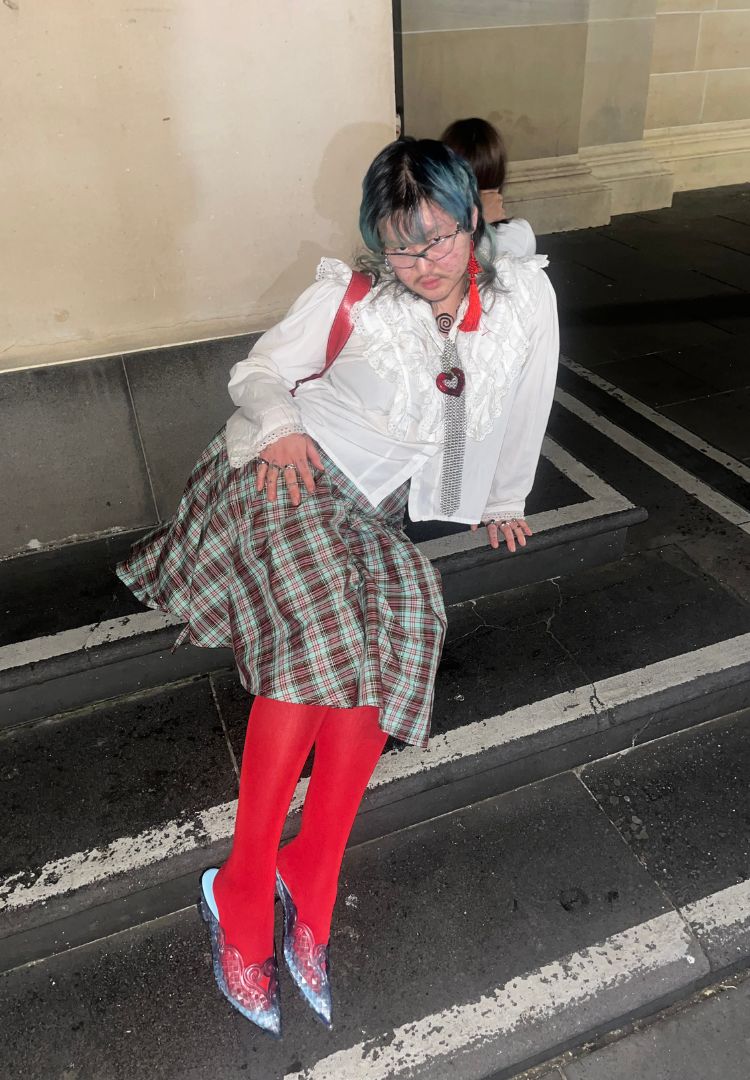
Many brands that have a unisex section will feature only masculine styles, but I’ve found that embellishing with accessories allows me to have fun with the silhouette, without overly restricting myself to what masc style should be.
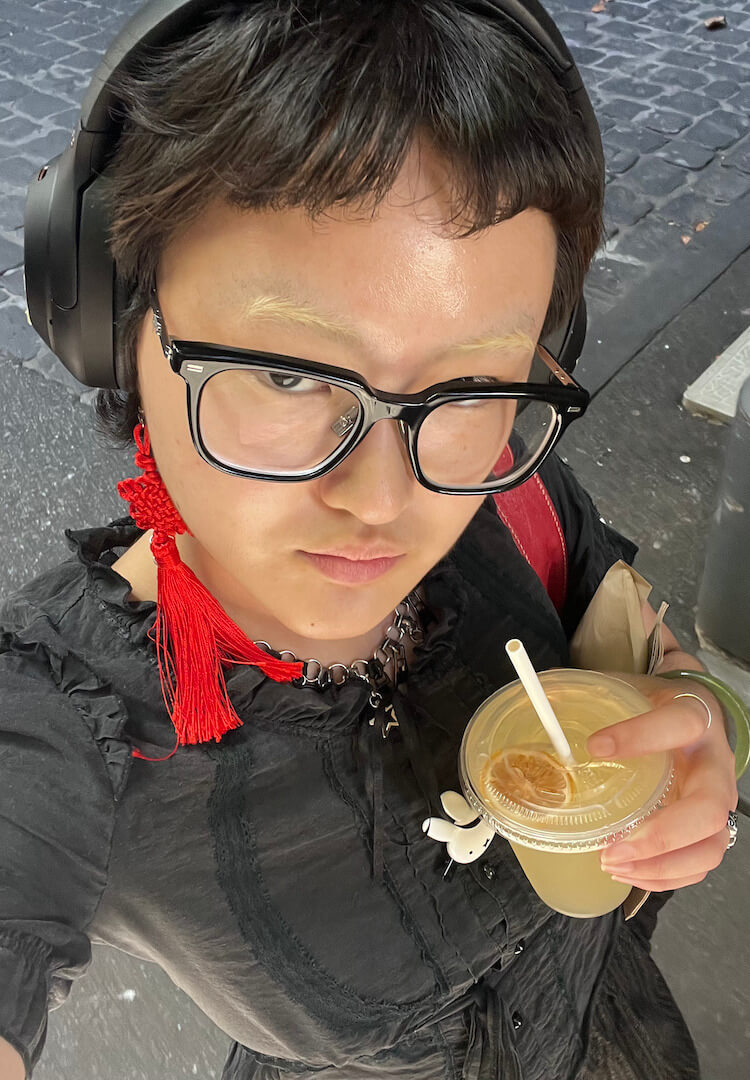
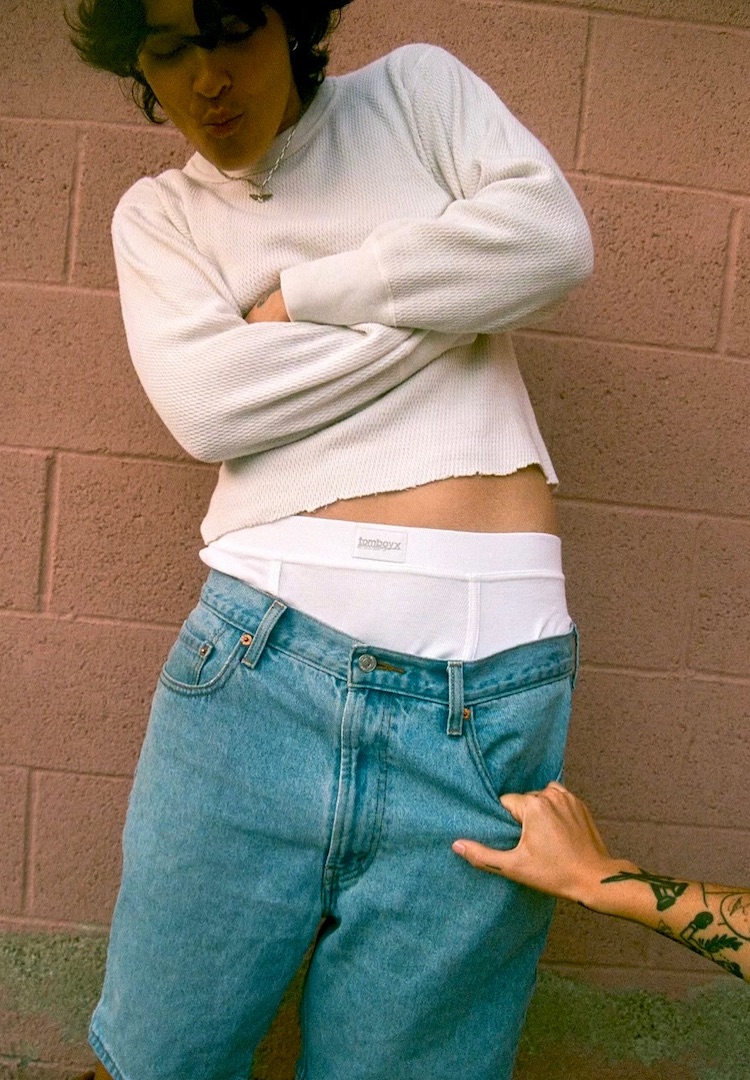
Keeping my changing body in mind, I’ve purchased baggier pants and shorts that are too big for me in the waist but have my preferred silhouette; bottoms with drawstrings or elastics so I can fit into them as my weight fluctuates; and flexible wrap-around skirts that let me play with the fit. Tops are tricky; I don’t wear binders as often anymore, but huge shirts make me feel like Adam Sandler (derogatory), so I opt for blouses with fabric detailing at the front, or T-shirts with shorter sleeves.
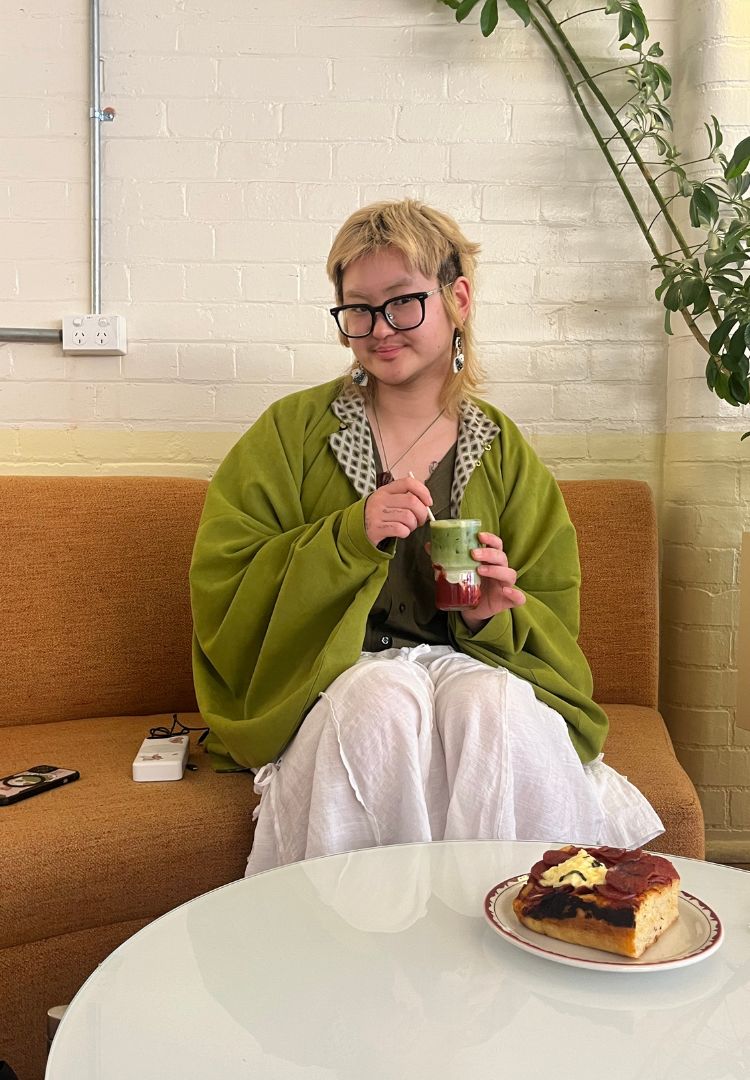
My favourite labels I’ve invested in have been Itadaki, I Love Ugly, Homie, Pseushi and Checks Downtown for baggy clothes that don’t feel like I’m drowning in fabric but are still fun. Nuwa Hanfu also has beautiful modernised traditional Chinese pieces that have a loose but structured silhouette, and independent labels like Velvet Slipperz and Magg’s Rags feature expertly upcycled pieces for everyone.
Starting HRT is a big decision that should not be taken lightly; it’s critical to be informed and prepared for changes both temporary and permanent. I know my acne will settle and my voice will stop cracking, but as my hormones fluctuate, so will my body shape for the rest of my life. But I can also allow myself to be fluid in the way I dress.
I want to be clear – gender expression is a highly individualised, personal experience, and everyone’s journey with it is completely different. The idea that you have to medically transition to be ‘actually’ trans is extremely outdated and restrictive, reducing gender diversity to a medical disorder that correlates being transgender with an expected level of gender dysphoria or emotional distress. In reality, not all gender diverse people experience this, or feel the need to undergo HRT. But I decided to take testosterone because my body had never felt like it was my own, nor did it reflect the person I thought I should be.
Although ‘transsexualism’ hasn’t been labelled as a mental disorder by the World Health Organisation since 2019, many people, including trans folks themselves, still internalise transphobic rhetoric of accepting gender expression as the sex you’re born into as representative of ‘mental stability’.
Despite my shifting confidence and body, I am more myself and ‘mentally stable’ than ever before. Remaining flexible in how I dress, rather than forcing myself into a restrictive design framework, is what makes the future of gender diverse fashion fresh, interesting, and representative of what we can achieve beyond the binary.
To read more about Jackie’s style journey, try this.
Liked this? You’ll love these...