

“I wanted to look at fashion like a nature documentary”: Hyun Lee on ‘French Girls’
photography by Priscilla Cui and ‘French Girls’
words by lara daly
The stranger side of Sydney’s modelling world.
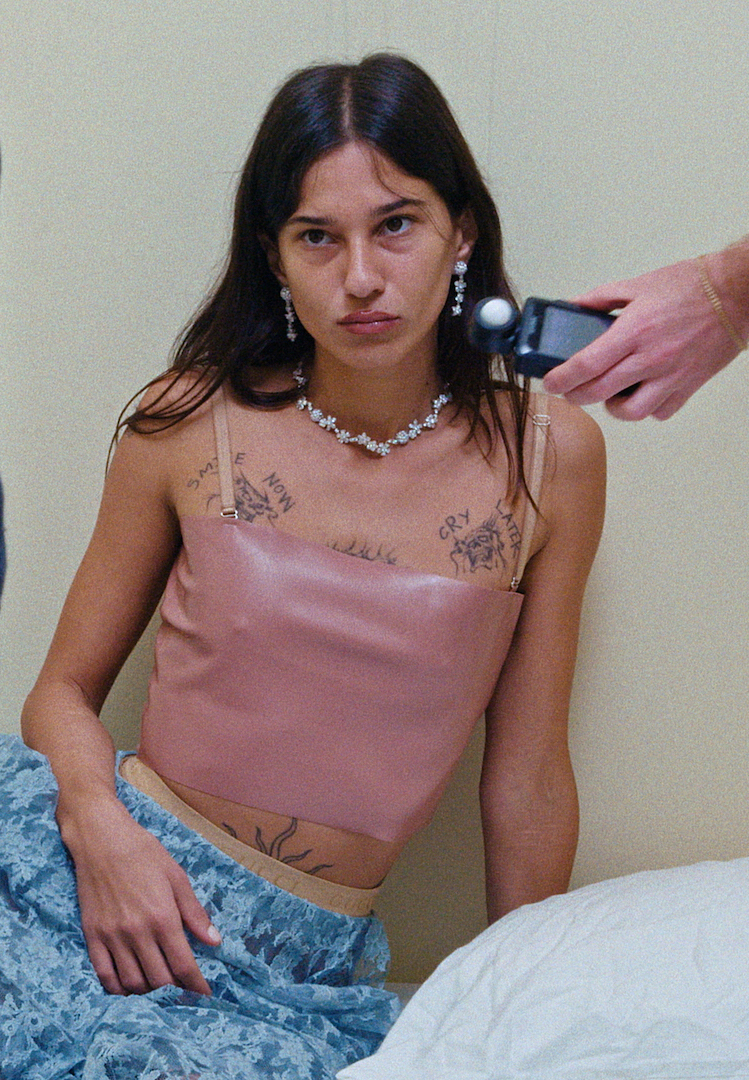
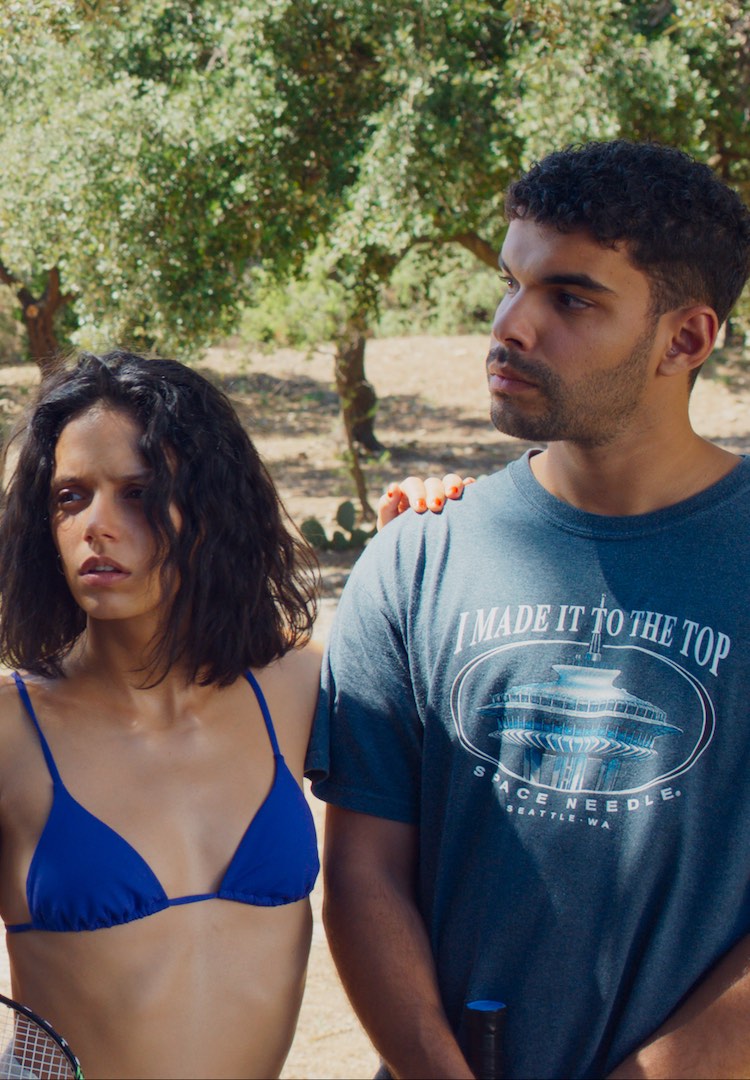
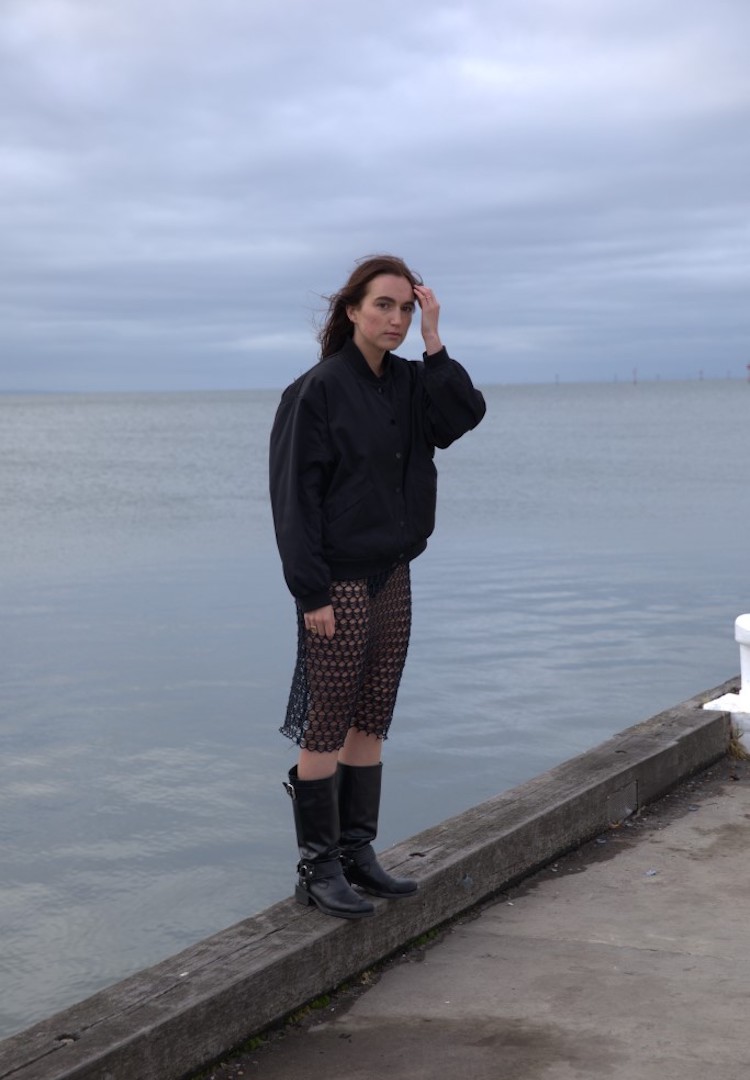
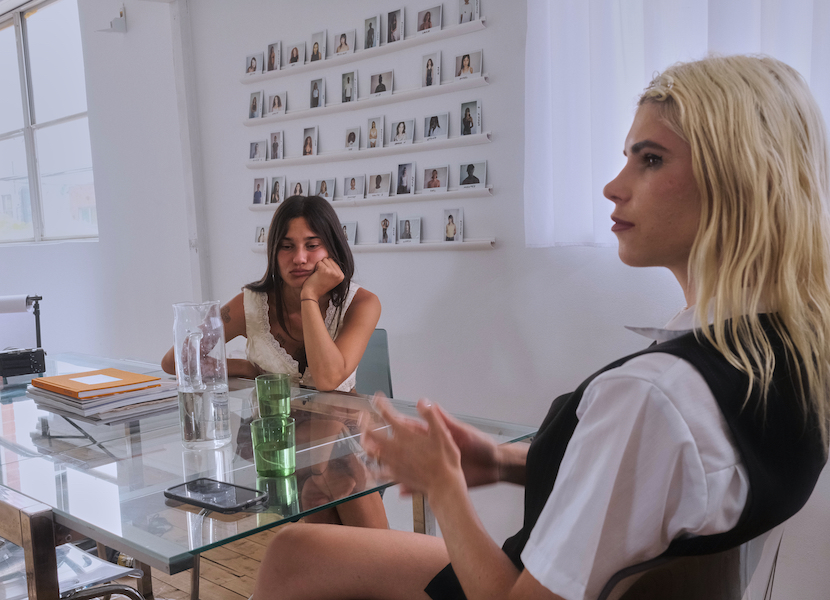
Writer and director Hyun Lee is counting down the days until the world premiere of her debut feature film, French Girls. Screening at Sydney Film Festival this June, the documentary-style film follows Mia, a twenty-something construction worker who’s suddenly pulled into the world of modelling.
Shot in Sydney on a budget of just $28,000, French Girls draws on the director’s own background in fashion photography. Starring Mia Kidis, who Hyun met on a magazine shoot, the film approaches the industry with quiet observation, exploring the contradictions and absurdities of fashion through the eyes of an outsider.
Interested to hear how others navigate the world? Head to our Life section.
“I’m not trying to critique models, the fashion industry or even capitalism. I’m trying to look at it all neutrally, as if it were a nature documentary,” Hyun tells me.
Growing up in Sydney, Hyun first entered the fashion world as a shy but creatively-driven teenager, organising test shoots with agencies while still in high school. “Often the models were really young as well – sometimes they’d turn up with their parents and they’d be in their school uniforms,” she says.
Those formative experiences became the foundation for French Girls. “It’s jarring to me when films portray the industry as this dramatic, bitchy place. The interactions I had with models at that time were just really sweet and awkward.”
Below, Hyun reflects on the contradictions of modelling, the parallels between fashion and labour, and why she wanted French Girls to portray the people within the industry with empathy.
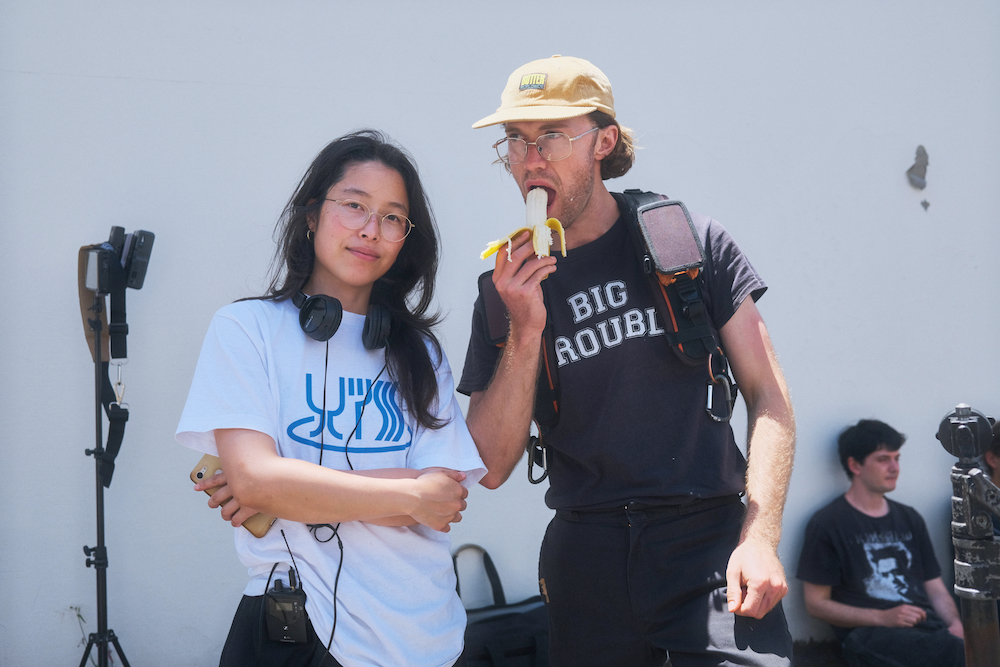
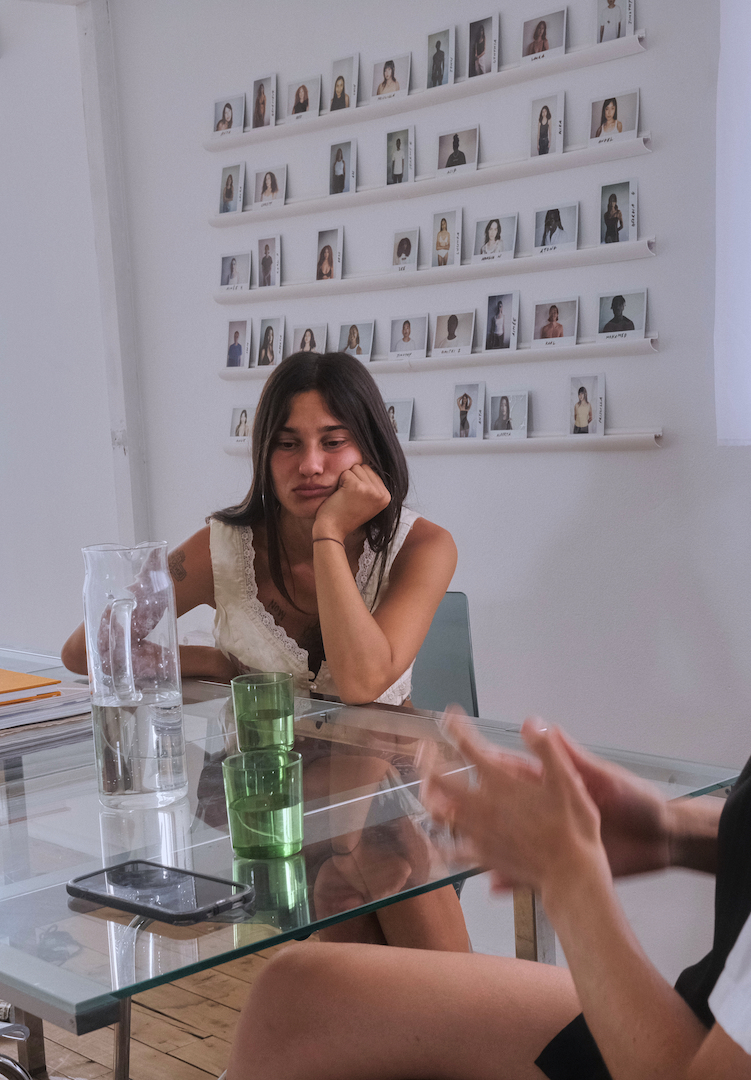
Director Hyun Lee (left) and sound recordist Adam Roberts.
Fashion Journal: What interested you in telling a story about the modelling industry from the perspective of an outsider?
Hyun Lee: I think a lot about this crazy world we live in, and the sorts of absurd contradictions that we have – that you can work very hard and be paid very little, and then you can also be in other situations where you hardly work at all, and all sorts of things fall into your lap. And modelling is a really good example of the capitalist contradiction, which will have you believe that it’s a fair and logical system… when in reality, it’s completely senseless and illogical like a lottery, and fashion models really illustrate that point.
You have to win a very specific genetic lottery to be a successful model. I’m not trying to critique models, the fashion industry or even capitalism. I’m trying to look at it all neutrally as if it were a nature documentary. I do have a lot of empathy for all the girls though, all sorts of fantasies and nasty stereotypes get thrust onto them, but under it all they’re just girls.
There’s a strong thread in the film around labour: Mia leaves construction work for modelling, yet both industries seem tied to physicality in different ways.
Yeah, that was intentional. Construction and fashion modelling are both jobs that involve labour tied to your body. And also something about the contrast of construction being a very masculine-coded environment, and then modelling being the extreme opposite… [I was] making that contrast as extreme as possible for this character, to really show the difference of the worlds that she’s bridging.
Can you tell me about the casting process – how did you land on Mia Kidis?
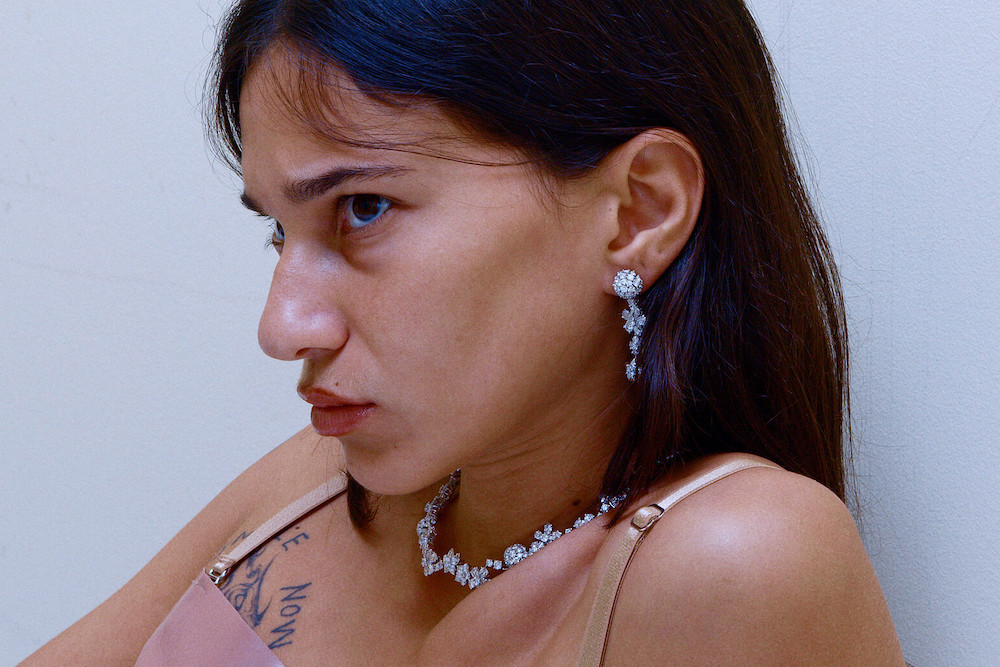
The way that I met Mia was actually on a Russh print shoot. I was shooting BTS video stuff but I was also shooting documentary material. Mia was the model. It was her first-ever editorial shoot, she had been signed maybe a couple of weeks before that. She has this really quiet presence… there’s something about actors who have, some people call it an ‘open face’, where you can just project a lot of emotions onto it. She definitely had that presence.
I was really struck by her, and I sort of tracked her down to try and shoot a few more things. At the start, we were thinking maybe it could be cut into a short film, and then one thing led to another and we just ended up shooting the whole thing.
So this is also Mia’s first acting role?
Yeah, yeah. And she’s an incredible actor. There are definitely some people who have a natural comfort in front of the camera and an ability to just forget that it’s there. Mia’s definitely got that, her best takes are often the first take.
What was the shooting process like, making your first feature-length film?
We shot it over such a long time, over a year. We divided the film into four blocks and spaced it apart so people could take breaks, go on holidays if they needed to. At one point, Mia was flown over to Paris to be in a Jean Paul Gaultier campaign, so we had to delay filming. Our cinematographer had to go to Scotland to shoot a documentary about the international porridge-making championships.
Oh, my god.
That film is now released, and it’s amazing.
As someone who’s immersed in Sydney’s fashion scene, how did you want to portray the city?
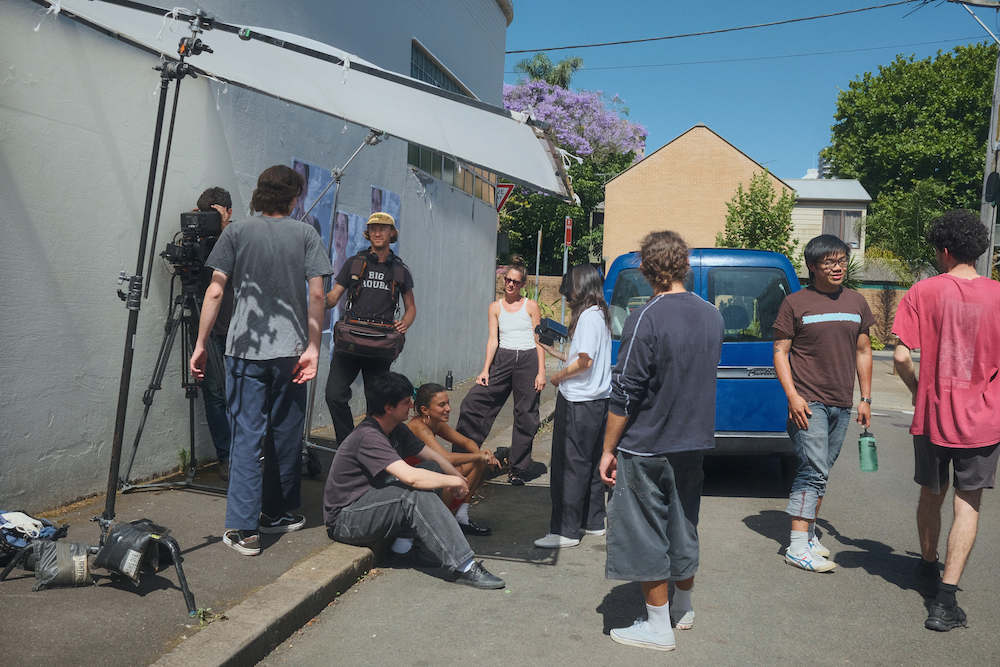
I think I just wanted to show the community… for example, we cast Mia, who’s the lead, we cast her real friends and her actual boyfriend at the time to play her boyfriend in the film. And so naturally, you end up filming in places where they would hang out, or where they live. We actually shot in some of their homes or in their actual studios. A lot of it was in and around Kings Cross, and we shot quite a bit in the inner west as well.
Something that I put in there that I like to point out is the bats that we have here… Maybe more for an international audience, people don’t think about bats when they think of Australia. And I feel like with Sydney especially, people think of the beaches and the sunshine, and bats are so kind of, goth?
How did you approach depicting the modelling world – did you draw from your experience as a photographer, or people in your life?
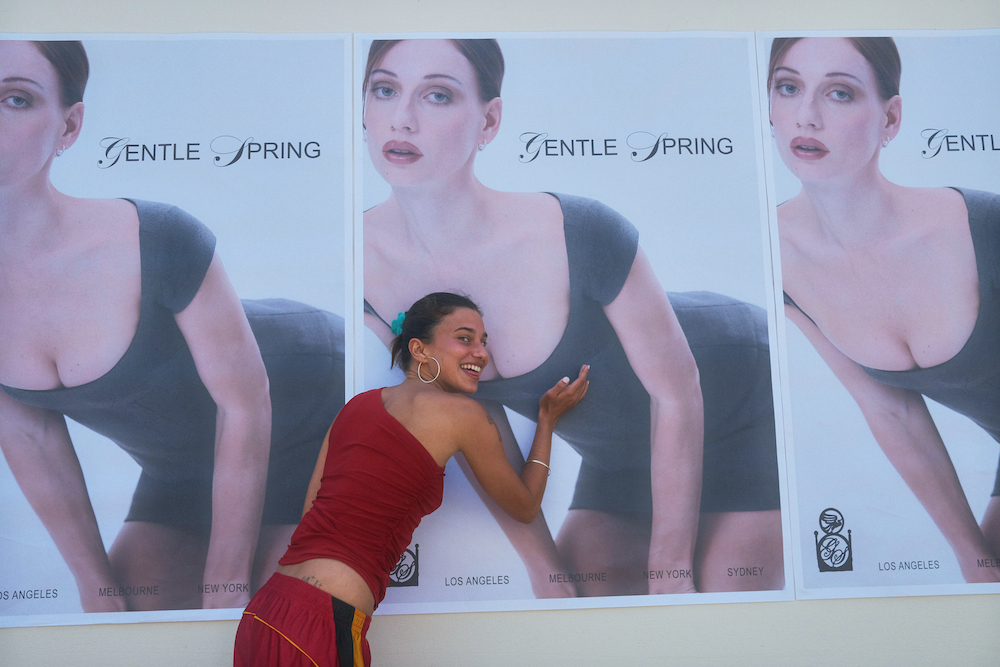
I have this friend I talk about a lot. She was a really close friend around that era of my life, this Russian, hyper-intelligent woman who was so beautiful it was actually ridiculous. We would walk down the street and men, women, children, elderly people, every human being, would stop and triple-take to watch her, she was that striking. And she really resisted the idea of becoming a model.
I would tell her, because at the time I was shooting for agencies, I would be like, ‘Oh, I can link you up with an agent, you’d be successful’. And she was really against it. And that kind of egged me on even more, because I noticed that the models who do really well in their careers tend to not care about it that much. So I was like, ‘Oh, then you’re even more primed for success because you don’t care’.
So you wanted it to be about a model that wasn’t ambitious about being a model?
Yeah, that was a big part of it. And I think it was important that it was someone who was a bit more of an observer. You know, there are some models who are really charming in an outgoing way, they can like, talk their way into a room. I think this character needed to be someone not like that. Not a hustler, much more a floater and an observer.
Was that sort of how you felt when you first started in the fashion industry?
I was such a quiet and shy teenager. Like, when I talked to model agents on the phone, my hands would literally be shaking, my voice would be shaking as well. It took a lot for me to speak up. I literally didn’t think about it, which is ridiculous, because I’ve been working on this for so long. But yeah, actually, that probably is where it comes from.
Do you think the way models are portrayed in popular culture matches the reality you’ve experienced?
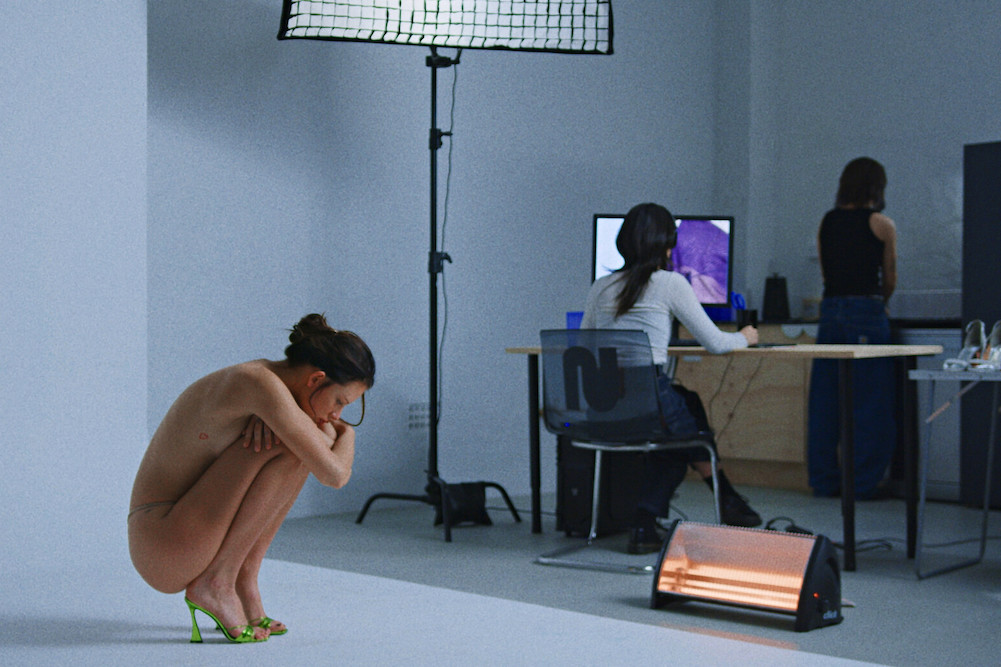
It really frustrates me when I see how fashion and models are shown in the media. And even with that Netflix exposé on America’s Top Model, I feel like models either get shown as these exploited, poor, helpless victims, or it’s the total opposite, they’re these nasty, evil girls that have all this power and then it’s almost like they deserve to be exploited and mistreated? Something about that feels deeply wrong to me, especially when I think of me being like 16 or 17, shooting other 16-year-old girls. I look back on that time, and we were just girls, you know.
What do you hope people take away about the fashion industry after watching French Girls?
I think my intention was not to be like, ‘Ooh, the fashion industry is so messed up’, because I think the world we live in is messed up. At the same time, the world we live in can be very beautiful, with kind people who are just doing their jobs and taking care of each other in the capacity that they can. And so for some characters, like the model agent, or there’s a fashion designer character who is maybe a little bit of a jerk, I still wanted to approach those characters with empathy and an understanding that they’re just trying to do their jobs, they’re trying to do their best.
Sometimes in this flawed system, a lot of beautiful art is made. And you know, the fashion industry can be fucked up sometimes but within it, there are professionals who are trying really hard to be kind and considerate, and they’re making art. And sometimes it’s commercial garbage, and sometimes it really is art.
I hope that when people who work in the fashion world see the film, I hope that they will not feel targeted, and instead they will feel seen.
To get tickets to see French Girls at Sydney Film Festival, head here.
Liked this? You’ll love these...