


Is sliding into DMs the new catcalling?
WORDS BY SHAEDEN BERRY
“I didn’t join Instagram thinking it was a dating app, I joined it thinking it was a photo-sharing app. It shouldn’t become another avenue where we’re forced to fend off unwanted advances.”
The anonymous Q&A messaging app NGL (Not Gonna Lie) exploded in popularity on Instagram around July 2022. If you’ve been on the Instagram app anytime during and since then, you’ll probably be familiar with it. Influencers especially have been using it to allow their followers to submit anonymous questions for them to answer.
As far as apps go, it doesn’t feel like anything new – it reminded me of the now-defunct anonymous messaging website Formspring. But there was something I noticed. Many of the anonymously submitted ‘questions’ were people simply saying, “I think you’re cute”, “You’re hot” or “Would you date me?”.
For more content like this, tap through to our Life section.
Often, the influencer’s responses to these anonymously submitted compliments were pleased acknowledgments or even sometimes a coy “It’s been submitted anonymously, I don’t know who you are to say yes to a date!”.
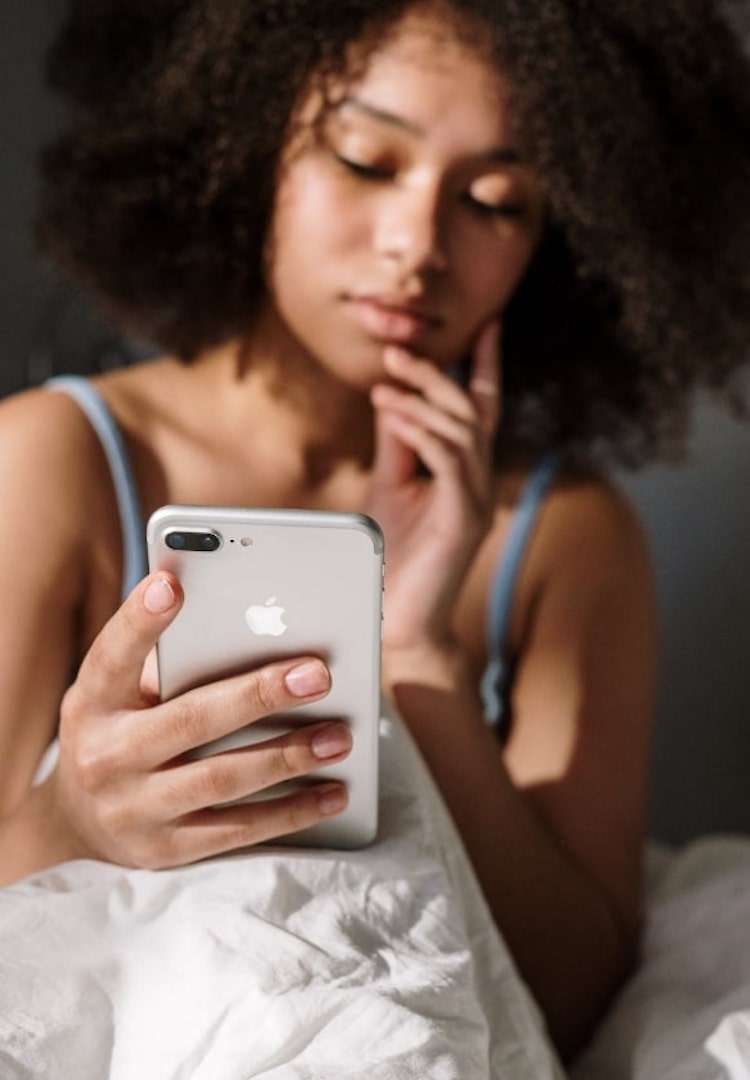
Similarly, there’s been a recent wave of articles about sliding into people’s direct messages (DMs). Their purpose is to provide people with tips and tricks on how to shoot their shot in someone’s DMs, generally on Instagram. Apparently, it’s the new way to meet people, the virtual “approaching someone at a bar”. Except, it’s not.
It’s fair to say, whether welcomed or not, if you go to a bar or a club you might expect to be approached. It comes with the territory given that these venues, in pre-dating app days, used to be the place to meet people and hook up.
What isn’t fair to say, however, is that when logging into my Instagram and posting innocuous pictures of a cat, I should expect to be similarly approached by someone sliding into my DMs and asking me out. It feels like an intrusion into my space. It feels akin to me minding my own business in everyday life and having someone accost me with unwelcome attention. And there’s a word we usually use for this: catcalling.
Which brings me to the question I’m trying to get: what’s the difference between catcalling – harassment, usually by men towards women, in public spaces through the yelling of inappropriate or sexualised comments – and sending the same kind of messages via DMs or via the NGL anonymous question app?
Why do influencers welcome the comments of “You’re so hot” via an anonymous app when they would most likely aggressively rebuke the same comments thrown at them as they walked down the street? Are we saying that the same boundaries we expect to be respected out in public don’t apply online?
I was listening to an episode of The Weekly Cheek, a podcast hosted by Hannah Ferguson and Kristin Perissinotto, titled The Power of Parasocial Relationships. The hosts touched upon a ‘tell us a secret’ Instagram story series they ran that saw a few men put in the answer box comments calling Hannah attractive.
“We should not be amplifying or highlighting that behaviour” Kristin stated in the episode. As the episode continued, Kristin posited, “you’re walking along the street and someone’s like “hey hot stuff” – what’s the difference? It’s the same thing online.”
Obviously, catcalling involves an additional layer of fear and intimidation – there’s always the lingering threat that, if you choose to ignore the catcaller, they might follow you and even go so far as to attack you.
A direct message is easier to disregard and an online profile can be blocked with the click of a button. But people can be determined, and it can be a slippery slope from someone sending a seemingly innocuous “You’re hot” to that same person creating multiple accounts to repeatedly send comments.
The articles that tell us to ‘shoot our shot’ in someone’s DMs seem eerily similar to articles we often ridicule. Consider the articles about ‘How to approach a girl with headphones on’. Did we not all laugh upon reading these types of articles? It seems so obvious that you don’t approach someone with headphones on.
So, we’re aware of boundaries that exist in real life – online, it seems to get murky. When we’re encouraging people to send unsolicited DMs, we’re basically saying that purely because you have a public Instagram, you’re granting permission for people to hit on you and ask you out.
That seems unfair to me. I didn’t join Instagram thinking it was a dating app, I joined it thinking it was a photo-sharing app. It shouldn’t become another avenue where we’re forced to fend off unwanted advances. “But how else do we meet people?” I hear you ask. It’s a fair question, as the days of meeting people organically in a bar or club seem to be rapidly fading.
With a lot of modern life seeming to exist online, it makes sense that people might think that sliding into DMs is the only way to meet new people. But I’d argue that there are apps for that and the people who go on those are, by the act of creating a profile, explicitly saying “I want to be messaged”. (They are not, I’ll clarify, saying “I want to be messaged creepy stuff”.)
So, let’s keep the digital catcalling to a minimum and be mindful of the DM slide – if we wouldn’t tolerate these things in the real world, after all, it makes sense that we shouldn’t be encouraging and condoning this behaviour in the online world.
For advice on dating outside of the apps, try this.
Liked this? You’ll love these...