

“There’s no point hiding”: The Jungle Giants on their 10-song step ladder towards joy
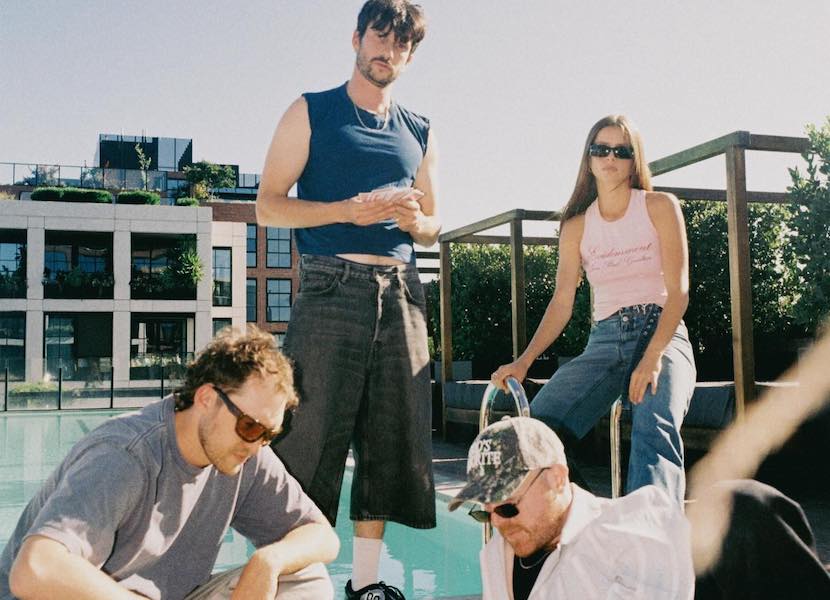
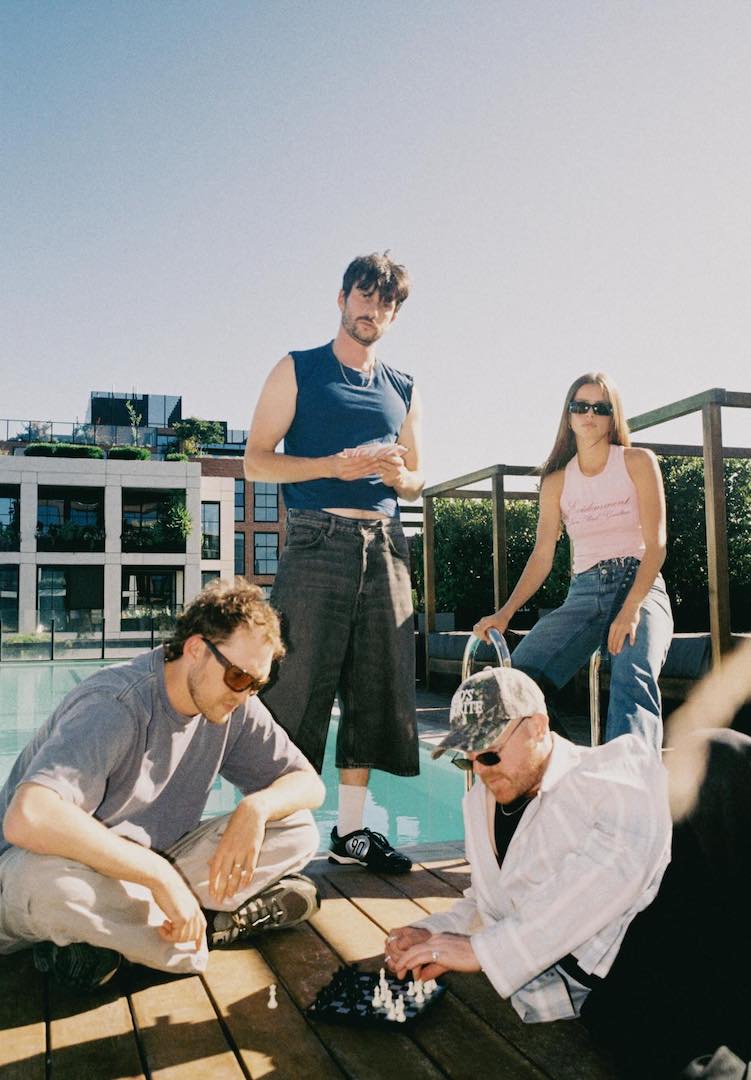
image via @junglegiants/instagram
Words by Frankie Anderson-Byrne
“This is a classic thing, you have to go through something hard to survive it and grow.”
Joy, it turns out, is not a starting point. For The Jungle Giants frontman, Sam Hales, it was the destination at the end of five years of grief, false starts, and music that kept coming out wrong. You can’t rush your way there. You just have to go through what you go through and hope it leads somewhere good.
The band’s upcoming album, Experiencing Feelings of Joy, took Sam five years to make. Double his usual pace. And the extra time wasn’t spent in studios or on experiments. It was spent living, roughly for a while, and then slowly, painstakingly, better.
Discover more artists and music we love at FJ’s Music section.
A relationship ended. He’d left another project, Confidence Man, and the music, which had always come freely across 15 years and two bands and eight albums, stopped. “Music and love were really connected,” he says. “So when love broke down, music got hurt too.”
He’d never lost the music before – he naively assumed that he was immune. “Then music got really hard. And it was just a few simple things happening to me that caused that.”
The songs that came in that period felt counterfeit, close to real, but not real enough. His body knew the difference. “I realised the songs had to be about this. If they weren’t, they felt fake. My body wouldn’t accept it if it wasn’t real.”
So he waited. And tried. And waited more. There were near-misses in Bali, a moped, then a jet ski accident, during what he calls the “clouded bad time.” All of it part of the same long weather.
What came through on the other side were 10 songs that don’t flinch. A record that begins in grief and ends somewhere quietly, genuinely lighter. “It was like a step ladder towards joy,” Sam says. “Ten sad moments that got me happy again.”
Cesira Aitken, guitarist, watched the whole thing from close range. She remembers sitting with the early demos, Sam playing something unfinished and admitting he didn’t know what it was about.
“I was like, well,” she says, smiling, “it’s probably not the one.” She means it with love. They’ve known each other since high school. There’s a kind of honesty between them that only comes from that much shared time and growth.
View this post on Instagram
What changed things was The Artist’s Way, Julia Cameron’s twelve-week creative recovery program, which Sam worked through with a London-based coach at three hours a week. He wanted to dive straight in. He did.
“At the end of those twelve weeks, the album was done,” he says. “I processed everything. Now it’s nice to be free of those things. I have all these tools now that I didn’t have before.”
He talks about making an album and going to therapy as though they are, at their core, the same act. “There’s really no difference,” he says. “You have to first choose to face these things that may be easier to avoid. The music takes a hit if you’re not forward-facing with this stuff.”
What emerged is the most unguarded record the band have made. Earlier albums moved in metaphor, kept feeling at arm’s length. This one stands in direct light.
View this post on Instagram
“The first albums were very shrouded in metaphor but this, every song you can tell what it’s about. Which I love,” Sam says. “Because even though it was hard, and I lost my confidence and then found my confidence again, now I’m confident in being truly expressive. There’s no point hiding anymore. That’s the price I had to pay. Being real. I couldn’t release them if I didn’t care.”
He’d had hard albums before, but differently hard. Love Signs came easy; “that was out of a big place of love, I was in a really great place, expressing this crazy good love I was in.”
Their second album, Speakerzoid, was its own kind of struggle, a younger Sam pushing back against being called ‘indie pop darlings’ when all he wanted was Beck and Caribou.
“That was more teenage rebellion as opposed to an inward journey. This new album to me was the closest to being exactly real for who I am now.”
When he first started talking publicly about the new record, sadness came up automatically. Doing a track-by-track felt like reopening something. But things had shifted when speaking to him, nine days away from the album launch on May 8.
“It’s great to look back on something that was really hard,” he says. “It’s this time capsule of the period. And that feeling of being able to look at it and go, I’m not there anymore. It’s still a part of me and what I’ve been through. But I’m not there.”
Fifteen years. High school to now. People tell them it’s crazy they’re still going and Sam hears it and thinks: does it? “It feels like two seconds,” he says. “Which is also cool.”
Cesira puts it differently. “I think we’ve just been growing together and it’s kept us really young. When I think about our age and how long we’ve been together, I feel 25, still. I’m grateful for how youthful it makes us feel and behave.”
There’s no nostalgia in the way they talk about their history. No self-mythology. Just four people who kept making music that mattered to them and were surprised, pleasantly, every time it connected.
“It’s always fresh and we don’t take things for granted,” Sam says. He thinks of each album like a new relationship. “It’s good because you stay in love with them. You just stop dating.”
View this post on Instagram
Cesira adds that the sound has never felt like a deliberate evolution, more like the inevitable result of people who keep listening and following it honestly. “It’s the music we like. And developing the live show further as we’ve gone on, too, is challenging and fun, but now we’re in this great spot where the music is like nothing we’ve done before.”
The tour they’re building around this album is more considered. There’s a musical director. Stage design with real intention behind it. Songs that have never been played live. A rotating setlist so different cities get different nights.
“We’re going nuts,” Sam says. “Doing wild shit. Really well-thought-out, badass shit.” There’s a live string camera running backstage. The visuals are centralised around the album’s imagery in a way that feels “powerful”.
In rehearsals, something good is happening in the room. “Everyone is really enjoying it,” Cesira says, “and we keep saying, ‘Oh my god, we’re going to have the best time.’ Having something more challenging right now is really good and fun.”
“So much growth went into this record. And now that we’re celebrating that distance we’ve travelled, we want to put it all into a good show,” Sam adds.
For anyone else sitting in the silence that he has sat in, the creative drought, the sense that the thing you love most has somehow left the building, Sam has some words of advice: “Don’t blame the music and don’t blame yourself,” he says. “The music isn’t doing anything wrong. There are some things blocking you that you need to focus on and get some help for. If you’re struggling, it’s a great opportunity to try something new.” The Artist’s Way gave him tools he didn’t know he needed.
“This is the biggest amount of growth I’ve had,” he says. “This is a classic thing, you have to go through something hard to survive it and grow.”
He’s back. The album is the proof. And somewhere at the top of the step ladder, looking down at all of it, is the joy he didn’t know he was writing toward.
For those of us who’ve been along for the ride since we were 13 years old, still here at 26 and still looking for joy wherever we can find it, this record feels like a particular gift.
Keep up with The Jungle Giants here.
Liked this? You’ll love these...