

Meet the local studio upcycling old billboards into one-of-a-kind bags and wallets
“I hope it encourages people to look at waste differently.”
The idea for Nick Chin’s label was born during one of the most monotonous times of the day: his morning commute to work. He found himself returning to a particularly eye-catching billboard design – and when it was inevitably taken down, wondering ‘what happens to it next?’
After learning that over 50,000 kilograms of PVC rots in away in landfill every year, Nick started experimenting with upcycling discarded billboard vinyl into colourful, durable accessories. Rooted in Melbourne’s burgeoning creative skin, Bugskin’s one-of-one bags can now be spotted slung over shoulders across the city – and now, Nick is taking on a new challenge.
For more fashion news, shoots, articles and features, head to our Fashion section.
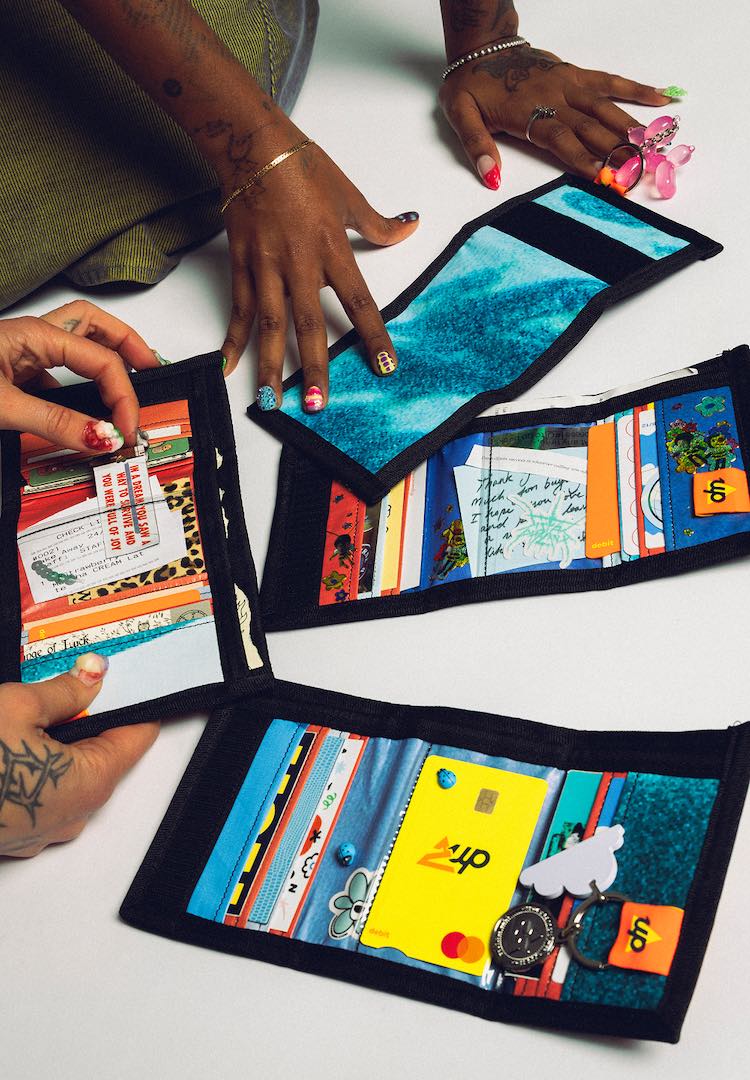
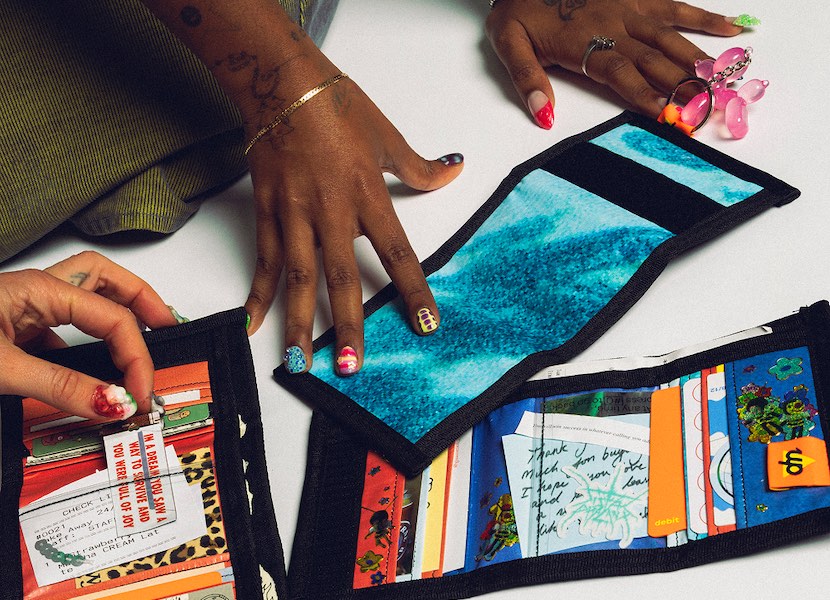
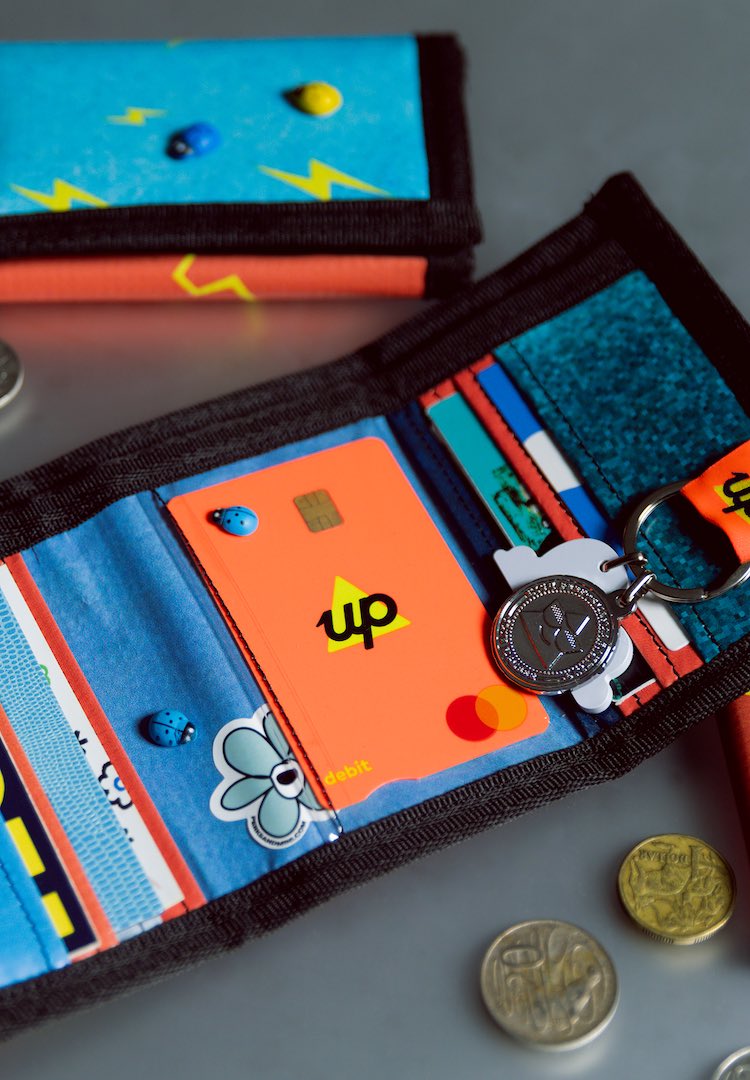
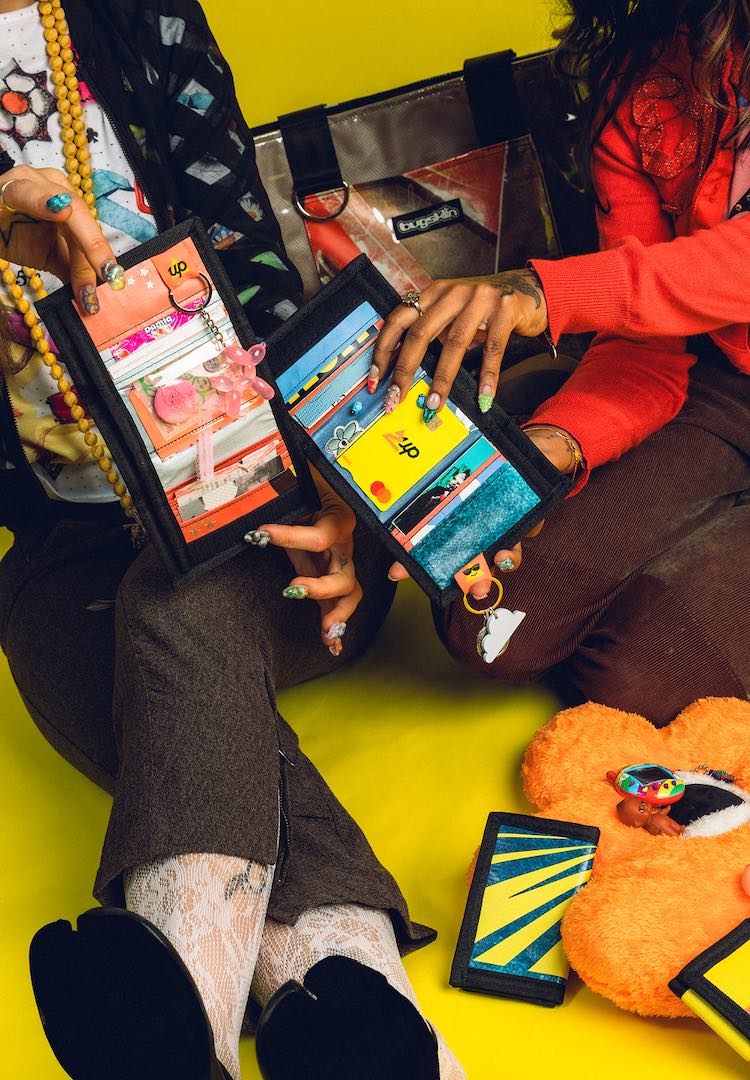
In an exciting new collaboration with digital bank Up, Bugskin’s upcycled billboard designs are coming for our back pockets with a new limited-edition run of Velcro wallets. “When Up approached us with the idea, there was an immediate alignment in values,” Nick explains. “Both of our brands are interested in creating practical products while challenging conventional thinking in their respective industries. Up’s willingness to explore a more thoughtful approach to branded products made the partnership feel like a natural fit from the beginning.”
Ahead, we speak to Nick about collaboration, the realities of working with unconventional materials, and how the collection came together.
Tell us about the beginnings of Bugskin. What was the catalyst for starting the brand?
Bugskin came out of a long-standing interest in working with clothing and materials in different forms. I’ve always worked within fashion in some capacity, from screen printing and garment design through to a period of upcycling denim sourced around Melbourne.
Over time, that practice naturally expanded to include other materials beyond clothing and how they might be reworked or extended rather than discarded. When I came across retired billboards, it felt like a natural continuation of that thinking. They’re bold, durable, and designed to capture attention, yet often exist only briefly before being removed.
What began as material experimentation quickly developed into Bugskin, a way of challenging how we think about waste, value and the lifespan of materials within fashion.
How did the conversation with Up begin, and what excited you about the project from the outset?
The conversation started through a mutual appreciation for thoughtful design and sustainability. What excited me most was that Up wasn’t interested in creating another piece of branded merchandise. They genuinely wanted to explore how campaign material could be transformed into something useful and long-lasting, which aligned perfectly with the way we approach design at Bugskin.
Can you walk us through what happens when a retired billboard arrives at Bugskin HQ?
The first step is always unrolling the billboard and seeing it in its entirety. From there, I assess the imagery, colours and graphic elements before carefully mapping out where each product panel will be cut. Every section is selected by hand, cleaned, cut and then sewn into a new form. It’s a slow process, but that’s what makes each piece unique.
Bugskin is best known for larger accessories. What was your first thought when the brief became a wallet rather than a bag?
My first thought was that it would be a fun challenge. Bags give you a lot of surface area to work with, whereas a wallet forces you to be much more selective about the graphics and details you choose. It required a different way of thinking about the material and how to maximise both function and visual impact in a much smaller format.
Which stage of the process ended up being the most labour-intensive?
The most labour-intensive stage was cutting the billboard skins. Each wallet is made up of 13 individual pieces, and across the entire project, that meant carefully cutting nearly 2,000 components by hand. Because every billboard is different, there’s no automated process. Each piece needs to be thoughtfully placed and cut to ensure the final product is both functional and visually unique.
What role does Melbourne’s creative community play in projects like this?
A huge role. Melbourne has a strong culture of collaboration and creative experimentation. Many of Bugskin’s opportunities have come through relationships with local brands, artists and organisations who are open to rethinking waste as a resource. Projects like this are a reflection of that community mindset.
What conversations do you hope this collaboration sparks about waste and consumption?
I hope it encourages people to look at waste differently. Materials are often discarded simply because they’ve fulfilled their original purpose, not because they’ve reached the end of their life. If this collaboration gets people thinking more critically about what we throw away and what could be reused, then that’s a positive outcome.
The collaboration centres on Up’s ‘Simplify Money, Amplify Life’ campaign. How did that message translate into the final product?
The wallet felt like a natural extension of that idea. It’s a simple, functional object that people use every day, but it’s made from a material that has been given a second life. Taking something that was once temporary and transforming it into something useful and long-lasting reflects the idea of getting more value from less.
What’s next for Bugskin?
This year has been a period of transformation for Bugskin. We’ve spent the first five months refining our products, systems and overall direction as a brand, really focusing on how we can improve every touchpoint. It’s been a significant period of evolution behind the scenes, and we’re excited to start sharing the results over the coming weeks. Alongside that, we’ll continue pursuing meaningful collaborations and finding new ways to give discarded materials a second life.
To explore the Up x Bugskin collection, head here.
Liked this? You’ll love these...