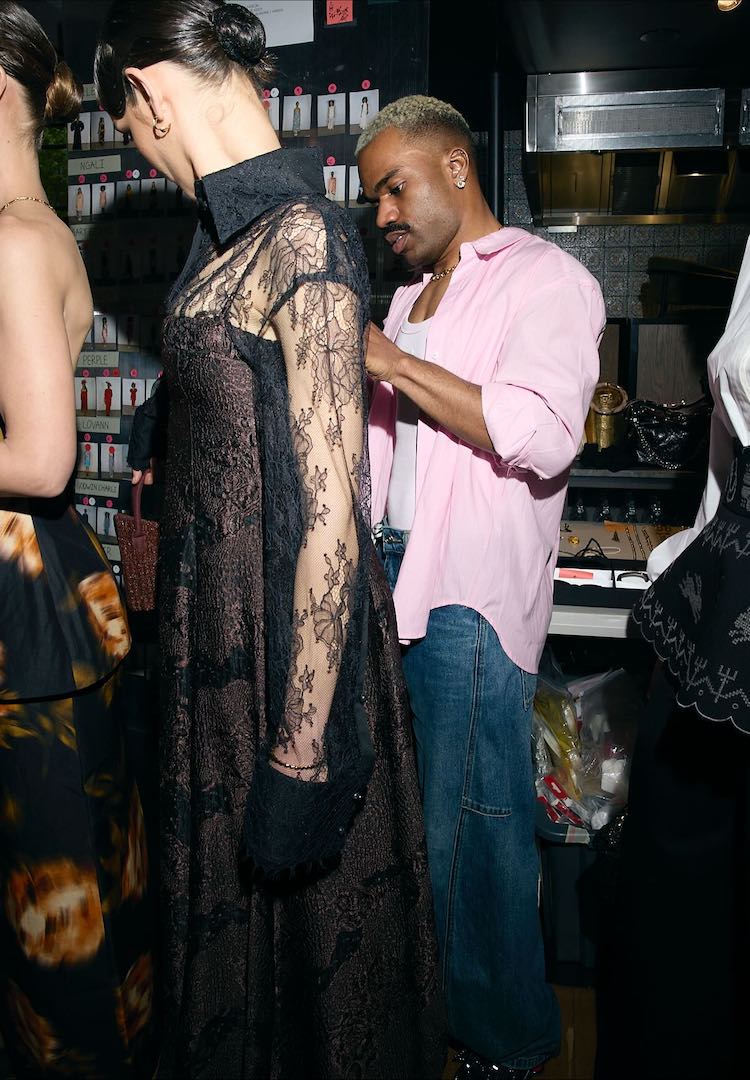


Stylist and creative director Lindyn Rowland on thinking outside the box
image via @lindynrowland/instagram
AS TOLD TO MARYEL SOUSA
“I’m about to welcome you all to the Ghetto Opera.”
Soon, Melbourne Fashion Week’s ganbu marra opening runway will return for its sixth year, welcoming a cast of returning First Nations designers alongside a new generation, set against the dramatic backdrop of the NGV’s Gandel Hall.
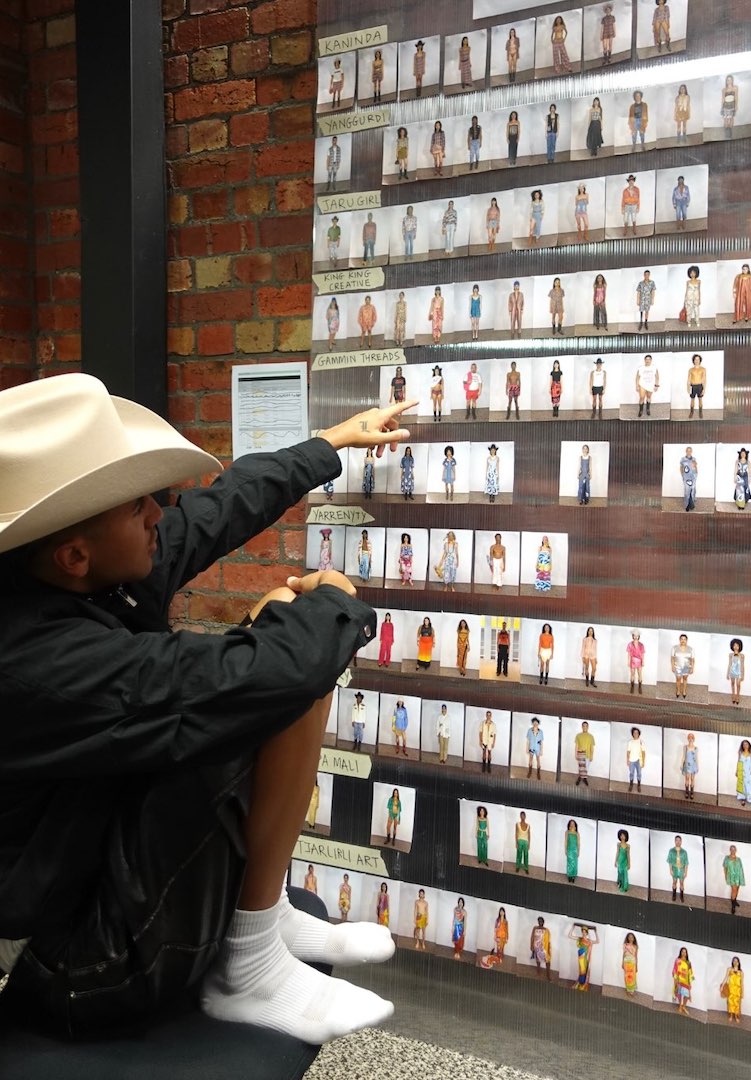
Leading it all is Lindyn Rowland, a proud Wiradjuri and Waiben Island man and multihyphenate creative. From styling to casting, set design and overall creative direction, Lindyn plans to bring to life an operatic vision that celebrates First Nations communities’ creativity and perspective.
For more fashion news, shoots, articles and features, head to our Fashion section.
This year’s show is especially personal to the stylist and model, whose connection to ganbu marra runs deep. The showcase will feature both a piece of himself, as he debuts his brand Rowland Vision, and a piece of his home, as his aunty Saretta Fielding debuts Saretta the Label alongside him.
It’s also a chance for Lindyn to break out of a box often unfairly placed on him and other First Nations creatives: the idea that his culture somehow places bounds on his creativity. “I’ve given myself permission to be completely free,” he says. “I wanted to explore what happens when I take all of those different influences, references and ideas in my head and let them exist together, without feeling the need to explain or categorise them.”
First Nations communities are expansive and always have been. “I want people walking into that show to see themselves, their culture, their identity, and their community reflected back at them,” Lindyn says.
Fashion Journal: Hi Lindyn! What can we expect to see on the ganbu marra runway this year?
I’ve really challenged myself to step outside of the box that First Nations people are so often placed in. Yes, I’m a First Nations stylist and creative director, but I’m also a stylist and creative director. My culture is a huge part of who I am, but I don’t want that to be the only lens through which my creativity is viewed.
I’ve given myself permission to be completely free. I wanted to explore what happens when I take all of those different influences, references and ideas in my head and let them exist together without feeling the need to explain or categorise them. Without giving too much away, let me just say this: I’m about to welcome you all to the Ghetto Opera.
View this post on Instagram
How did holding the runway at the NGV influence the show’s direction?
Being the opening runway of Melbourne Fashion Week, with the Gandel Hall as our setting, there’s already such a sense of occasion before a single look even comes down the runway. The stained glass ceiling is the obvious starting point. It’s so grand, colourful and theatrical that I didn’t want to compete with the architecture. It naturally lends itself to something dramatic, cinematic and operatic.
How did you curate the designers for the show?
I’m lucky to be connected with First Nations designers from across the country. Whether through other runways and events or as a judge for the National Indigenous Fashion Awards, I get to see so much incredible talent firsthand. I’m always thinking about who I feel is ready for that next step. It’s not just about selecting designers because their clothes look good together; I’m thinking about their stories, where they come from, what they represent and how each designer contributes to the bigger world we’re creating.
There are some really exciting debuts this year, and one that’s particularly personal for me is Rowland Vision, my own brand, making its debut on the ganbu marra runway. We also have an incredible lineup of designers making their M/FW debut, including Saretta the Label, Van Ermel Scherer, Out of Hand x Lisa Waup, Delvene Cockatoo-Collins, Atyene, Ebony Noire and Marnin Studio.
View this post on Instagram
Each of them brings something completely different to the runway. I don’t want ganbu marra to feel like everyone is doing the same thing. I want the audience to see the breadth of First Nations fashion and the different perspectives, aesthetics and stories coming out of our communities.
We have Kaninda and Yapa Mali returning for another year, and bringing these two designers back was really important to me. Both of them have been part of my journey for quite some time. I’ve watched both brands grow and evolve, and I wanted to give them another opportunity to be part of this platform and show where they are now.
Can you tell us about any designers who have drawn on unique techniques?
Craftsmanship and textile design are such an important part of First Nations fashion because so much of the work can carry stories, knowledge and cultural meaning beyond the garment itself. Lisa Waup has created something crazy. I’m gagged by the thought of it. I think this one deserves to be experienced, rather than explained.
View this post on Instagram
When did preparation for Melbourne Fashion Week begin for you?
Honestly, my mind just never stops. I was already thinking about this year’s show while we were in rehearsals for last year’s ganbu marra. I didn’t even know for certain that I’d be coming back for a second year, but I had an idea forming in my head.
The real preparation starts once I’m officially confirmed to return, around the beginning of June. From there, things move pretty quickly. I start thinking about the overarching creative direction, the designers, the styling, casting and all the elements that need to come together to create the world of the show.
View this post on Instagram
What would surprise people about your role?
How much work happens behind the scenes that you never see on the runway. People see the final results of a show, but they don’t see the months of planning, fittings, casting, problem solving and decision making that go into making that happen.
I think there’s another layer to my role that people might not necessarily see. As a First Nations person, a person of colour, and a young black man working in the Australian fashion industry, I’ve always felt that I have to work incredibly hard to be recognised and taken seriously.
You’re a true multihyphenate. What skills or qualities serve you well in a role like yours?
I can see something in my head and then figure out how to make it one real, cohesive vision. I’m also very detail-oriented. I notice everything from how a garment is sitting on a model to whether the music feels right with the styling. Those small details can completely change the feeling of a show. With a production this big, things are constantly changing. You have to be able to problem-solve quickly, stay calm and find another way to get to the same outcome without losing the original vision.
I also really value relationships, and ganbu marra is built around people and community. I care deeply about the work, about the designers, the models, representation and about what we’re creating. That level of care is what keeps me going.
ganbu marra is the opening runway of Melbourne Fashion Week, which runs from 19-25 October. Check out the website to learn more about the program.
Liked this? You’ll love these...