

Jordan Gogos returns to “normal land” following his AFW 2026 presentation
photography by Tom Hearn
words by daniel mizzi
“I don’t sit on my ideas. I act on them, and bring them to life quickly.”
Last week on the steps of UNSW in Paddington gathered the who’s who of Sydney’s fashion industry. Among the frenzy of photographers and reporters stood stylists, editors and agents, swanning around whilst kissing cheek to cheek and patting one another on the back.
To pose and to posture is the nature of Australian Fashion Week; to see a collection is secondary to being seen oneself. This is why those who bought tickets to designer Jordan Gogos’ second show – a public offering following the press-only debut – arrived hours early. We were in fantasy land.
For more fashion news, shoots, articles and features, head to our Fashion section.
There’s nothing subtle about Iordanes Spyridon Gogos, the brand and by extension, the man behind it. His world extends beyond fashion, dare I say beyond art. A Gogos show is cultural. A society event, as it would have been referred to in days gone by.
At 11am, schmoozing was brought inside as guests took their seats on benches flanking a central runway, where a stainless-steel Trojan Horse sculpture grounded the room. The walls, ceiling and floodlights maintained a white sterility, the environment lending itself to an art exhibit, not a fashion show. The presentation began with esoteric musings on the nature of buttons, voiced by the designer himself.
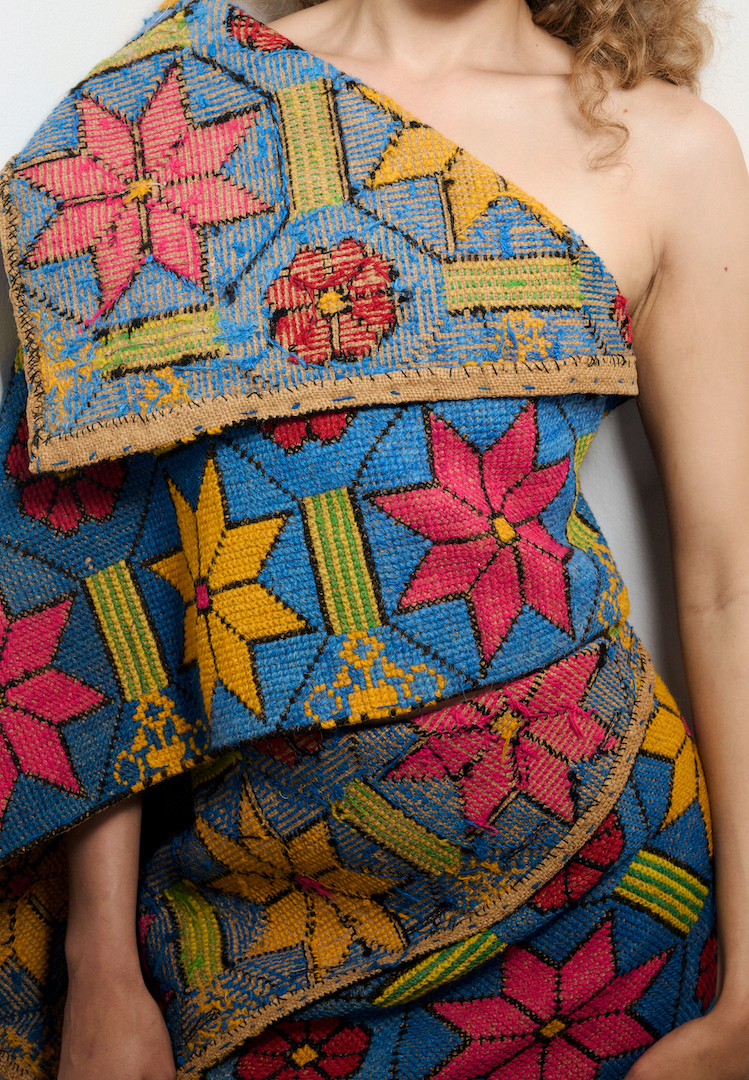
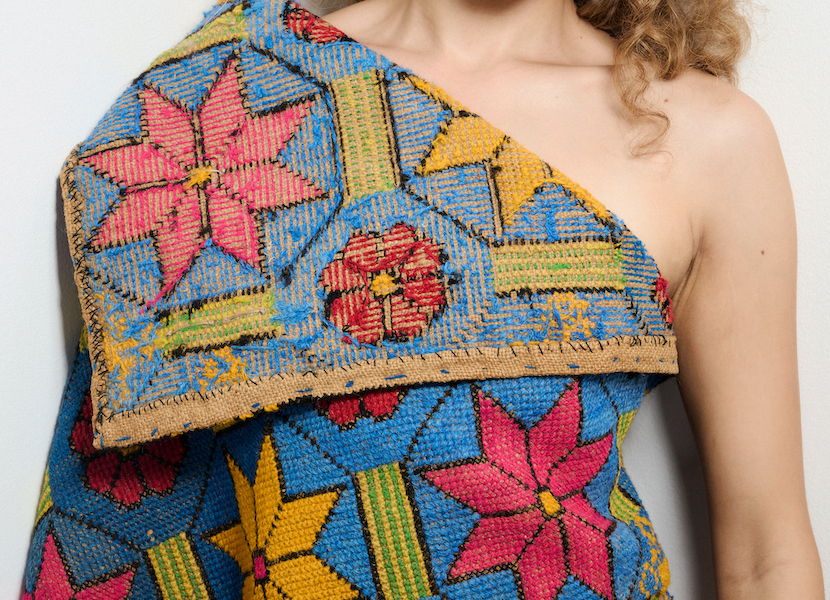
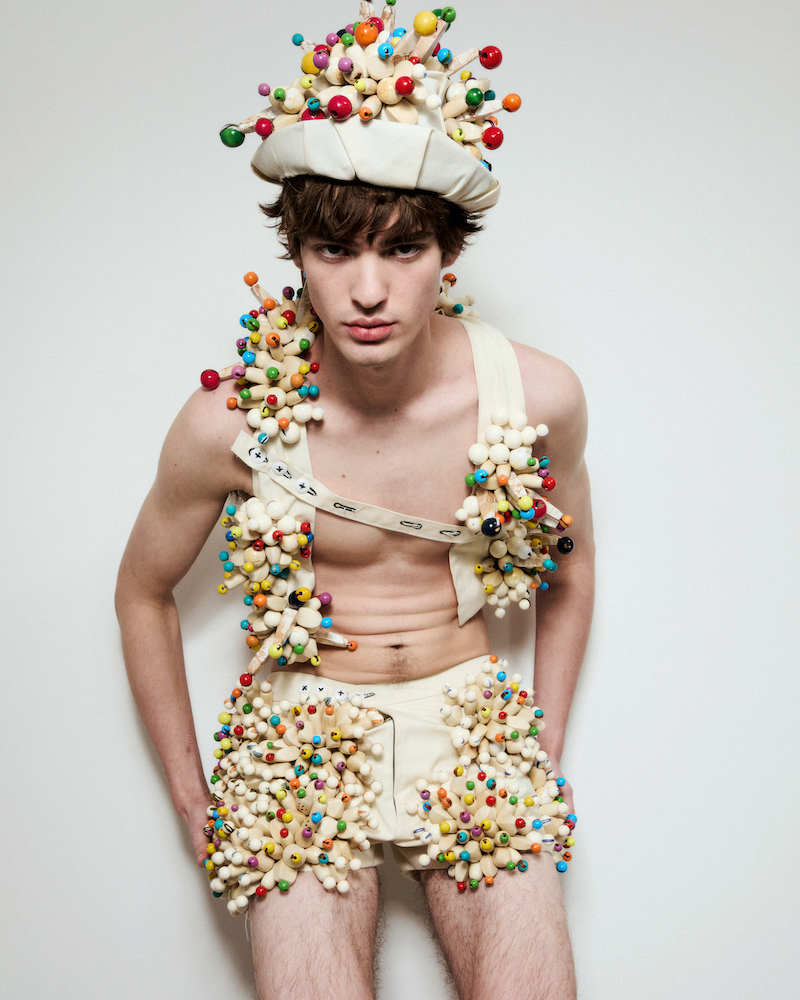
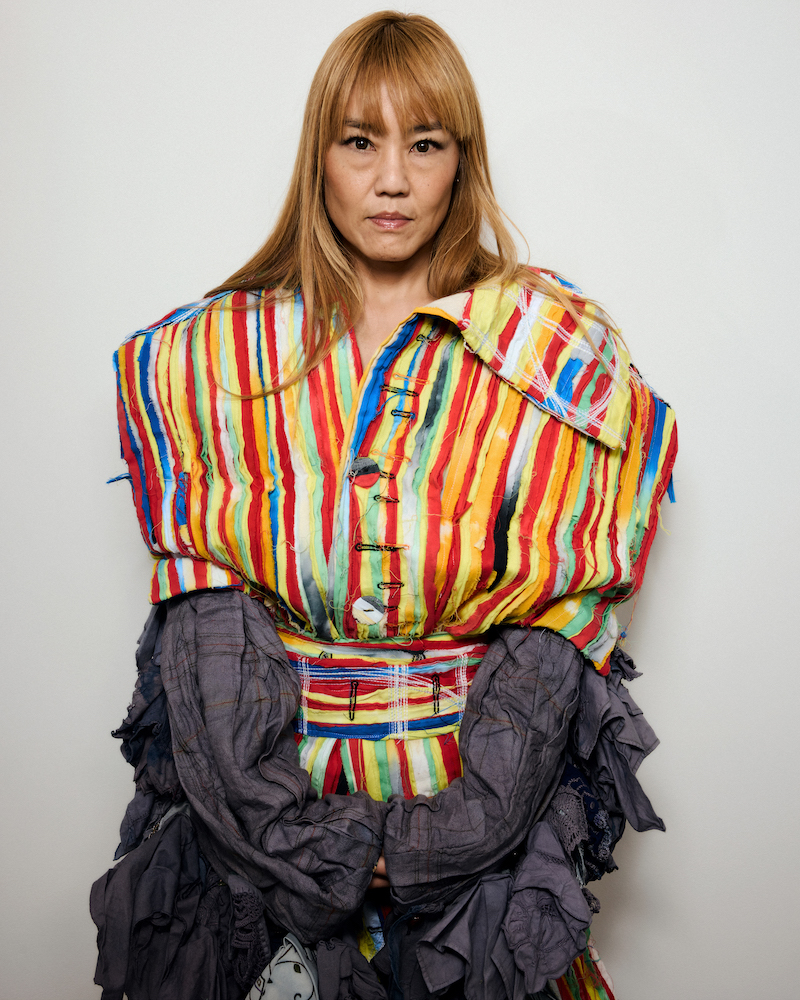
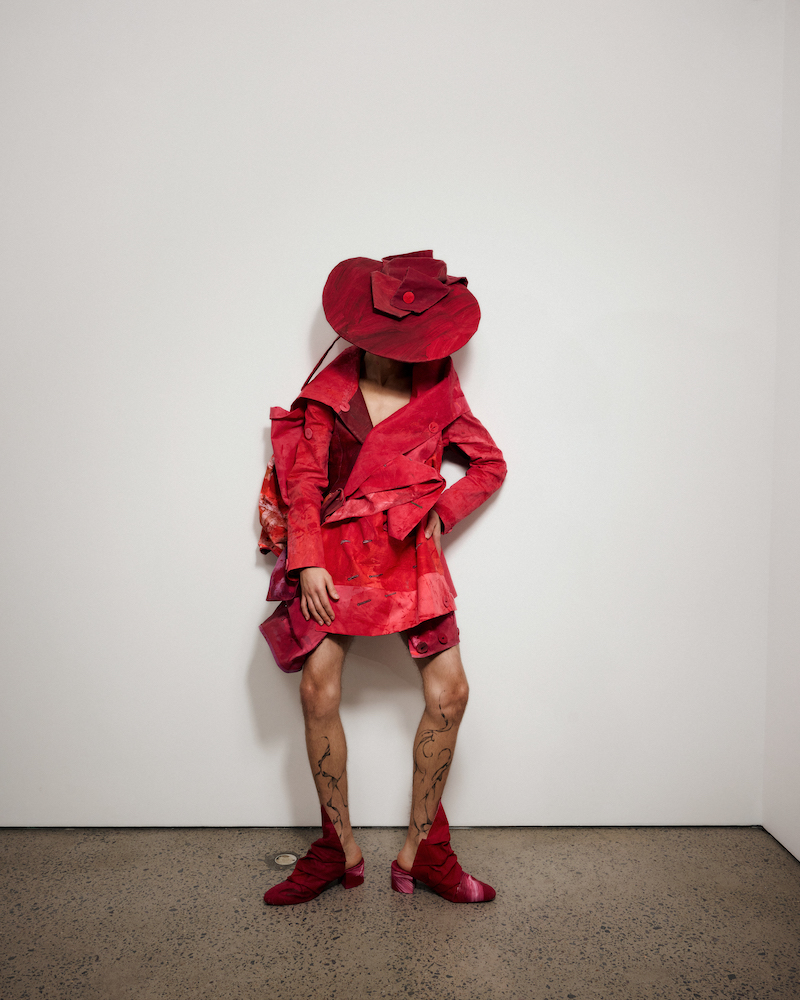
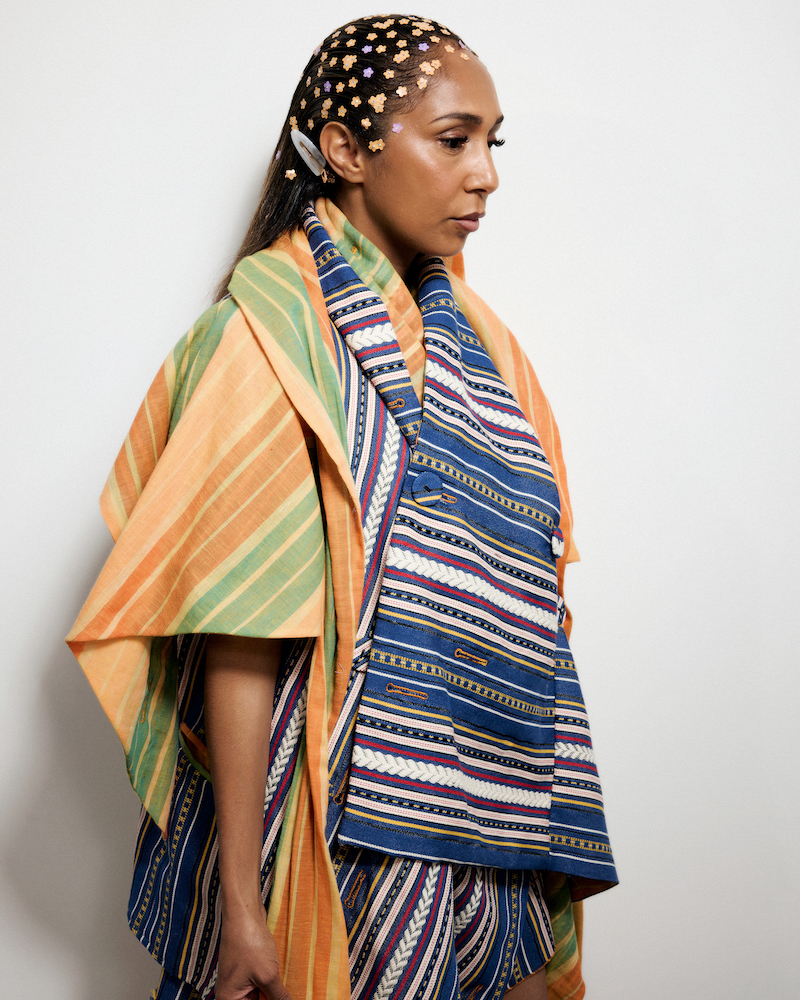
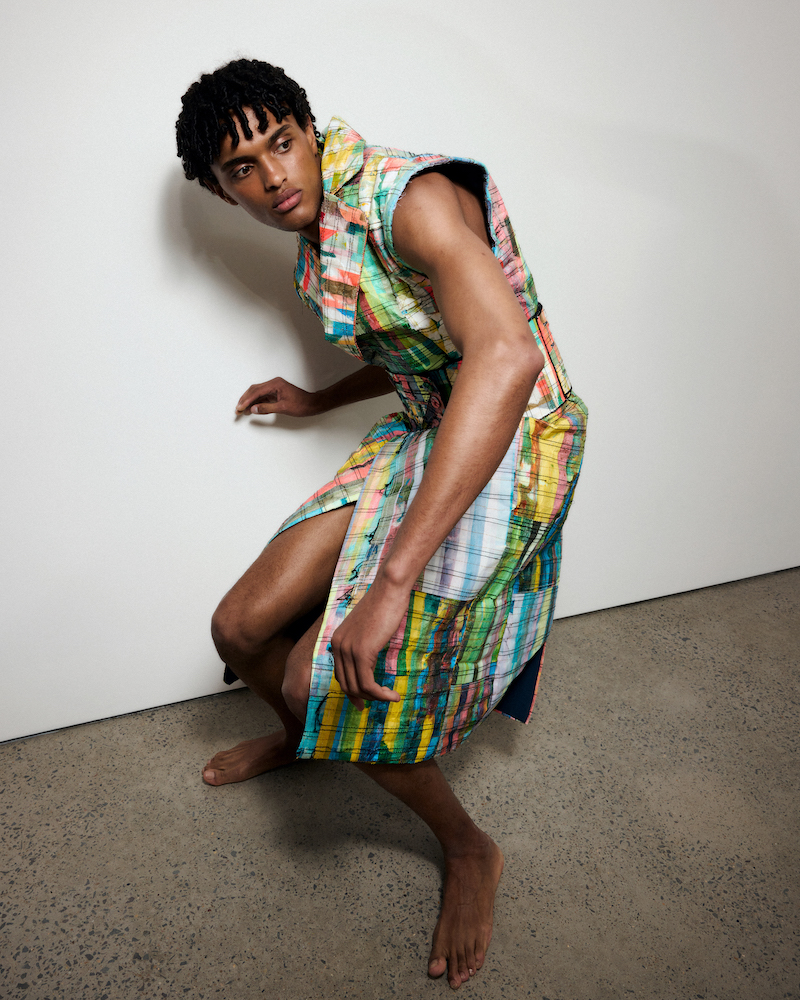
The show, though subdued compared to his previous runways, was a spectacle nonetheless. Buttons, a recurring motif, appeared in bold reds, yellows, purples, blues and green. The opening look saw Kirsha Kaechele draped across the shoulders of Kal Henderson, both models clad in emerald ensembles. It was, admittedly, a truly brilliant show. Visceral in a way that moves the woman next to me to tears. She really begins sobbing, quite uncontrollably.
That night it rained, sending the city awash. Abrupt and relentless, it continued on as if Sydney may never see sunshine again. The condition, however, was entirely lost on those carousing inside the Ace Hotel, host of the Iordanes Spyridon Gogos afterparty. The Ace and, more so, Good Chemistry, the hotel bar, is a Sydney hotspot, and seeing it printed in black lettering against the white invitation signals a knowingness on behalf of the designer and his collaborators: we understand this industry.
I spent the days after the show dotting around Sydney, shopping in Darlinghurst and Haymarket, and while in these boutiques the natural topic of conversation centred on AFW and Gogos’ presentation. Some designers revelled in the opportunity to espouse their thoughts on Jordan, both personally and professionally. Others were less overt, although slight tensions could be felt underneath the pleasantries. Gogos is a name about town and, whether viewed in jest or sincerely, he’s seen.
And not just by his peers, by the press. Following the runway, his name was splashed across headlines as a true media spectacle: “Runway model dragging ‘lifeless’ woman sparks fierce debate.” “Shirtless model’s act shocks fashion week.” “Bizarre moment man drags woman down the catwalk.”
It’s in the wake of his show that we meet. He seems reluctant to return to his studio: “Not sure if I want to be there at the moment. Need fresh air.” So we sit outside at a coffee shop on Darling Drive. He wears a shirt embroidered with clocks and blue jeans. His hair is cropped close, his amber eyes intense even behind his Prada glasses, which he cleans on his shirt. He looks tired and absolutely human.
I’m interested in the tension between Gogos the persona and the person, and I begin: why do you do this? “Because I believe in Australian culture and diasporic perspectives,” he tells me. “I’ve always wanted to bring a different voice into fashion because I was never in fashion.” He pauses. “Now, six years later, I’m fucking in fashion.”
There’s a friction in his argument between arrival and refusal, between claiming space and resisting its definitions. When I suggest he’s an outsider turned insider, he refutes it: “There are days where I feel really in and days where I feel really out.”
He speaks in contradiction: “to have a career in Australia, you have to be robust and malleable.”. To anyone else, these appear mutually exclusive. For him, they operate in tandem. He speaks with conviction, rarely short on words or ideas, the conversation flowing easily, animated by the same exuberance with which he gestures through life: “I don’t sit on my ideas. I act on them, and bring them to life quickly.”
This is easier said than done, especially considering the cost of producing a show. “We’re making collections while trying to find the funds,” he explains. This has been achieved through a flurry of partnerships Gogos maintains: Schwarzkopf, Skin Control (supplying the artfully-placed pimple patches on some models) and Masterfoods, which presumably accounted for the mascot dressed as a bottle of barbecue sauce who sat front row.
A solution to this is merchandising his creativity, a taboo practice within the art world. When I challenge him on this, his candour surprises me: “Half the stuff I’ve done could be taken as selling out. I’m doing things that work for me.” In the spirit of honesty, I make him privy to the rumours circulating, namely that this collection was an attempt at ready-to-wear.
“That’s funny,” he replies. “No,” he concedes, “I want to do ready-to-wear more than I’ve wanted to in the past few years because I really didn’t like it for a while.” I smile and, sensing my amusement, he presses: “Have you ever bought my stuff in a store? Exactly. Have you seen my stuff in galleries?” He knows I have. We had just spoken of his work entering the National Gallery of Australia.
Yet the distinction collapses under its own logic. I read from the pamphlet distributed at his show, which previews his upcoming exhibition, ‘Paradeisos’. Next to a portrait by Jordan Drysdale (another soon-to-be-bigwig), it states: ‘bringing together expansive textiles projects alongside wearable works by his acclaimed label’. “Wearable means artwork that can be worn,” he retorts.
The separation, he suggests, is semantic rather than structural. “There are so many imagined barriers within fashion because people associate fashion with clothing. Fashion is fashion. It’s time, space and people.” When asked about commerciality and merchandising, Gogos interrupts: “I would.” The contradictions are not resolved; they are absorbed.
Another truth: Gogos shares the city with a plethora of notable designers like Niamh Galea, Beare Park, and Alix Higgins, who likewise move between fashion and art. Yet where Higgins’ work maintains functionality, Gogos’ practice stands in opposition to the banalities of day-to-day life. In an industry as small as Sydney’s, competition is assumed. He agrees: “in being a fashion designer, there’s a selfishness required.”
Yet his frankness is matched by sincerity: “whatever’s personal with designers, we can’t exist without each other. It doesn’t matter what ebbs and flows we have… without an ecosystem, there is no fashion industry.”
There’s a community at the heart of Gogos’ studio: “Charlie [Hope-Parsons] on hats, Billie [Ronis] on knits, Joseph [Botica] on shoes.” Extending that sense of community to the public was rare: “I made my tickets cheaper because it allowed more eyes.” This contrasts with the exclusivity of industry insiders who move from show, to afterparty, to salon. There’s an ephemerality to that life: “the two-and-a-half weeks of AFW you are a celebrity, and then the second it’s over” – he snaps his fingers – “you’re just a gay, just living a scenester life in Sydney.”
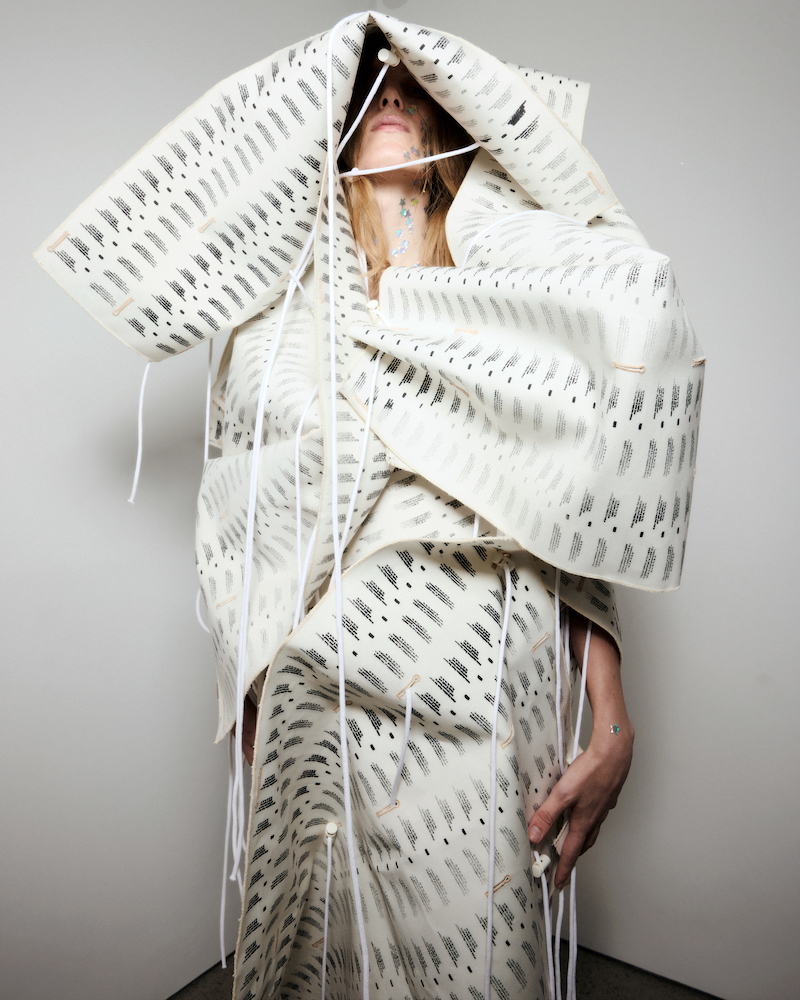
Addressing criticism around the performance art elements of his show, Gogos reflects: “I think it’s beautiful that in Australia we’re treating art or fashion in a high enough regard to be critical about it. I will always do better and take things on board.” On casting, he notes he allows models to express themselves. On Kirsha Kaechele, he adds: “she’s a total feminist. Her whole practice is about belittling men.”
Six consecutive years at Australian Fashion Week have given Gogos a certain clarity regarding the industry and its rhythms. “God I hope not,” he sighs when asked if he’s lost anything in the process. “I mean a few friends, but who hasn’t?” Beneath this sits awareness of narrative fatigue – of fashion’s tendency to mythologise youth while treating longevity as evidence of decline.
“This whole idea of being mid-career, that brand that feels washed up…” he trails off. “I was always warned: you’ve been getting attention, and that may wear off. ‘Enjoy it because it will end.’” Yet, unlike so many creatives hollowed out by cynicism, Gogos remains focused, unjaded. “I don’t see my shows as something that’s going to catapult me into stardom. There’s a limit to what can happen from a show.”
“My lifestyle hasn’t changed. I still don’t have a house. I’m still paying off a normal household car.” Beneath the spectacle lies awareness of impermanence. “Every artist and designer historically – the most famous, the most successful – if you look at their lives it becomes a shit show… There’s no path in fashion or art that will always be a peak.”
Success, as he frames it, is cyclical and unstable. “For a moment, you ride it, until there’s nothing for you to ride.” Then, inevitably, you return to “normal land”.
As my afternoon with Jordan ends, I walk towards Thai Town thinking that he reflects a contemporary creative identity, particularly within Australian fashion, where coherence is impossible because survival depends on contradiction. Gogos suggests you can be an artist and a fashion designer, a nobody and somebody at once, both inside and outside the mainstream – celebrated yet peripheral.
You can move between celebrity and fantasy and still return to normal land. What he seems to understand is that identity is not singular but multiple: we exist in overlap and inconsistency, in constant negotiation, and like Gogos himself, we contain multitudes.
Keep up with Jordan Gogos’ work here.
Liked this? You’ll love these...