

Big shapes, loose ends and bright ideas: A review of the Student Collections runway
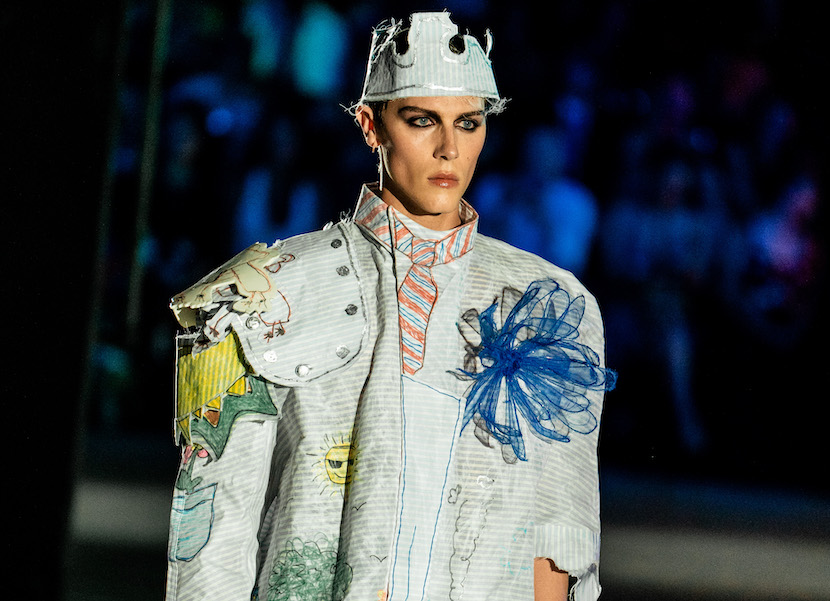
photography by liana hardy and gemma thomas
WORDS BY Daniel mizzi
lead image design by chloe danielle tooker
The future of Australian fashion is in very good hands.
On Thursday evening, the night before Melbourne Fashion Week’s Student Collections runway, RMIT’s fashion studios were so quiet you could hear a pin drop. Finished garments waited on racks while offcuts gathered beneath worktables, the usual calamity replaced by calm.
Among the stillness stood 22-year-old Fashion Design Honours student, Eloise Green. In 24 hours, she would join 29 other graduate designers from around Australia at Younghusband for the anticipated showcase. “My roommate is also in it,” Eloise tells me. “I heard her screaming from the next room. I thought she’d fallen over. She was like, ‘We got it!’”
For more fashion news, shoots, articles and features, head to our Fashion section.
This year, M/FW received more applications than ever, with 120 graduates applying for a place in the show. The final 30, selected and mentored by stylist Stuart Walford, came from RMIT School of Fashion and Textiles, Box Hill Institute, LCI Melbourne and Whitehouse Institute of Design Australia. For an emerging designer, it’s a significant opportunity. “I don’t think I’ve ever had this many people in a room looking at my work,” Eloise told me.
Indeed, Friday night was a fanfare of photographers crouched shoulder-to-shoulder along the runway, while a packed audience rose behind them in tiers. Bright white lights washed over exposed concrete; projections fractured across a scaffolded installation at the centre of the room. Whatever modesty the words “student runway” might imply disappeared in Kensington – deservedly so.
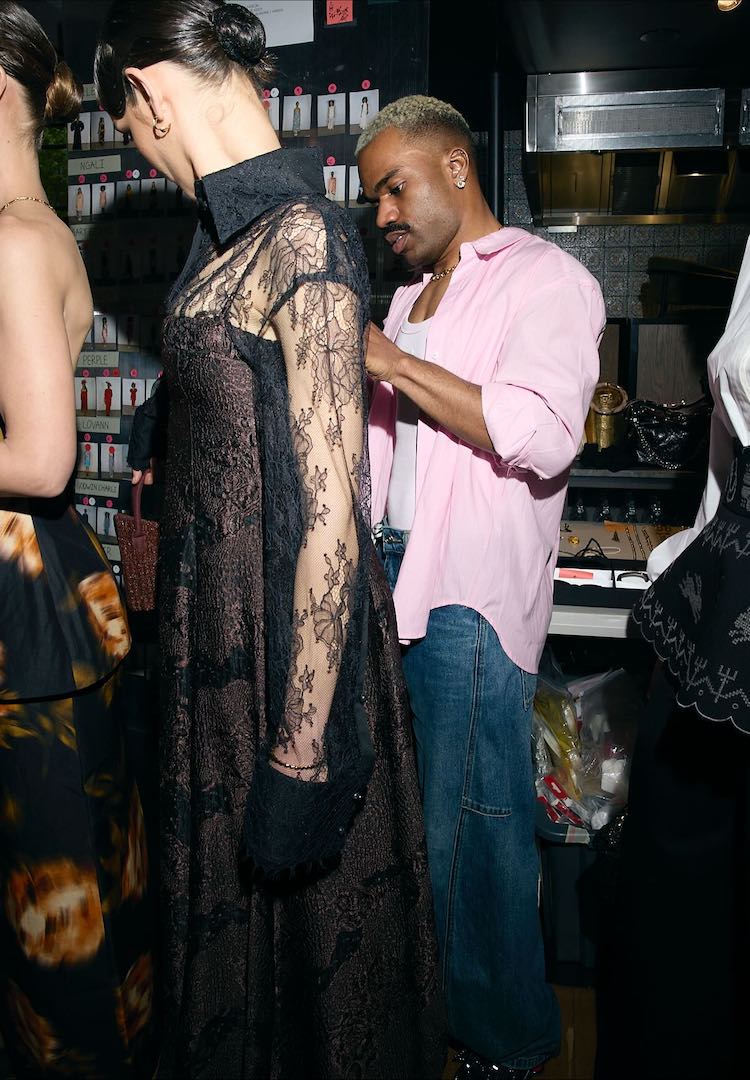
This reality was not lost on the graduates, nor did it dissuade them from seizing the moment. “I still feel so young and it all feels so new,” RMIT graduate Eva Brahm told me before the show. “Being in such a professional space with so many industry people… feels kind of amazing.”
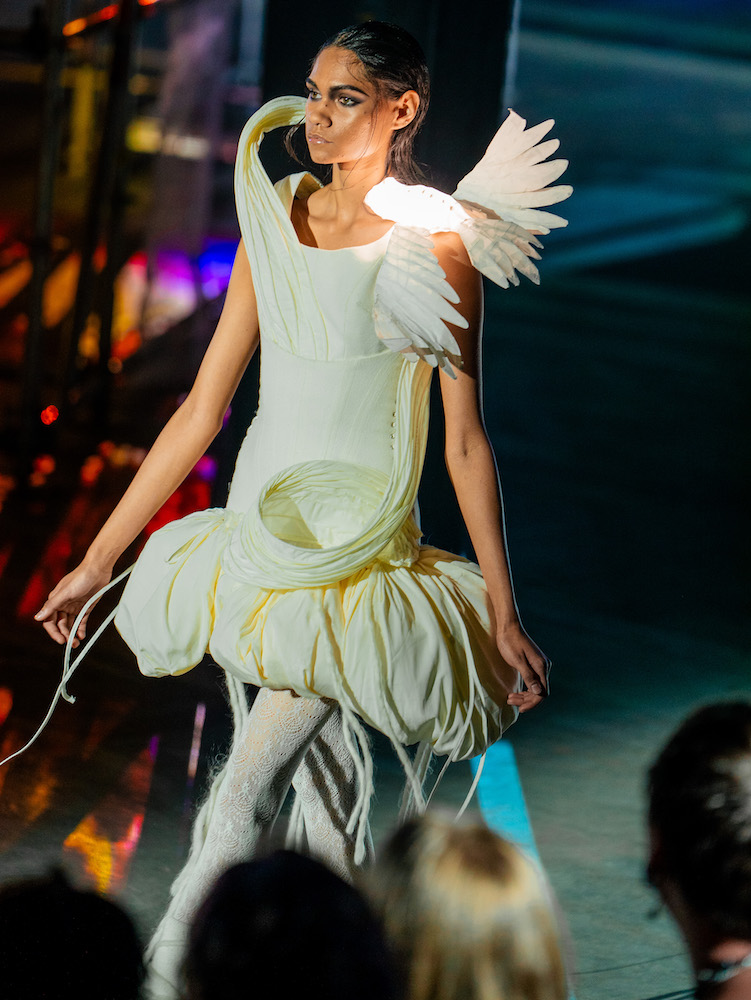
Amelia Hull, LCI Melbourne
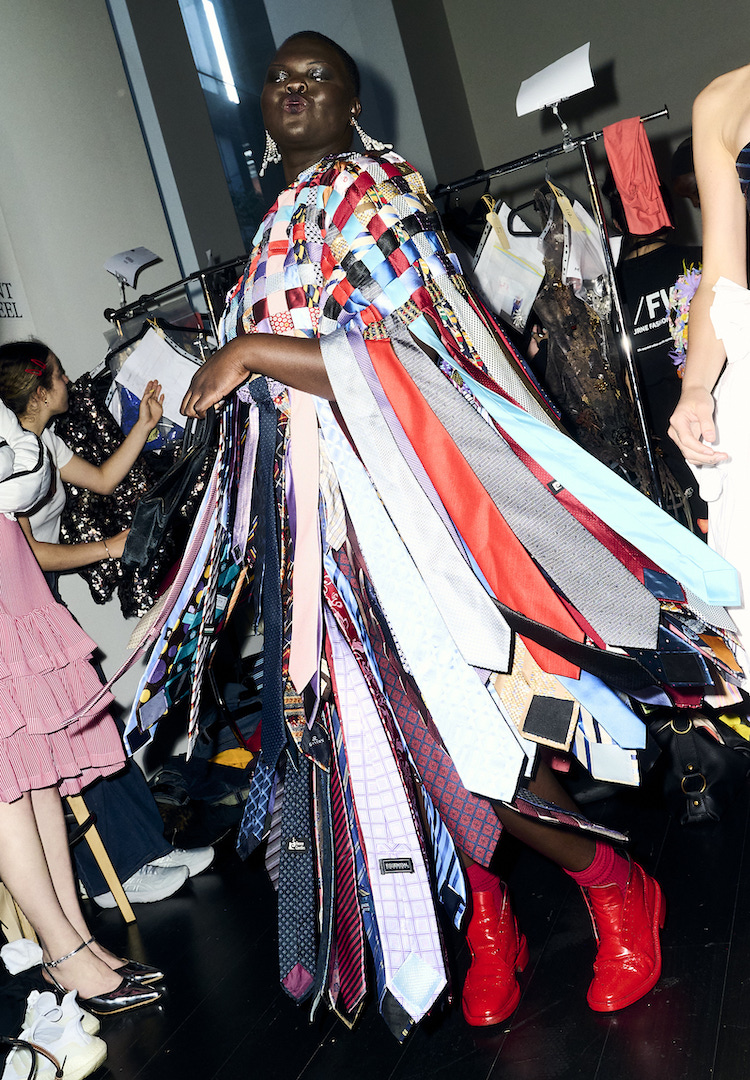
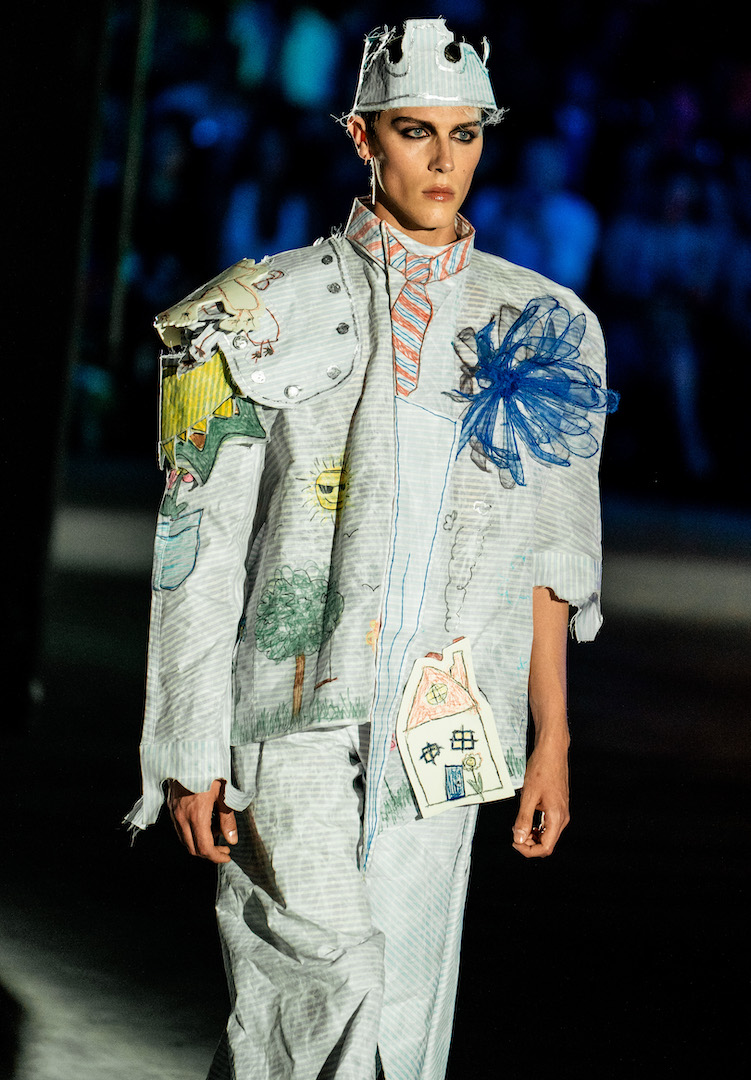
Once the first of 90 looks hit the floor, process became product; experimentation became proposition. Across the collections, clothing pushed beyond the body, as seen in Amelia Hull’s work, where the model’s legs were framed by a halo trimmed with ivory organza. Tanika Goodman’s form projected outwards, widening hips and cinching waists, creating a bulbous silhouette that bounced alongside the body.
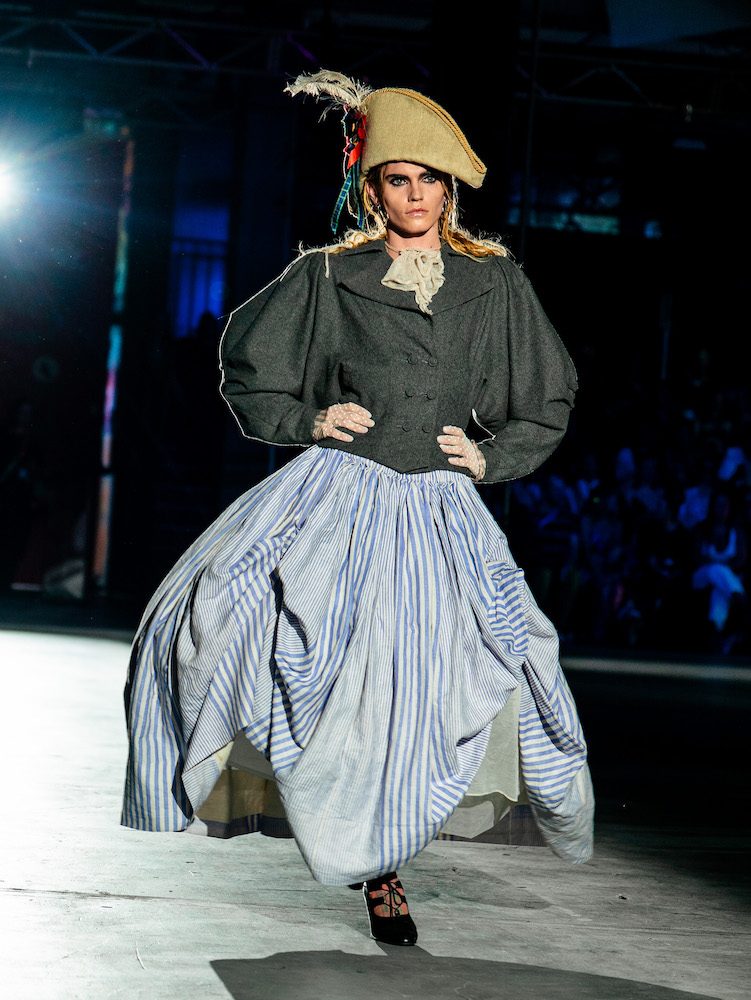
Tanika Goodman, RMIT
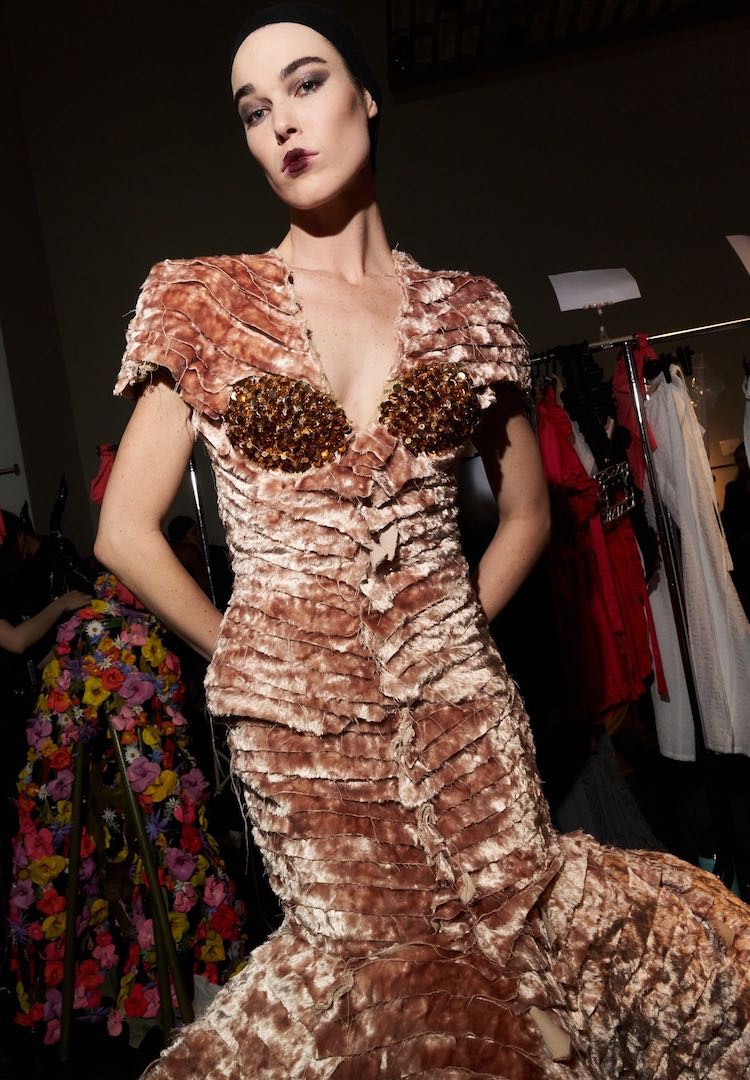
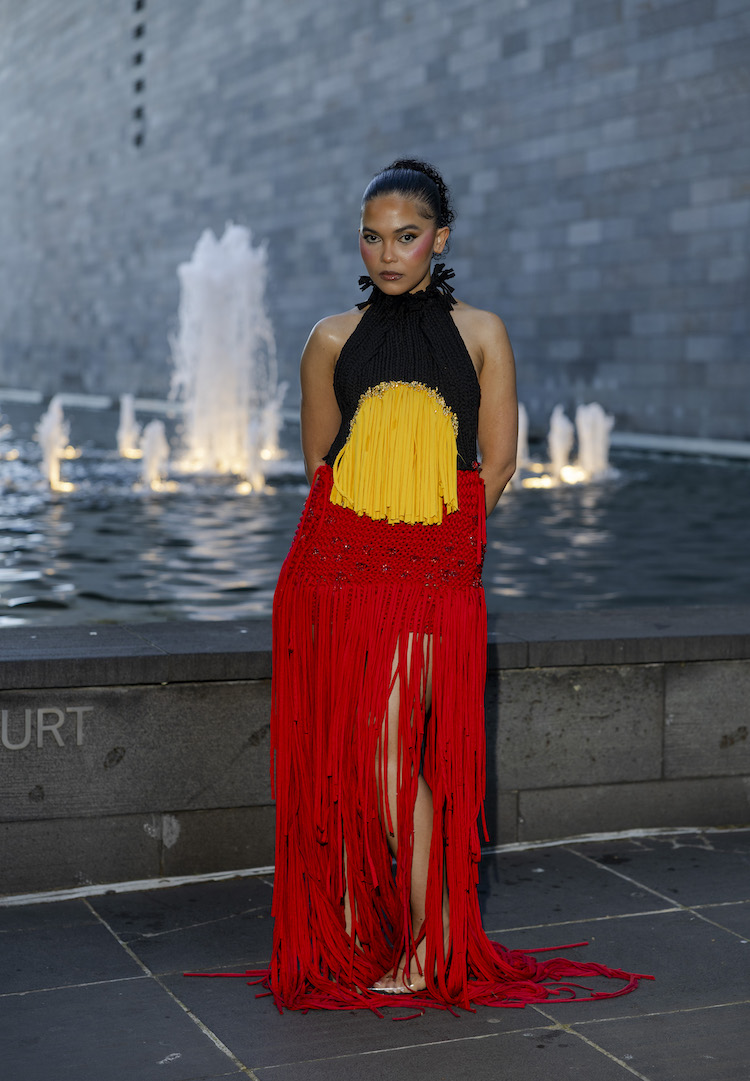
Loose ends were often left untied. Fringe, cords, shredded hems and trailing strips of fabric followed models down the runway, giving garments a second life in motion. Whitehouse Institute’s Josephine Gear let strands spill from clutches and dress hems. Mikayla Mae tucked fringe beneath boots, leaving panels to drag a step behind the wearer. At times, the clothes seemed to leave the runway a few seconds after the models did.
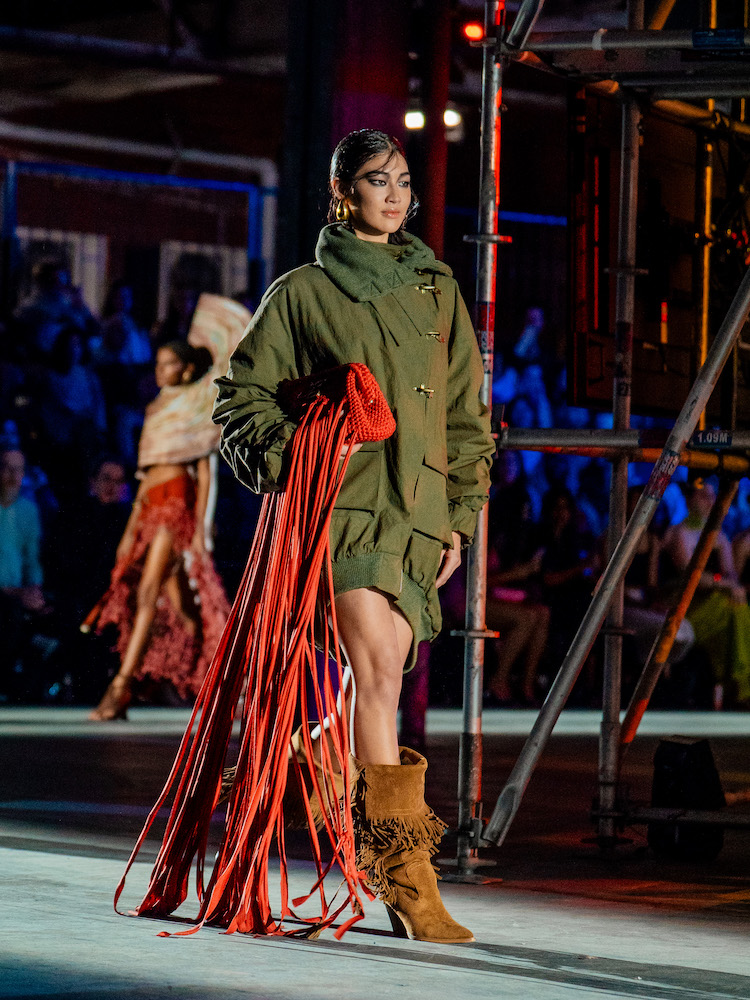
Josephine Gear, Whitehouse Institute of Design Australia
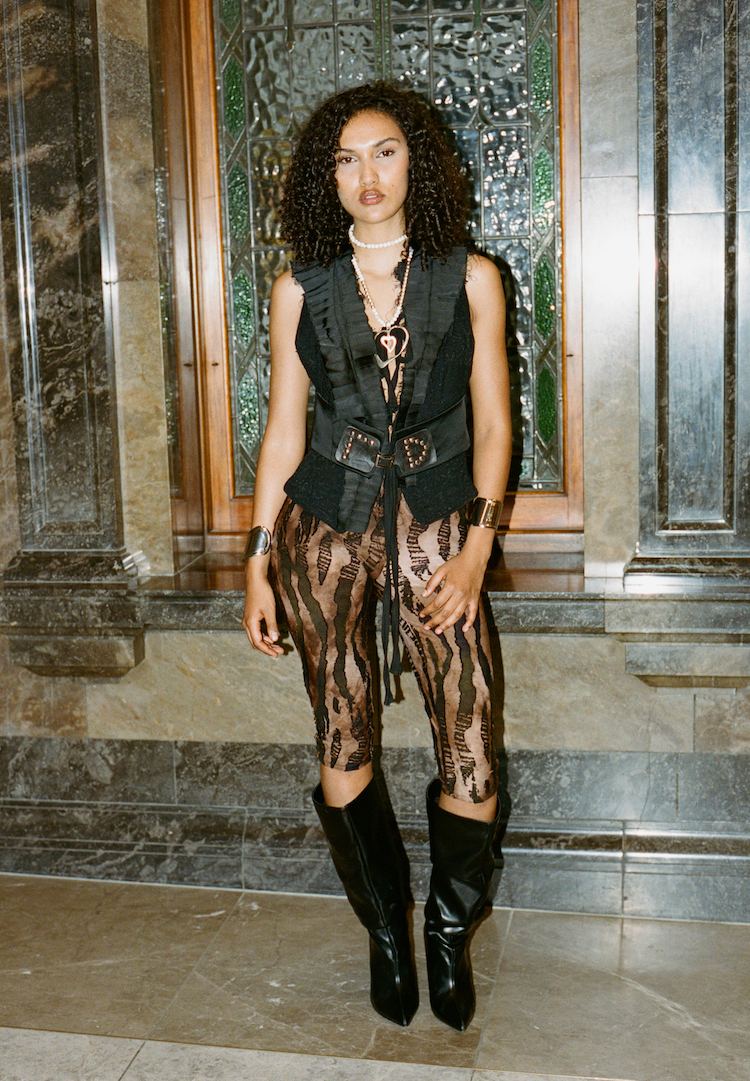
Prim eveningwear became well-to-do done wrong; tailoring sharpened into something stranger, corsetry exaggerated. LCI Melbourne’s Claire Moffat tartan spiked into sharply structured silhouettes, styled alongside latex. Elsewhere, RMIT’s Adam Shainfeld similarly subverted utilitarian codes, reworking them in bright yellow and lilac, accented by blue.
Millinery, seen across the collections, extended the looks upwards and occasionally obscured the wearer altogether. Faces disappeared behind the beaded veils of LCI’s Jesslyn Tan. Hats were folded, wrapped and warped. Sculptural forms rose above the body, as in the spiked headpiece realised by Imi Heggie.
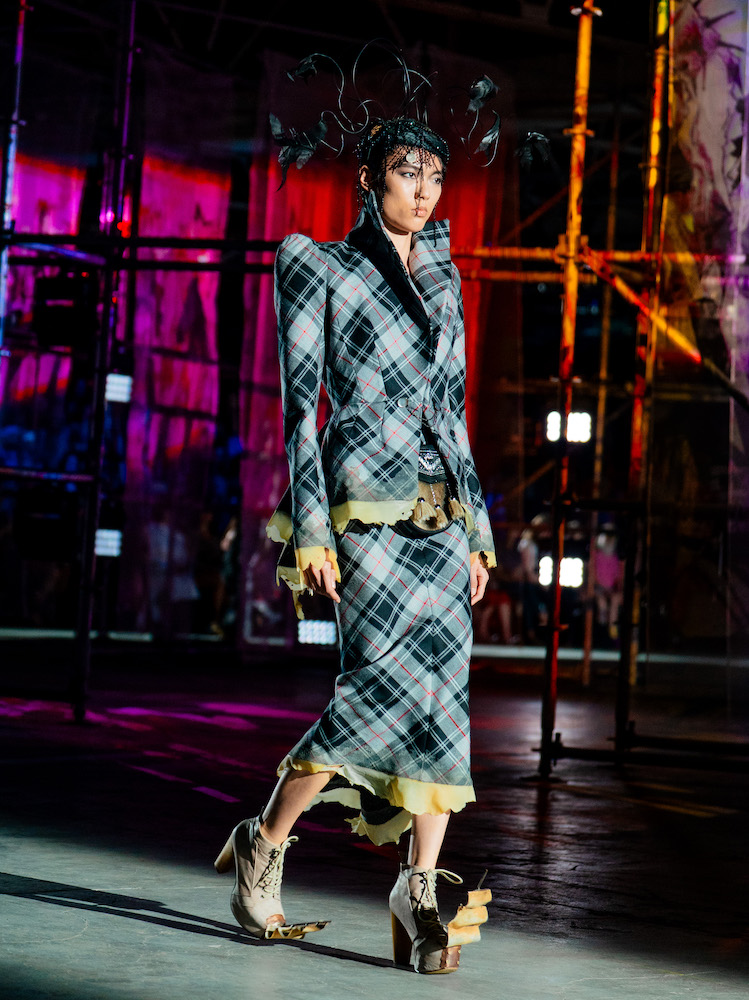
Claire Moffat, LCI Melbourne
After the runway emptied, the coveted Student Design Award was presented by Julia Brown, founder of Melbourne Fashion Hub. At RMIT the night before, I’d spent the evening asking a deliberately unfair question: who was going to win?
Despite my attempts to provoke competition, the students refused to rank one another, instead taking the opportunity to sing their peers’ praises: “Tom is the one to watch,” one said, while others nominated Maddie Clark or Claire Moffat. When the lights settled and the announcement finally came, one of them cut cleanly through the room: Maddie Clark.
“I’m very shaky. I’m feeling very stunned,” she said while collecting her award. Her winning collection, The Feeling of Performance, drew from her background in volleyball, translating movement and injury through pine wood, sand, stainless steel and netting. “I’ve combined something that’s so personal to me this year, both my fashion and my volleyball,” she explained, before turning the attention back to her peers.
“Above all else, I’m in awe of all the work I’ve seen here today. I’m beyond amazed, and so proud of everybody who’s presented work.”
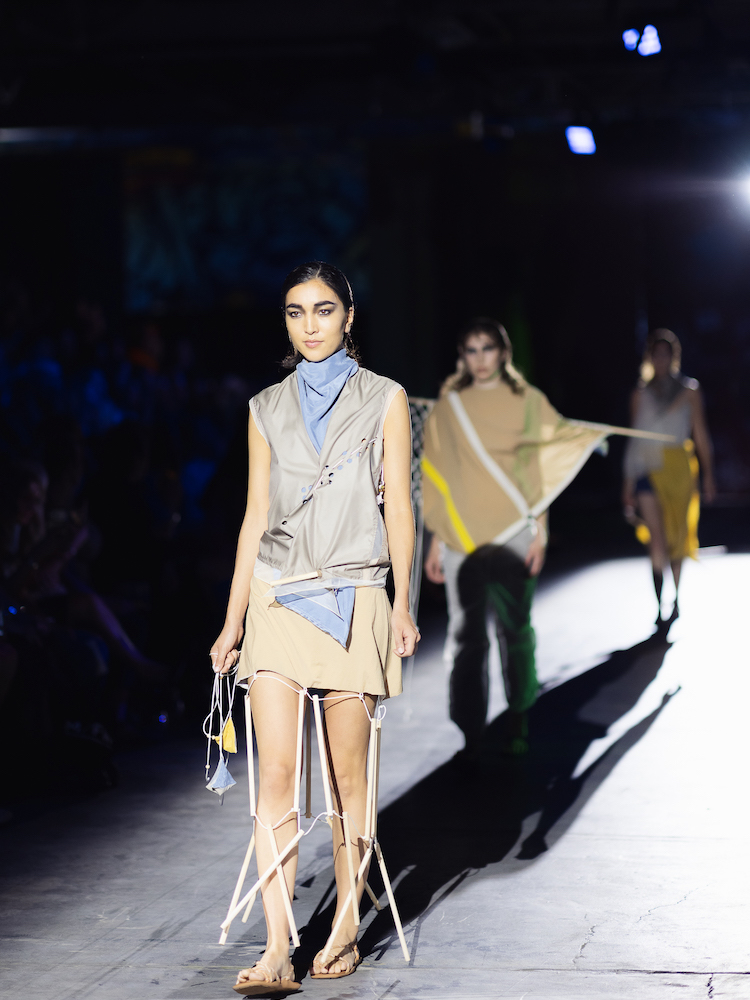
Maddie Clark, RMIT
Maddie’s design prowess was obvious – exactly the quality her classmates had recognised before the judges made it official – but her humility was even more so. By then, I’d come to understand something about these student designers: their love of fashion was matched, perhaps even surpassed, by their love for one another.
Before the runway, before Maddie knew she would leave a winner, she described to me the feeling of simply being selected. “I was in the studio, of course, with all my classmates,” she recalled. “I was over the moon.”
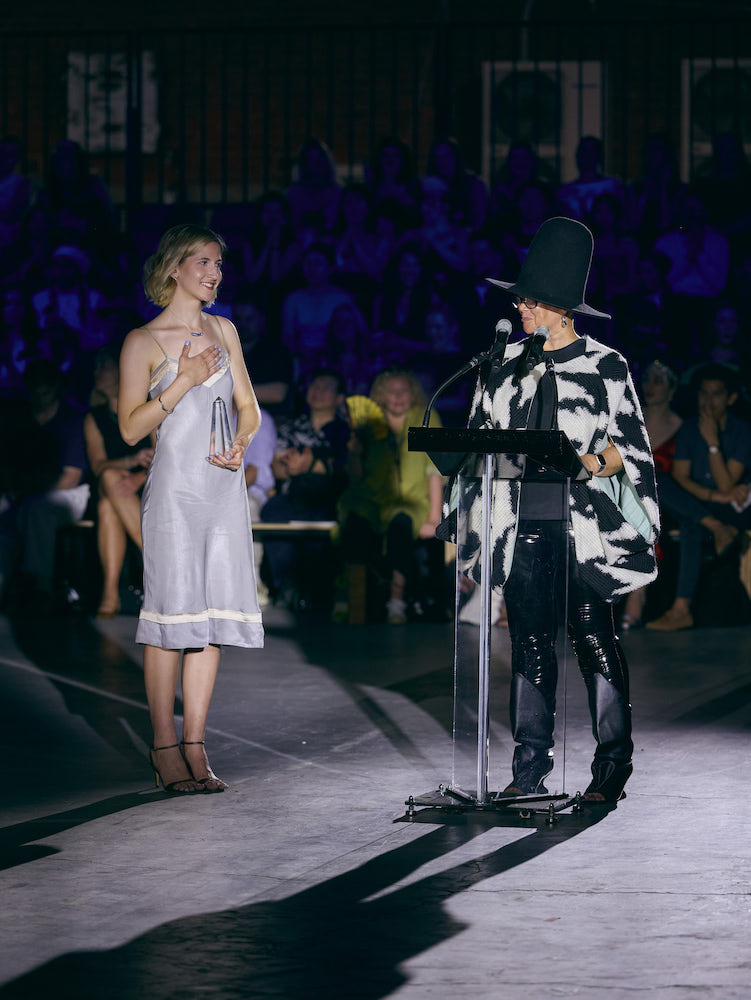
RMIT graduate Maddie Clark (left), accepting the Student Design Award from Julia Brown.
Again and again, I heard these stories. RMIT’s Mary Hall: “I woke up, and the first thing I did was call my mum, and she started crying.” Stella Reardon: “I told my friend who is here… we were jumping up and down with excitement, to be quite honest.” Individual achievement became something shared.
For all the personal hopes, dreams and ambition carried into the night, Maddie’s name was called to thunderous applause – the loudest of which came from her own cohort. Therein lay the point: students coming up together, fitting one another, modelling each other’s collections, critiquing, correcting and carrying the work forward. Each designer produced something singular, yet every collection was shaped by a collective process.
Taking up space. Leaving things undone. Subverting tradition. Topping it all with a hat. The collections differed in form, but they shared an instinct to resist convention. The same could be said of the students behind them. Fashion is an industry built on competition, yet this cohort kept resisting the idea that they were competitors first. They were classmates, collaborators, critics, cheerleaders – and now, together, they’re the future of Australian fashion.
For more on the student runway, try this.
Liked this? You’ll love these...