

From nightclubs to runways, underground culture has always shaped Australian fashion

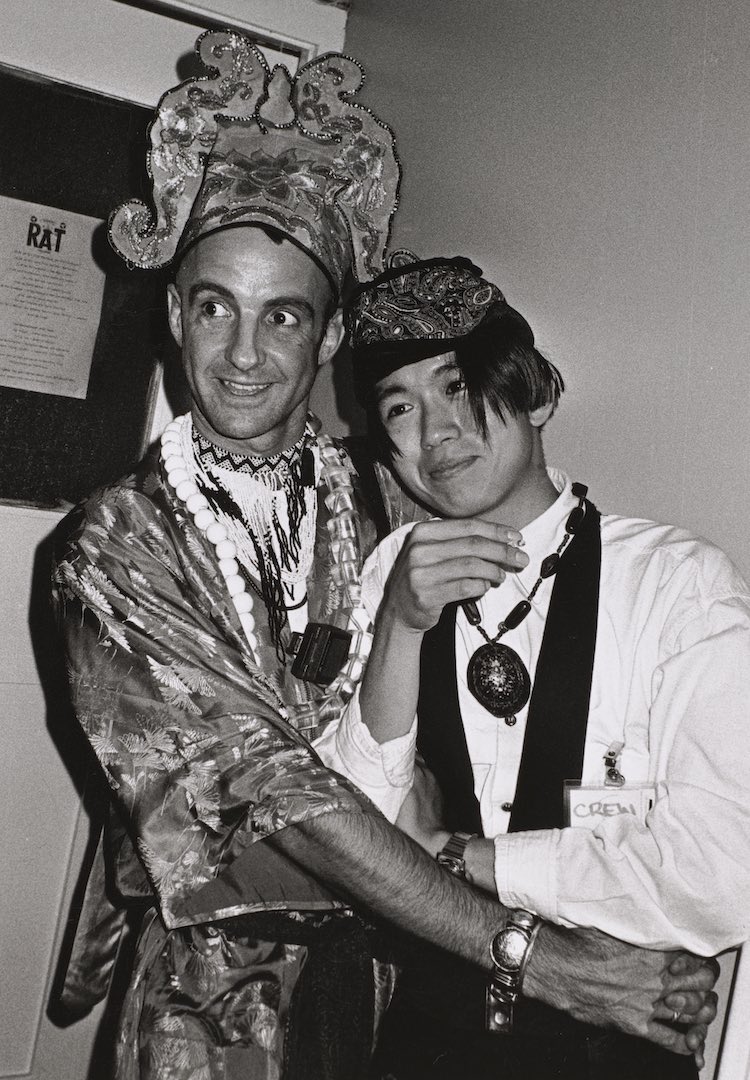
Jac Vidgen and Akira Isogawa at Rat Party, Sydney, 1989. Photographed by Robert Rosen. Powerhouse Collection.
Words by Arielle Richards
“The art that seeks to challenge the status quo is rarely found in institutions.”
Tracing the veins of innovative Australian fashion, you’re led underground. In a culture of import, the greatest minds of design were nurtured in the subterranean basements and dim sharehouse backrooms of Sydney and Melbourne. It’s a legacy that continues today. Through global economic recession, lockdowns and waning arts funding in the so-called lucky country, Australian fashion happens underground.
In a fuzzy VHS clip from 1989, Robert Pearce gesticulates vehemently as he lambasts the ‘Aussie’ aesthetic. “I just personally like anybody who makes an effort. I’m just so sick of tracksuits and so sick of the Aussie dressing down, scared to be noticed.”
For more fashion news, shoots, articles and features, head to our Fashion section.
The interview opens an ABC Countdown report on the Fashion Design Council of Australia (FDC) – a collective formed in Melbourne in 1983 to promote local, independent fashion. Pearce was one of the FDC’s founding members, who, alongside arts-law graduate Robert Buckingham and jewellery designer Kate Durham, identified the need for a platform to support alternative designers.
In the early ’80s, mainstream Australian fashion was largely conservative, addicted to the example set by American and European houses; its industry locus in department stores and imports. But punk had made its way to Australia by way of magazines like i-D, The Face and Interview, and those with the financial capital to travel to where it was all going on.
Informed by the do-it-yourself momentum charging in small pockets of Melbourne, the FDC’s manifesto resisted the conventions of commercial and mainstream fashion, “the European tradition” and “the stranglehold of fashion houses”, instead promoting independent designers whose work probed the line between fashion and art.
Jenny Bannister was one of those artists. The designer had travelled down to Melbourne from Mildura to study fashion at Emily Mac (now RMIT), a “really straight school where you learnt pattern-cutting and tailoring, and everything important.”
“I did the three-year course and my teacher said, ‘We don’t know what to do with you because you’ll never get a job at Sportscraft’,” she recalls. Jenny didn’t want a job at Sportscraft. She was scavenging found materials; plastic, rubber and leather offcuts, for her barely-wearable “art-clothes” – anarchic, scandalous, punk.
“I had to scrounge, I had to pay my rent,” she laughs.
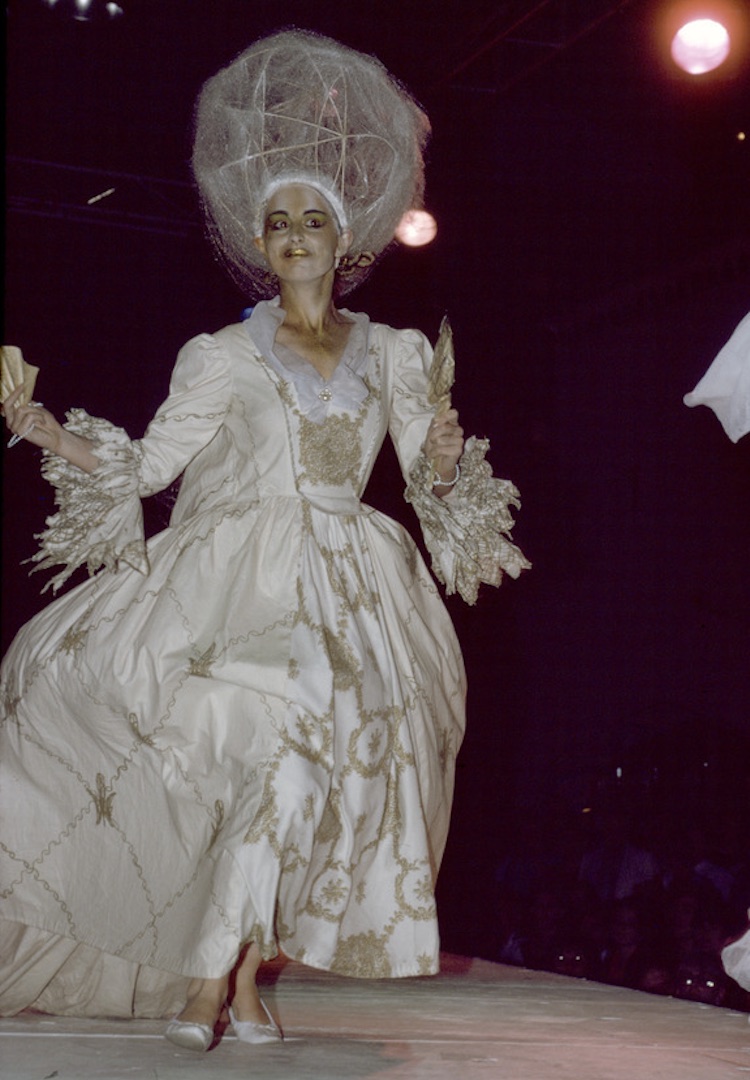
The Romps, FDC Designers Group (1985). Photographed by Rennie Ellis.
Jenny was one of the first designers to join the FDC. Its genesis was firmly in the underground: two dance parties that fused fashion with nightlife, held at St Kilda’s Crystal Ballroom.
Organised by the independent collective, Party Architecture, the Fashion ’82 and Fashion ’83 events incorporated live music with art-happenings, from stand-up comedy to film, hairdo demonstrations, and showcases from local designers like Martin Grant, who now designs in Paris; Sarah Thorn, one of Australia’s most successful textile and clothing designers; Peter Morrissey; Bettina Liano; and my aunt and mother, Bernie and Veronica Goegan.
As fashion academic Robyn Healy writes in Design collective: an approach to practice, the FDC “cultivated local creative industries and established an alternative fashion scene in Australia.”
From 1983 to ’93, the council secured hundreds of thousands of dollars in arts and commercial funding to hold events in nightclubs, industrial construction sites and condemned warehouses across Sydney and Melbourne – huge fashion parades that drew thousands to witness “the development of the art of fashion design… the new and provocative, both in its wearable and unwearable form…”
The FDC revitalised dilapidated sites and instigated the development of new ones, while a nightclub boom supported the growing underground scene, “where fashion, music, dance, performance and film were integrated together for extended hours.”
The nightclub was an important space for fashion, writes Robyn, “designed for mass spectacles with people dressing up and parading.” For experimental designers, the club was at once a source of inspiration and a stage.
“You made things to go out in those days,” Jenny says. “You’d go up to the Crystal Ballroom and everyone would be there: filmmakers, designers, artists. It was a real scene.”
She recalled constructing a ballerina dress from scrap plastic for a party. “Everyone loved it, people were throwing their drinks on it all night. The guest performer was following me around with a bottle of Windex, wiping it down.”
From the late ’80s, Sydney’s busy metropolis became a party capital with a new movement fuelled by the electronic music trickling down from sweaty, pumping basements in the US Midwest. The Recreational Arts Team, better known as RAT, are credited with founding Sydney’s rave scene. Pub rock was the dominant culture and electronic music was considered weird, avant-garde at best. But for the city’s queer youth, it was an opportunity. RAT was the first to hold huge, hedonistic dance parties at large venues across Sydney, hosting international acts like Grace Jones and Frankie Knuckles.
“Dressing up was essential,” says Roger Leong, a curator at Sydney’s Powerhouse Museum, which holds a vast collection of RAT party memorabilia, including posters, photographs and importantly, eight costumes worn to the parties made by local designers.
The underground scene provided a home for artists across disciplines who were enlisted to photograph, DJ and design costumes for the parties. Arriving in Sydney at 21 years old, acclaimed designer Akira Isogawa credits the RAT scene as a “turning point” in his career.
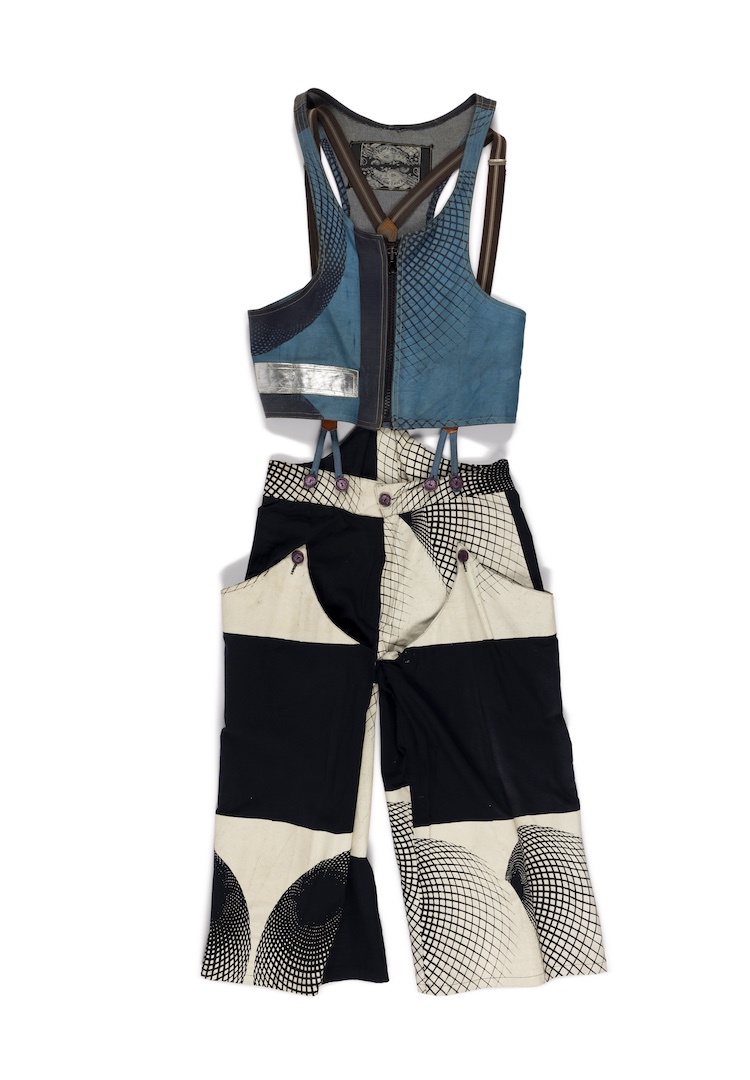
Outfit, mens, comprising waistcoat, trousers and suspenders, cotton / plastic / elastic / leather, designed and made by Kathy McKinnon, used by Jac Vidgen and Akira Isogawa at RAT parties, Sydney, New South Wales, Australia, 1984-1988. Powerhouse Collection. Gift of Jac Vidgen, Billy Yip and the Recreational Arts Team, 2003. Photographer Marinco Kojdanovski.
“When I came here I couldn’t find shops I liked,” he told The Australian in 2018. “Then, about six months after I arrived, someone took me to a RAT party… I felt, ‘This is it’. Everyone made their own clothes and looked fabulous. It was a turning point for me creatively. I started studying fashion after that.”
Like the FDC in Melbourne, the RAT momentum was underscored by the DIY energy of punk and its related misfit subcultures – some niche, others with legs that stretched out past the ’80s: alternative rock, the New Romantics and the queer Club Kid movement, emblematised by icons like Leigh Bowery that, as Roger describes, inspired “radical forms of drag and performative dress.”
“RAT parties offered designers and their clients a chance to experiment and express themselves to the hilt,” he says. “I think the party scene turbocharged everyone’s creativity.”
Where the establishment could not offer designers an opportunity, the club became their catwalk.
The art that seeks to challenge the status quo is rarely found in institutions – a legacy that has prevailed past the FDC’s reign. Since the ’80s, Australia’s artistic communities have propped one another up when industry has been slow to catch on.
In 2021, photography student Kat Stevens formed the Emerging Artists Collective (EAC), a non-profit that holds exhibitions and runways to platform unestablished designers.
Australia might have a Fashion Week, but cuts to arts funding throughout the pandemic, a tightening economy and ever-increasing costs have seen the gap between emerging and established designers yawn wider than ever.
“There just isn’t enough support for emerging creatives, and so artists now rely on collaboration instead of having to go through institutions.”
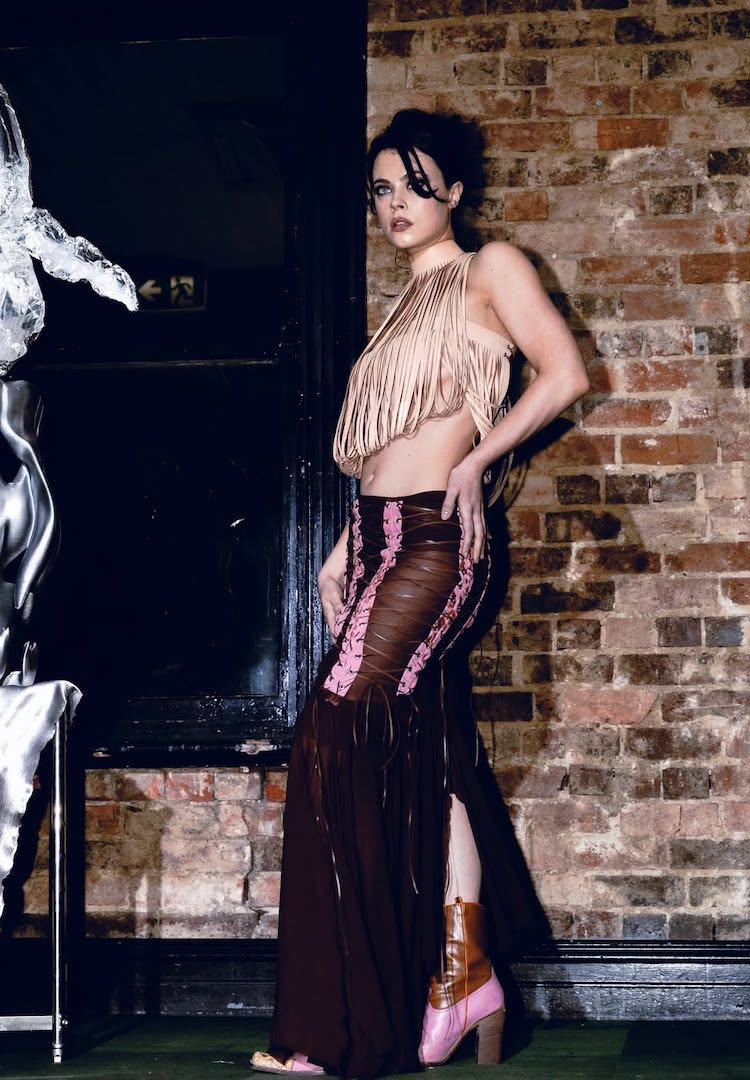
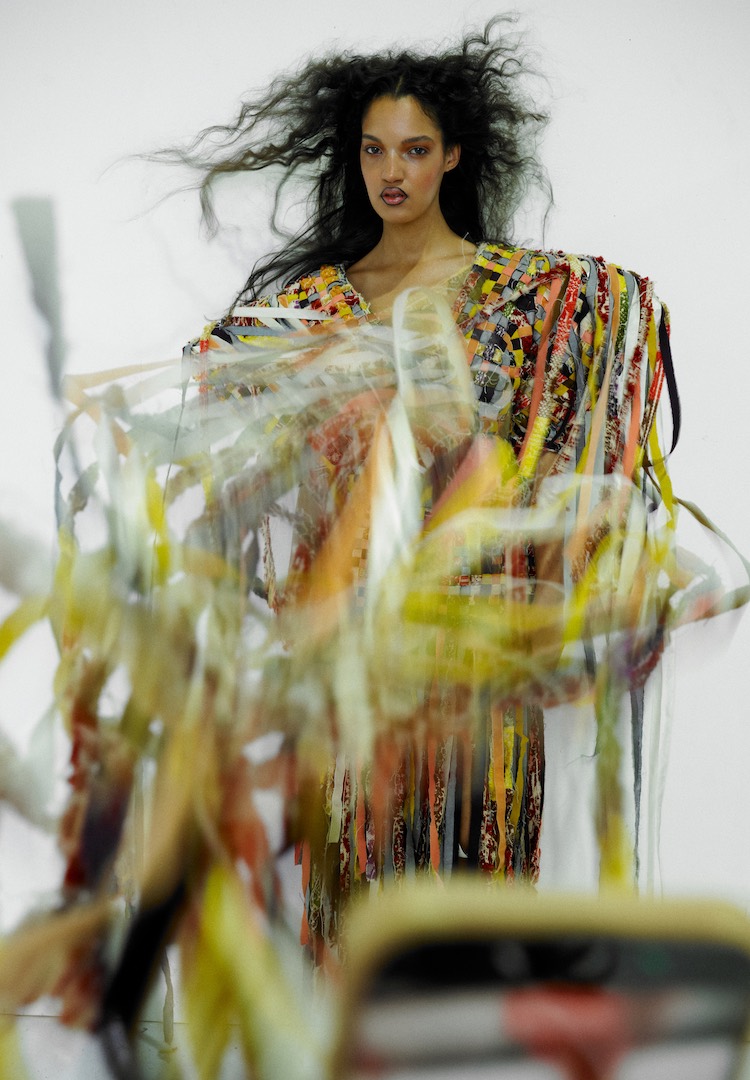
Outfit designed and made by Shesadesigner at the Emerging Artists Collective runway 2026. Photography by Celia. H.
The EAC has never received a grant – ticket sales fund each show. It’s a bold model that embraces fashion as an art form, rather than a commercial venture. When you consider that designers can expect to outlay significant sums to host and produce their own runways, the EAC’s mission is clear.
“I think it’s really important to know that you can be something outside of [fashion] institutions,” says Kat. “There’s just such a big gap between the people that are established and the people who aren’t, and what are they meant to do if they don’t come from money? How are they meant to be in these spaces?”
But projects like Kat’s are becoming increasingly difficult. In the FDC era, fashion parades helped to revitalise abandoned venues. But today, increased development and privatisation of public spaces have seen prices rise. In the four years since the EAC began hosting runway events, the cost of hiring a venue has nearly tripled.
But there remains an urgent need for physical spaces to foster local independent fashion, and Kat says she is committed to wearing whatever it takes.
In recent years, Sydney has also seen new collectives embodying the experimental legacy of Australia’s ’80s and ’90s parades. Wings Independent Fashion Festival has run concurrently with Australian Fashion Week since 2025. Off-site and off-schedule, founders Alvi Chung and Dan Neeson formed the guerrilla event to showcase the independent design that’s consistently blowing new ground in the city.
It’s an ethos remarkably similar to the FDC manifesto, something Alvi might concede as she describes the event’s predisposition toward a “spirit of disruption.”
In the ’80s, the mainstream resisted the financial and cultural risks proposed by the FDC’s “fashion mavericks” and “art-clothes”, leaving innovation to thrive in the underground. Today, fashion institutions appear willing to have these designers at the table – so long as they can fund their way, and so long as it doesn’t involve too much risk.
Kat launched the EAC after her university grad runway show didn’t go ahead as planned due to lockdown concerns. “We decided to make something of our own, for our community.”
It’s not surprising that the EAC erupted in Melbourne, where the city’s nightlife is its calling card. A legacy from the ’80s, the club serves as both inspiration and exhibition for local designers. SlamRoss1000 cites its inspiration on the dancefloor; Wackie Ju clothes ballroom stars; the designs of Emily Watson, Maroske Peech, and Karlaidlaw are all club night favourites.
More than three decades since the FDC shuttered, Australia’s best talent emerges from the underground – that exhilarating space which nurtures high-risk design, that questions the very idea of fashion, and with it, the wider culture itself.
Regardless of whether the industry is quick enough, or smart enough, or brave enough to find out what’s happening, it’s happening underground. And hopefully, it always will.
For more on the history of Australian fashion, head here.
Liked this? You’ll love these...