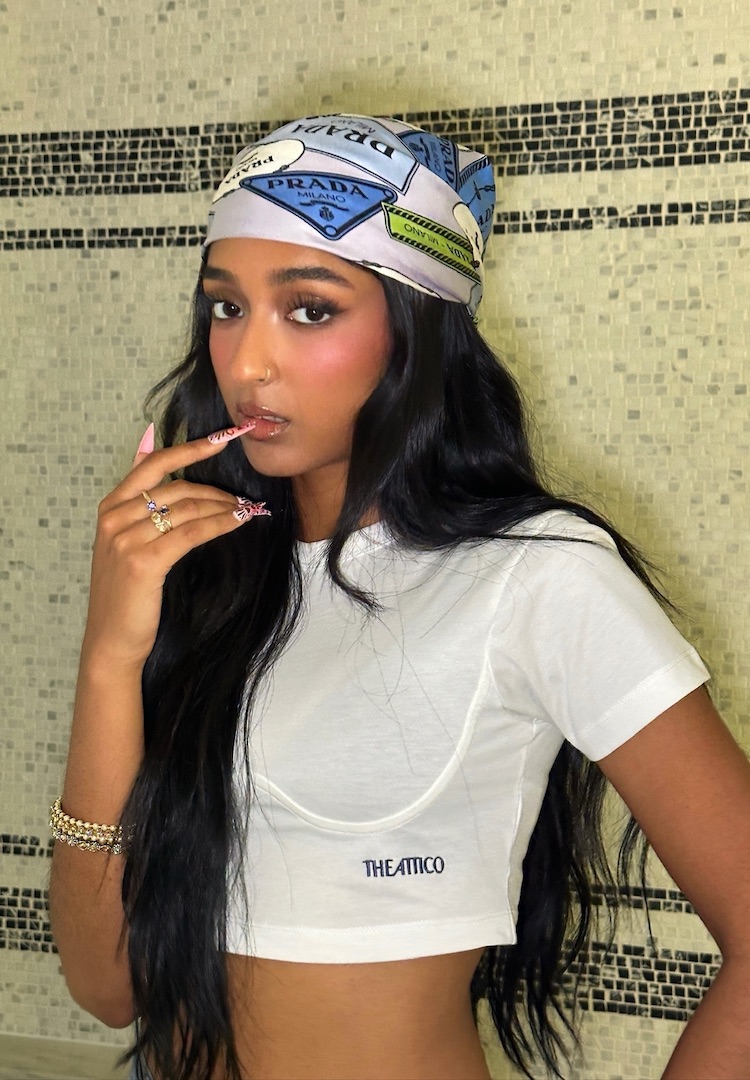


“I don’t need every brown woman on screen to represent me”
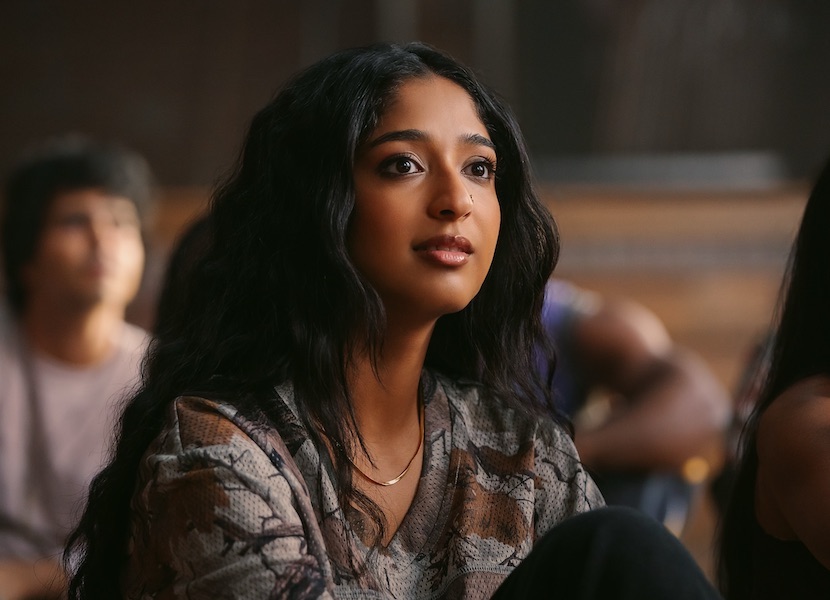
image via Netflix
words by Steph Simons
Unpacking the ‘Best of the Best’ discourse.
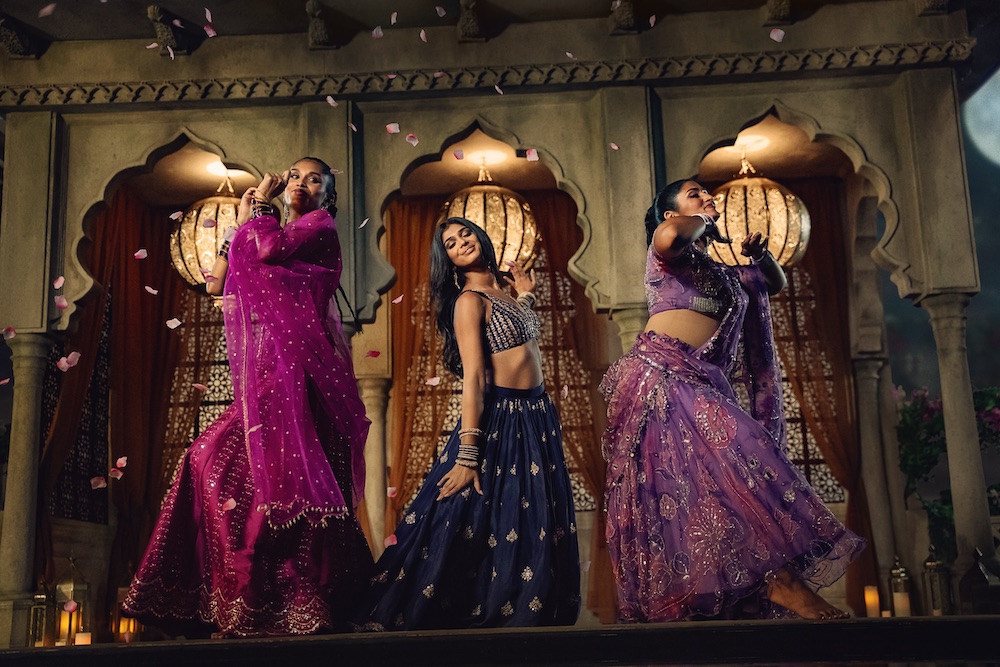
There was a lot I enjoyed about the new Netflix comedy, Best of the Best, but I think what I loved most was how loud it was. There was pattern on pattern, embellishment, makeup, hair – all of it existing together without anyone apparently feeling the need to take one thing off before leaving the house.
I loved it because that loudness feels familiar to me. I grew up around women who dressed up. Properly dressed up. Colour with more colour, gold upon gold, outfits that weren’t trying to look effortless because effort wasn’t something to be embarrassed by. There was ceremony in getting ready – that was kind of the point.
For more pop culture and media analysis, head over to our Life section.
At some point in my life, I learnt another set of rules. Sophistication meant restraint, black was chic, neutrals looked expensive and jewellery should be delicate. I learnt that the visual language I’d grown up around could very quickly read gaudy, tacky or ‘too much’ when viewed through a Western lens.
Like many women who grow up between cultures, I got pretty good at understanding which version of myself belonged where. So watching Best of the Best, a film full of brown women who hadn’t turned the volume down, I was genuinely joyful. Then I went online.
I started reading the conversation around the film and whether it was “good South Asian representation”. People were debating whether the clothes and characters were authentic, whether it was too Bollywood, too American, not Indian enough, a Western idea of Indian culture rather than the real thing. And I felt myself getting a little sad.
It’s not that I don’t think we shouldn’t interrogate representation. I’ve written about what happens when something with cultural history becomes an aesthetic once it’s removed from the people it belongs to. I care about colourism and which versions of South Asian beauty are considered palatable, and I care that ‘South Asian’ can become a convenient way of bundling billions of people and countless cultures together as though we’re interchangeable, as long as we’re some variation of brown.
Those conversations matter, but I also couldn’t shake the feeling that we’re almost getting in our own way.
I remember when Simone Ashley was cast as Kate Sharma in Bridgerton, and how much that moment meant, particularly for dark-skinned South Asian women who had spent their lives absorbing a very different message about whose beauty was desirable.
Kate wasn’t simply present, she was the story. A dark-skinned Tamil woman was standing in the middle of one of the biggest shows in the world while an extremely attractive white man spent most of a season looking like being in the same room as her might actually kill him.
But alongside the celebration came questions. What kind of Indian was Kate supposed to be? Why were words and cultural references from different parts of India being folded together? Was this representation, or another Western production treating an enormous region like one culturally interchangeable place? They weren’t unreasonable questions.
Now we’re having another version of that discourse, and it has me wondering who actually gets to decide what authentic South Asian representation looks like. Someone living in India? Someone whose parents migrated? Someone whose grandparents did? What about someone whose family left generations ago?
I’m Fijian Indian. My version of Indianness travelled long before I did. It left India generations before I existed, crossed an ocean, grew roots somewhere else and eventually arrived in Australia with me. There are parts of Indian culture that feel so familiar I don’t remember learning them, and others I recognise almost from the outside.
So when someone asks whether a South Asian woman on screen represents me, I don’t actually know that I want the answer to always be yes.
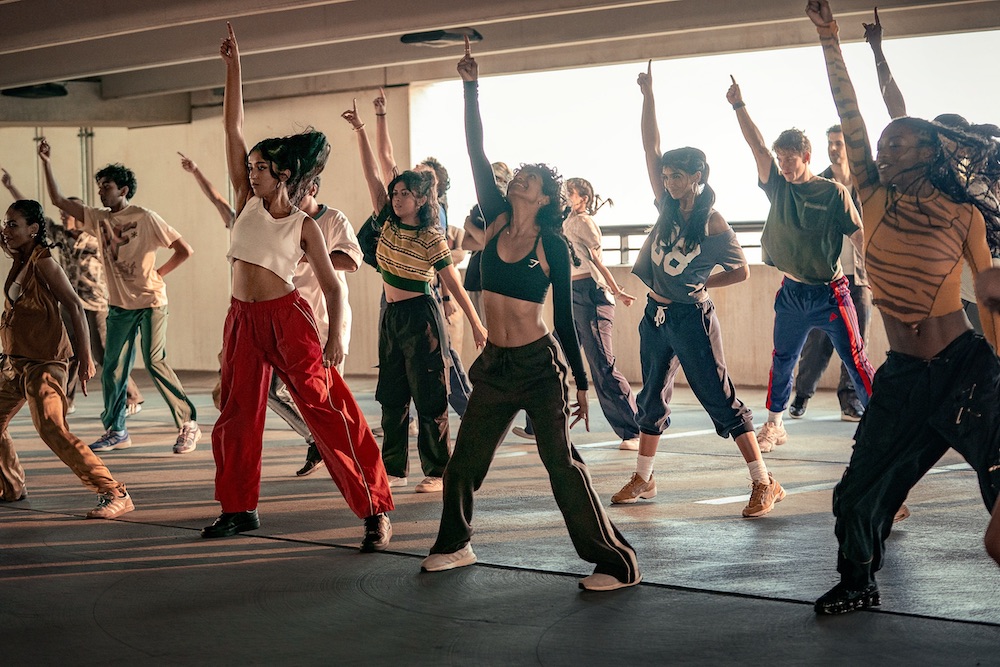
Maybe scarcity taught us to expect too much from representation. When there was only one brown woman in the room, of course we examined her. We were looking for ourselves because we had been given so few places to look. But there are more places to look now.
I agree it’s not enough. I’m not suggesting we should be grateful a woman of colour got the lead in a Netflix film and call the job done. I want more brown women on screen, darker-skinned women, women from communities we still barely see, and South Asian women behind the camera and in the rooms deciding which stories are worth telling.
I also want us to criticise the work when it deserves criticism. If culture has been flattened into an aesthetic, say it. If everyone has been thrown into one giant brown bucket, let’s talk about it. But can we also, just for a minute, do the women-village thing?
Simone Ashley isn’t responsible for Western television spending decades failing to understand the difference between South Asian cultures. Maitreyi Ramakrishnan shouldn’t have to perform a version of brownness that somehow satisfies people across India, Sri Lanka and every corner of the diaspora simultaneously.
I want so much representation that eventually we can stop treating every brown woman who gets a lead like she’s been elected to office. Let one woman be Tamil and another Punjabi. Let someone be Indian by way of Fiji and someone else Indian by way of London. Let their experiences contradict each other. Let one woman make me feel completely seen and another have absolutely nothing to do with me. Isn’t that the luxury white people have always had?
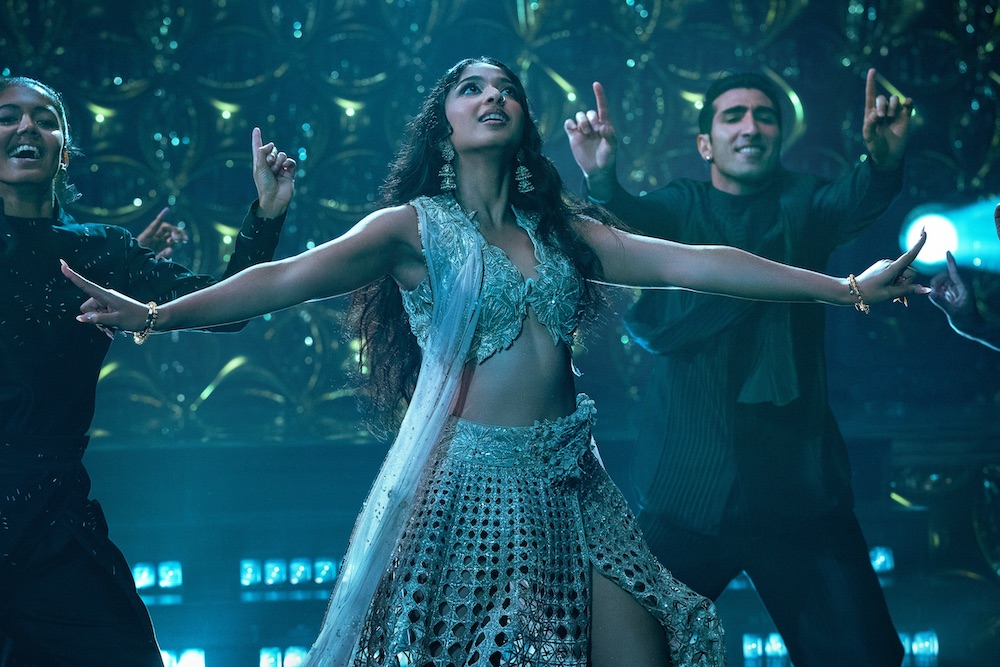
I keep coming back to the clothes in Best of the Best because, weirdly, that’s where all of this clicked for me. Watching all that colour and unapologetic embellishment made me think about how much energy so many of us have spent learning how not to be too much.
Too loud, too colourful, too ethnic, too hairy, too opinionated, too ambitious, too different. Somewhere along the way, we learnt how to edit ourselves, and I don’t want our pursuit of perfect representation to become another way we ask ourselves to do it.
So keep asking who’s missing, keep asking why and keep demanding better from the people in power making these decisions, because simply putting a brown woman in the middle of the screen is not enough and it never should be.
But when one of them does get to stand in the middle of that screen, dressed loudly and taking up all that space, maybe we can allow ourselves to enjoy that, too. Not because we should be grateful for what we’re given but because she shouldn’t have to be perfect for us to want to see her win.
For more on authenticity in media representation, try this.
Liked this? You’ll love these...