

In raising my daughter, I was confronted with my idea of womanhood
words by Steph Simons
“Daughters are shaped not just by what we teach, but by what they catch.”
There are so many confronting aspects about becoming a mother. One of the more confronting things about having a daughter is realising how closely she is watching while you are still trying to work yourself out.
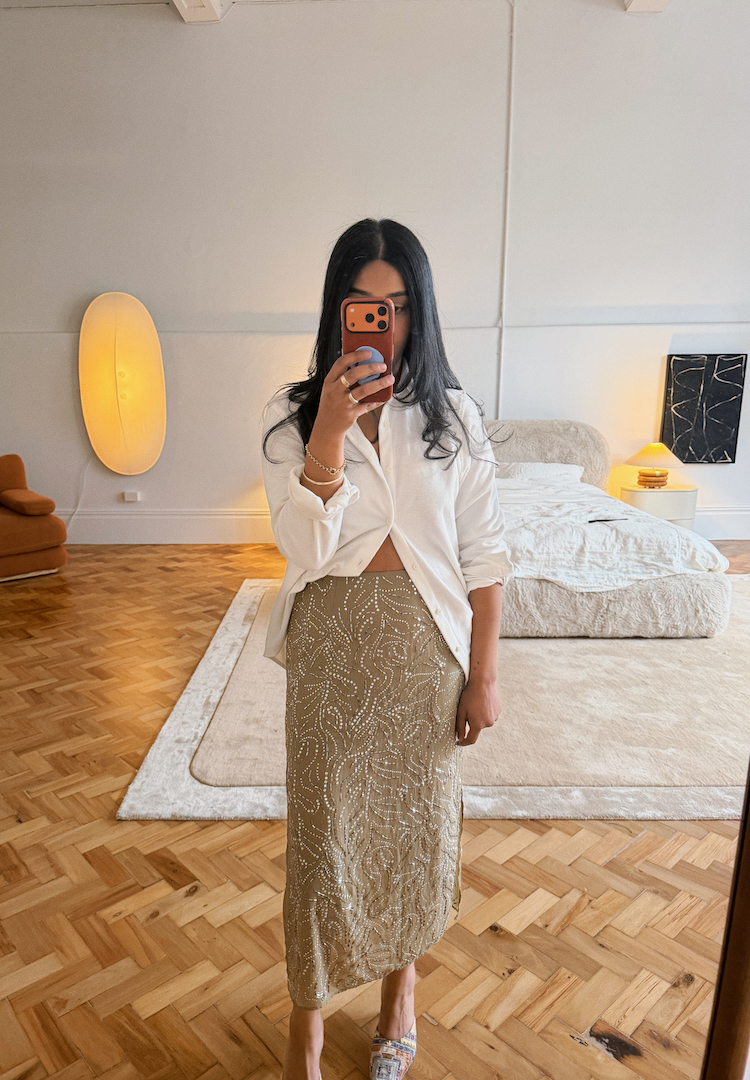
The way you stand in front of the mirror, the way you talk about your body, the way you get dressed, the way you dismiss yourself, or don’t. None of it is as private as it used to be.
Interested to hear how others navigate the world? Head to our Life section.
Part of what has hit me since having a daughter is that I can be intentional in all the ways that matter to me and still know it is not enough. I can make sure she knows the real names for her body parts, because I want her to grow up with ownership of herself. I can try not to raise her on shame, euphemism, or the idea that her body is something to be managed into acceptability.
I can remind her every morning that she is brave, kind and loved. But she is still watching me. She’s still learning from the moments I hesitate before leaving the house, from the way I smooth something down without thinking, from how quickly I brush off a compliment or apologise for being tired. And I think that’s the part I find hardest: knowing that daughters are shaped not just by what we teach, but by what they catch.
I know this because I was watching, too. I grew up in a conservative Christian, culturally loaded household where womanhood seemed to come with its own set of unspoken instructions. It was there in how women got ready before church or before guests arrived, in the quick mirror checks, the adjusted necklines, the sense that a woman should be presentable but never too visible.
It was also there in how women were spoken to, what was expected of them and what was simply taken for granted. I watched my male cousins be served first, plates made for them, drinks brought to them, while women moved around them, feeding, clearing, anticipating, often before they had sat down themselves.
I learned early that being a woman meant managing far more than your appearance. It meant being useful, agreeable, contained. It meant knowing how to make yourself smaller in ways that could still be mistaken for goodness. And then there were the comments that sounded casual and somehow stayed with me anyway: I look tired. I need to lose a few kilos. You’re not wearing that. Go put something else on. The constant low hum of correction and accommodation that made being a woman feel inseparable from managing yourself.
No one needed to sit me down and explain exactly what a woman was supposed to be. I was already gathering it in gestures, tone, body language and offhand comments that seemed too small to matter until they did.
That’s what unsettles me now. Motherhood has made me realise that what my daughter is absorbing isn’t just how I feel about my appearance, but how I live inside myself more broadly. She’s watching what I make space for, what I minimise, what I let myself want. She’s watching whether I move through the world as though my needs are real, or as though they should always come after everybody else’s. She’s learning from the way I carry a body, yes, but also from the way I carry a life.
Part of what I’m trying to do now, for her as much as for myself, is build a language that makes room for both capability and care. I want a way of being a woman that does not confuse self-sacrifice with goodness, or martyrdom with love. I want her to know her body as strong, useful and intelligent, but I also want her to understand that putting yourself first isn’t always selfish. That wanting a life with room for yourself isn’t a failure of character. That self-expression isn’t frivolous but one of the ways we learn to inhabit ourselves fully.
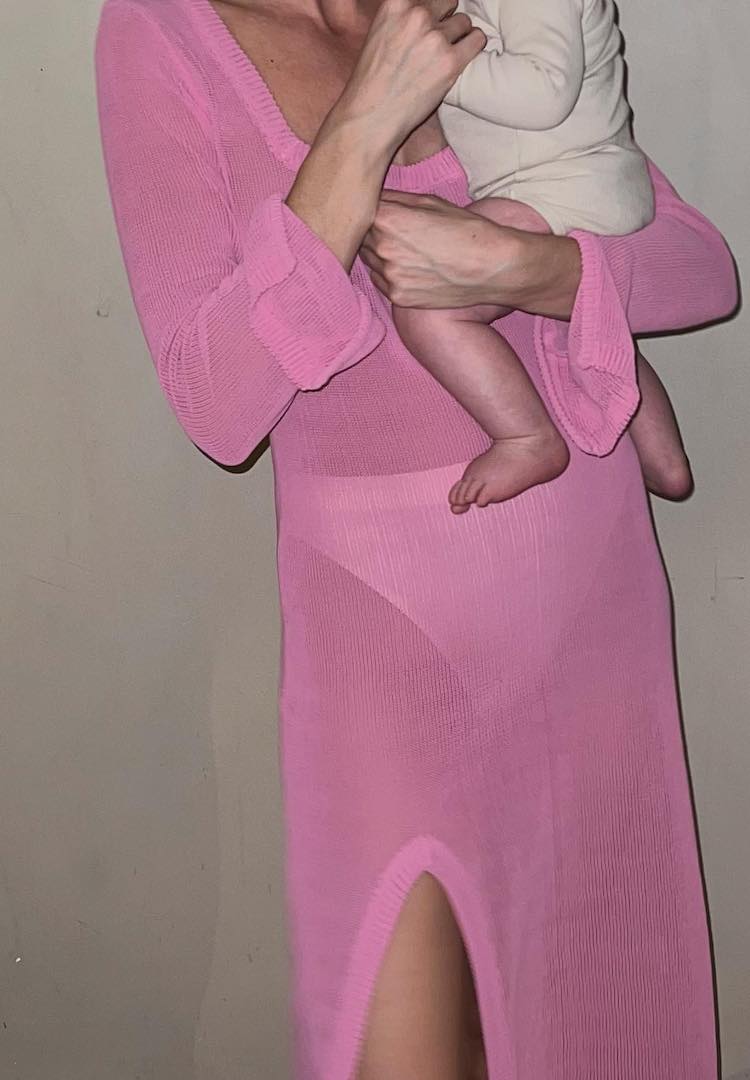
My daughter sees what I reach for when I want to feel most like myself, and she also sees the days I circle myself a little harder. Children are forensic witnesses; they notice what we underestimate, including whether we let ourselves take up space inside being seen.
What daughters are learning, I think, isn’t just whether we like the way we look. It’s what kind of womanhood lives in the room with them every day, and what they come to understand about beauty, effort, visibility, pleasure and self-worth by watching us move through our own.
I’m still unlearning in real time. I’m still trying to separate self-awareness from self-surveillance, and work out what parts of femininity feel expressive or inherited. Maybe that’s part of the point, too. Maybe what my daughter will learn from me is not perfection, but practice.
So much of mothering a girl, I am finding, is realising that the mirror is no longer mine alone. It’s shared space now, a place where she will meet not just her own reflection one day, but traces of mine. Maybe that is motherhood in part. Not the clean passing down of wisdom, but the messier realisation that she is learning from a woman still learning too.
For more reflections on motherhood, try this.
Liked this? You’ll love these...