

Perfume label Kolido finds inspiration in horses, ’70s taxis and wildflowers
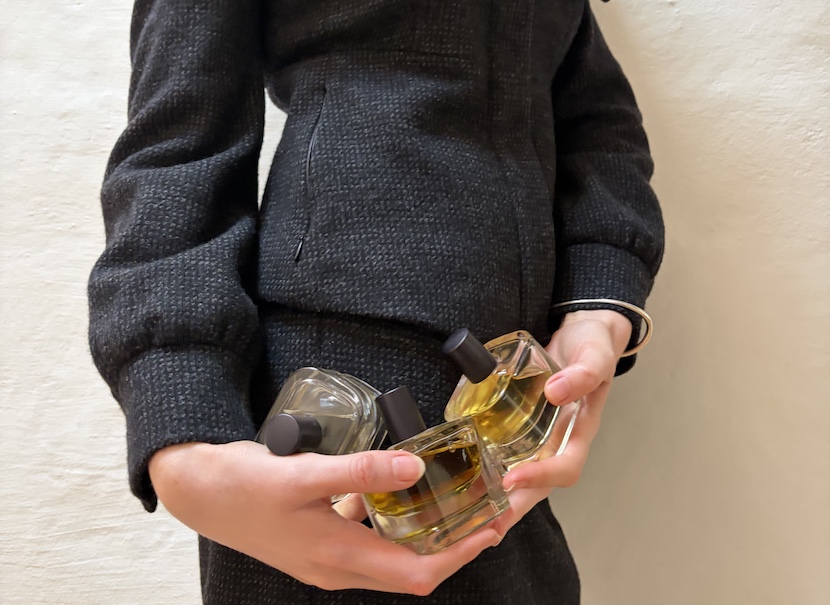
image via @kolido__/instagram
as told to daisy henry
“Perfume can only be experienced through physical proximity.”
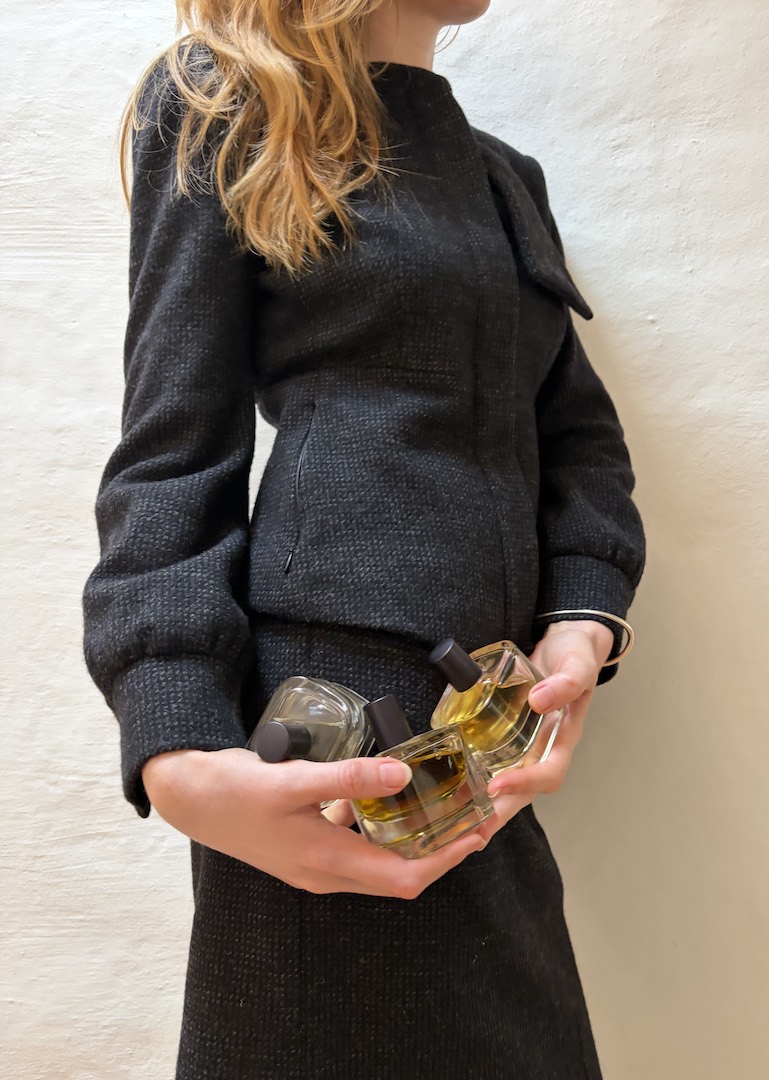
A single perfume can take years to develop. For Melbourne-based perfumery Kolido, it took five years to perfect its scents before launching the brand. This is partly what happens when you opt to manufacture independently – sourcing raw ingredients is no easy task. But it’s also about knowing when to stop.
“Perfumery is an art form with endless possibilities for refinement, and the temptation to keep adjusting, experimenting and refining is so strong,” explains co-founder Saskia Dodds-Painter. For her, learning when a fragrance has reached its final form has been the most difficult part of the process.
For more beauty news, guides and reviews, head to our Beauty section.
The first scent Kolido released was Bareback, a fragrance inspired by the relationship between horses and people. “Many horse-inspired perfumes explore the more animalic or dusty aspects of their scent, but there’s another side to horses that’s under-explored: the sweet warmth of their breath, the sweat on their skin after a ride, the dry scent of summer hay,” Saskia adds. Working alongside principal perfumer Kim Ngo, they interpreted the scent through a fresh green rose accord.
Where much of modern life has become digitised, part of the appeal of developing a perfume brand is its physicality. Unlike mediums that can be photographed and shared online, perfume must be experienced in close proximity. As Saskia puts it: “Digital and social platforms encourage us to project ourselves outward, but perfume draws that projection inward.”
Preparing to present ‘The Smell Library’ at PDA Shop in Fitzroy this Friday (where Kolido is regularly stocked), Saskia tells us about the process of developing a perfume from scratch.
View this post on Instagram
Fashion Journal: How did Kolido begin and what was the catalyst behind launching?
Saskia: Chris (Kolido’s other co-founder) and I have always loved perfume. When we discovered that Molecule 01, a fragrance by Escentric Molecules, was solely composed of one material (Iso E Super), we decided to try making our own. That purchase quickly turned into a collection of around 30 natural raw materials and a Covid lockdown project fuelled by the naive belief that creating a perfume was simply a matter of mixing beautiful-smelling things together.
We then, quite serendipitously, became acquainted with Kim Ngo, our perfumer. What followed was years of learning: training our noses through the help of Kim, building a library of raw materials, and gradually developing the brand.
What was the very first fragrance you came up with for Kolido?
Bareback. We always had horses in our family, so there’s a deep smell memory attached to them. Many horse-inspired perfumes explore the more animalic or dusty aspects of their scent, but there’s another side to horses that’s under-explored: the sweet warmth of their breath, the sweat on their skin after a ride, the dry scent of summer hay.
We had smelling sessions around horses so Kim could understand their scent, taking turns getting right up in their muzzles. We also wanted to express the romance and beauty of the relationship between horse and human, which we interpreted through a green rose accord.
View this post on Instagram
Can you walk us through the process and any early challenges in starting up a fragrance label?
It was no short ride. It took us around five years to develop the brand and perfumes we were happy with. Part of that was balancing full-time work alongside building Kolido as a side project but more importantly, we wanted to dedicate the time needed to refine every detail.
One of the biggest challenges was manufacturing independently. When we began the process five years ago, access to certain materials in Australia was far more limited, making it difficult to source certain things we were looking for. The industry has changed significantly since then, and the availability of raw materials has really improved.
The other (big) challenge was knowing when to stop. Perfumery is an art form with endless possibilities for refinement, and the temptation to keep adjusting, experimenting, and refining is so strong. Learning when a fragrance has reached its final form – when to draw a line in the sand and let it exist in the world – has been one of the most difficult parts of the process.
View this post on Instagram
How would you describe Kolido aesthetic or ‘feel’ to someone discovering it for the first time?
We’re not overly polished, definitely drawn to a more raw visual aesthetic. The identity takes cues from scientific laboratory design, balanced with fluid, expressive details and moments of human touch.
We also worked with an amazing team, including Anthony Eid, Jenny Fang and Marissa Hor, on the creative direction and design of the brand.
Your perfumes are formulated in the Yarra Valley. Can you tell us more about where you’re based?
We renovated a side room in Chris’ shed in Coldstream, which is where we’re based. It’s a grounding place to design from, with the regular company of chickens, Peacocks, cows and flowers across 25 acres. There’s over 500 rose bushes on the property too, so walking around in summer means moving through waves of scent, which is always inspiring. This setting naturally supports the slow approach to our practice as it’s just so much easier to give yourself permission to slow down when you’re surrounded by nature and animals.
View this post on Instagram
Where do you find inspiration when creating a new fragrance?
Our perfumes are inspired by the stories around us. We’re drawn to moments, places, scenarios that to us have powerful olfactory stories we can draw from. The new scent we’re working on actually takes inspiration from the landscape surrounding the lab. Sometimes the inspiration is as immediate and tactile as the environment around us; other times it emerges from a memory or a story.
What are some of the steps involved in creating a fragrance, from beginning to end?
Each perfume starts with a brief. It paints a picture of the perfume: what is the story behind it, how it should feel. We spend time interrogating the brief, imagining the olfactory landscape around it, the small tactile moments we want to capture.
From there, we spend time smelling and discussing raw materials, identifying what feels aligned with the brief and what doesn’t, ensuring we are all working from the same sensory language – smell is so subjective, so this helps us stay aligned. We then move into the sketching phase, where Kim develops a selection of early interpretations of the brief, each approaching the idea from a slightly different perspective. The chosen sketch is refined and refined and refined and refined until the formula feels complete.
After compounding in bulk, the perfume is aged in stainless steel vats in our lab. It’s a long process. A quality perfume can take years to develop.
View this post on Instagram
What kinds of materials and ingredients do you most love working with and why?
As Kim, our principal perfumer, tells me: “Hay absolute is a material I really love working with. It can create a sense of open air while still being medium-bodied. It carries so many facets – woody, dry, green, sweet, warm but fresh. And tonka bean. It can enhance the depth of a whole structure and delivers a vanillic aspect but with hints of hay, tobacco and caramel. It’s a very sensual material when paired with musks and milky woody materials.”
My favourite material is definitely Orris. It can add so much poise and elegance to a composition. I also love the texture it creates, giving a fragrance a smooth, velvety quality that makes everything feel beautifully resolved. Kim used it in Bareback and when paired with the warm, dry woods and slight animalic notes, it adds beautiful lift and refinement to the composition. There’s a timelessness to it which I gravitate towards.
View this post on Instagram
Why do you think people connect so deeply with scent?
On a biological level, scent has an incredible ability to bypass the rational and connect directly with memory and emotion. Unlike our other senses, smell is deeply intertwined with the parts of the brain associated with memory, feeling, and instinct, which is why a single scent can transport us so viscerally.
Culturally, it also feels as though we’re experiencing a renewed fascination with scent and perfumery. Smell is one of the only senses that can’t be digitised. While so much of contemporary life exists through screens, fragrance remains stubbornly physical. Digital and social platforms encourage us to project ourselves outward, but perfume draws that projection inward, closer to the body.
Unlike clothing, makeup, music, movies, and writing, which can be endlessly photographed, shared, and consumed online, perfume can only be experienced through physical proximity. It does create a beautiful intimacy, then, with how we experience scent.
View this post on Instagram
Do you have a favourite Kolido fragrance, or is that impossible to answer?
It naturally changes all the time. We’re mid-winter currently and the perfume, ’70s Taxi, has become a go-to. It’s also what many of our friends and family have been wearing, and smelling it on others always is a great reminder of what a beautiful scent it is. There’s something about experiencing a perfume outside of yourself that can really reinvigorate your zest for it.
Where are your hopes for Kolido over the next five years – where do you see the label heading?
We’d love to continue bringing the laboratory to the forefront of Kolido’s expression, creating experiences where people can engage directly with raw materials and explore scent in a more interactive way. Scenting spaces is another area we’re deeply interested in exploring, and we’re excited to have a few projects in this space currently underway.
We really see Kolido as a broader scent practice, with perfume being one facet of how we work with and understand scent. We are currently designing a new perfume, which we’re aiming to release in early 2027.
Keep up with Kolido here.
Liked this? You’ll love these...