



How ‘rawdogging’ your walk can help you become more mindful

words by daisy henry
Spot the whale.
I was at a work event a few weeks ago, speaking to a few other writers about the usual – the fashion brand throwing the event, star signs and how fast the year was going – when one woman shared an analogy that’s since stuck with me. She was referring to a moment a few years ago when she was sitting at a beach pier.
After a while, she turned to leave when an older man stopped her and said, “I bet you didn’t even notice the whale”. An unsolicited comment, sure, but it was true. She hadn’t. Instead, she’d spent the whole time looking out at the ocean, consumed by her own thoughts, to the point that she had, in fact, missed the whale.
For more perspectives on health and wellness, head on over to our Health section.
It made me realise that whenever I’m out and about, I’m often just as distracted. Rarely do I sit in silence, taking in the world around me fully present. I’ve probably missed several whales myself.
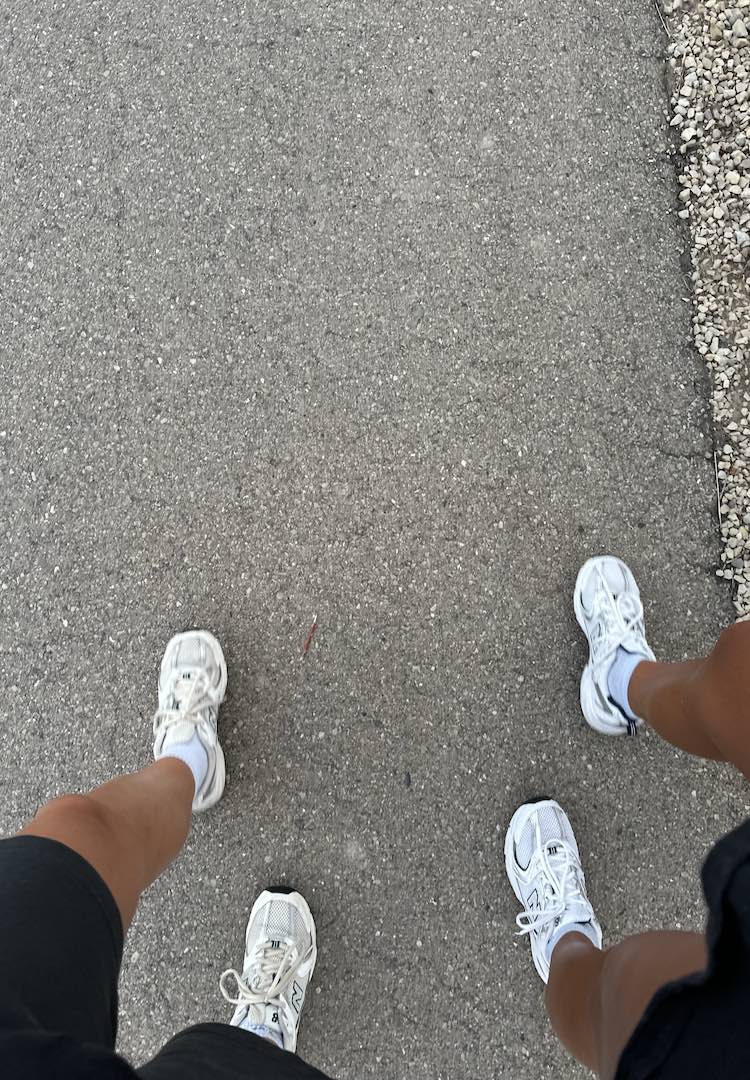
Not long after speaking to her, I came across the idea of ‘rawdogging’ your walk. The somewhat jarring term first expanded beyond its original remit into the world of long-haul flights. To ‘rawdog’ a plane ride means to go without phones, screens or any form of entertainment. The same concept applies to going for a walk without extra stimulation. No music, no podcast, no scrolling.
According to psychologist Bec McWilliam, our dependence on constant stimulation is worth paying attention to. “It’s important to carve out time to simply ‘be’ without the distractions of our devices,” she says.
Being present and tuned into your surroundings (though not impossible) isn’t easy when you have noise and content literally pouring through at all times of the day. But since hearing this proposition, I’ve stopped bringing my AirPods out on my morning walk and it’s offered a similar type of reset.
The benefits of being bored and unproductive
Very rarely do most of us ever experience boredom. As Bec explains, we’ve all become fairly accustomed to constant stimulation, to the point that we’re inclined to fill up any quiet moments with some form of input, whether that’s by scrolling, watching videos, listening to podcasts or music, or doing something productive.
For some people, doing this can help regulate their mood or avoid any uncomfortable thoughts and feelings. “[But] constant stimulation can reduce our tolerance for stillness and make it harder to notice internal cues like stress, fatigue, or emotional needs,” Bec cautions. “It may also limit opportunities for cognitive rest, which is important for memory, creativity and emotional processing.”
It can also be a form of productivity guilt and the pressure to feel like we need to do something useful, all the time. “Many people feel pressure to optimise every moment, turning a walk into a chance to ‘learn’ or ‘catch up’,” Bec adds.
By plugging into an audiobook, podcast or using your free time to call and message people back, you’re simply filling the void by ticking off an endless to-do list, rather than actually resting or checking in with yourself. “Over time, this can reinforce shorter attention spans and make it more difficult to engage in slower, less stimulating activities.”
What exactly is ‘mindful’ walking?
Mindful walking (a more palatable version of ‘rawdogging’ your walk) is all about bringing your attention to the present moment, without judgement. In practice, this might mean focusing on your breath, your steps and your environment. “Research suggests it can support stress reduction, improve mood, enhance focus, and help regulate the nervous system,” Bec tells me.
She suggests starting small, with a short five to 10 minute stroll without your phone (or popping it on silent). “Focus on one sense at a time, like what you can see, hear, or feel. Notice your pace and breathing. If your mind wanders, gently bring it back without judgment. It’s about awareness, not perfection.”
You can also try going for a ‘colour walk’, where you head out with the intention of spotting a specific colour as many times as you can. “By focusing on one colour, you naturally become more mindful, tuning into the present moment and noticing details you would normally overlook,” she adds.
You can even take it a step further by heart spotting, where you try and find examples of heart shapes around you or by trying to spot each letter of the alphabet.
Building community
Beyond the mental benefits, another unexpected bonus of mindful walking has been the ways it lets me connect with strangers.
“When we’re not absorbed in devices, we’re more available to our environment and the people in it,” Bec explains. “These small social interactions, like eye contact, smiling and brief conversations, are linked to a greater sense of connection and belonging.”
While small, small talk is an important part of forming community in your day-to-day. Forming connections with people isn’t always about those deep and meaningful relationships. It can just as often come from knowing your neighbours, chatting to someone at the park about their dog or asking your barista about their day – something you close yourself off from doing when you’re constantly plugged in.
If you’re also determined to notice the metaphorical whales, I’ve found that rawdogging your walk is a pretty good place to start.
For more on mindful walking, try this.
Liked this? You’ll love these...