

The powerful practice of Atong Atem
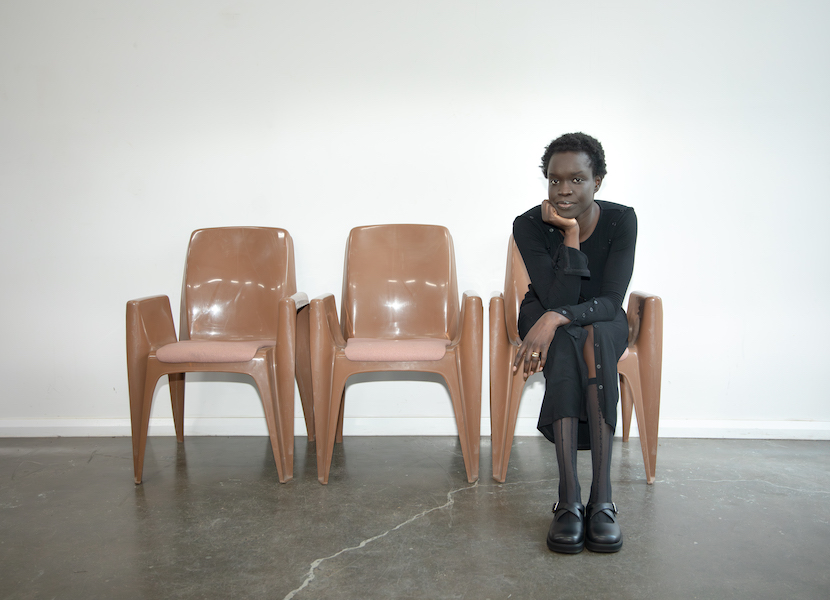
PHOTOGRAPHY BY ANNIE TRUMBLE
STYLING BY SINÉAD HARGREAVES
WORDS BY PHOEBE CANNARD-HIGGINS
We catch up with the artist ahead of her largest solo exhibition to date.
On a winter’s day in July, I sat down with artist Atong Atem. She’s been shooting this afternoon in Ruma Studios in Brunswick, where we settle into a cosy seat at the table, an electric heater shuffled closer. She breastfeeds her daughter as we chat about the colour, texture and beauty that define her visual language.
“Ultimately,” she says, “my visual language is just a condensed version of all the things I’ve consumed as an art lover, and as a person with interests in the world.”
For more content like this, have a look through our Life section.
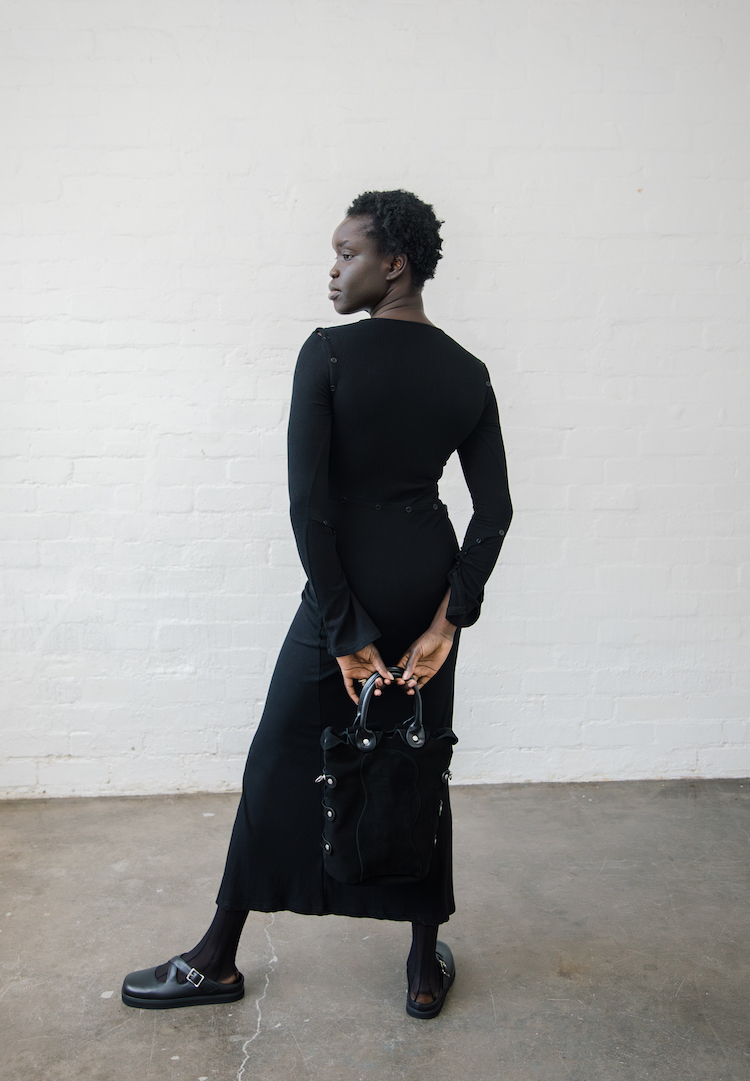
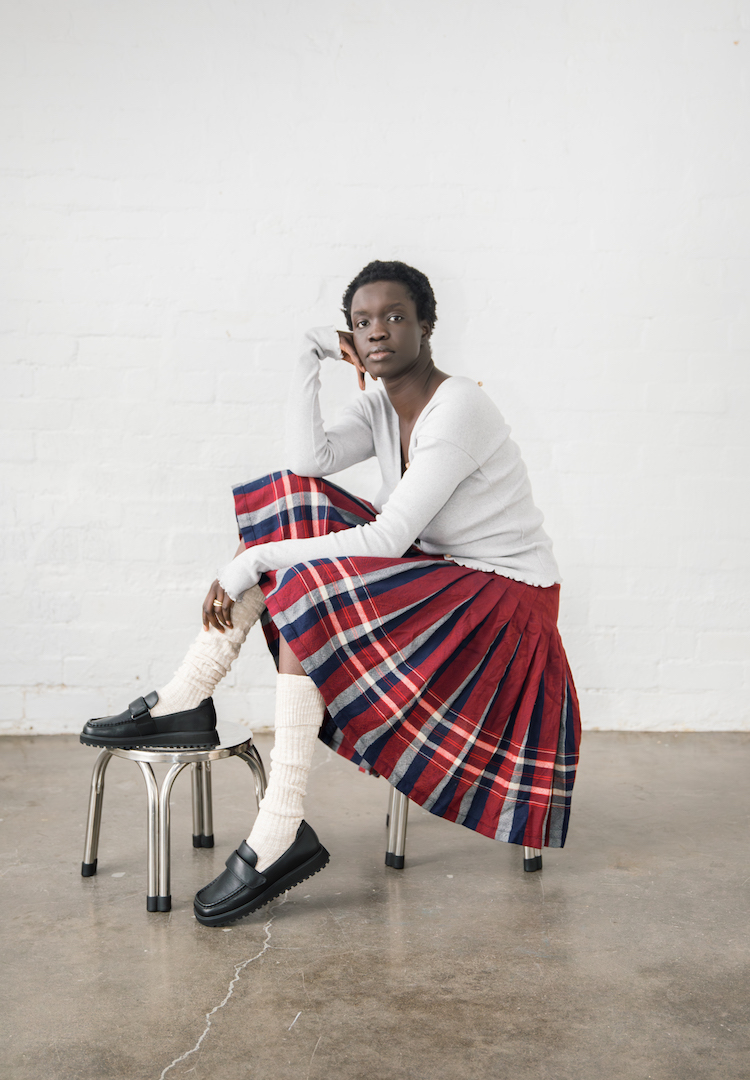
A significant part of that visual language is clothing, an awareness that transcends her art and spills into everyday life. She arrived at the studio pushing a double pram, from which she produced not only two beautiful kids but an array of outfit options, most of them sourced from the nearby op shop.
Textiles speak both to her personal relationship with culture and to a broader understanding of it. Atong has a special interest in wax-printed fabrics. “To me, they are specifically African fabrics.”
Atong was fascinated to learn about the history of wax printing, a practice brought to West Africa by the Dutch, who had adopted it from the Batik textile tradition of Indonesia.
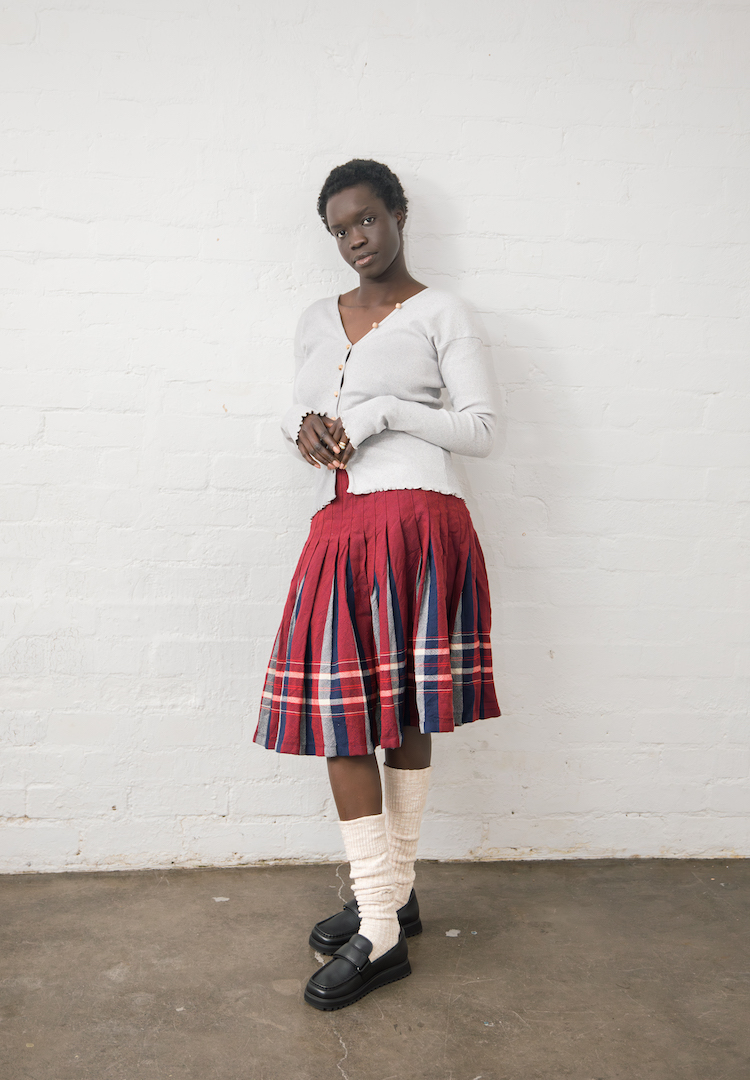
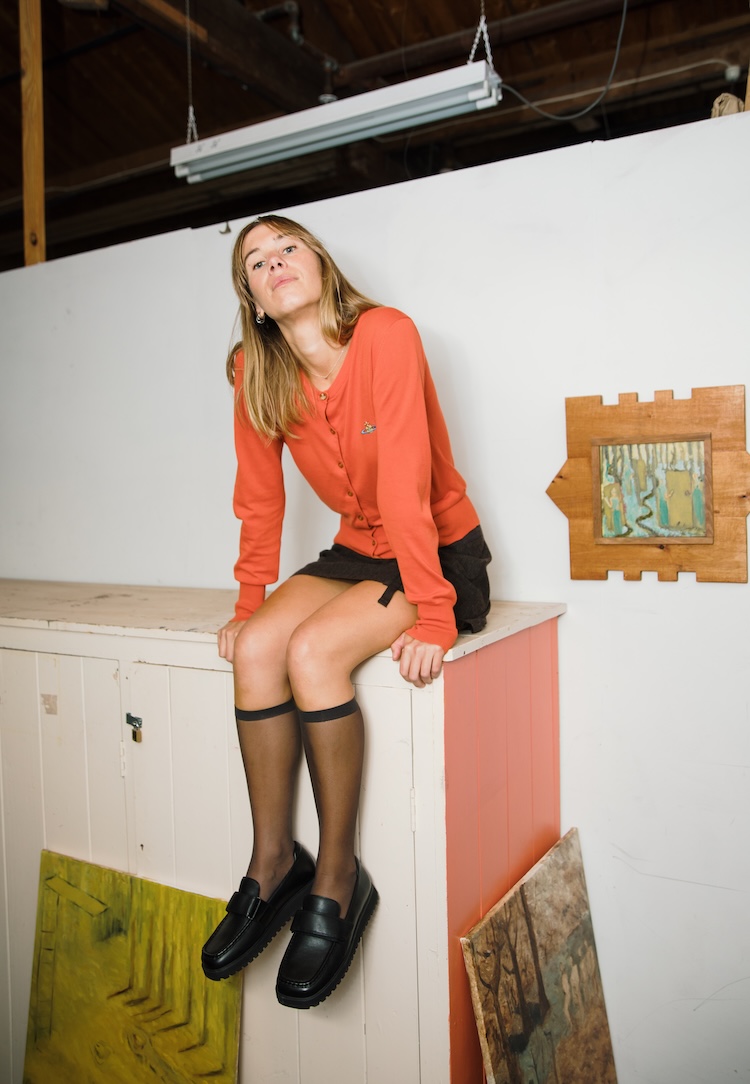
Atong wears her own clothes, with shoes and accessories by Gup throughout.
“I’m interested in how colonialism introduces foreign concepts, objects and aesthetics to communities, but over time those communities change and evolve what was introduced and create something entirely new that becomes their own,” she explains. “Those fabrics have become so culturally significant to contemporary African identity.”
Alongside the fabrics, Atong is attentive to every other element of a portrait: the hair, makeup, lighting and props. Earlier that afternoon, we wandered back to her studio to collect artwork for the shoot. I carried a large, framed portrait of her cousin through the back alleys of Brunswick, as we chatted.
In the portrait, set against a red-and-white checked backdrop, her cousin wears a silk scarf wrapped around her face and neck, a yellow velvet jumper and a cotton skirt. Her face is painted purple; the outer edges of her lips are coloured white, fading into pale blue. Her eyelids are yellow and red, white dots rise from her eyebrows, cheeks and chin like bubbles surfacing.
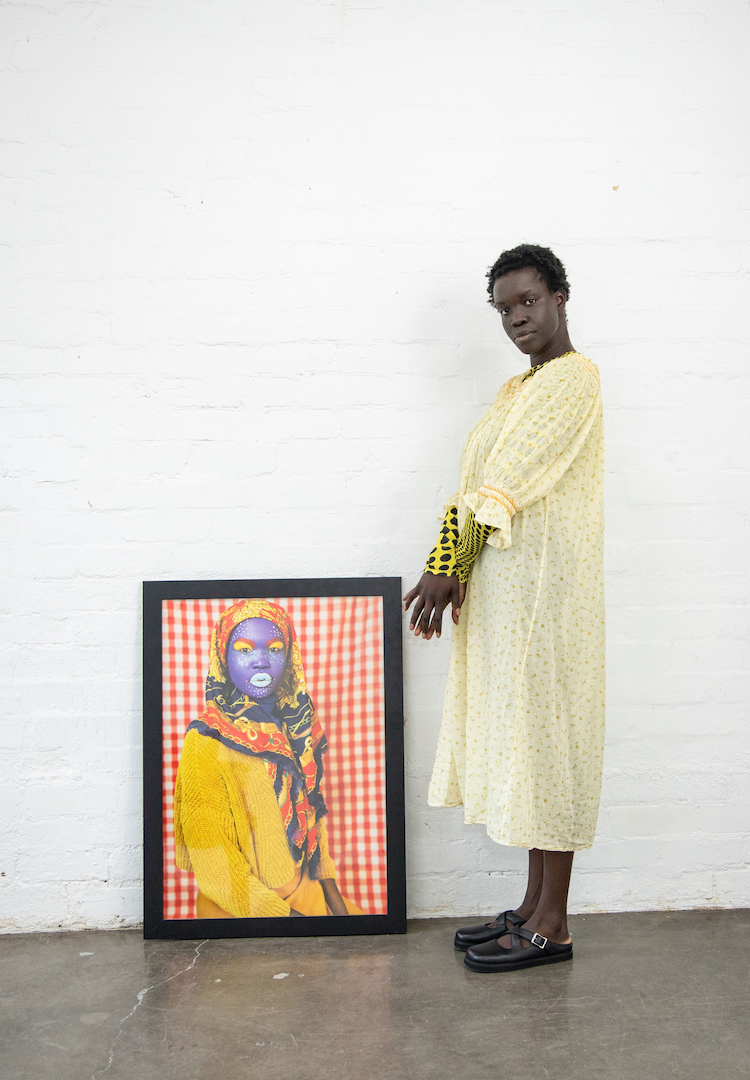
Atong studied painting at university and had a close friend who worked as a professional face painter. That friend taught her how to translate her practice with acrylics and oils onto the face. “Makeup just feels like an extension of my practice now,” she says.
Atong’s photographic practice grew from an interest in history and a desire to learn about the artistic traditions of South Sudan, where her parents were born. Her family moved from Ethiopia (where Atong was born), to Australia as refugees when she was a baby.
Her first camera was a Holga plastic 35mm toy camera, which she adored as a child. As she grew older, Atong became fascinated by photography’s power to define cultures, shape historical narratives and control how groups of people are seen. “I couldn’t get my mind off that,” she says. “I wanted to participate in this powerful practice.”
She tells me photography itself can be used to undo some of the crimes it has committed in the name of colonialism, imperialism and Christianity. In the 19th and early 20th centuries, colonial ethnography presented itself as an objective record of cultural and physical differences under the guise of ‘science’, ignoring the subjective biases of the colonial gaze.
Atong’s photographic practice is in conversation with that history – but the people in her photographs, primarily herself, are active subjects. They represent their cultures in playful, unique and individual ways. They tell their own stories, myths and legends.
I’m surprised (given her extensive body of self-portraits) when Atong says she prefers photographing other people. “If I could, I would photograph other people 90 per cent of the time. But I’ve been thinking a lot about the ethical implications of what I was doing. It felt inherently unethical to figure it out on other people.”
“So, I thought if I ask these tricky questions of my own body and personhood, that might inform the approach I take to photographing other people more ethically, and it has.”
Interestingly, she says those questions do not change simply because the subject is herself. “They become about your own relationship to the self, and the ways that you’ve internalised racialised concepts around your body, your face and your gender.”
When I ask how she feels about seeing her face in galleries, shop windows and on the street, she tells me she doesn’t really see herself at all. “The art isn’t about me literally; it’s so conceptual.”
“It would be very uncomfortable if it was just me in my regular-degular outfits. I would stop making art; it would be too real. But I am able to step out of it a little, which makes it less psychologically damaging,” she laughs.
Atong says she doesn’t make art with an audience in mind, but that she thinks of herself as an innately curious person. “If people take anything away from my work, I hope that it would be a sense of curiosity for the art, and for the world.”
Atong will present her major solo exhibition, Passage: The Art of Atong Atem this October at the NGV. For more information, head here.
Liked this? You’ll love these...