

The playful discipline of artist Yvette Coppersmith
PHOTOGRAPHY BY ANNIE TRUMBLE
STYLING BY SINÉAD HARGREAVES
WORDS BY PHOEBE CANNARD-HIGGINS
“There’s something about restriction that can facilitate the creative process.”
John Safran told Yvette Coppersmith he needed three months to work out before she painted him topless for her Archibald entry in 2009. She had previously portrayed the documentarian, fully clothed, for the Portia Geach Memorial Award, but for this next painting she said, “We won’t be needing the shirt and tie.”
When she painted John wearing just black jeans and a black belt, she chose to do so on raw plywood, sealing only the part that would be painted. “There was something about the vulnerability, the rawness and exposure that I felt was so right for him,” she recalls.
For more content like this, have a look through our Life section.
At the time, she had no idea he was planning to be nailed through the hands and feet to a timber cross, literally crucified, in the Philippines as part of a comedy-documentary TV series.
Intuition, instinct, sorcery. These are the tools of the painter.
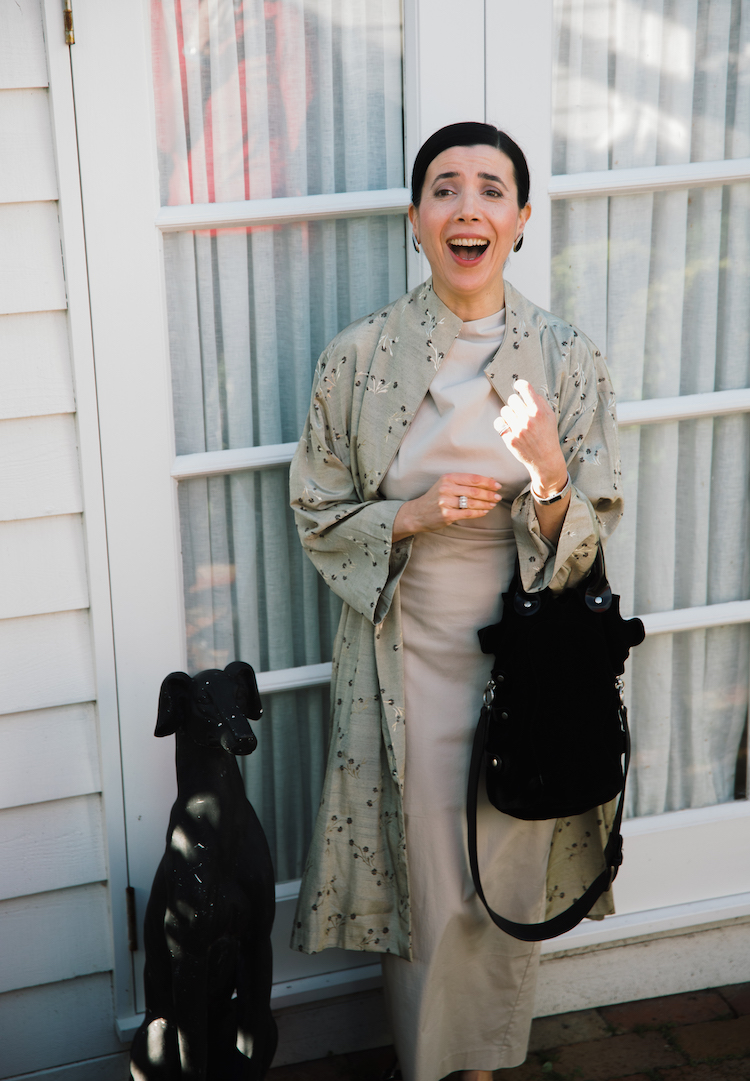
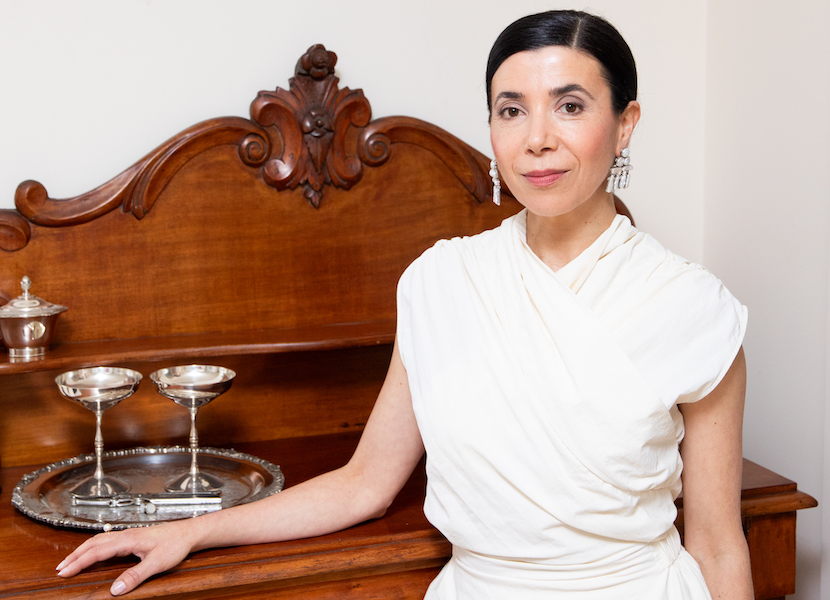
In both looks and character, Yvette is Audrey Hepburn-esque: regal, elegant, a natural performer prone to break into song and dance or deliver a witty aside: “My career counsellor sat me down and asked me what I wanted to do. Naturally, I said paint. It was before online shopping.”
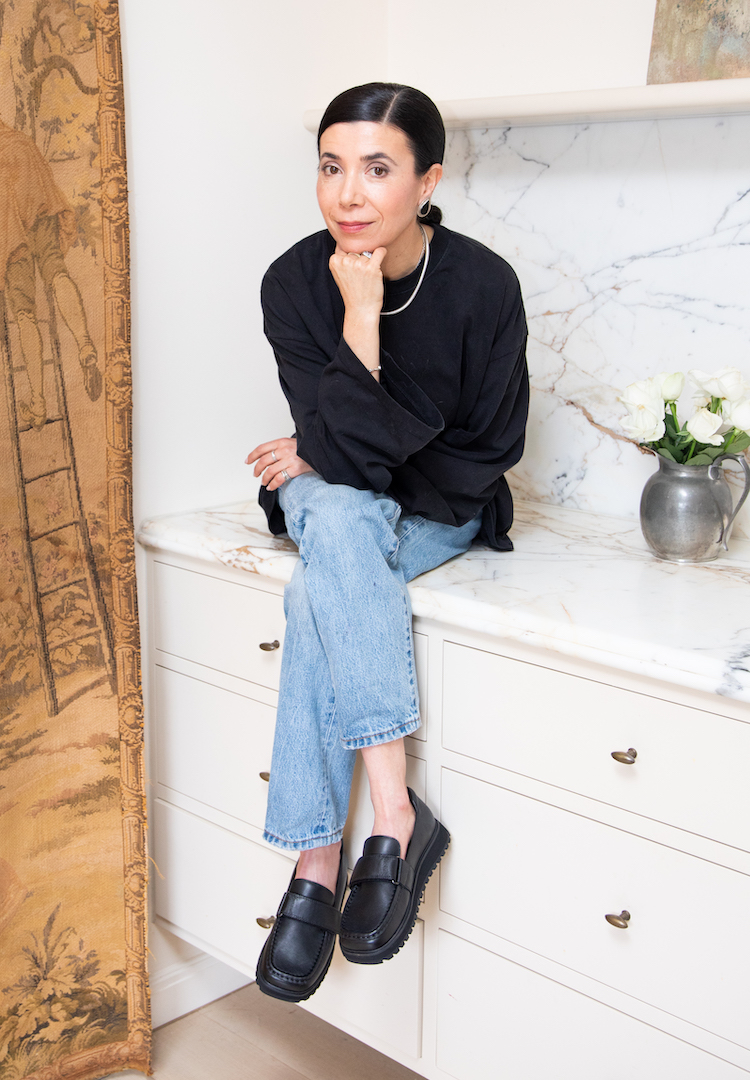
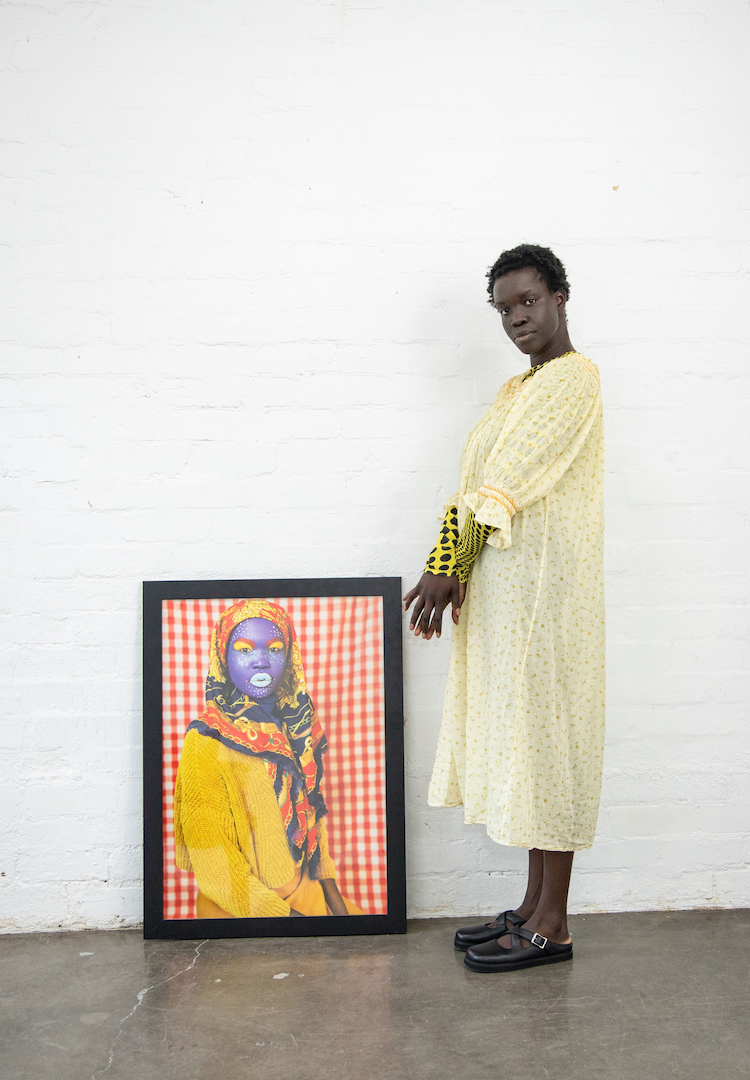
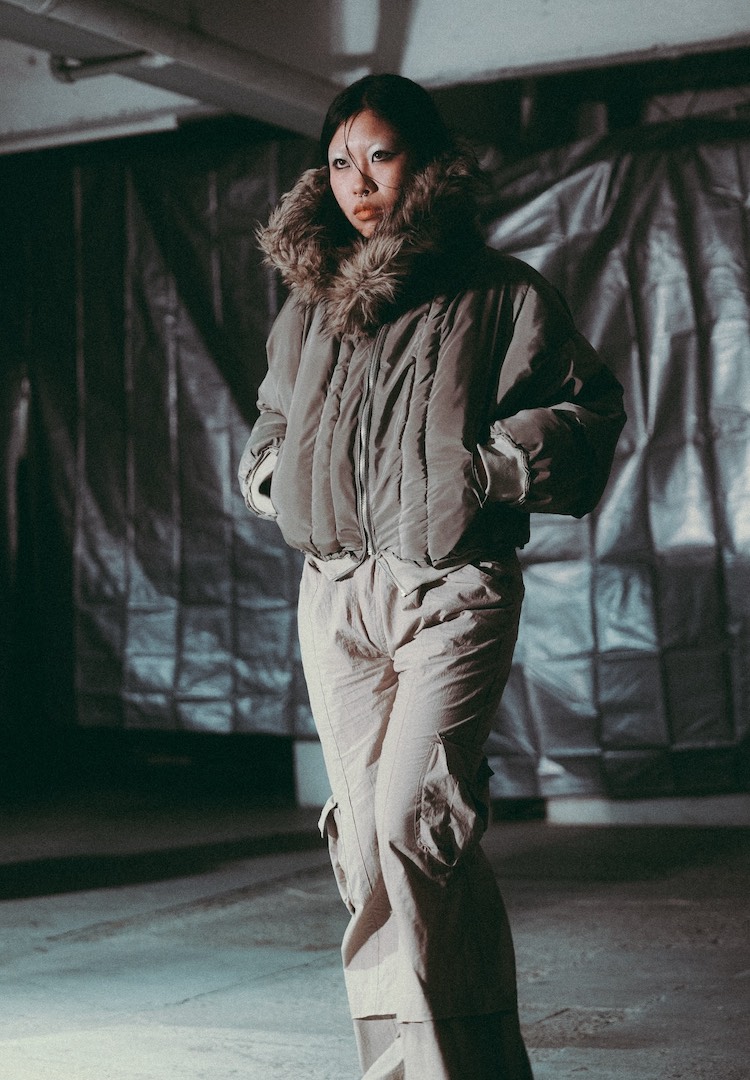
Yvette wears her own clothes, with shoes and accessories by Gup worn throughout.
Her fondness for performance often finds its way into her art. She has inhabited the personas of Rose Byrne and St. Vincent and, perhaps most notably, Jacinda Ardern for the self-portrait that won her the 2018 Archibald Prize.
At the time, she was working on a commission that was taking longer than expected, leaving her with just a month to paint her Archibald entry. She spent three weeks on a version only to scrap it at the last minute and start a new canvas.
“I had a week – four days solid, and the last day I had the worst period pain and PMS, and I’m there standing on one leg holding the pose, trying to paint for 12 hours.”
“It was agony and I just wanted to be lying down in bed, but I remember thinking if I don’t give this painting everything I can in the last few hours I have to paint, I would look at it and know that I hadn’t done enough.”
After viewing the painting, people would often comment, “You’re not that intense in real life, and she would say, “Well, you weren’t there!”
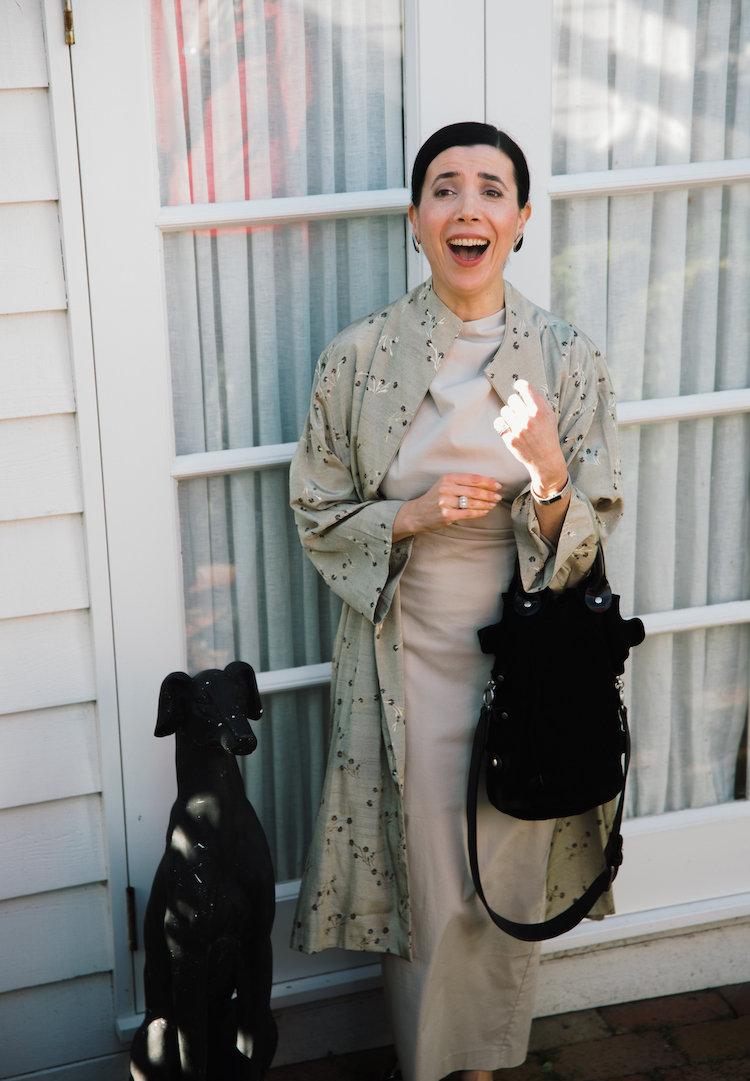
Last year in her solo show, titled Volle au Fond (Flight to the Bottom), Yvette inhabits the legendary sorceress, Circe, from Homer’s Odyssey. The exhibition is underpinned by a short film, shot on Super 8 and described by Yvette as a “1920s silent film actress interpreting a Greek myth and singing in Yiddish.” That pretty much sums it up.
The film is funny, quirky and aesthetically beautiful all at once. Behind Yvette’s silhouette in a flowing dress are the pale rocky cliffs of Sandringham beach. Up clamber two of Odysseus’ men, naked but for a Grecian wrap skirt, only to be turned into swine by the ever-powerful Circe.
One gets the feeling that Yvette would turn us all into animals if she could. “Animals are the soothing antidote to the chaos of the world,” she says, turning her attention to the bonded pair of white cats languidly circling her kitchen.
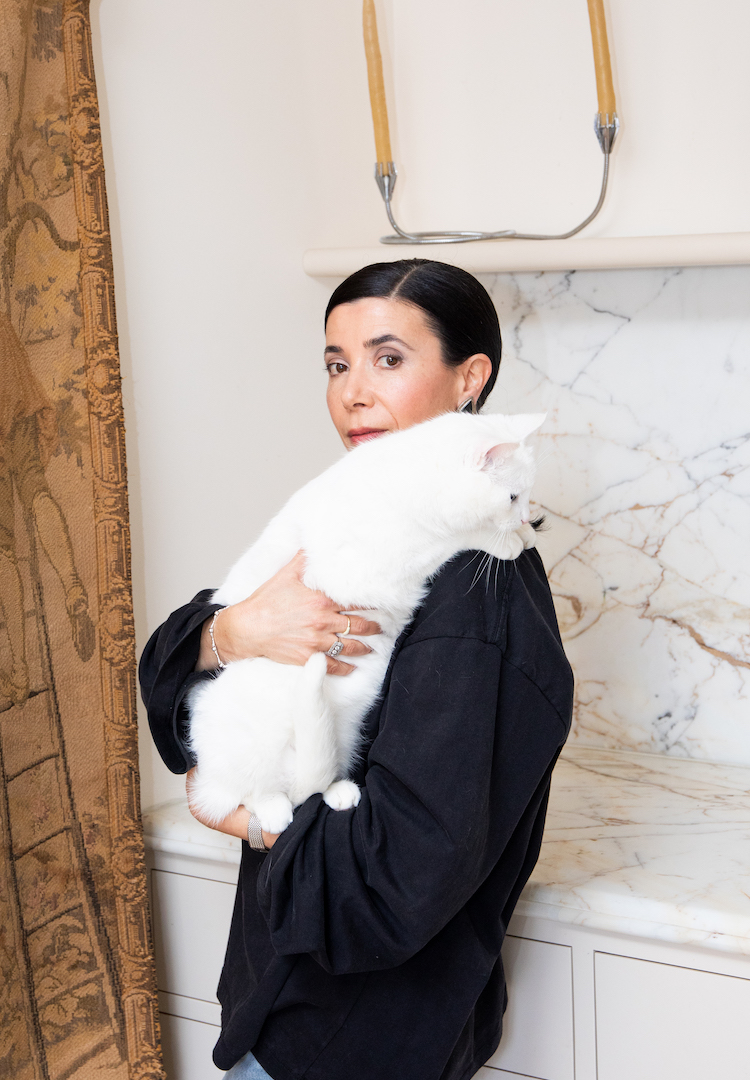
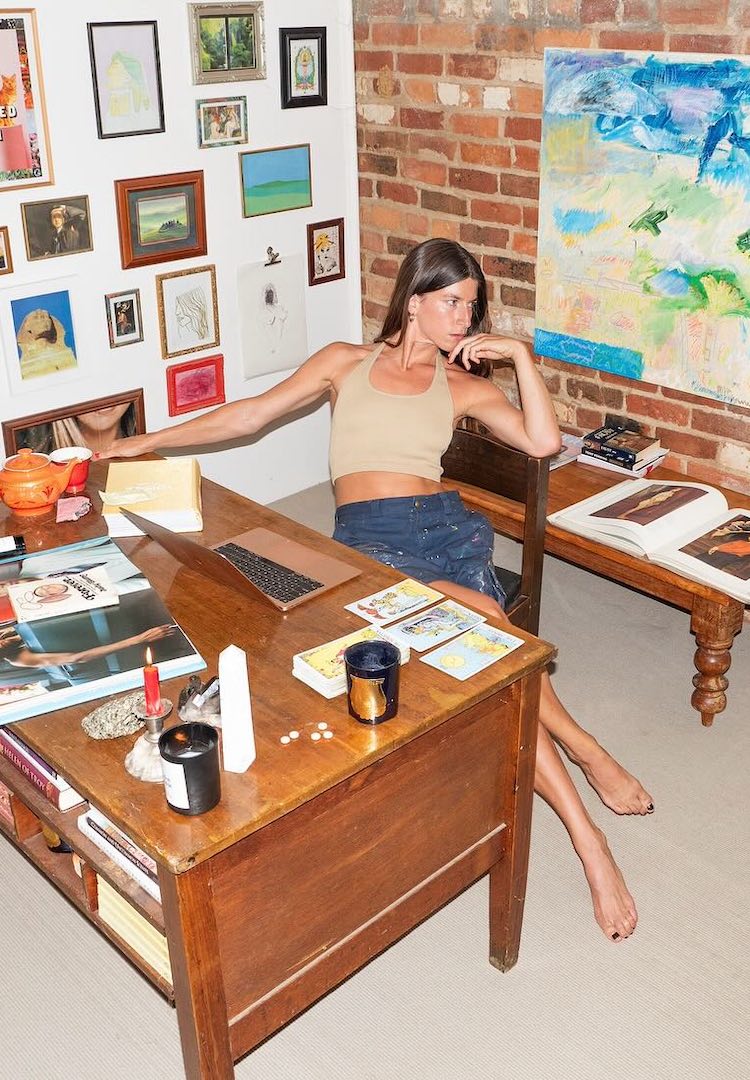
White sunshine travels through the olive trees outside and falls across her freshly sanded dining table. A metal jug holds a bouquet of white roses. A French tapestry hangs on the wall. The benchtops are marble, the vintage teacups cream with a gold rim; the whole place spotless, like a set, not a trace of daily clutter.
Yvette’s year is punctuated by art fairs, commissions, prizes and solo shows, and although she can be humorous and playful, she’s deeply serious about putting her best work out into the world. She works to tight deadlines.
“Perhaps if I didn’t have deadlines, I’d invent some other kind of problem to solve,” she says. “There’s something about restriction that can facilitate the creative process.”
Even in her twenties, painting mattered more to her than having a social life. If she had an upcoming show, forget tempting her with an invite. “Nup, these paintings need the time they take, so I can’t go to that. I can’t go to that.”
“And this was before social media,” she adds, “so if you didn’t leave the house, you didn’t feel connected to anything.”
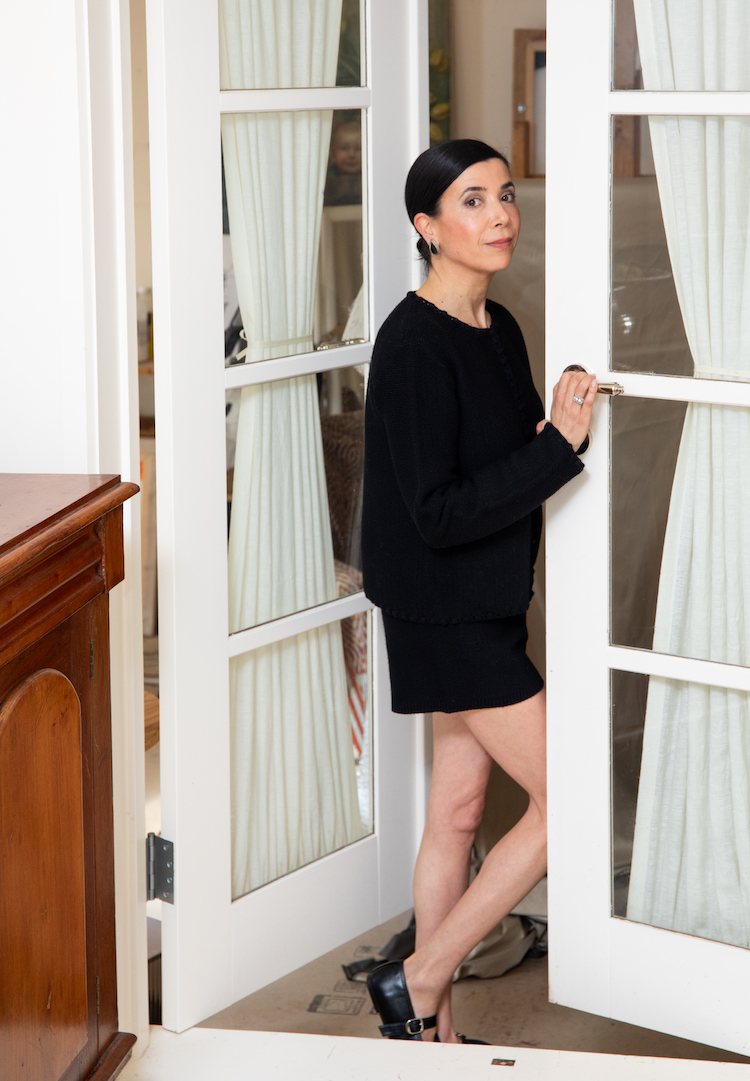
Yvette’s way of working – where almost everything else is consumed by painting – has allowed her to produce a solo show in just two months. But how does this intensity affect the work?
“It impacts the decisions you have to make about the work, like how much paint you can put on a canvas for it to be dry in time to ship interstate,” she replies. “I know what I went through to create it, and the times I’ve done it, I’ve always pulled it off in a way that I don’t think looks rushed.”
Reflecting on her practice, Yvette admits, “Your nervous systems can get a bit fried – not to say that it won’t happen again, but I do really want to be gentler in the future.”
Keep up with Yvette Coppersmith here.
Liked this? You’ll love these...