

Tired of the apps? The love of your life could be on LinkedIn

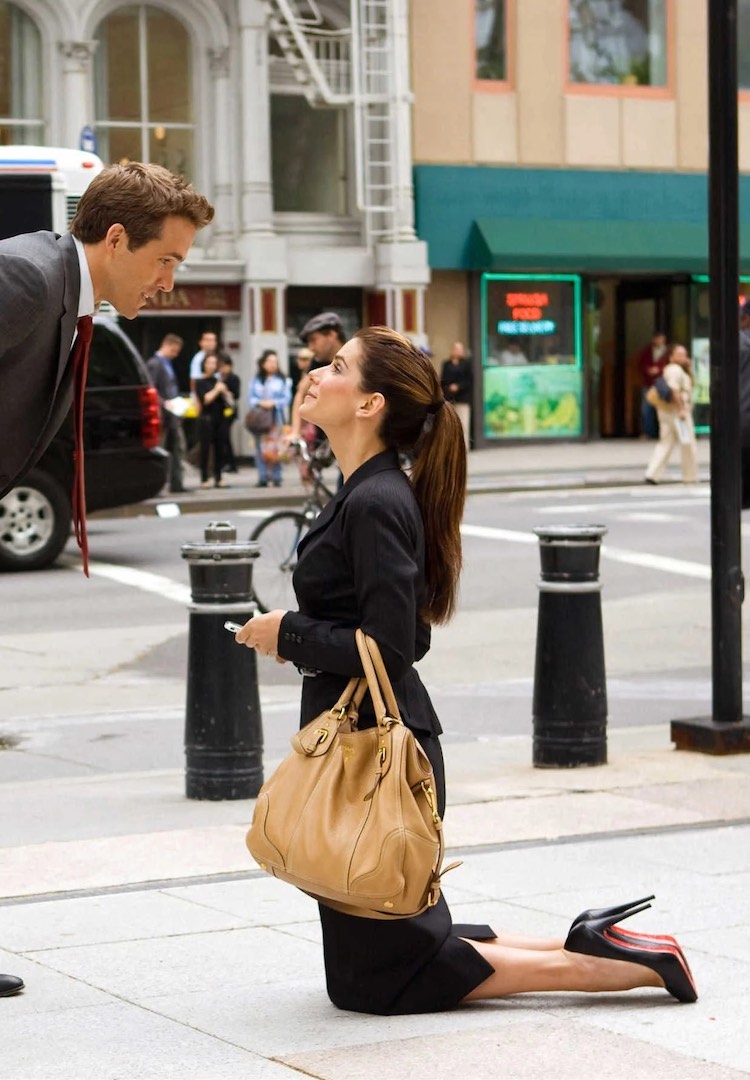
IMAGE VIA IMDB
WORDS BY Rebecca Fearn
B2B, as in business-to-boyfriend.
If you looked up the term ‘dating app fatigue’ in the dictionary, there’d probably be a picture of my face. Like many women around my age (34), I’ve spent the past few years stuck in the toxic cycle of deleting and re-downloading Hinge, continuously oscillating between cautious hope and total despair.
Using dating apps can be exhausting. And for many of us, they continue to yield no real results or success stories. But the willingness to return to them regardless, time and time again, comes from the reality that so few of us seem to meet anywhere else these days.
Interested to hear how others navigate the world? Head to our Life section.
That said, in our continued desperation to finally get away from them, we’re turning to new, untapped resources to find true love – from IRL dating events to run clubs. In fact, one recent study from the US even found that as many as one in eight have found their romantic partners on LinkedIn, with one in five using it to research a potential partner. Forty-eight per cent also said they trusted the professional networking platform more than dating apps to find love.
From my research, these stats aren’t just totally hypothetical numbers on a page. It’s happening in Australia right now. When I shared a call-out on my Instagram story, I had not one, not two, but three people respond saying LinkedIn had played a big role in their forever love stories.
Two (who wish to remain anonymous) told me they’d taken to the site to search for someone they loosely knew of. “I kinda stalked my current partner on LinkedIn after meeting him three months prior at work. He had no other socials,” one shared. “We talked on LinkedIn for about two weeks before I finally got the balls to ask him out. We’ve been together seven years now and we’re getting married next year.”
Mia, 29, had a similar experience. Working in the Melbourne CBD at the time, she first met her now-husband Josh in her company’s building. They worked for totally different companies, but she realised she had a crush after riding in the elevator with him and “chatting for 22 floors.”
After pulling up his LinkedIn several times to co-workers (not realising he was being notified every time she looked at his profile), the first real move was made: “He ended up messaging me [on the site] one day asking to grab dinner the next week. We got coffee in the office the next day and that was that.” The pair are now expecting a baby.
In these love stories, LinkedIn clearly played an integral role. And the aforementioned study suggests the site is actually becoming more and more prevalent in our search for romance. So why might this be happening?
The ‘dating app fatigue’ epidemic has a lot to answer for, says dating coach Hayley Quinn. “We’re seeing people actively look for other ways to make connections. You can see this in the growing popularity of supper clubs and other events designed to bring strangers together socially… LinkedIn is obviously not designed for dating, but it sits within this broader desire to find new routes to meeting people.”
Sarah Louise Ryan, psychotherapist and relationship specialist, adds that, for some, this mode could feel refreshing after years of scrolling the apps. “Dating profiles are specifically constructed to attract a partner,” she says. While on LinkedIn, though, you’re “encountering somebody when they are not actively marketing themselves as a romantic prospect,” which may feel more authentic.
My theory is that LinkedIn may now be a digitised alternative to how our parents’ generation met partners through work. With working from home so common now, is LinkedIn filling the gap left behind by ‘traditional’ office romances?
“Historically, work has been one of the major places where adults formed friendships, communities and romantic relationships. You spent considerable amounts of time around the same people and attraction could develop gradually through familiarity,” says Sarah.
“In that sense, LinkedIn could almost be seen as an extension of the modern workplace. The colleague you might once have met by the photocopier, at a conference or through another colleague may now be somebody you encounter through a post, a mutual connection or a professional conversation online. The human behaviour isn’t particularly new. The environment in which it is happening is.”
These habits may also reflect what we now value when finding new love interests. In my experience, many people my age increasingly place importance on stable finances, career ambition and homeownership when seeking a partner. This is often revealed through app prompts, like a desire to meet someone who ‘financially has their shit together’ or is ‘ambitious with a 10-year career plan.’
While I don’t place these things that highly on my personal non-negotiables list, I can understand why people might. With the cost of living at an all-time high, it can make sense to prioritise finding partners we’re somewhat financially compatible with or who structure their lives in similar ways around work. Making connections on LinkedIn that could lead to romance, therefore, might feel convenient in this way. It allows users to reasonably estimate factors like income, working hours and lifestyle (if these are important to them).
All this said, just because we may be more open to building romantic relationships via LinkedIn doesn’t necessarily mean we should. Maintaining professional boundaries and mutual respect can become a fine line when mixing work with pleasure.
“There’s an important distinction between being open to connection and treating LinkedIn like a dating app,” says Sarah. “People meet partners in all sorts of places that were never designed for dating and there is nothing inherently problematic about two people developing a mutual interest after initially connecting professionally. It becomes uncomfortable when someone uses a professional platform primarily to pursue people romantically, particularly through repeated unsolicited messages.
“I would also be particularly cautious where there is a power imbalance, for example between a senior colleague and a junior employee, a recruiter and candidate or somebody whose professional opportunities could be affected by the interaction.”
So if you’re going to incorporate LinkedIn into your love life, tread carefully. Context matters, as does reciprocity. Stories like Mia’s are great examples: there wasn’t an uncomfortable power imbalance (they worked at different companies in different fields), the couple had chatted IRL and felt chemistry and they approached communication with mutual respect.
So maybe LinkedIn isn’t suddenly the go-to alternative dating app of 2026. But being open to meeting partners romantically through different, less conventional avenues could be the goal – and what’s starting to happen. “Ultimately, I wouldn’t advise singles to turn LinkedIn into their latest dating strategy,” concludes Sarah. “I would encourage something broader: become more open to the possibility that love doesn’t have to begin in a designated dating environment.”
For more on modern dating culture, head here.
Liked this? You’ll love these...