

Can shopping bring you closer to God?

image via @franziskanazarenus/instagram
words by arielle richards
The rise of the spiritual-materialistic baddie.
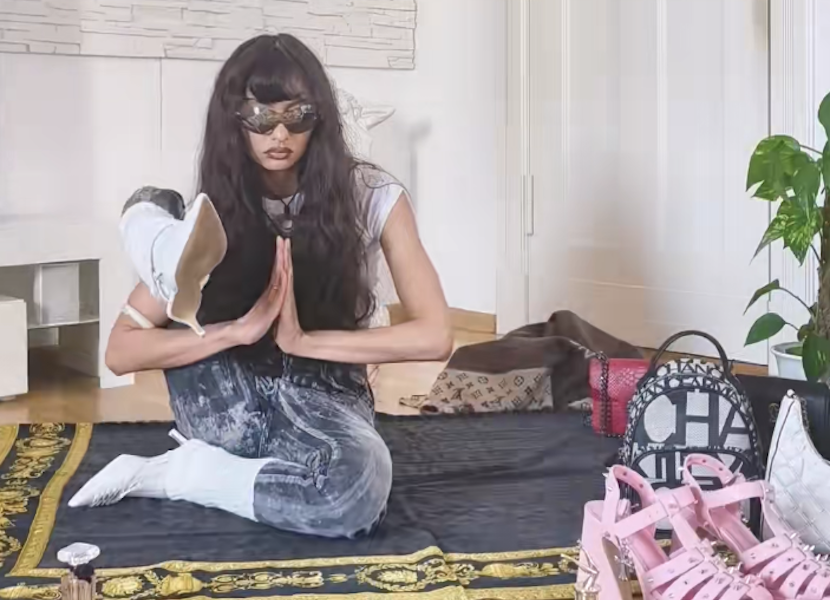
My TikTok algorithm has been feeding me ‘spiritual, but materialistic’ content: white girls throwing asanas, lighting incense and pulling tarot in platform heels and designer sunglasses. Their eyes are closed in beatific rapture, hands folded in prayer, balancing thousand-dollar bags on their heads. One smudges a Range Rover.
It’s that lemongrass-shot-fuelled, yoga-mummy flavour of ‘spirituality’ – vaguely Orientalist; encompassing everything from manifestation to bare feet, ‘wellness’ and ‘vibes’; replete with aesthetic symbols co-opted from Eastern philosophies and stripped of any inherent or ascribed meaning – and it’s surfacing all over again.
For more on the circular economy, head to our Pre-Loved section.
While the videos are ostensibly tongue-in-cheek, it isn’t surprising that in 2026, a ‘spiritual’ identity is being wielded as a status indicator online. Influencing runs on an endless marketing scheme, and as the world continues to burn around us, it’s getting more and more difficult to justify shopping.
And yet, we shop, a lot. In 2024, research from the Australia Institute found Australians bought an average of 56 new clothing items per year, surpassing the US at 53, the UK at 33 and China at 30 to become the biggest fashion consumers in the world.
Meanwhile, colossal mountains of clothing waste pile up in Chile’s Atacama Desert; fashion recycling plants poison whole cities in India; and the entire state of Ghana has become a dumping ground for the world’s fast fashion.
In a system that’s so clearly ethically deficient, it seems apt that a renewed interest in the divine may arise. Especially if it permits us to justify our participation in it. After all, you can be a spiritual person and like to go shopping at Prada.
That’s what Madonna said, anyway, in a famously terse 1998 interview with Marília Gabriela on the Brazilian show De Frente com Gabi. Prompted by Gabi’s question about her apparent move away from capitalism and materialism, and toward spiritualism and the teachings of Eastern philosophy, the spiritual girl living in the material world seemed to ask, Why can’t I have both?
Indeed, why not? Intuitively, spirituality and materialism are opposites. You don’t have to be a devotee of the teachings of Buddhism to know that possessions will not help you ascend to a higher spiritual realm. As Madonna continues, “you just need to not get attached.”
Is there a way to align ourselves with divinity in a system that is so spiritually bankrupt?
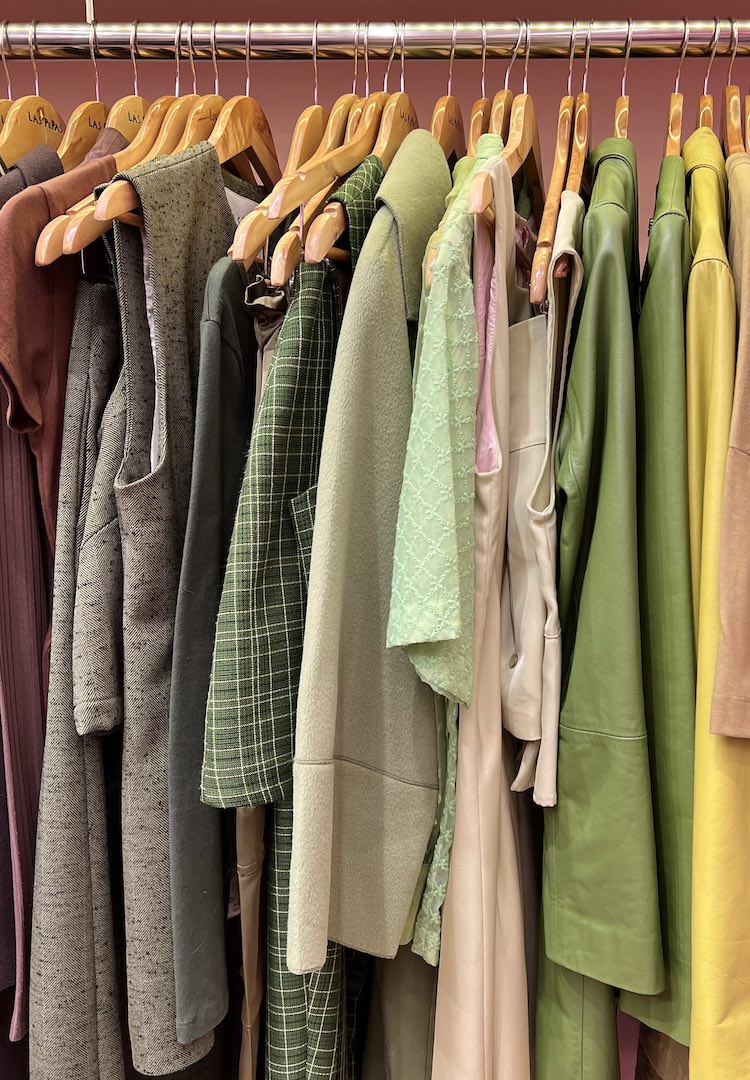
It’s Saturday morning and somewhere church bells are clanging. Outside, people are moving and the birds have been singing and I’m in my car, taking the first turns on the pilgrimage I’ve been preparing for all week. My mind slips over the day’s manifestation, and I set my intention: knee-high heeled leather boots, a draped knit blouse with ruffles, a fitted white cotton shirt. I revolve each item in my mind. Mentally, I genuflect. I ask spirit very nicely.
My offering – three jostling garbage bags filled with clothes of cotton, lace and polyester that grip onto fading tags that mostly read nice things like Made in Australia – is good. Proper vintage, baby. They could have fetched plenty on Depop but I’m doing the right thing. I am closing the cycle. I divest myself of worldly possessions… to get better ones. I look forward to cashing out on this karma.
My rituals do not stop at the op shop. At night by candlelight, I check eBay with religious fervour. Manolo Blahnik, Anna Molinari, Marithé et François Girbaud, Vivienne Westwood. I sort lowest to highest, sometimes by time ending soonest. I set my intention. I return every day. I wait.
I have faith that what is meant for me will find me. And when it does, I will buy it and hang it up in my wardrobe.
For those of us so inclined, say, the material girls among us, is this not the most ethical way to consume fashion? To lay yourself at the altar of chance, circumstance and fate? To practise devotion, discipline and mindfulness?
Is it not a kind of asceticism? This waiting, this yearning? Is this not faith?
Buddhism, Christianity, Hinduism, Judaism, Islam. While the doctrines, cultures and methods of major world religions may differ, they all place ethics at their core. To live a spiritual life, we should do the same.
No one said it would be easy. A 2021 article in The Conversation asks Australian fast fashion shoppers how they finagle their ethics: “It’s too hard sometimes to actually track down the line of whether something’s made ethically,” says a woman in her early twenties.
There is no ethical consumption under capitalism. Marx never said it, but sometime in the early 2010s someone on Twitter borrowed his anti-capitalist rhetoric and made it a slogan. While once it meant something like protest, it’s been appropriated, defanged and turned on itself, promoted as a platitude, co-signing our desire to shop. Because if all consumption is bad, why bother abstaining?
We manufacture our own consent to participate in this material world. Have a little treat, buy a little outfit, feel better about our complete and total impotence in this abhorrent system. As The Conversation article concludes, “consumer choice alone is insufficient. We need a system where all our clothing choices are ethical, where we don’t need to make a choice between what is right and what is cheap.”
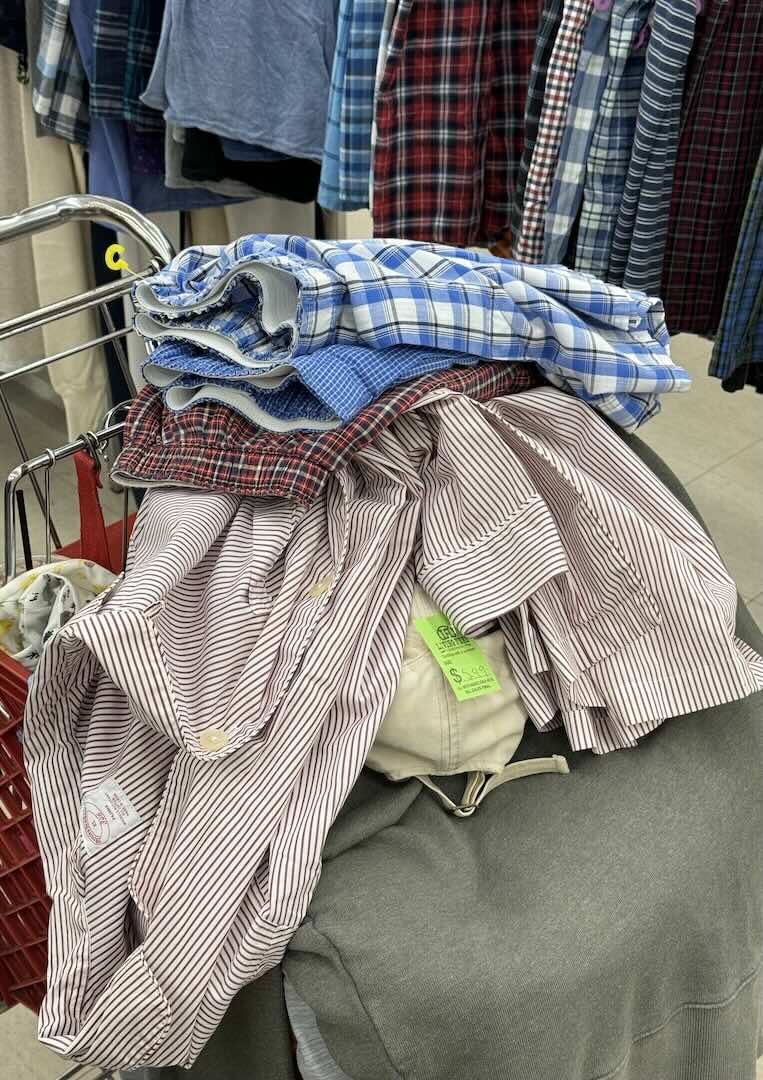
That would be nice. Until then, I adhere to the thrift gods: I don’t donate garbage, I chit-chat with the volunteers, I empty my mind in the aisles as Smooth FM floods tinny through the speakers. When an off-the-shoulder blouse falls off a hanger, I put myself through penance and wrestle it right back on. Secondhand shopping is my religion; the op shop is my church.
You totally can be spiritual without becoming a total ascetic – that’s really not for me to decide. But being a spiritual materialist should come with rules, a doctrine of sorts: Not the next trend, not 56 new items of clothing per year. Ethically made clothes, locally made clothes, secondhand clothes. A kind of reverence for your garments, where you infuse them with your spirit, treating them as an old friend.
It doesn’t stop at purchasing with intention. Make like an 18th-century nun and correctly mend, store and care for your clothing. Show a kind of reverence for the material, for divinity’s sake!
Buy a chakra balancing mist, buy a vintage Prada shoe. The material world remains a small consolation for our godless system.
This article was originally published in Fashion Journal issue 201.
For more on ethical consumption, try this.
Liked this? You’ll love these...