

Got writer’s block? What to know about writing retreats
What to know about writing retreats before locking in.
It’s the hallmark of a Serious Creative, at least in every Hollywood adaptation I’ve seen. A writer shuts themselves off from the outside world, probably in a remote cabin in the woods, with only a typewriter and reams of A4 paper on which to clap out their manuscript. Maybe those loose pages fly into the freezing water of a nearby lake and spark the seeds of love (Colin Firth, Love Actually) or perhaps you birth a bestseller to international acclaim. Perhaps, writer’s block tightens its grip. Regardless, it’s all very cinematic.
In reality, there’s a much greater spectrum when it comes to writing retreats. The benefits of each differ, but ultimately all offer the same delicious prospect of time to work, exclusively, on your creative project.
Understandably, in today’s world, the lure of a creative retreat is strong. But they can come with a heavy investment (financial, logistical, temporal) so it’s good to know what lies ahead before you commit.
Who can you expect to see at a writers’ retreat?
With the promise of time to write (in this economy?!), it’s unsurprising that it’s typically time-poor women who are drawn to writers’ retreats. At least that’s the case for Victoria-based author Kelly Gardiner, who, having 12 published books and a PHD in creative writing under her belt, runs several retreats a year.
“Quite often, they are people who’ve put their creative work on hold, perhaps for years, while they did a thousand other things, but now they are making time for themselves and their writing. That’s wonderful to see.” She says her retreats are typically booked out months in advance and most often (but not always) feature women, of all ages and backgrounds.
Do I need to be a professional writer to attend a writers’ retreat?
If you’re a little nervous about joining a structured retreat, forget about the imposter syndrome. Non-professionals tend to make up the bulk of numbers at retreats, with established writers typically connecting with more formal fellowships and residencies, funded by government organisations. As Kelly explains, “professional writers are more likely to head off alone or with friends, or go somewhere like Varuna, the National Writers’ House, to work in solitude all day.”
Emerging writers (or those looking to develop in a new form or genre) tend to head to structured, private retreats, like the type Kelly runs.“They’re working on something but perhaps haven’t yet published a book,” she notes. “Those who do work in the field, like journalism or technical writing, often are there to develop in a new form or genre.”
View this post on Instagram
What are the different types of writing retreats?
What surprised me most when looking into artist retreats was the spectrum of what’s on offer. Kelly’s published a really useful handbook that breaks this down further, for anyone serious about attending.
First, she explains, a writers’ retreat doesn’t need to be anything formal. “A retreat is about making time to focus on your writing, away from daily interruptions, tasks and distractions,” she explains in the handbook. “It doesn’t have to cost anything, and if time is short or you have many responsibilities, you simply do as much as you can.”
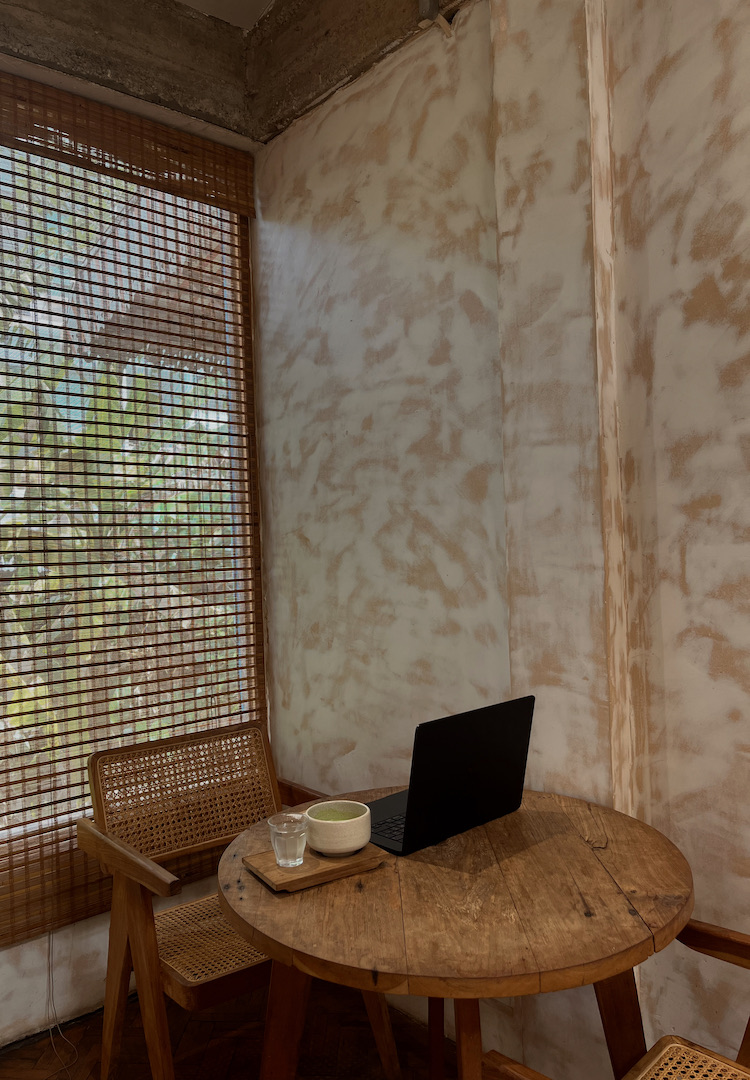
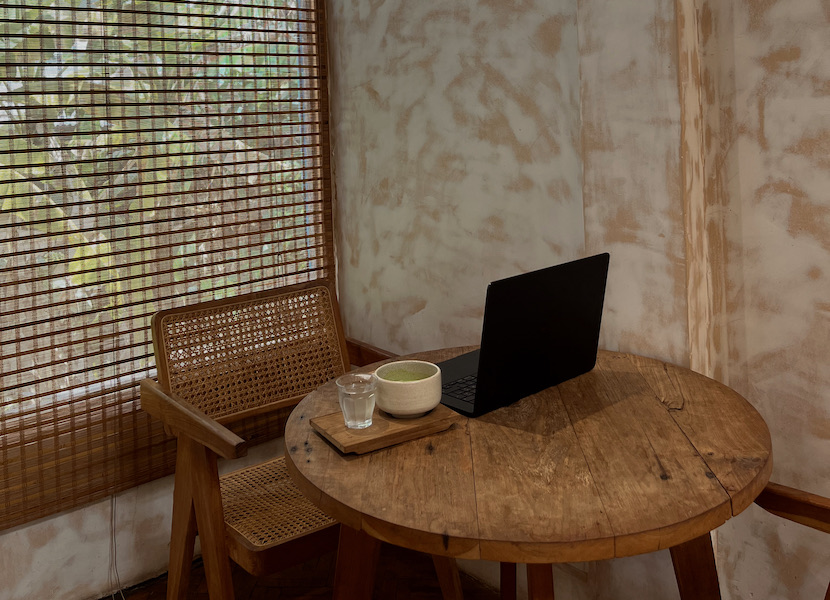
This may look like locking yourself in a room, library or cafe, turning your phone to ‘do not disturb‘ and quite simply, locking in. It could be for as little as an afternoon or as long as a few months of regular writing sessions. Simply naming it a ‘writers’ retreat’ is a great way to romanticise the process and bolster your commitment.
Those looking for a little more structure might explore private accommodation, like a cabin in the woods. A number of listings on Airbnb market themselves to writers and creatives as ideal places for a retreat, making them easier to find. Writing is typically a solitary pursuit, but Kelly also notes the benefits of collaborating to reach your goal. “There comes a point when we look around and ask ourselves, ‘How do I know if this is any good?’ or ‘How do I take it to the next level?’.”
If you do head away with friends, she recommends agreeing on a structure in advance. “I suggest you meet in the morning to discuss your individual goals for the day, then do a companionable ‘Shut Up and Write’ session together. After that, you might write separately, rest, walk, or read before gathering for a check-in on progress and problems over dinner.” She continues, “Aim for a lot of writing, a lot of laughter and a lot of cheese.”
Writer, publicist and Fashion Journal contributor Genevieve Phelan is a proponent of retreats, after taking herself on a private escape to Blairgowrie’s Camillo House (which also hosts a formal program). “It was the key to unlocking that writing brain that felt really dormant at the time,” she explains. “It never used to be this way, but now I feel diabolically reliant on a change of scenery (and utterly gorgeous surroundings) to fire up my creative writing synapses. How high maintenance of me.”
View this post on Instagram
What about more structured retreats?
For those who need strangers to hold their boundaries in place, private group retreats are worth a look. This is the type of retreat Kelly runs. She explains there are specialised options for memoirists, poets and fiction writers, as well as retreats on different themes, like nature writing. Given the variety, it’s worth spending a little time browsing which is right for you.
NSW-based author Anna Featherstone has published a helpful list of Australia’s best writing retreats, which is updated regularly. It includes helpful notes on what to expect from each retreat, and who might benefit most from each.
Kelly explains that some fee-based retreats are relatively informal, with structured writing time and group meals. Other residential programs (like hers) include more structured learning programs led by authors or editors. There may be workshops, masterclasses and mentoring sessions alongside more leisurely pursuits like yoga.
Finally, there are formal residency programs, which tend to be leveraged by established writers. Some venues, like Varuna, mentioned above, offer all of these options and invite anyone to attend for a fee.
What are the best writers’ retreats in Australia?
In addition to the above list curated by Featherstone, Kelly highlights some of the best-known residencies and fellowships in Australia. These include Edenhope Artist Residency in Victoria; Varuna, the National Writers’ House in the Blue Mountains; Bundanon Artist in Residence program in Shoalhaven, Salamanca Arts Centre residency in Hobart; May Gibbs Children’s Literature Trust fellowships in Adelaide; and KSP Writers’ Centre in Greenmount, WA.
How do I know which retreat is right for me?
“I guess the first thing is to try to figure out what you need,” Kelly explains. ”What would help you right now? Silent time to focus? People around you doing the same thing as you? Or do you feel you need advice or classes in specific areas? And importantly, who do you trust and want to work with? It’s a big deal to go away for a weekend with a bunch of strangers – and let’s face it, most of us are introverts.”
She advises looking into the people who host each retreat, their experience in both writing and publishing in your form or genre, but also teaching. “They should be happy to answer questions for you and offer plenty of information on what to expect and how it’ll feel. You want to feel you’re in safe hands.”
Kelly’s curated a checklist here to guide your decision-making.
What should I avoid?
Having written her first book on public transport, to and from work, Kelly is a big advocate for rest as part of the creative process. “Neuroscience tells us how important rest is for creativity,” she begins. “So rest, play, allowing yourself to daydream: they are all so important in how we discover ideas and develop them.”
She advises against locking yourself in a cabin for a month. “Yes, you’ll get heaps done, but you also need to eat properly and walk around and go see a movie or have dinner with real people – you can’t spend every moment of the day with imaginary characters. Well, you can, and I have, but at some point you will find yourself eating corn chips at 3am and typing out a scene that no longer makes any sense. Or maybe that’s just me.”
For more to improve your writing, head here.
Liked this? You’ll love these...