

‘It’s not for you’ explores the absurd reality of being a woman in music
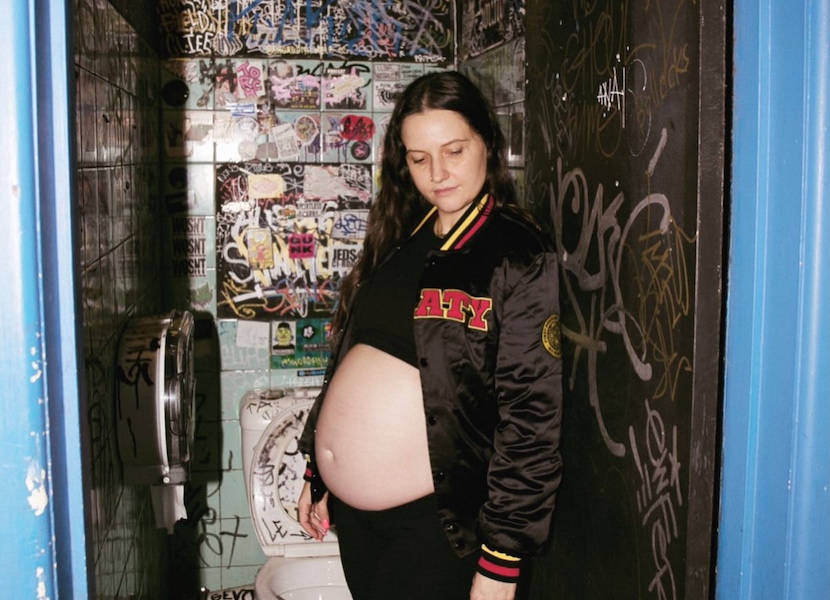
image via @aeroplanekelly/instagram
as told to daisy henry
Show ’em Kelly.
Anyone lucky enough to have attended a Camp Cope gig knows the atmosphere there was always different. They weren’t shy to pause a show mid-set to call out a man for shoving women to get to the front. Where the music industry can often feel like a dog-eat-dog world, Camp Cope’s legacy was one of fearlessness. They were unafraid to call out sexism in the industry, in festival lineups, even in the mosh pit, and even if it came at a personal cost.
For years, bassist Kelly-Dawn Hellmrich would joke with her bandmates, Georgia McDonald and Sarah Thompson, about the absurd reality of being a female band in a male-dominated industry. “The book idea was a bit of an in-joke and probably a coping mechanism,” she says. “It became a way of dealing with it in the moment. I would say, ‘That’s going in the book!'”
Discover more artists and music we love at FJ’s Music section.
Now, three years after Camp Cope announced its split and exit from music, Kelly’s book is here. Titled It’s Not for You, it’s part memoir, detailing many of Kelly’s experiences in the industry, from writing music to touring. It also features 18 interviews with female and gender-diverse artists who have each shaped Australian music in their own way.
From Amy Taylor of Amyl and the Sniffers to Sampa the Great, Courtney Barnett, Barkaa, Linda Bull and, of course, her former Camp Cope bandmates, Kelly’s quick to credit those in the industry who have paved the way. “If I was going to write something, I wanted it to be a way to give back and celebrate that community,” she says.
The title of the book comes from a lyric in Camp Cope’s song ‘Keep Growing’, and has two meanings. “It represents the exclusion, doubt and the internal and external voices that say there is no place for you,” Kelly explains. It’s also a reckoning, acting as a reminder that you don’t always need to seek permission first.
View this post on Instagram
Fashion Journal: Hi Kelly, congratulations on your new book! You’ve been in the music industry for a long time, what was it that made you want to write It’s Not For You?
Kelly: Thank you so much, it still feels so surreal. The book idea was a bit of an in-joke and probably a coping mechanism I had with the band over the years we were touring. We had these absurd, sometimes problematic, sometimes funny and sometimes really just plain sexist things happen to us.
It became a way of dealing with it in the moment. I would say “That’s going in the book!”, almost as a way of saying, “Maybe we don’t have the language or understand these things now, but maybe in ten years or one day, we will.”
I also wouldn’t have the career or be the person I am today without the community of women and gender diverse artists I had to look up to during my time in the music industry. If I was going to write something, I wanted it to be a way to give back and celebrate that community.
What made you feel ready to go all-in on writing it?
After the band ended and I spent a lot of time caring for a baby at home, I was really itching to create and use that part of my brain again. Then, my cousin passed away quite suddenly in 2024. She was just a few years older than me and had so many great things planned. It lit a fire under me to stop putting off the things I wanted to do in life.
It had a few different iterations, and I explored a few different ways to try and tell the story I wanted to tell. All up, I would say it roughly took about three years of writing, interviews and editing.
How much of the book draws on your own experiences in the music industry? Was there anything that felt particularly vulnerable writing about?
It is part memoir, and I really try to show the mental and emotional journey one goes through in order to even begin joining a band and start writing music. I found talking about my family really vulnerable, because I wanted to do it respectfully but truthfully – these are real-life people, after all!
Also, I felt like I was asking the contributors to be really vulnerable with their stories, so I felt as though I needed to be as honest and open with myself. That felt fair.
You speak with many female and gender diverse musicians in the book. Was there one conversation or interview that stayed with you?
It is hard to pick just one because each interview felt so different and inspiring in their own unique way. I would say that I’d have moments where I would feel a bit lost or directionless during the writing process. Some of that came from being so used to creating alongside the band and I didn’t have them here to lean on in that same way. But then I’d have an incredible conversation and interview, and it would motivate me in new ways and push the book in a different direction.
What surprised you most about the process of writing a book? Did it feel strangely similar to making an album or a song, or completely different?
It did feel a lot more isolating than writing a song or album. I’m also not usually the one on the microphone, or being the ‘voice’, so this was a new realm for me.
What was similar was the overwhelming support I received from the artistic community around me, especially the women, queer and gender diverse people in my life. They were really cheering me on the whole way.
What does the title of the book represent?
The title has two meanings. It represents the exclusion, doubt and the internal and external voices that say there is no place for you. The second is breaking free and understanding that not everything needs permission. Some things are just for us to understand, for ourselves.
I remember going to Camp Cope shows and always feeling so safe in those spaces. Part of that was the music, but also how the band conducted its shows. What was this like from your perspective? Was it often a battle in such a male-dominated industry?
I am so glad you felt safe in those spaces, that is everything to me! It was a challenge at times and a bit lonely. We faced a lot of backlash publicly and behind the scenes. But, I do feel like the people criticising us the most weren’t the ones going to the gigs and experiencing that beautiful community we ended up creating.
A big part of Camp Cope’s legacy was being willing to call things out. Is there an emotional toll involved in that?
Absolutely. I talk in depth about that emotional toll we together felt in Camp Cope but also explored those feelings with the other contributors, too.
I do think it played a part and became one of the reasons for us no longer making music together anymore. A lot of the fun and joy we should have been experiencing from making art, performing and travelling was overshadowed by what felt like a bigger purpose of trying to change an industry that felt heavily driven by ego and money.
Looking back on your time in Camp Cope, what stands out most to you about creating music and touring with your bandmates?
I was so fortunate and privileged to be able to travel and meet the people I did across the world and from so many different artistic communities. I would never have had those opportunities without Camp Cope and I wouldn’t be the artist, mother, partner today without the imprint those people left on my life.
Get a copy of It’s Not for You here.
Liked this? You’ll love these...